
A sliding door opens onto a room of woven tatami, a futon is already laid on the floor, and the smell of hot spring water still clings to your skin from the bath down the hall. Out in Kyoto, lanterns glow along the lanes of Gion, and somewhere in the city a festival drum is warming up. Japan rewards travelers who collect moments rather than checkmarks, and this is a list of the ones worth building a trip around, from temple lodgings to snow sculptures.
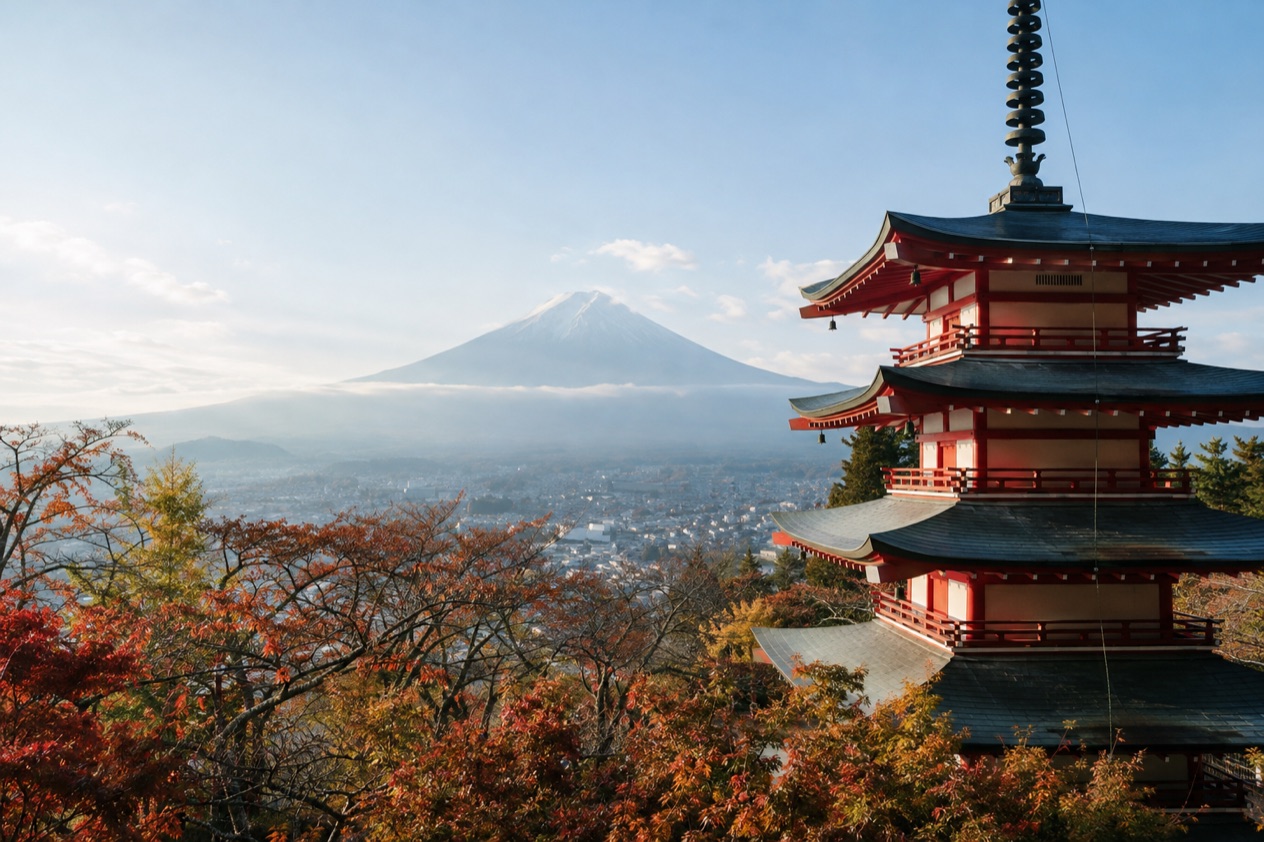
What should be on a Japan bucket list?
The sights are wonderful, but the experiences that stay with people are usually the ones where you step inside Japanese daily life for an evening.
Japan is an island nation in East Asia, divided into 47 prefectures, and the traditions below turn up in every corner of it. You do not need to cover them all. Pick three or four and let the rest of the trip fill in around them.
A night in a ryokan
A ryokan is a traditional Japanese inn, and staying in one is the clearest way to understand how a Japanese home is arranged. Guests sleep on futons laid directly on tatami mat floors, so the room that served as a sitting area at dinner becomes a bedroom by the time you return from the bath.
Most ryokan have public and private natural hot spring baths, and most serve typical Japanese meals, sometimes directly in your room. That means a slow evening: soak, change into the yukata (a light cotton robe) provided, then settle in for a multicourse dinner with small dishes of seasonal ingredients. Breakfast tends to follow the same spirit, with rice, grilled fish, pickles and miso soup.
This suits couples, friends and anyone who wants a night that feels unhurried. Shoes come off at the entrance, and slippers stay on the hallway side of the tatami. If you only book one night of this kind, choose it for the middle of a trip, when a city-heavy itinerary needs a pause.
Temple lodging at Koyasan
Shukubo is lodging inside a Buddhist temple, and Koyasan, in Wakayama Prefecture, is one of the most popular places to try it because many temples there offer it. Instead of a hotel lobby you get a tatami guest room, sliding paper doors and the sense of sleeping inside a working religious community.
Temple stays usually come with vegetarian monastic cooking, known as shojin ryori, which relies on tofu, vegetables, sesame and seasonal greens. The meals are plain-looking and surprisingly satisfying. It is an experience for travelers who like to slow down and watch how a place runs, and less for those who want nightlife or a minibar.
Tea, flowers and kimono
Three hands-on experiences are available across the country. Beginner tea ceremony lessons are offered in all major Japanese cities, where you learn how to receive a bowl of matcha, turn it in your hands and eat the sweet that comes first. Travelers can also learn the basics of ikebana, the art of flower arrangement, in beginner courses available in most major cities.
Then there is dressing the part. Visitors can rent a kimono or yukata for a few hours and walk around the city, which turns an ordinary stroll through an old district into something closer to a costume photograph and a small lesson in how the sash is tied.
Which experiences are best known?
Among the most popular sites are Sensoji temple in Tokyo, Nikko, and the Fushimi Inari shrine or Kinkakuji in Kyoto. Add Japan’s 26 World Heritage Sites, which include Himeji Castle and the Historic Monuments of Ancient Kyoto and Nara, and you have the core of most first itineraries.
Kyoto: shrines, groves and geisha
Fushimi Inari Taisha is the shrine of the long corridors of vermilion gates, and the Japan National Tourism Organization lists it as a top scenic spot. Kinkakuji, the Golden Pavilion, mirrors itself in its pond and rewards a slow lap around the garden. The Arashiyama Bamboo Grove, also a top scenic recommendation, is a walk between tall green stalks that creak and whisper when the wind moves through them.
Kyoto is also where geisha culture is most visible. Many geisha live and are trained in geisha houses here, and they can often be seen in the Gion district, hurrying between appointments in their formal dress. The respectful way to enjoy it is to watch from a distance and photograph the street, not the person.
In July the Gion Matsuri festival fills Kyoto with floats and street life. A matsuri (festival) is the best chance to see the city at full volume, and if your dates allow it, it is the most memorable time to be here.
Tokyo and Nikko: temple gates and shrine woods
Sensoji is the temple in Tokyo that appears on most lists, and it is a good place to see how a big city folds old religious life into its everyday rhythm. Visitors burn incense, draw paper fortunes and pass through a gate hung with a huge lantern before reaching the main hall.
Nikko, also among the most popular sites in Japan, adds a different mood, with ornate shrine buildings set among trees. Pair it with a Tokyo stay when you want to see how Japanese religious architecture looks outside the capital. Tokyo’s Rainbow Bridge, listed as a top scenic recommendation, rounds out the picture with a very modern skyline view.
Snow, sumo and spectacle
The Sapporo Snow Festival takes place in Sapporo in February and features huge ice sculptures, so you can wander among them with a cup of something hot. In Toyama Prefecture, the Tateyama Snow Walls are listed as a top scenic spot by the Japan National Tourism Organization, a canyon of snow cut for visitors.
For a very different kind of spectacle, six major sumo tournaments are held each year in different cities in Japan. Watching a bout is a mix of ritual, such as salt thrown into the ring and slow stamping, and a few seconds of sudden force. It suits travelers who like sports with ceremony built in.
How do you fit them into a trip?
Fit them in by anchoring the trip to one or two fixed events and a few regions, then filling the gaps with flexible experiences like a tea lesson or a kimono afternoon. Japan is large enough that trying to see everything in one go turns into a blur of stations, so choose a base per stretch of the trip and let each one carry a theme.
Build around a season or a date
Some items on the list are tied to a month, and those decide the rest. The Gion Matsuri festival belongs to July in Kyoto, and the Sapporo Snow Festival to February in Sapporo. If either excites you, book the other pieces of the trip around it, and use the weeks near it for the nearby stops.
Sumo works the same way. With six tournaments held each year in different cities, you can check which one overlaps with your dates and decide whether to add that city. The rest of the list, from ryokan nights to tea lessons, has no calendar and slots into whatever days remain.
Group by region, then by mood
A sensible shape is a big-city stretch followed by a slower one. Tokyo carries Sensoji and the Rainbow Bridge. Kyoto packs Fushimi Inari, Kinkakuji, Arashiyama and Gion into one base, and Nikko or Koyasan add a night in a more rural setting. The Shinkansen, the world’s first high-speed rail line, links the big cities, so a trip across several can be stitched together without much backtracking.
Alternate high-energy days with calm ones. A day of temples and markets pairs well with an evening in a ryokan bath.
Add the night views
Japanese cities look different after dark, and the Japan National Tourism Organization lists several night views as principal recommendations. The Rainbow Bridge in Tokyo, the Yokohama Red Brick Warehouses, Hakodate and Yokkaichi all appear on that list.
They are good additions to a city day because they cost little planning, just a final stop before dinner or the hotel. Pick the one that matches where you already are, and leave the rest for another trip.
A word on crowds and courtesy
Popular places come with a cost. In Fujikawaguchiko, in Yamanashi Prefecture, a mesh barrier was set up to block a view of Mount Fuji behind a Lawson convenience store because of tourist-caused disturbances.
Keep voices down in lanes where people live, and keep photographs of geisha and local residents respectful. A trip planned around fewer, deeper experiences usually leaves more room for that kind of attention.
Good to know before you go
Electricity in Japan is 100 volts, and Japan keeps to a single time zone, Japan Standard Time (UTC+09:00). In an emergency, dial 119 for fire, 110 for police and 118 for the Japan Coast Guard. A few habits go a long way on this kind of trip: take your shoes off where others do, follow the bathing customs posted at hot springs, and treat shrines and temples as places of worship before photo stops.
Sources
- Japan National Tourism Organization, cultural experiences (https://www.japan.travel/en/guide/cultural-experiences/), checked October 11, 2026
- Japan National Tourism Organization, night views (https://www.japan.travel/en/things-to-do/attraction/scenic-night-view/), checked October 11, 2026
- Japan National Tourism Organization, scenic spots (https://www.japan.travel/en/things-to-do/attraction/scenic-spot/), checked October 11, 2026
- Wikipedia, Tourism in Japan (https://en.wikipedia.org/wiki/Tourism_in_Japan), checked October 11, 2026
- Wikivoyage, Japan (https://en.wikivoyage.org/wiki/Japan), checked October 11, 2026
To plan your stay
- Best Time to Visit Japan: Cherry Blossoms, Autumn Colors, Weather and Festivals
- Where to Stay in Japan: Ryokan, Temple Stays, Capsule Hotels and the Best Cities to Base In
- Sending Luggage from the Airport in Japan: Hands-Free Travel, Hotel Delivery and Coin Lockers
- Know Before You Go to Japan: Entry, Money, Etiquette and Getting Around