
Under the vermilion gates of Fushimi Inari, the path climbs into the trees and the noise of the city drops away. Japan strings together temple towns, huge cities, forested mountains and far-flung islands, and the places that draw travelers are spread across all of them.
What are the best places to visit in Japan?
The places visitors cherish most are Kyoto’s shrines and bamboo groves, Tokyo’s temples and waterfront, the view of Mount Fuji and the snowy highlands of Toyama Prefecture. Together they show the range of the country, from sacred gates to skyline to alpine scenery. Japan is an island nation in East Asia, and most of what you see on a first trip sits on Honshu, the largest of the main islands.
The Japan National Tourism Organization lists several scenic spots as top recommendations, and they make a sound backbone for a first itinerary. Around them you can add food, hot springs and small towns, depending on how much time you have.
Kyoto: Fushimi Inari and the Arashiyama Bamboo Grove
Fushimi Inari Taisha is a Shinto shrine where rows of torii gates, each one donated and inscribed, form tunnels of orange-red over the stone steps. It is among the most popular sites in Japan, and the Japan National Tourism Organization lists it as a top scenic spot. You walk under the gates, past small fox statues and quiet side shrines, with the light filtering through the trees.
The Arashiyama Bamboo Grove, also a top scenic spot in Kyoto, is a different kind of walk. Tall green stalks rise on both sides of the path, and the wind makes them creak and rustle overhead. Pair the two in separate outings so each has room to breathe, and finish with tea or tofu in a nearby café.
Tokyo: Sensoji and Rainbow Bridge
Sensoji is among the most popular sites in Japan. You reach the temple through a market street of rice crackers, sweet bean pastries and souvenirs, then arrive at a hall wrapped in incense smoke. Visitors waft the smoke over themselves before stepping up to pray, and the mix of old ritual and city life is quintessentially Tokyo.
Rainbow Bridge is the city’s other scenic recommendation from the Japan National Tourism Organization. It spans the bay, and its outline against the skyline and the water makes it a favorite for photographs. Tokyo is also home to Haneda Airport, the largest in Japan, which means many trips begin or end right here.
Mount Fuji and Fujikawaguchiko
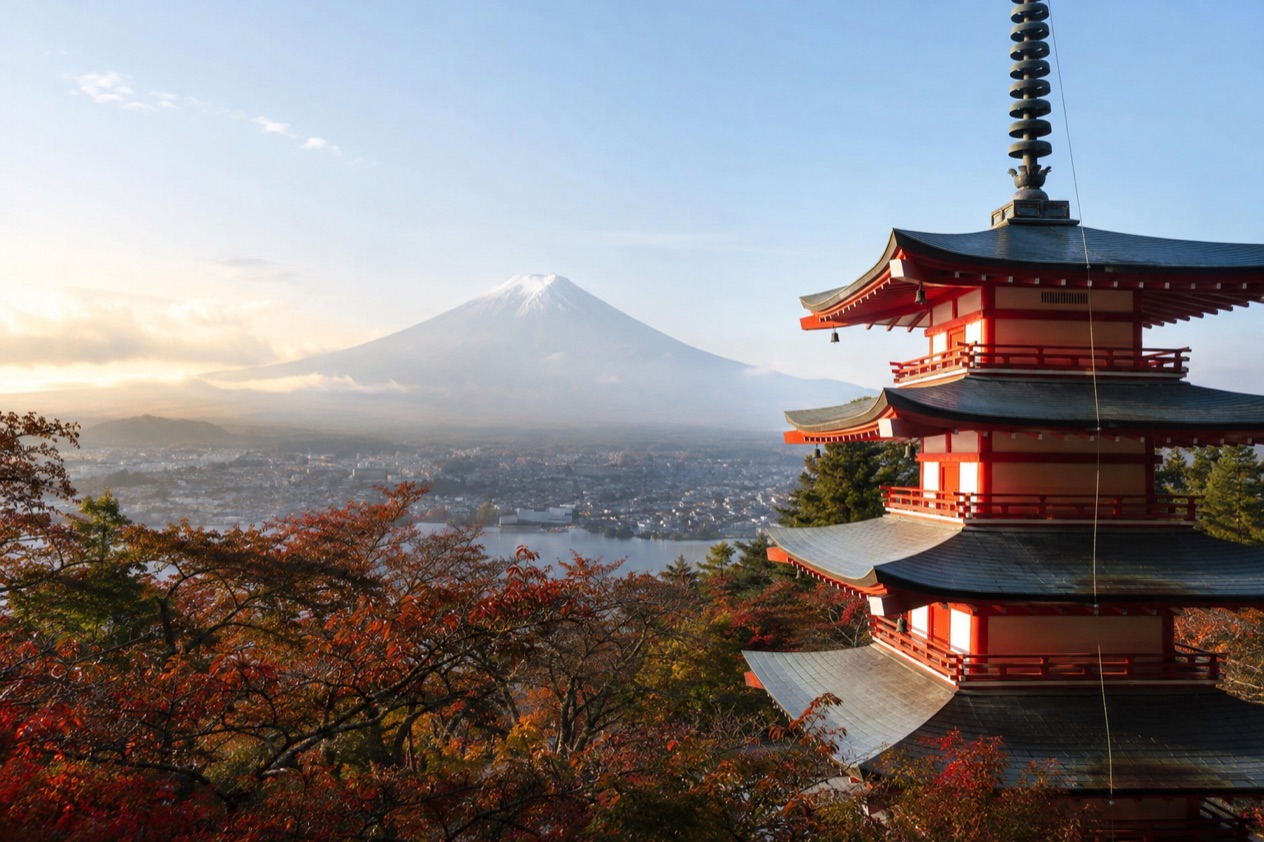
Mount Fuji and the Shinkansen are two of the images most associated with Japan, and seeing the mountain is high on many wish lists. The town of Fujikawaguchiko in Yamanashi Prefecture is one place people go for that view. The attention has had side effects: a mesh barrier was set up to block the view of the mountain behind a Lawson convenience store because of disturbances caused by tourists.
The lesson for a visit is to treat the mountain as a landscape you share with the neighbors. Stay on public paths, keep voices down on residential streets and take your photographs from places meant for visitors. Fuji sometimes hides behind cloud, so a day spent among lakeside cafés and hot springs still pays off.
The Tateyama Snow Walls in Toyama Prefecture
The Tateyama Snow Walls are another of the Japan National Tourism Organization’s top scenic spot recommendations. They are tall corridors of packed snow, with a road cut between them, and walking through feels like moving along the bottom of a white canyon. It is a landscape of mountain Japan far from the temple circuit, and it suits travelers who like to see the country’s wilder side.
Japan’s forests help explain such scenery, since much of the archipelago is wooded rather than farmed. Add a stay in a mountain inn with a hot spring bath and a dinner of local vegetables and fish, and you have a trip with a very different rhythm from Tokyo or Kyoto.
Which cities come first?
Tokyo, Osaka, Kyoto and Fukuoka are the cities at the top of most itineraries, and Chiba joins them on the list of the most visited prefectures. The five names that come up most often are Tokyo, Osaka, Chiba, Kyoto and Fukuoka. Each offers a different side of Japanese life, from temples and department stores to street stalls and river promenades.
Tokyo and Osaka: food, neon and big-city energy
Tokyo is a patchwork of neighborhoods, each with its own mood: old temple streets, glass towers, narrow lanes of tiny bars called izakaya, department store food halls laid out like jewelry cases. You can spend days moving between them and never run out of corners to explore. Sushi counters, ramen shops, tempura and convenience store snacks all count as part of the experience.
Osaka is the city travelers associate with eating. Takoyaki (octopus dumplings), okonomiyaki (savory griddle pancakes) and skewers of fried food are what people line up for in the lit-up entertainment districts. The mood is louder and more playful than in Tokyo, and it works well for anyone who plans a trip around meals.
Kyoto and Nara: the old capitals
Kyoto is where Japan’s older face is easiest to find. Temples, wooden machiya townhouses, gardens and tea houses fill its streets, and its Historic Monuments of Ancient Kyoto, together with those of Nara, form one of Japan’s World Heritage Sites. Kyoto is also a city of seasonal food, from tofu dishes to the multi-course meals called kaiseki.
Nara belongs on the same page, since its monuments share that World Heritage listing with Kyoto’s. Japan has twenty-six World Heritage Sites in all, so a trip built around them can take you well beyond the big cities.
Fukuoka and Chiba
Fukuoka sits on Kyushu and is known for its food culture, especially the tonkotsu pork-bone ramen of the Hakata area and the open-air food stalls called yatai that set up along the streets and the river. It is a way to experience a regional city with its own flavors, and it adds an island beyond Honshu to your trip.
Chiba, next to Tokyo, is on the list of the most visited prefectures as well. Treat it as part of a wider Tokyo-area trip rather than a stand-alone destination, and plan the rest of the days around the cities and mountains you most want to see.
How do you choose?
Choose by what you want to do and when you are going, since Japan rewards a clear idea of what you came for. Temples and gardens point you to Kyoto and Nara, food and nightlife to Tokyo and Osaka, scenery to Fuji and the mountains. With forests covering roughly two thirds of the archipelago, nature is never far from a city, which makes it possible to mix all three.
By interest
If history and ritual draw you, put Kyoto and Nara first, with Fushimi Inari and Kinkakuji in the plan, and add Himeji Castle for a look at a fortress that has survived into the present. If you like cities, base yourself in Tokyo and let Osaka supply the second act. For landscapes, look at Fujikawaguchiko and the Tateyama Snow Walls.
Moving between them is part of the pleasure. The Shinkansen, the world’s first high-speed rail line, is one of the symbols of the country, and riding it between cities lets you watch fields, towns and mountains slide by the window. Mixing a city, a temple town and a mountain stop gives a trip a balance that a single base cannot.
By island and coast
Japan stretches over 14,125 islands, though your trip will touch only a few. The five main ones run from north to south: Hokkaido, Honshu, Shikoku, Kyushu and Okinawa. Honshu holds Tokyo, Kyoto, Osaka and Nara. Kyushu brings Fukuoka, Hokkaido offers a northern landscape, and Okinawa adds a southern, island-style break.
The coastline is long, and the sea shapes the food, the fishing towns and the way of life along it. Lake Biwa, the country’s largest freshwater lake, offers an inland counterpart. If you have time for only one extra stop beyond the classic route, choose the island whose landscape and food match your own tastes.
By season and weather
Season changes the experience of each place, so it is worth matching your dates to your wishes. Snow scenery such as the Tateyama Snow Walls belongs to the snowy months, while Okinawa’s main rainy season begins in early May. In late summer and early autumn, typhoons often bring heavy rain, which can disrupt plans and is worth keeping in mind when you build a schedule.
Leave some slack in the itinerary for a rainy day. Museums, covered shopping streets, department store food halls, hot spring baths and long lunches all work when the weather turns, and they are as much a part of Japan as the famous views.
Good to know before you go
Electricity in Japan runs at 100 volts, so check that your chargers and devices accept it, and the country keeps Japan Standard Time all year. In an emergency, dial 119 for fire and ambulance or 110 for police, and 118 reaches the Japan Coast Guard.
Cities are laid out for visitors who want to walk, but the usual habits of traveling anywhere still apply, such as keeping an eye on your belongings in crowds. If your trip falls in late summer or early autumn, follow the weather reports for typhoons.
Sources
- Japan National Tourism Organization, scenic spots (https://www.japan.travel/en/things-to-do/attraction/scenic-spot/), checked October 11, 2026
- Wikipedia, Japan (https://en.wikipedia.org/wiki/Japan), checked October 11, 2026
- Wikipedia, Tourism in Japan (https://en.wikipedia.org/wiki/Tourism_in_Japan), checked October 11, 2026
- Wikivoyage, Japan (https://en.wikivoyage.org/wiki/Japan), checked October 11, 2026
To plan your stay
- Best Time to Visit Japan: Cherry Blossoms, Autumn Colors, Weather and Festivals
- Where to Stay in Japan: Ryokan, Temple Stays, Capsule Hotels and the Best Cities to Base In
- Sending Luggage from the Airport in Japan: Hands-Free Travel, Hotel Delivery and Coin Lockers
- Know Before You Go to Japan: Entry, Money, Etiquette and Getting Around