
Shoes in one hand, you step off the road onto sand that squeaks a little underfoot, and the horizon opens into the East China Sea. Japan is better known for temples and neon, yet the beach side of the country sits on Okinawa Island, far south of Kyushu, where the climate turns subtropical. Here is where the sand is, when the weather suits a beach day, and which neighboring islands the ferries reach.
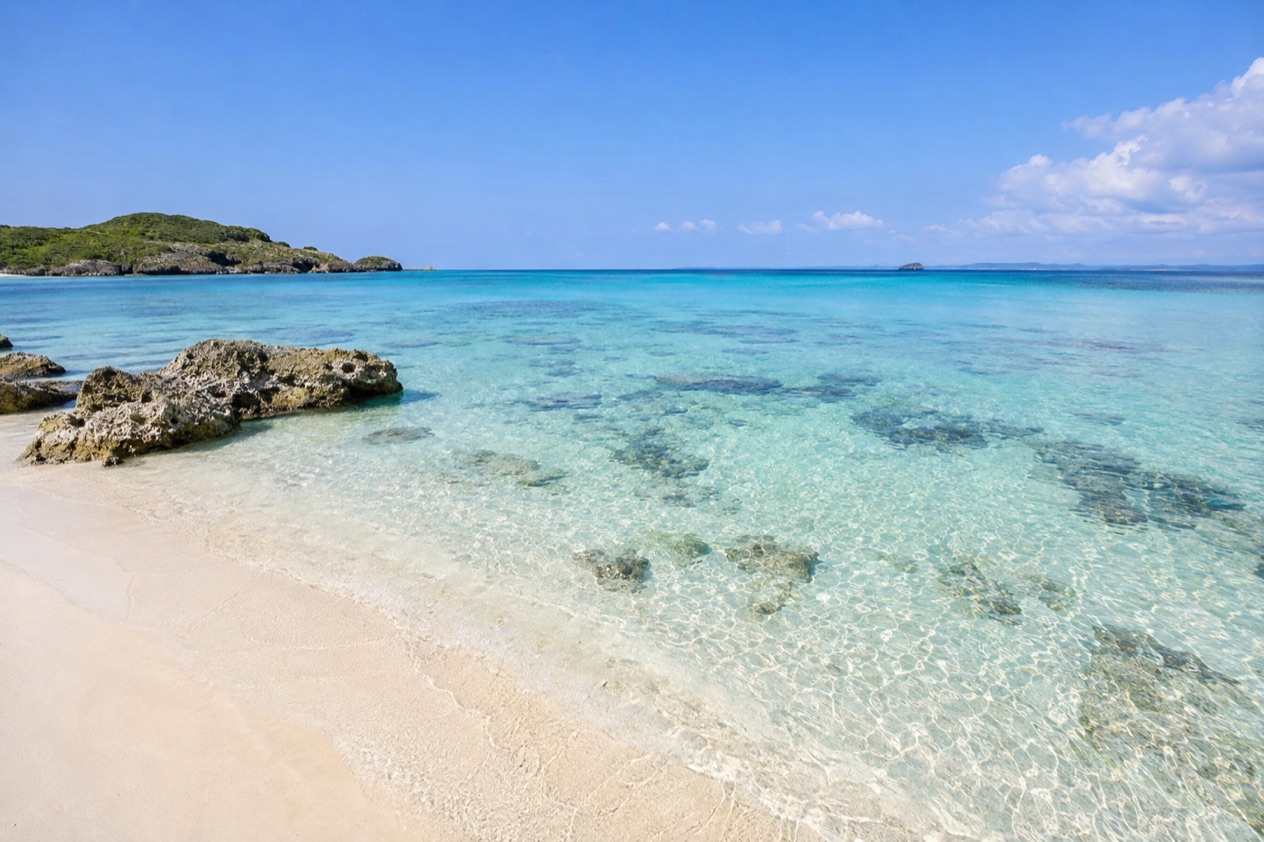
Where are the best beaches in Japan?
Beyond these names, the island offers a mix of resort sands, a beach beside a well-known aquarium visit and stretches with their own local character. Picking among them is a matter of what else you want from the day.
Okinawa feels unlike the rest of Japan in small ways. The light is different, the food leans on local ingredients, and the old Ryukyu past shows in the castles.
Manza Beach, Emerald Beach and Okuma Beach
These three names turn up together when people plan a beach stay on Okinawa Island. Manza Beach and Okuma Beach are tied to the island’s resort culture, the kind of place where a day means a towel, a book, a cold drink and a slow walk along the waterline. Emerald Beach has a name that suggests the color the shallows take in good light, and it makes a natural pairing with the sights of the island’s attractions list.
What you do on such a beach is simple. You walk the tideline, look for shells, watch the sky change, and follow the local habit of lingering until the evening. Pack sun protection and a hat, and plan to eat nearby, since a beach day on Okinawa tends to stretch into dinner with Orion beer, the island’s own brew, whose factory is among the attractions the island lists.
Zanpa, Moon and Sunset beaches
Zanpa Beach, Moon Beach and Sunset Beach in Chatan-cho round out the named stretches of sand. The names alone tell you how people like to use them: Moon Beach for lingering after dark, Sunset Beach for watching the sun sink over the water. Chatan-cho is the town where Sunset Beach lies, so you can pair the sand with a stroll through the town afterward.
Each has its own feel, from the open sweep of a resort beach to the quieter rhythm of a town waterfront, and the differences are easier to enjoy when you are not racing the clock.
Century Beach and the aquarium side of the island
Century Beach appears among the island’s tourist attractions, next to Okinawa Churaumi Aquarium, which was at one time the world’s largest aquarium. Pairing the two makes a day with both a sea view and an indoor stop, handy when clouds roll in or the sun gets strong.
The same list names Pineapple Park, the Orion Beer Factory and Hiji Falls. Together they make a loose menu for days when you want something besides sand: fruit and sweets at the park, a tasting at the brewery, a waterfall for a change of scenery.
When is swimming season?
Okinawa Island has a humid subtropical climate that borders on tropical rainforest, which is why it is the beach destination of Japan, and the one weather marker to plan around is the rainy season in late spring. Planning a beach trip means thinking about that stretch of wet weather first, because showers and gray skies shape the days more than any thermometer reading.
Beyond the rainy season, the island’s humid air is a constant. Expect warm, damp days where a shower can pass quickly and the sun returns, and keep your plans loose enough to move between the beach and an indoor stop. A swim is always a matter of that day’s conditions, so look at the water and the weather when you arrive rather than fixing a date months ahead.
Planning around the late-spring rains
Late spring is when the rains arrive on Okinawa Island, and travelers who want long, sun-filled hours on the sand often schedule around it. That does not mean the island shuts down. Rainy days are good for the castles, the aquarium and the brewery, and a beach walk in a drizzle has its own mood, with the sea gray and the sand dark and empty.
If your dates fall in that stretch, build a flexible plan. Keep a castle visit and an aquarium day in reserve, and treat the beach as the thing you do when the sky opens. Flexible travelers tend to leave with more of what they came for than those who set a rigid daily schedule.
Reading the water and the weather on the day
A beach is never the same twice. Wind, tide and recent weather change how the water looks and feels, so treat any swim as a decision made on the spot. Look at how the waves are behaving, watch what other people are doing, and follow any local signs at the beach itself.
Pack light layers for breezy moments, something to cover your shoulders when the sun is high, and a dry bag for your phone. After the swim, the island’s food waits, and a meal with a view is a fine reward for a morning outdoors.
Which islands are best?
Okinawa Island is the one to start with, because it holds the beaches named above, the castles and the transport links, and it is the base from which the neighboring islands are reached. From Tomarin Port in Naha, ferries run to nearby islands such as Aguni, Tokashiki and Zamami, which gives a beach trip a second act without leaving the Okinawa orbit.
Okinawa Island as your base
Naha Airport is the main transportation hub for the Ryukyu Islands, so most trips begin there. The Okinawa Urban Monorail, known as Yui Rail, runs from the airport to Tedako-Uranishi Station in Urasoe, passing Akamine Station, which is Japan’s south-easternmost monorail station. It is a pleasant way to see the city of Naha without a car.
To reach the beaches further along the island, the Okinawa Expressway is a toll road that runs from Naha to Nago, with a speed limit of 50 mph, the highest on the island. Pair that with a day of stops, and a loop through the beach towns becomes part of the trip rather than a chore. Mount Omoto, the island’s highest mountain, rises behind it all, a reminder that Okinawa is more than sand.
Ferries to Aguni, Tokashiki and Zamami
Three neighboring islands, Aguni, Tokashiki and Zamami, are served by ferries from Tomarin Port in Naha. They are the natural next step for a traveler who has seen the main island and wants a change of scale, a smaller place with a slower pace and a sea view from the ferry deck.
Choose among them by what you want from the stay. Treat the crossing as part of the experience: the harbor in Naha, the open water, the first sight of the island ahead. Once you arrive, you can settle into the local rhythm, walk to the shore and let the day unfold without a rigid plan.
Good to know before you go
Okinawa is far from the Japanese mainland, so a beach trip here is a trip of its own rather than a side stop on a city itinerary. Keep an eye on the late-spring rainy season when choosing dates, and give yourself a flexible day or two in case the weather turns. Naha Airport is the arrival point, the monorail links the airport with the city, and the expressway tolls apply when you drive north toward the beach towns.
Sources
- Wikipedia, Okinawa Island (https://en.wikipedia.org/wiki/Okinawa_Island), checked October 11, 2026
To plan your stay
- Best Time to Visit Japan: Cherry Blossoms, Autumn Colors, Weather and Festivals
- Where to Stay in Japan: Ryokan, Temple Stays, Capsule Hotels and the Best Cities to Base In
- Sending Luggage from the Airport in Japan: Hands-Free Travel, Hotel Delivery and Coin Lockers
- Know Before You Go to Japan: Entry, Money, Etiquette and Getting Around