
Somewhere in the upper deck, a brass section is playing a fight song for the hundredth time, and a whole block of fans is waving small plastic bats in perfect rhythm. Vendors climb the steps with kegs of beer on their backs while a batter steps in, and nobody sits down until the at-bat is over. Baseball, called yakyū in Japanese, is a summer-long ritual in Japan, played from spring into the autumn of the pro season, and an evening at the ballpark is one of the liveliest ways to spend a night there.
How do you watch baseball in Japan?
You watch it mostly at a pro game in Nippon Professional Baseball (NPB), whose season starts in late March or early April and ends in October, or at a high school tournament at Kōshien in spring and August. Baseball arrived in Japan in 1872 and has become a national pastime, with seven million people playing it. The word yakyū combines the characters for field and ball.
The pro game is built around the stands as much as the field. Each team’s supporters have their own chants, songs and trumpet lines for every player, and the cheering section sits together and sings through the whole game. Visiting a ballpark is therefore less like a quiet afternoon at the park and more like joining a very organized, very musical choir that happens to be watching a ball game.
The pro season, week by week
NPB is made up of two leagues, the Central League and the Pacific League, with six teams in each. Each team plays 143 regular season games, split between home and road. Teams generally play six games a week with Mondays off, so a Monday is the day to plan something else. Doubleheaders have not featured since the late 1990s, which means one game per ticket.
The season runs about eight months. In July, NPB holds two or three all-star games. After the regular season, the top three teams from each league move on to the Climax Series playoff tournament, and its winners meet in the Japan Series, the championship held in October.
Details that shape what you see on the field
A few rules give Japanese baseball its own flavor. A team cannot have more than four foreign players on its 25-man game roster, and if it carries four, they cannot all be pitchers or all position players. The Pacific League has used the designated hitter since 1975, while the Central League plans to bring it in from the 2027 season. Watching a Central League game, you may therefore still see pitchers batting.
High school baseball at Kōshien
High school baseball holds a place of its own. The National High School Baseball Invitational Tournament in spring, known as Spring Kōshien, is organized by the Japan High School Baseball Federation with Mainichi Shimbun. The summer championship, Summer Kōshien, takes place each August and is organized in association with Asahi Shimbun.
The tournaments culminate in a final showdown at Hanshin Kōshien Stadium in Nishinomiya, and each game of the final stage is televised nationally on NHK. It is a tournament of single-elimination drama, teenage players, and bands and cheer squads from each school filling the stands.
Other levels of the game
Beyond the pros and the schools sits industrial baseball, played by company teams. Its most prestigious event is the Intercity Baseball Tournament, which began in 1927 and predates NPB. It is a reminder that the sport has deep roots in Japanese workplaces and towns, not only in the big-city stadiums.
Which teams and stadiums are best known?
The Hanshin Tigers are the team that drew the highest average home league attendance in the 2025 season, at 41,722, and their home is Hanshin Kōshien Stadium in Nishinomiya, the same ground that hosts the high school finals. Alongside them, the Tokyo Yakult Swallows and the Yokohama DeNA BayStars give visitors two ballparks that sit within the Tokyo and Yokohama area.
Hanshin Tigers and Kōshien Stadium
The Tigers play in the Central League, and their home crowd is the one that filled the stands most often in 2025. Kōshien sits in Nishinomiya, and being there for a Tigers game means sharing the park with a very loyal fan base. The ground carries a double identity, as the home of a pro club and as the stage for the high school finals each spring and August.
For a visitor, this is the place to feel baseball as a social event. Expect singing from the first pitch, coordinated chants for each batter, and a crowd that treats the game as a shared evening out. If you are choosing one pro game to anchor a trip, a Tigers home game is a strong candidate.
Meiji Jingu Stadium in Tokyo
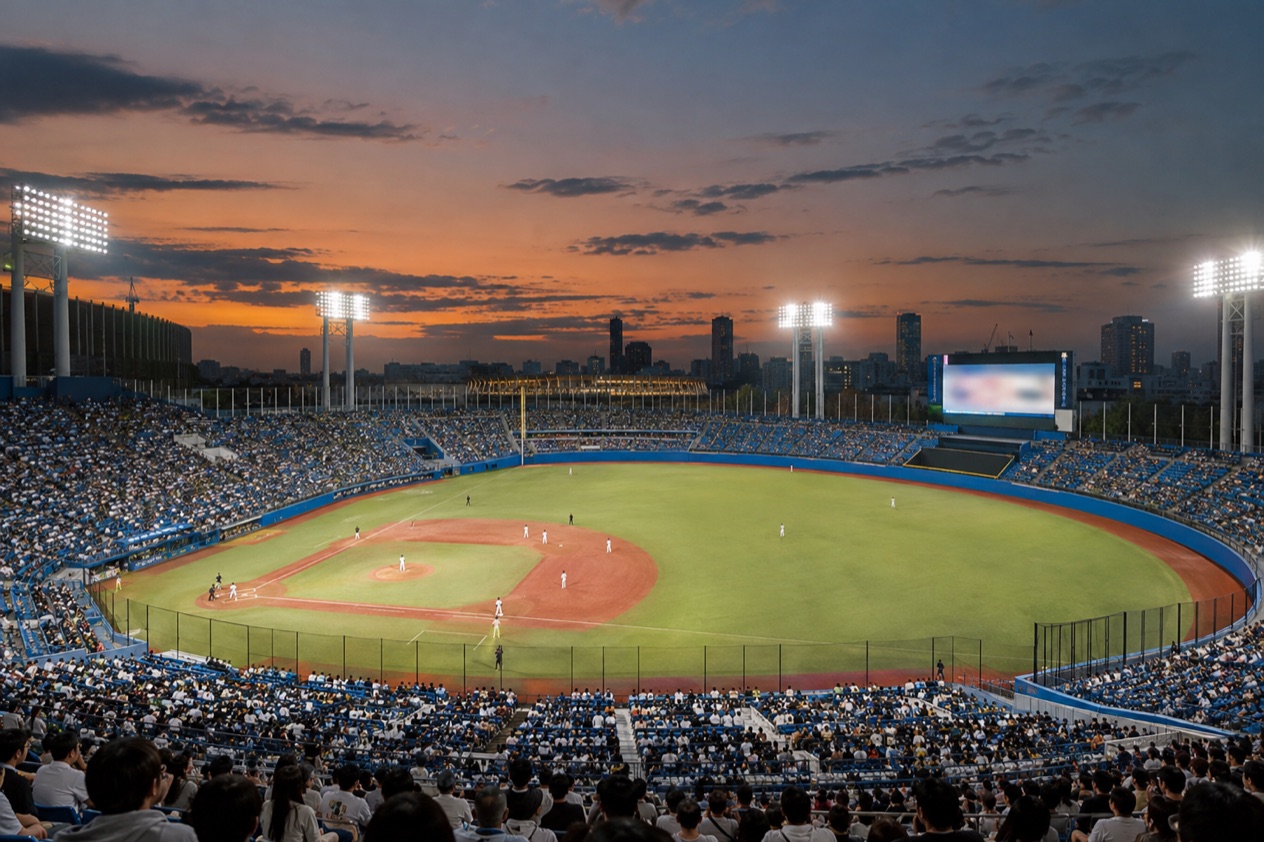
The Tokyo Yakult Swallows play at Meiji Jingu Stadium in Shinjuku, Tokyo, which has a capacity of 37,933. The Swallows are a Central League club, and a night here puts you in the middle of Tokyo with the city around you rather than out in a distant suburb.
This is a good fit for travelers who are already based in Tokyo and want a ballgame without leaving the city’s rhythm. Fans wave small umbrellas and sing along when their team scores, a ritual that has become one of the most recognizable sights of the Swallows’ home games.
Yokohama Stadium and the BayStars
Yokohama Stadium, home of the Yokohama DeNA BayStars, has a capacity of 30,000. It is smaller than the Tokyo and Nishinomiya grounds, which gives a game there a closer, more intimate feel. The BayStars also belong to the Central League.
Because the park holds fewer people, the sound of the supporters feels tight and close, and the view of the field tends to feel nearer to the action. It suits travelers who like a ballpark with a more contained atmosphere.
| Team | Stadium | Capacity |
|---|---|---|
| Tokyo Yakult Swallows | Meiji Jingu Stadium, Shinjuku, Tokyo | 37,933 |
| Yokohama DeNA BayStars | Yokohama Stadium | 30,000 |
How do you get tickets?
The details of how to buy tickets are not something we can state for every club, so the useful thing to know is what you are buying and when games happen. A pro ticket is for one game, because doubleheaders have not featured since the late 1990s, and games run six days a week, with Mondays off except for specific occasions.
That schedule gives you real choice. With 143 regular season games per team and the season running from late March or early April to October, a visitor in almost any spring, summer or early autumn week can find a home game in a city they are already visiting. Tokyo, Yokohama and Nishinomiya each have a home club in the Central League.
Choosing the game that fits your trip
Think first about the kind of evening you want. For the loudest crowd and the strongest local identity, look to the Hanshin Tigers, whose home attendance led the league in 2025. For a game inside a major city, the Swallows at Meiji Jingu fit neatly. For a smaller ballpark, the BayStars at Yokohama Stadium offer a more contained setting.
If your dates fall in July, the all-star games are a separate option, since NPB holds two or three each year. In October, the Climax Series and the Japan Series bring the season to its close, with the championship being the final act.
High school tournaments
Spring Kōshien and Summer Kōshien run on their own calendar, with the summer edition each August. Both end at Hanshin Kōshien Stadium in Nishinomiya, and the finals are carried live on NHK. If you cannot be in Nishinomiya, the national broadcast means you can still catch the final stage from wherever you are. Because these tournaments sit outside the pro schedule, they give a second reason to plan around baseball, especially in August when the pro season is also in full swing.
Good to know before you go
Plan around the calendar: games begin in late March or early April, the all-star games come in July, Summer Kōshien takes place in August and the Japan Series closes the year in October. Remember that Mondays are generally days off, so aim for another day of the week. Bring a light layer for evening games and expect to stay seated or on your feet with the crowd through the chants, since the singing is part of the show.
Sources
- Wikipedia, Baseball in Japan (https://en.wikipedia.org/wiki/Baseball_in_Japan), checked October 11, 2026
- Wikipedia, Nippon Professional Baseball (https://en.wikipedia.org/wiki/Nippon_Professional_Baseball), checked October 11, 2026
To plan your stay
- Best Time to Visit Japan: Cherry Blossoms, Autumn Colors, Weather and Festivals
- Where to Stay in Japan: Ryokan, Temple Stays, Capsule Hotels and the Best Cities to Base In
- Sending Luggage from the Airport in Japan: Hands-Free Travel, Hotel Delivery and Coin Lockers
- Know Before You Go to Japan: Entry, Money, Etiquette and Getting Around