
The moment comes at the front desk of a business hotel in Osaka or a ryokan (a traditional inn) near Kyoto, when the clerk slides the bill across the counter and a small extra line appears beside the room rate. It is a lodging tax, and in Japan it belongs to the city or prefecture where you sleep rather than to the country as a whole. Some places add it, others do not, and it is charged per guest and per night rather than per room.
Are there hotel taxes in Japan?
Yes, some local governments in Japan charge a tax on overnight stays, and it is collected by the property where you sleep. It is not a national charge that follows you from one town to the next. A traveler who stays in several cities can pay it in one, find it waived in another, and see a different line on each receipt.
The tax sits apart from the room rate. On a bill you may see it as a separate entry, often under a name such as accommodation tax or lodging tax, next to the consumption tax and, at some inns, a service charge.
How the tax reaches you
Hotels, ryokan and guesthouses act as collectors. Rather than paying a government office, you settle the amount with the property, usually at checkout together with the rest of the bill, and the property passes it on to the local authority. Nothing is filed by the traveler, and nothing is mailed afterward.
Some properties show the tax already folded into the displayed price, while others list it separately on the booking page or at the desk. When you compare two rooms on a booking site, it helps to look at what the final total includes, since two rooms with similar rates can end up with different bills once local charges are counted.
What the money is for
Local governments generally describe these taxes as funding for tourism: the upkeep of visitor facilities, promotion of the area and the work of managing crowds. That matters in a country where tourism spending is large. Total tourism consumption within Japan in 2024 amounted to 34.3 trillion yen, and the places that receive the visitors are the ones with the most reason to pay for what those visitors use.
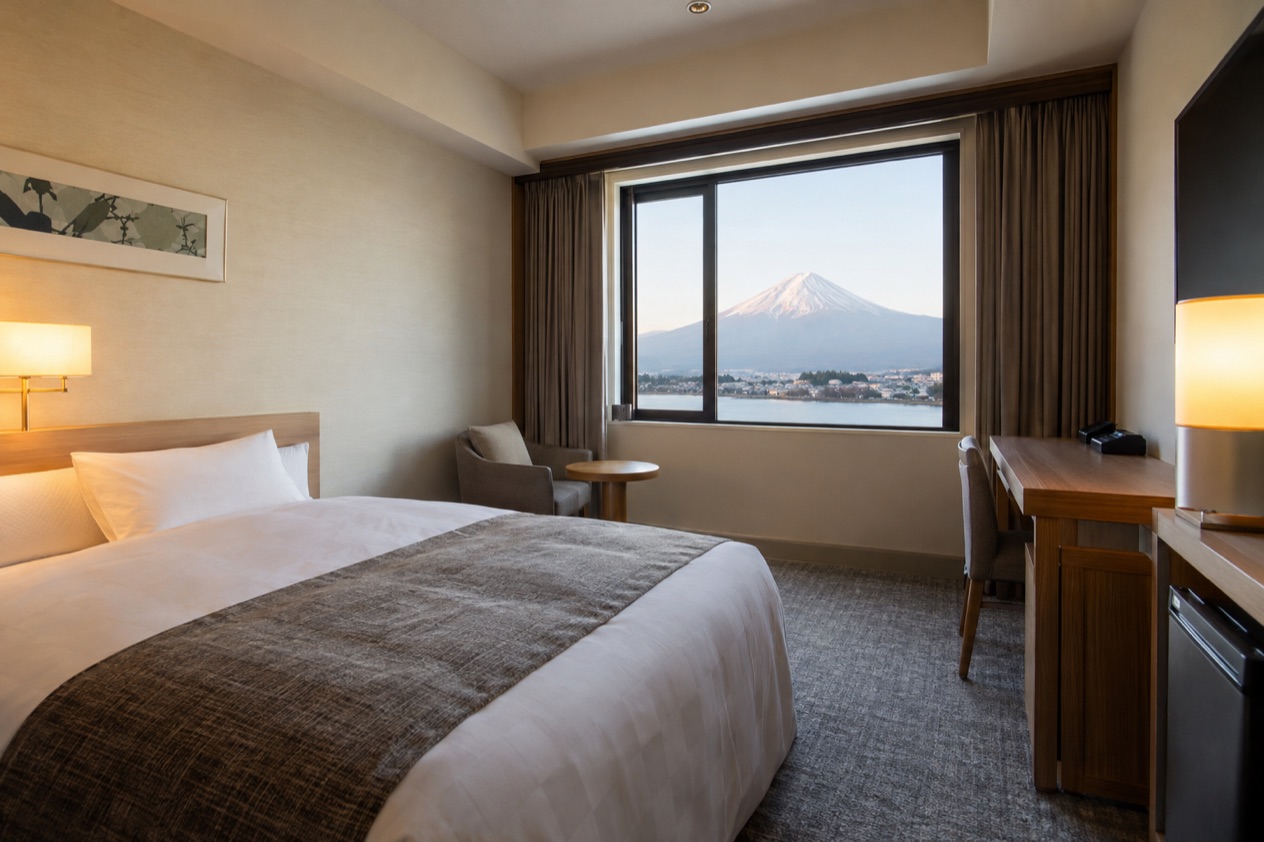
A sign of that pressure shows in Fujikawaguchiko, in Yamanashi Prefecture, where a mesh barrier was set up to block a view of Mount Fuji behind a Lawson convenience store because of disturbances caused by tourists. Towns dealing with crowds like these are the kind that look to lodging charges and other local levies to cover the costs.
Which cities charge them?
The tax follows the local government, so the answer depends on the city or prefecture of your hotel rather than on the country. Each authority decides whether to levy it and how, which is why neighboring areas can treat the same kind of room differently.
Where visitors concentrate is a useful guide to where the question arises. Japan’s most visited prefectures are Tokyo, Osaka, Chiba, Kyoto and Fukuoka, and a trip built around them means sleeping in several different jurisdictions. Each city has its own rules for the charge, so the bill in Kyoto may not look like the bill in Fukuoka.
City stays: Tokyo, Osaka and Kyoto
A first trip often strings together Tokyo, with Sensoji temple among the most popular sites in the country, and Kyoto, where Fushimi Inari shrine and Kinkakuji draw visitors. Between them sits Osaka, another of the most visited prefectures. Three beds in three cities means three local authorities, and the receipts can differ in layout as well as in amount.
Business hotels, boutique properties and ryokan all act as collectors in the same way. What changes is how each one prints the line. A large chain tends to itemize every charge, while a small family-run inn may give you a single total and explain the breakdown if you ask.
Smaller towns and day-trip bases
Travelers also sleep outside the big cities. Nikko, among the sites visitors seek out, is often a stop on its own. Himeji Castle and the Historic Monuments of Ancient Kyoto and Nara are among the 26 World Heritage Sites, so places around them see overnight guests too. In towns like these, the local authority decides whether a lodging charge applies, and a village inn may have none at all.
When a plan crosses several towns, a quick question at booking or at the desk settles it: does the rate include any local lodging tax, or is it added at checkout? Asking in simple terms, with the word for tax or the English phrase, is usually enough for the staff to point to the right line.
How much are they?
The amount depends on the local authority and on the room, and it appears on your bill in yen. Because each place sets its own charge, there is no single figure for the country, and the sensible habit is to read the total shown at booking or at checkout instead of working it out in advance.
Per person, per night
The charge is counted by guest and by night, so a couple staying three nights is billed for each person and each night rather than once for the room. This is why a family or a group sees the line grow faster than the room rate does, and why a long stay in one town adds up in a way a quick overnight does not.
Some places set the amount according to the price of the room, so that a simple room and a suite on the same night carry different charges. Others apply a flat sum per guest. Which approach a city takes is part of its local rules, and the hotel’s bill shows the result without needing you to know the formula.
Paying and reading the bill
At checkout the tax is typically settled with the room charge, in yen, at the desk. A receipt that lists the accommodation tax on its own line makes it easy to see what you paid, and it is worth keeping a copy if you share costs with travel companions, since each person’s share is simple to divide.
Travelers coming from the United States are used to hotel taxes added at the end, so the idea is familiar. The difference is that in Japan the setup varies from one local government to the next, and the line can be small enough to pass unnoticed. Reading the final total, not just the nightly rate, avoids surprises.
A note on the wider cost of a trip
Visitors have long been a major part of the economy. Travelers from China were the highest spenders in Japan by country in 2011, with an estimated 196.4 billion yen, almost a quarter of total foreign visitor expenditure, and tourists from South Korea have made up the largest number of inbound visitors several times in the past. Lodging charges are one small way local governments take part in that flow.
Good to know before you go
Money in Japan is counted in yen, and lodging charges are settled in that currency at the property, so it helps to look at the total in yen before you confirm a room. Keep your receipts from each stay, since the tax line differs from one city to the next. A trip across several prefectures, with Japan ranked 3rd out of 141 countries in the 2024 Travel and Tourism Competitiveness Report, is simple to follow on paper when each bill is saved.
Sources
- Wikipedia, Tourism in Japan (https://en.wikipedia.org/wiki/Tourism_in_Japan), checked October 11, 2026
To plan your stay
- Best Time to Visit Japan: Cherry Blossoms, Autumn Colors, Weather and Festivals
- Things to Do in Japan: Kyoto Temples, Onsen, Street Food and Day Trips
- Sending Luggage from the Airport in Japan: Hands-Free Travel, Hotel Delivery and Coin Lockers
- Know Before You Go to Japan: Entry, Money, Etiquette and Getting Around