
Somewhere between the second ryokan and the third hotel on a Japan wish list, a name keeps coming back: Hoshinoya. It appears beside a hot-spring valley, a Tokyo office district, an island village and a former prison. The name belongs to one family of hotels, each built around the history and customs of the place where it stands.
What is Hoshinoya?
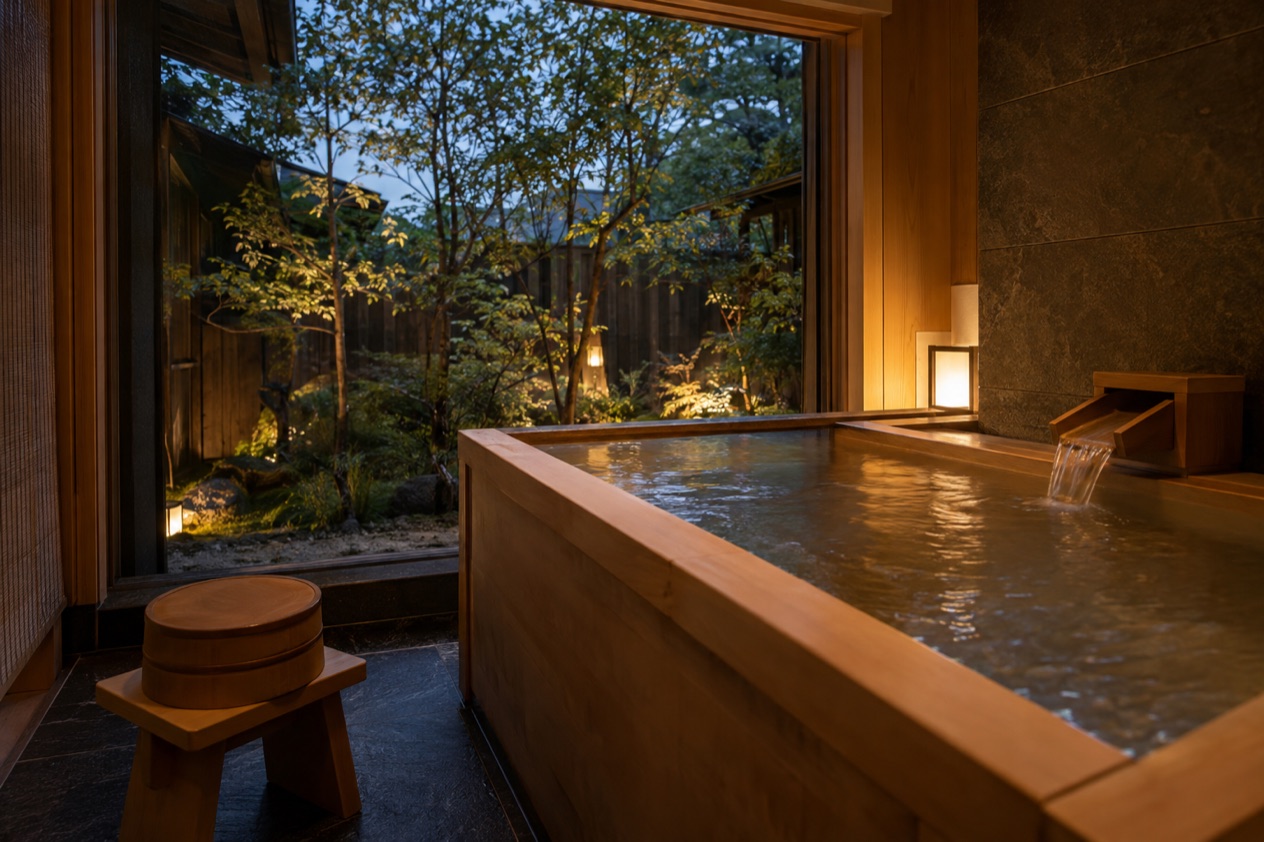
Hoshinoya is a collection of luxury hotels and resorts in which every property is designed around a theme drawn from local history, culture and traditions. Instead of one template repeated from city to city, each address tells a story about its own ground. Its promise is a singular stay, filled with moments found nowhere else and at no other time.
That puts it in the part of Japanese hospitality that the national tourism organization groups under luxury stays: unique accommodations, hotels, resorts and ryokan. Hoshinoya touches several of those categories at once. Some properties lean toward the ryokan tradition of hot springs, tatami and slow evenings, while others are city hotels, island villages or something harder to label.
A theme for each place
The idea shows in the architecture, the food, the activities and the way a day is paced. A property in a hot-spring valley is organized around bathing and tea. A property in a business district reinterprets the ryokan for a city of towers. An island property is a village of wooden houses built around the setting itself.
This is why two Hoshinoya stays can feel nothing alike. Choosing one is less about picking a hotel brand than about picking the kind of place you want to be: a mountain resort town, a historic capital, a tropical island, a hot-spring hillside abroad.
What the stays have in common
The shared thread is attention to craft and context. Japan’s luxury accommodations are often a way to meet artisanal heritage, regional drinks such as sake, shochu and awamori, and the national parks and landscapes around them, and Hoshinoya works in that spirit. Expect the setting to be part of the program, not a backdrop.
Modern ryokan in particular let visitors step into Japanese tradition and culture without a lecture. You sleep in a room shaped by that tradition, eat food that belongs to the region and spend an evening in a way that suits the place. Hoshinoya follows the same logic at every location, including the ones that do not look like a classic inn.
Three properties with their own character
Hoshinoya Karuizawa has 77 rooms, two hot-spring baths and a chaya, a traditional tea room. It is the largest example of the hot-spring resort side of the collection, a place where bathing, tea and walking between buildings fill the day.
Hoshinoya Taketomi Island is the only resort on Taketomi Island and consists of 48 wood-structure villas arranged as a mini-village. Hoshinoya Tokyo stands in downtown Marunouchi, so a ryokan-inspired stay sits within the business district itself. Together the three show how far the idea stretches, from tea room to island village to city center.
Where are its properties?
Hoshinoya properties stand in Tokyo, Fuji, Karuizawa, Kyoto, Nara Prison, Asuka, Okinawa, Taketomi Island, Guguan and Bali. Most are in Japan, two are abroad, and one is still to come. The table gives the opening years the collection has published.
| Property | Place | Opened |
|---|---|---|
| Hoshinoya Taketomi Island | Taketomi Island | 2012 |
| Hoshinoya Tokyo | Marunouchi, Tokyo | 2016 |
| Hoshinoya Bali | Bali | 2017 |
| Hoshinoya Guguan | Guguan hot springs, Taiwan | 2019 |
| Hoshinoya Okinawa | Okinawa Island | 2022 |
| Hoshinoya Asuka | Asuka | 2027 |
Japan’s cities and mountains: Tokyo, Fuji, Karuizawa, Kyoto and Nara
Tokyo is the city address, set in Marunouchi, the downtown district of office buildings beside the central station area. A stay there makes sense for a traveler who wants a ryokan mood between museum visits and long dinners. Karuizawa brings the hot-spring resort, with its baths and tea room, and it suits a stay where the property itself is the destination.
That last one stands out because the name points to a building with a past, which fits the collection’s habit of honoring local history. Each of these places has plenty to see on its own, so a Hoshinoya night can be the anchor of a trip or a single chapter in a longer route.
Asuka, the property still to come
Hoshinoya Asuka is opening in 2027, so it joins the list as a name to follow rather than a room to book today. Asuka is a place tied to early Japanese history, and the collection’s approach of building a stay around local heritage gives a good idea of what its theme will look like.
For a traveler building a Japan itinerary now, the point is simple: the Kansai and Nara area already has a Hoshinoya address in Nara Prison, and Asuka will add another. Anyone planning a heritage-focused trip there may want to keep both in mind.
The islands and the first stay abroad
Okinawa Prefecture has two Hoshinoya locations. Taketomi Island came first, a village of wooden villas that is the only resort on its island. Okinawa Island followed as the chain’s second place in the prefecture. For a trip built around the southern islands, one stay can be the quiet island village and the other a base on the main island.
Outside Japan, Bali was the chain’s first property abroad, and Guguan followed in Taiwan’s hot-spring area. Guguan is the clearest sign that the hot-spring side of the collection travels well beyond Japan’s borders. Both are worth knowing about if your itinerary includes more than one country.
How do you reach them?
You reach each Hoshinoya by going to the place where it stands, so the route is the route to Tokyo, Karuizawa, Kyoto, Nara, Okinawa, Taketomi Island, Guguan or Bali. The properties are tied to their destinations, and the destination is the first thing to plan. Each property can serve as the reason for a stop in that region.
Start from the destination
Think of the trip in two layers. The first is how you get to the city, island or hot-spring area. The second is the last stretch to the property itself, which depends on where it sits. Hoshinoya Tokyo is in the Marunouchi district, so arriving means arriving in downtown Tokyo. Karuizawa is a resort stay, and the resort is where you spend the visit.
The same reasoning applies to Kyoto, Fuji and Nara. A Hoshinoya night can slot into a rail-based itinerary through central Japan, with a day or two spent on the surrounding sights before you check in. Planning around the property’s region, not the property alone, gives you more to do and a better sense of why the hotel is built the way it is.
Islands and overseas properties
Taketomi Island is a destination in itself, and its only resort is a mini-village of villas. Reaching it means planning the trip to Okinawa Prefecture first, then the island. Hoshinoya Okinawa, on Okinawa Island, is a separate stay in the same prefecture, so the two can be paired or chosen one at a time.
Guguan and Bali are international trips. Each one belongs in a different itinerary than a classic Japan circuit, built around Taiwan’s hot springs or around Bali. If you are combining countries, treat each Hoshinoya as the anchor for its own leg.
Match the stay to the trip
A first visit to Japan fits the city and the heritage addresses: Tokyo for the ryokan idea inside a capital district, Kyoto and Nara for history. A second or third visit, once the main sights are done, opens the island villages and the hot-spring resort at Karuizawa, where the property sets the pace of the days.
Because every property has its own theme, it helps to read what each one is built around before choosing. A traveler drawn to tea rooms and baths will find a different mood from one drawn to wooden villas on an island or a stay in a restored historic building.
Good to know before you go
Hoshinoya properties sit in very different places, so what you need depends on the destination: a city, a mountain resort, a southern island or another country. Japan’s luxury stays are often paired with local food and drink, including sake, shochu and awamori, so the evening meal is part of the stay. Pack for the region you are visiting, and plan the nights around the property rather than the other way round.
Sources
- Japan National Tourism Organization, luxury accommodation (https://www.japan.travel/en/luxury/accommodations/), checked October 11, 2026
- Wikipedia, Hoshino Resorts (https://en.wikipedia.org/wiki/Hoshino_Resorts), checked October 11, 2026
- Hoshino Resorts, Hoshinoya (https://hoshinoya.com/en/), checked October 11, 2026
To plan your stay
- Best Time to Visit Japan: Cherry Blossoms, Autumn Colors, Weather and Festivals
- Where to Stay in Japan: Ryokan, Temple Stays, Capsule Hotels and the Best Cities to Base In
- Sending Luggage from the Airport in Japan: Hands-Free Travel, Hotel Delivery and Coin Lockers
- Know Before You Go to Japan: Entry, Money, Etiquette and Getting Around