
On a weekend afternoon, the traffic on Chuo-Dori disappears and people drift down the middle of the road with shopping bags, ice cream and cameras. Beneath the clock tower of an old department store, a few friends wait for each other at the lion statues of another. Ginza is Tokyo’s polished shopping and dining district, and it rewards anyone who likes to wander from window to window and sit down for a long, careful meal.
What is Ginza like?
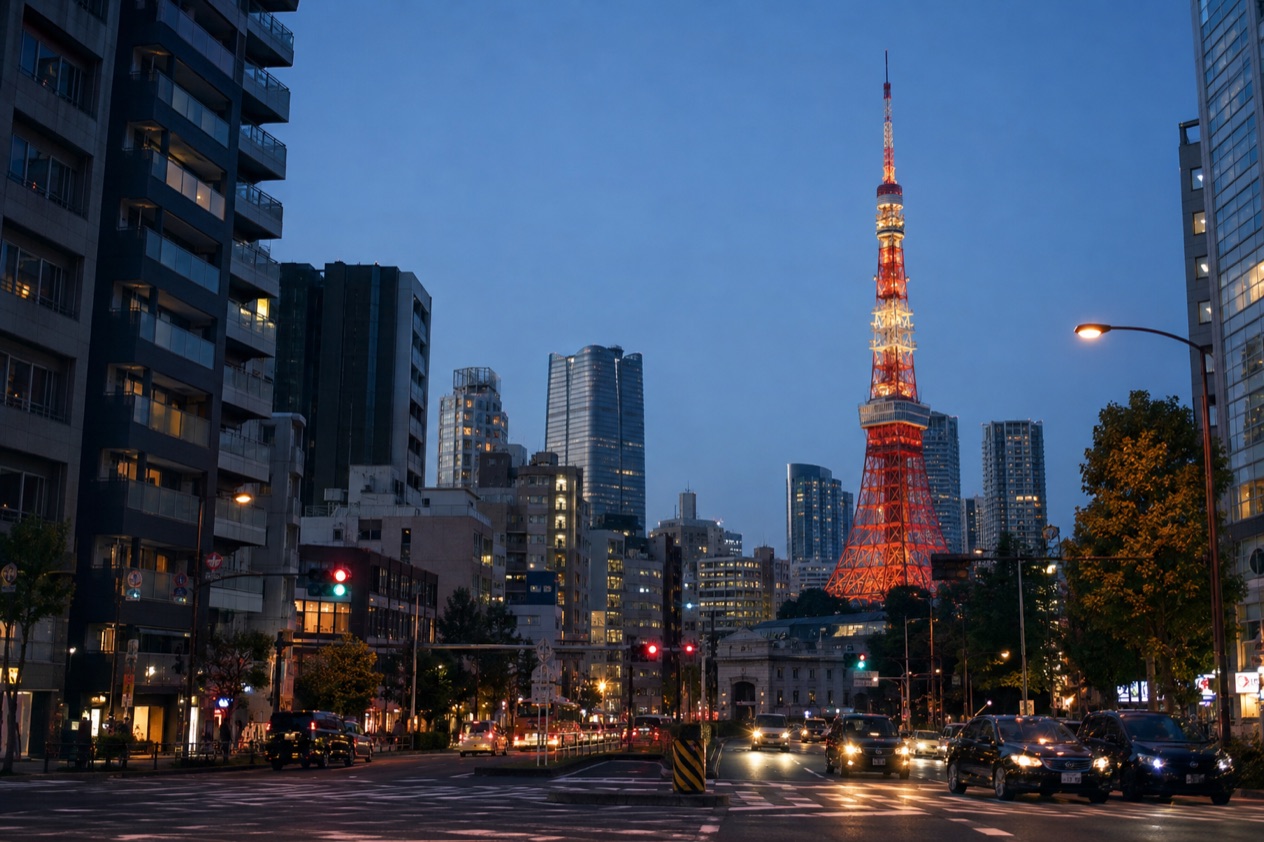
Ginza is Tokyo’s upscale downtown, a district of luxury shops, department stores, coffeehouses and high-end restaurants in the Chuo ward, and it is considered the high fashion center of the city. The streets are laid out in a tidy grid, the buildings are tall and glassy, and the window displays are arranged with the care of small museum exhibits. Walking here feels more like moving through a long, well-lit gallery than through a crowded market.
The name tells part of the story. Ginza literally means silver mint, and it comes from a silver-coin mint established here in 1612, during the Edo period. That link between money, craft and trade never quite left. Today the stores selling watches, handbags and stationery stand on the same ground where coins were once struck, and the old habit of presenting goods beautifully is still visible on every block.
People who love Ginza tend to love details. It suits travelers who enjoy department store food halls, quiet coffeehouses with dark wood counters, and restaurants where one chef cooks for a handful of guests.
It also works for anyone who simply likes to window-shop in a place where even the paper bags look considered. If your idea of a good afternoon involves browsing, a pot of tea and a good dinner, you will feel at home.
Ginza also sits in the middle of the city’s older and newer layers. Kabuki theater, with its painted faces and sweeping costumes, has a home here, and next to it stand glass towers that carry the names of fashion houses from Paris and Milan. The contrast is part of the pleasure, and you can take it in on foot without leaving a few blocks.
Things to do in Ginza
Most of what you do in Ginza happens on foot, moving between main avenues, side lanes and the lobbies of the big stores. The sights are not monuments so much as streets and buildings you read slowly, with a stop whenever something catches your eye.
Chuo-Dori on a weekend afternoon
Chuo-Dori is Ginza’s main shopping avenue, and on Saturdays and Sundays it becomes Hokosha Tengoku, often shortened to Hokoten, which means pedestrian paradise. The road is closed to cars, and people walk freely down the center of the street, past the store fronts and the crossings that are usually full of taxis. The mood turns relaxed, with families, couples and groups of friends stopping to look up at the buildings.
It is a good chance to look at the architecture, which is hard to do when you are dodging traffic. Look at the rooflines, the signs and the lit facades, and notice how each store frames its entrance. Wander off onto a side street for a coffee or a pastry, then rejoin the avenue when you want to keep walking.
| Street | Closed to road traffic |
|---|---|
| Chuo-Dori, through Ginza | Saturday and Sunday, 12:00 p.m. to 5:00 p.m. |
Wako and Mitsukoshi, two old department stores
The Wako department store occupies a building dating from 1894, and its clock tower is one of the landmarks people use to find their bearings in Ginza. Look at the building from the street first, then step inside to see how a store this old arranges its counters and displays. Even if you buy nothing, the visit is a way of seeing a piece of Ginza’s past standing among the glass towers.
Mitsukoshi is the other store to know. Two lion heads flank its entrance, and the spot is a popular meeting place, so you may see people checking their phones beside the statues while they wait. Inside, department stores in Japan are worth exploring floor by floor, from clothing to housewares to the food halls. It is a pleasant way to spend a rainy hour, since everything is under one roof.
Ginza Six, Tokyu Plaza and the Apple Store
Ginza Six is the newest shopping center in Ginza, and it holds a Dior Cafe, a place to pause between boutiques and look at how the fashion world dresses a coffee break. The complex is a good example of how the district keeps adding new buildings without giving up its polished feel.
Tokyu Plaza Ginza is another large shopping center, and it has a duty-free shop for visitors from other countries. Over in Ginza 2 chome you will find the first Apple Store outside the United States.
Beyond Ginza itself, Nihonbashi is known for its rich heritage and is the main financial district of Japan, and Roppongi and Akasaka are other districts of Tokyo with their own character. They are separate neighborhoods, and each deserves its own visit rather than a quick add-on.
Eating and drinking in Ginza
Ginza is a place for sitting down to eat well, and the range runs from counters seating a few guests to department store restaurant floors and refined coffeehouses. The district has high-end restaurants and numerous coffeehouses, so you can plan your day around meals as easily as around shopping.
Sushi and the counters of Ginza
Sushi is the dish travelers associate with Ginza, served at small counters where the chef shapes each piece in front of you and sets it down one at a time. The experience is quiet and focused, and eating it as it arrives, with your hands or chopsticks, is part of the ritual.
Sukiyabashi Jiro is a restaurant in Ginza where advance reservations are required by telephone in Japanese. Reservations open on the first day of every month for the following month’s seating, and they almost always sell out the same day.
If a place like that is out of reach, other kinds of restaurants fill the streets, serving tempura, grilled fish, noodles, and multicourse kaiseki meals that follow the season. Browse the displays outside the doors, where plastic or painted models and handwritten menus tell you what each place serves.
Coffeehouses, sweets and department store food halls
Ginza’s coffeehouses are a pleasure in themselves. Traditional kissaten serve hand-poured coffee in a hush of wood and low light, while newer cafes in the big shopping centers, such as the Dior Cafe at Ginza Six, treat the coffee break as a small fashion statement. Either is a good place to rest your feet between stores.
Department store basements, known as depachika, are an adventure of their own. Counters are lined with sweets, bento boxes, pickles, tea and neatly wrapped delicacies, and you can browse them for a picnic or a gift. They are a way to taste a lot of Japan without sitting down, and they suit travelers who like to graze rather than commit to a full meal.
Staying in Ginza
Ginza suits travelers who want to be inside the shopping and dining district, stepping out of the hotel straight into the stores and restaurants.
The lodging here follows the character of the district, with upscale hotels that match the tone of the shops and restaurants around them. The neighborhood is a place for shopping and fine dining more than for rowdy nightlife, so the evenings feel more about dinner and a stroll than about loud late-night crowds.
Compared with the neighboring areas, Ginza has a different feel. Nihonbashi is the main financial district of Japan, with a heritage character of its own, while Roppongi and Akasaka are separate districts with their own personalities. Ginza’s advantage as a base is its three subway stations, which put several lines within reach and make it simple to head out for the rest of Tokyo and return to a polished home base.
It is also a base that works well on the weekend. When Chuo-Dori closes to cars on Saturday and Sunday afternoons, the neighborhood outside your hotel becomes a long pedestrian promenade, and you can drift in and out of the stores and cafes at your own pace.
Getting to Ginza
The subway is the way into Ginza, and three stations serve the district. Ginza Station is the big one, where the Marunouchi, Ginza and Hibiya lines meet, and the neighborhood is also served by Ginza-itchome and Higashi-Ginza stations.
| Station | Lines |
|---|---|
| Ginza Station | Tokyo Metro Ginza Line (G09), Marunouchi Line (M16), Hibiya Line (H08) |
| Ginza-itchome Station | Tokyo Metro Yurakucho Line |
| Higashi-Ginza Station | Tokyo Metro Hibiya Line, Toei Asakusa Line |
Ginza Station, Yurakucho Station and Hibiya Station are connected underground, which means you can move between them without going outside. That link helps when you arrive on a line that stops at one of the neighbors, or when you want to start a walk from a different station.
Tokyo’s two airports are Haneda Airport, officially Tokyo International Airport, and Narita Airport, Japan’s largest international airport. Both connect to the city, and from either one you can continue by rail to the stations above. Once you are in Ginza, walking is how you move between the avenue, the side streets and the big stores.
Tokyo sits on Tokyo Bay, in the Kanto region, on Honshu, the largest island of Japan. The same Hibiya Line that stops at Ginza also serves Roppongi Station, so a trip between those two districts follows a single line.
Good to know before you go
Tokyu Plaza Ginza has a duty-free shop for visitors from other countries, which is worth knowing if you plan to buy gifts. Keep in mind that the car-free hours on Chuo-Dori apply only on weekends, so a weekday visit means normal street traffic.
For a restaurant that takes reservations, such as Sukiyabashi Jiro, plan well before your trip, because the booking opens by telephone in Japanese on the first day of each month for the month that follows. For everything else, the neighborhood is easy to explore on foot, one block at a time.
Sources
- Wikipedia, Ginza (https://en.wikipedia.org/wiki/Ginza), checked October 11, 2026
- Wikivoyage, Tokyo/Ginza (https://en.wikivoyage.org/wiki/Tokyo/Ginza), checked October 11, 2026
- Japan National Tourism Organization, Tokyo (https://www.japan.travel/en/destinations/kanto/tokyo/), checked October 11, 2026
To plan your stay
- Best Time to Visit Japan: Cherry Blossoms, Autumn Colors, Weather and Festivals
- Where to Stay in Japan: Ryokan, Temple Stays, Capsule Hotels and the Best Cities to Base In
- Sending Luggage from the Airport in Japan: Hands-Free Travel, Hotel Delivery and Coin Lockers
- Know Before You Go to Japan: Entry, Money, Etiquette and Getting Around