
From here, Kyushu opens in several directions: a harbor city of churches and trams, a castle town beside a smoking volcano, a hillside where steam rises from the ground, a shrine garden of plum trees. Fukuoka makes a good base for all of them, and each can be done and brought home by evening.
What are the best day trips from Fukuoka?
The best day trips from Fukuoka are Nagasaki, Kumamoto, Beppu, Kitakyushu and Dazaifu, each a different side of Kyushu and each reachable by bus, limited express or Shinkansen from the city. Together they cover history, hot springs, a castle, a shrine and a harbor, so the right choice depends on what you want to see, not on how far you want to go.
- Nagasaki, for a harbor city with a layered past, its Hidden Christian Sites and a bus that leaves Fukuoka Airport on the hour.
- Kumamoto, for a castle town in the Land of Fire, reached on the Kyushu Shinkansen from Hakata.
- Beppu, for steaming hot spring zones and the Hells, reached on the Sonic limited express.
- Kitakyushu, for the old port of Moji, Kokura Castle and the link to Honshu across the Kanmon Strait.
- Dazaifu, for a shrine known for its plum trees and a stroll that suits a half day.
Pick one or two, not all five. Nagasaki and Kumamoto each deserve a full day, Beppu is built around soaking and steam, and Dazaifu or Kitakyushu fit a lighter schedule with room for a long dinner back in Fukuoka.
The best day trips from Fukuoka
Nagasaki: harbor, churches and a long view of Japan’s history
Nagasaki sits at the western extremity of Kyushu, and buses leave Fukuoka Airport for the city every hour. A one-way trip takes about 2 hours 30 minutes, and buses end at the Shinchi bus terminal in the city center. The nearest airport to Nagasaki is actually in the nearby city of Omura, which is a different place from the one you leave from.
The city climbs steeply from its harbor, and you spend the day moving between the waterfront, the old foreign quarter, Chinatown and hillside churches. The Hidden Christian Sites in the Nagasaki region are recognized on the UNESCO World Heritage list, and they tell the story of communities that practiced their faith in secret. Food is part of the day too: champon, a noodle soup piled with seafood and vegetables, and castella, the soft sponge cake that came through the port.
Nagasaki suits travelers who like history and a city that rewards wandering. A tip: eat your champon early, before the afternoon walks along the slopes.
Kumamoto: a castle town in the Land of Fire
Kumamoto is reached by high-speed train, and the Kyushu Shinkansen serves Kumamoto Station with a direct link running through Fukuoka’s Hakata Station. The prefecture is nicknamed the Land of Fire because it lies near an active volcano, and that landscape shapes the region’s hot springs, its farm country and its cooking.
In the city, the day centers on the castle district, its dark stone walls and wide grounds, and on the garden and shopping streets around it. Food plays a big part: look for karashi renkon, lotus root stuffed with mustard and fried, and basashi, thin slices of raw horse meat that the region is known for among Japanese diners. Honmyo-ji Temple holds a Nighttime Cherry Blossom Festival on the last weekend in March, which is worth timing a spring trip around.
This trip suits people who like a castle, a garden and a regional meal, and it works well for a full day. Leave room to linger over lunch, since the local specialties are the point.
Beppu: steam, hot springs and the Hells
The Sonic limited express runs twice an hour from Fukuoka’s Hakata Station and from Kokura, stopping at Beppu before ending at Oita. Beppu is the largest hot spring resort in western Japan, with eight major hot spring zones and about 3,000 steam vents, so white plumes rise from drains and rooftops all over town.
The famous sights are the Beppu Hells, or Jigoku, thermal pools where the water reaches around 98°C and cannot be bathed in. They are for looking: vivid blue, red and milky pools, bubbling mud and clouds of vapor.
Most of them are in the Kannawa area, almost on the opposite side of the city from the train station, which shapes how you plan the day. For bathing, there are over 150 individual onsen facilities in Beppu, so you can follow the Hells with a soak.
Beppu suits anyone who wants a day built around hot water and steam, and it pairs well with a slow lunch of local steamed dishes cooked in the town’s vents. Treat the Hells and the baths as two separate parts of the day.
Kitakyushu: Kokura Castle and the Moji waterfront
Kitakyushu is a large city in Fukuoka prefecture, formed from five smaller cities: Kokura, Moji, Tobata, Wakamatsu and Yahata. Kokura Station is the penultimate stop on the JR West Sanyo Shinkansen before the Fukuoka terminus, and all Shinkansen services stop there. Kitakyushu and Shimonoseki, on Honshu, are connected by the Kanmon Bridge and the Kanmon Tunnels.
In Kokura, the castle is the center of the visit, with a keep rising over a moat and a park. In Moji, the old port, the waterfront has restored brick-era buildings and a strait busy with ships, and the town is known for yaki-curry, curry baked with cheese on top. This is a trip for travelers who like a harbor town and a castle in the same day.
| Site | Open |
|---|---|
| Kokura Castle, April to October | 09:00 to 20:00 |
| Kokura Castle, November to March | 09:00 to 19:00 |
Dazaifu: plum trees at the Tenmangu shrine
Dazaifu Tenmangu is known for its 6,000 ume (Asian plum) trees, belonging to 167 varieties. One tree, called Tobiume, stands directly to the right of the honden, the main hall. The renovations of the honden are expected to take about three years, so the building you see may be partly screened or under work.
A visit here is about walking the approach, passing under the torii, crossing the bridges over the pond and following the paths between the trees. The shrine is a place where students come to pray before exams, and little stalls along the approach sell umegae mochi, a rice cake filled with sweet bean paste and toasted on a griddle.
Day trips from Fukuoka compared
| Trip | Best for | How to go |
|---|---|---|
| Nagasaki | Harbor city, Hidden Christian Sites, champon and castella | Bus from Fukuoka Airport, every hour |
| Kumamoto | Castle, gardens, regional dishes | Kyushu Shinkansen from Hakata Station |
| Beppu | Hot spring zones, the Hells, a soak | Sonic limited express from Hakata Station, twice an hour |
| Kitakyushu | Kokura Castle, Moji waterfront, yaki-curry | Shinkansen to Kokura Station |
| Dazaifu | Plum trees, shrine walk, umegae mochi | Not covered here |
To choose, start with what you want to do. For history and a city to wander, Nagasaki. For a castle and a regional meal, Kumamoto or Kokura. For hot water and steam, Beppu. For a lighter day built around a shrine and its sweets, Dazaifu. Trips with a long bus or train ride each way are best kept to one per day, and a pair of lighter stops can fill another.
Timing matters for some outings. Honmyo-ji’s night blossom festival in Kumamoto falls on the last weekend in March, and Dazaifu’s plum trees are the reason to go when they bloom. In Fukuoka itself, the Hakata Dontaku festival is held on May 3 and 4, and Hakata Gion Yamakasa fills July, so those weeks suit staying in the city.
Tour or on your own?
Each of these trips can be made independently by public transport, since a bus, a limited express or a Shinkansen serves Nagasaki, Beppu, Kumamoto and Kitakyushu. That means the question is less about getting there and more about what happens once you arrive, and a few points help decide.
Look at how spread out the sights are. In Beppu, most of the Hells are in the Kannawa area, almost on the opposite side of the city from the train station, so you need a plan for moving between the station, the Hells and any bath. Nagasaki’s sights run across a hilly city, and the Hidden Christian Sites are a regional list, not a single stop, so decide which ones you want before leaving.
Check the details of anything you book. If a tour includes several stops, ask which ones are on the list and how much time each gets. Ask where the day starts and ends and whether it begins in Fukuoka.
A tour appeals to some travelers because someone else handles the logistics, while a day under your own control leaves room for a long lunch, a bath or a detour. Both are reasonable, and the choice rests on how much you want to plan.
Good to know before you go
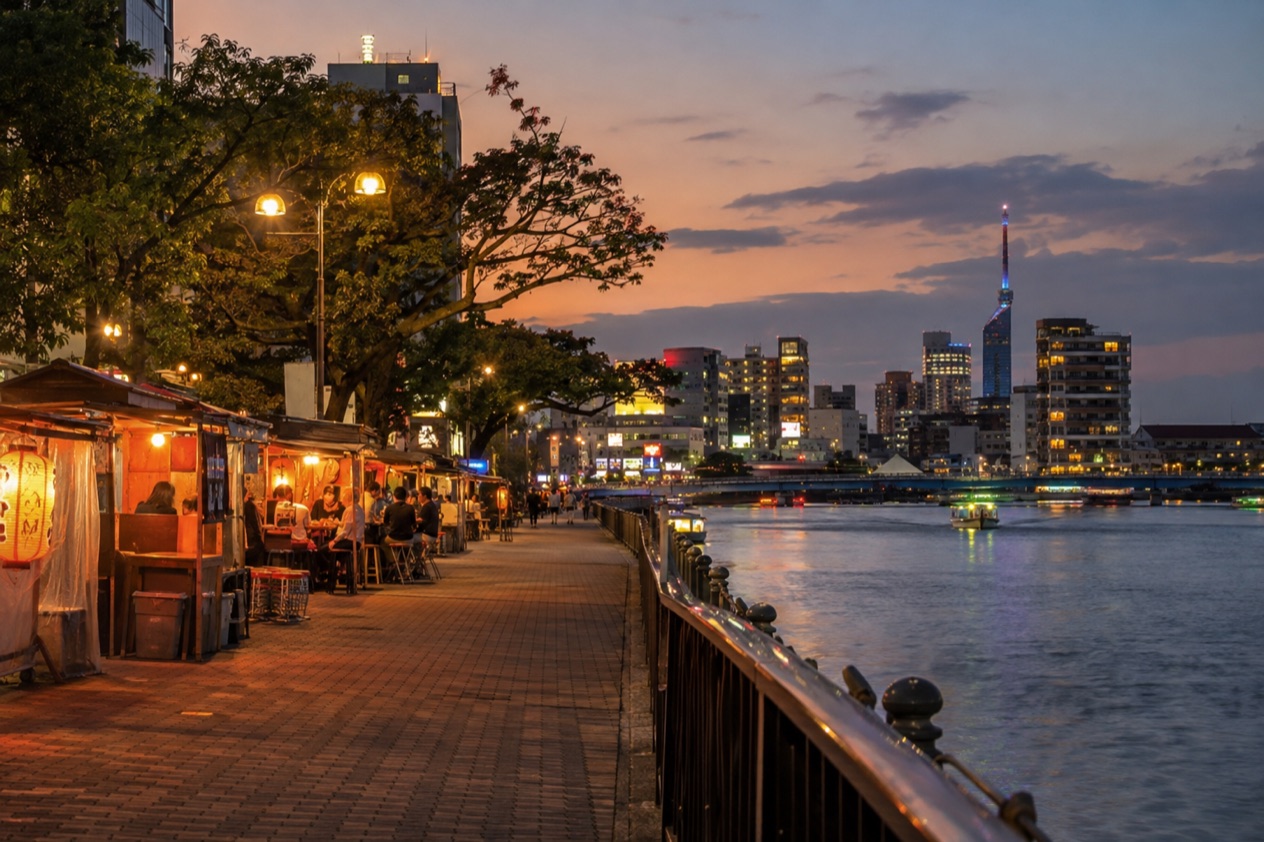
Fukuoka is a convenient place to sleep after any of these outings, since the evening food stalls along the river, which earned a spot in the New York Times’ list of places to go, are a fitting end to a day out. The city itself was named in the Food category of Lonely Planet’s Best in Travel, so there is no shortage of dinner choices when you return. Check the schedule of the last bus or train home before you commit to a late afternoon at your destination, and keep a weather eye out in the rainy and typhoon seasons, when a change of plan may be needed.
Sources
- Japan National Tourism Organization, Fukuoka (https://www.japan.travel/en/destinations/kyushu/fukuoka/fukuoka-city/), checked October 11, 2026
- Fukuoka City official tourist guide (https://yokanavi.com/en/), checked October 11, 2026
- Wikipedia, Fukuoka (https://en.wikipedia.org/wiki/Fukuoka), checked October 11, 2026
- Wikivoyage, Fukuoka (https://en.wikivoyage.org/wiki/Fukuoka), checked October 11, 2026
- Japan National Tourism Organization, Nagasaki (https://www.japan.travel/en/destinations/kyushu/nagasaki/nagasaki-city-and-around/), checked October 11, 2026
- Wikipedia, Nagasaki (https://en.wikipedia.org/wiki/Nagasaki), checked October 11, 2026
- Wikivoyage, Nagasaki (https://en.wikivoyage.org/wiki/Nagasaki), checked October 11, 2026
- Japan National Tourism Organization, Kumamoto (https://www.japan.travel/en/destinations/kyushu/kumamoto/kumamoto/), checked October 11, 2026
- Wikipedia, Kumamoto (https://en.wikipedia.org/wiki/Kumamoto), checked October 11, 2026
- Wikivoyage, Kumamoto (https://en.wikivoyage.org/wiki/Kumamoto), checked October 11, 2026
- Japan National Tourism Organization, Beppu (https://www.japan.travel/en/destinations/kyushu/oita/beppu-and-yufuin-around/), checked October 11, 2026
- Wikipedia, Beppu, Ōita (https://en.wikipedia.org/wiki/Beppu,_%C5%8Cita), checked October 11, 2026
- Wikivoyage, Beppu (https://en.wikivoyage.org/wiki/Beppu), checked October 11, 2026
- Wikipedia, Kitakyushu (https://en.wikipedia.org/wiki/Kitakyushu), checked October 11, 2026
- Wikivoyage, Kitakyushu (https://en.wikivoyage.org/wiki/Kitakyushu), checked October 11, 2026
- Wikipedia, Dazaifu Tenmangū (https://en.wikipedia.org/wiki/Dazaifu_Tenmang%C5%AB), checked October 11, 2026