
On a first morning in Fukuoka, the smell of pork bone broth drifts out of ramen shops before the shutters are fully up, and commuters stream between Hakata station and the shopping streets of Tenjin. This is a city for slow sightseeing: a park built around a pond, a shrine among plum trees, and food stalls that appear on the sidewalk as night comes on. Three days here make a plan for eaters and strollers, built around Hakata, Tenjin and one shrine town.
Is three days enough in Fukuoka?
Three days is enough for a first visit, especially for travelers who come for food, parks and a shrine rather than a long list of monuments. The third day leaves room for a trip out of town.
What three days leave out is the rest of Kyushu. Fukuoka is the largest city on the island, which makes it a natural base, but the temple with its giant reclining Buddha east of the city, the surrounding prefecture and the other Kyushu cities all need more time. If you add days, add them for those, or for a second evening at every kind of table: motsunabe, goma saba, mentaiko and more than one bowl of ramen.
Timing changes the feel of the plan. In July the air is hot and heavy with humidity, and rain falls on about a third of the days, which pushes you toward the covered arcades and long meals.
October brings mild days and fewer wet ones, so the park and the shrine walks are most pleasant then. Festival dates also matter: the Hakata Dontaku festival is held on May 3 and 4, and the Oiyama float race of Hakata Gion Yamakasa runs on July 15.
Day 1 in Fukuoka
Start in Hakata, the historical name of central Fukuoka, which still labels the main station and the local style of ramen. If you arrive by air, the subway from the Domestic Terminal reaches Hakata JR station in just two stops, so you can drop your bags and be on the street early. Spend the morning wandering the old merchant streets and the shrine and temple grounds of the Hakata side, where the heavy floats of the Yamakasa festival are the pride of the neighborhoods.
For lunch, go to a counter shop for Hakata ramen. Tonkotsu ramen began in Kurume, elsewhere in Fukuoka Prefecture, but in the city it carries the Hakata name: a cloudy pork broth, thin noodles and a pot of pickled greens and sesame at the counter.
Many diners ask for a kaedama, a second helping of noodles dropped into the same broth. In the afternoon, stroll between the station area and the river district at your own pace and browse the shops for mentaiko, the spiced pollock roe that is a gift from Fukuoka across Japan.
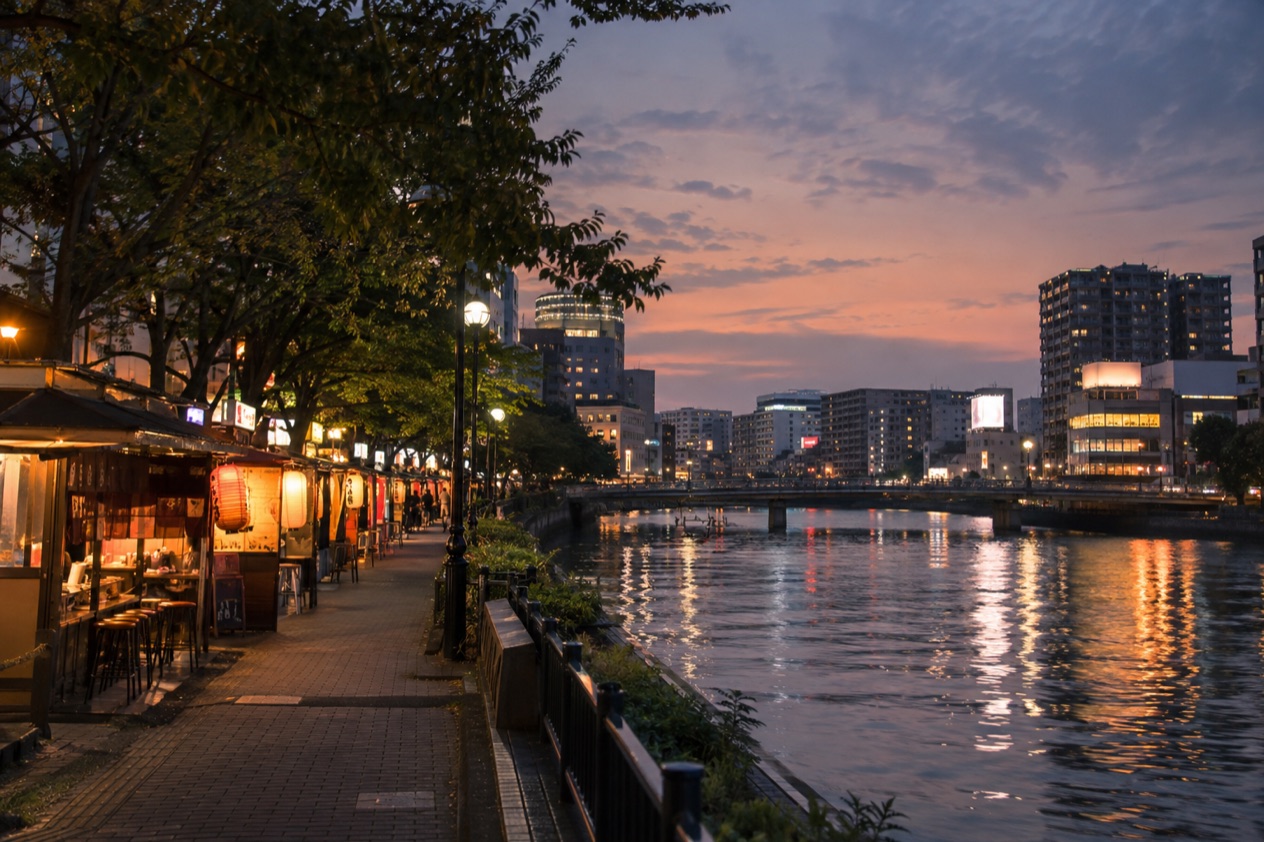
The evening belongs to the yatai. These small mobile food stalls are set up in the early evening on the walkways and are taken down late at night or in the early morning hours, and ramen stalls can be found in Tenjin and Nakasu most evenings.
Pick a stall in Nakasu along the water, squeeze onto a stool next to strangers and order whatever the cook is already making. Fukuoka’s yatai were chosen for The New York Times’ list of places to go in 2023, and the line of lanterns along the river is the reason. Stalls are small, so eat one dish and move on to the next.
Day 2 in Fukuoka
Day 2 moves west into the area around Ōhori Park in Chūō-ku, a registered Place of Scenic Beauty. A path circles the large pond, and you walk it with the city’s towers reflected in the water, stopping at the bridges and islets.
The park is also home to one of the city’s major art galleries, which makes a good indoor pause if the weather turns. Coffee from a small café near the water fills the gap between the walk and lunch.
After the park, head to Tenjin, the shopping and dining district where department stores, underground arcades and side streets full of small restaurants sit together. Lunch can be a set meal of grilled fish, or goma saba, the Fukuoka way of serving mackerel as sushi or sashimi with a sesame sauce. It is the dish locals bring up when asked what Fukuoka does differently, and it suits a long, slow lunch better than a quick one.
Spend the afternoon browsing Tenjin’s shops, then dine on motsunabe, the offal hotpot that Fukuoka is famous for. A pot of beef or pork offal simmers with cabbage, chives and garlic in a soy or miso broth, and the table shares it while it bubbles.
Order a bowl of champon noodles or a rice porridge to finish the broth. If you still have room afterward, a Tenjin yatai serves a small last bowl of ramen, and you can say you tasted both kinds of Fukuoka night food in two days.
Day 3 in Fukuoka
Day 3 goes to Dazaifu Tenmangū, a shrine town outside Fukuoka known for its 6,000 plum trees belonging to 167 varieties. The plum grounds are the draw, with paths running between trees that look different in every season, and the approach lined with small shops.
The shrine’s honden, or main hall, is expected to undergo about three years of renovation, so the main building may be under works while you walk the grounds.
Back in town, the last evening is for the meal you missed. Hakata and Tenjin both have izakaya, Japanese pubs where you order small plates and drinks, and this is the place to try mentaiko in a different form, folded into an omelet or spread on rice. Motsunabe, goma saba or the sesame-coated mackerel can also be ordered as part of a course of dishes if you did not try them already.
If you still have energy after dinner, walk the river and watch the yatai lanterns glow along the water in Nakasu. Finish with a coffee or a small bowl of ramen, the way locals close an evening here, a pattern called shime.
Where to stay for three days in Fukuoka
The area around Hakata station makes the best base for this plan. It is the railway hub, it is two subway stops from the airport’s Domestic Terminal, and it puts you on the Hakata side for Day 1 and in reach of Tenjin and Ōhori Park on Day 2. You return to the same neighborhood each night and wake up near the ramen shops that open for breakfast crowds.
Tenjin is the other good choice. It is the shopping and dining district, with department stores, side-street restaurants and a bar scene, and it sits close to Ōhori Park.
Travelers who care most about evenings out and about shopping will prefer it, and the Tenjin yatai are on your doorstep. If you plan to leave early on Day 3 for Dazaifu, Hakata station is the better starting point, because the rail connections leave from there.
Nakasu, the island district between the two, has the yatai along the water and a nightlife that runs late. It suits travelers who want to walk home after the stalls. Whichever area you choose, staying in the middle of the city rather than at the airport or on the outskirts keeps the three days about food and sightseeing rather than commuting.
What to skip if you only have three days in Fukuoka
Skip the reclining Buddha at Nanzoin. The temple, founded in 1899 and located east of Fukuoka, claims the largest reclining Buddha statue in the world, and it is worth a trip when you have a spare day. In a three-day plan, though, it would replace Dazaifu rather than join it, and Dazaifu fits the food and stroll rhythm of the city better. Keep Nanzoin for a longer stay or a rental car trip.
Skip the idea of crossing to Korea. Busan is the nearest overseas region, about 112 miles from Fukuoka, and the closeness is part of why the city has traded with the Asian mainland for so long. Spend the time instead on a second long meal in Hakata.
Skip a second Japanese city. Tokyo lies 684 miles from Fukuoka, and the rest of Kyushu has its own cities and hot spring towns, but each needs more than a day. With only three days, packing in another city turns Fukuoka into a base for train rides. Spend the extra hours in the neighborhoods you have already started to know.
Finally, skip the checklist approach to ramen. Hakata has many counters, but sampling five bowls in a day means you taste none of them. Choose one at lunch and one at a yatai, and leave room for motsunabe and goma saba, which visitors miss.
Getting around Fukuoka in three days
Most of the plan runs on foot and by subway. Hakata, Nakasu and Tenjin are the three centers of the city, and you move between them by walking or by subway, which also serves the airport’s Domestic Terminal and reaches Hakata JR station in two stops. Ōhori Park is in Chūō-ku, and you can fit it between Tenjin and a late lunch. The leg to Dazaifu on Day 3 goes by rail or by road out of the city.
An IC card, the rechargeable transit card such as Suica or ICOCA, can be used on trains, buses and boats, and also in vending machines, convenience stores and some taxis. Most regions have their own cards with different names and characters, and the cards can be used throughout Japan. If you already have one from another trip, it works here as well.
The Japan Rail Pass is offered jointly by six companies of the JR group, and it covers train travel throughout Japan. For a three-day stay centered on Fukuoka, the day trip and the city rides are the only legs you would add, so the plan itself does not hinge on it. Taxis and a rental car are also possible on the road, but the city’s core is laid out in a way that suits walking and the subway, and yatai evenings, where you may want a drink, are easier without a car.
Good to know before you go
Food is the easy place to keep costs in check. Carry some yen for the stalls and bring a transit card for the subway and trains.
Dress for the season. Winter brings cold days with some snow or sleet, and in July the air turns hot and humid with frequent rain, so a light rain jacket or umbrella is useful.
At the yatai and the shrine grounds you spend time outdoors, which makes weather part of the plan. Each evening, yatai are set up in the early evening and taken down late at night or in the early morning hours, so arrive for dinner rather than a late snack.
Sources
- Japan National Tourism Organization, Fukuoka (https://www.japan.travel/en/destinations/kyushu/fukuoka/fukuoka-city/), checked October 11, 2026
- Fukuoka City official tourist guide (https://yokanavi.com/en/), checked October 11, 2026
- Wikipedia, Fukuoka (https://en.wikipedia.org/wiki/Fukuoka), checked October 11, 2026
- Wikivoyage, Fukuoka (https://en.wikivoyage.org/wiki/Fukuoka), checked October 11, 2026
- Wikipedia, Dazaifu Tenmangū (https://en.wikipedia.org/wiki/Dazaifu_Tenmang%C5%AB), checked October 11, 2026
- Wikipedia, Yatai (food cart) (https://en.wikipedia.org/wiki/Yatai_(food_cart)), checked October 11, 2026
- Wikipedia, Hakata ramen (https://en.wikipedia.org/wiki/Hakata_ramen), checked October 11, 2026
- Wikipedia, Ramen (https://en.wikipedia.org/wiki/Ramen), checked October 11, 2026
- Wikipedia, Ōhori Park (https://en.wikipedia.org/wiki/%C5%8Chori_Park), checked October 11, 2026
- Japan Meteorological Agency (JMA), Normal values 1991-2020, monthly (https://www.data.jma.go.jp/stats/etrn/view/nml_sfc_ym.php?prec_no=82&block_no=47807), station Fukuoka, elevation 2 m, checked October 11, 2026
- Japan National Tourism Organization, IC cards, Suica, Pasmo, ICOCA, how to use (https://www.japan.travel/en/plan/ic-card/), checked October 11, 2026
- Japan National Tourism Organization, Japan Rail Pass and regional passes (https://www.japan.travel/en/plan/jr-rail-passes/), checked October 11, 2026