
Wooden sandals clack along the lanes of Dogo, and guests in cotton yukata robes drift between souvenir shops and the great bathhouse with its curved roofs. The town in Matsuyama, on the island of Shikoku, still carries the feel of an old resort where the day is organized around the bath. A visit here is part soak, part stroll, part pilgrimage to a building that seems to have stepped out of a film.
Few people arrive without knowing the story, because the bathhouse is tied to legends, to a famous animated film and to a very long history of bathing.
Is visiting Dogo Onsen worth it?
Yes, for anyone who likes the idea of a hot spring with deep roots, a town built around bathing and a building that looks like nothing else in the region. It suits travelers with a taste for Japanese culture, fans of Spirited Away, and people who want a slow evening rather than a checklist of sights.
Dogo is one of the oldest hot springs in Japan, with a history stretching back over 1000 years. Legend says an egret with an injured shin found the spring, soaked in it every day and eventually healed. That image of a bird recovering in warm water is the founding story of the place, and it explains why the town has treated its water with such respect for so long.
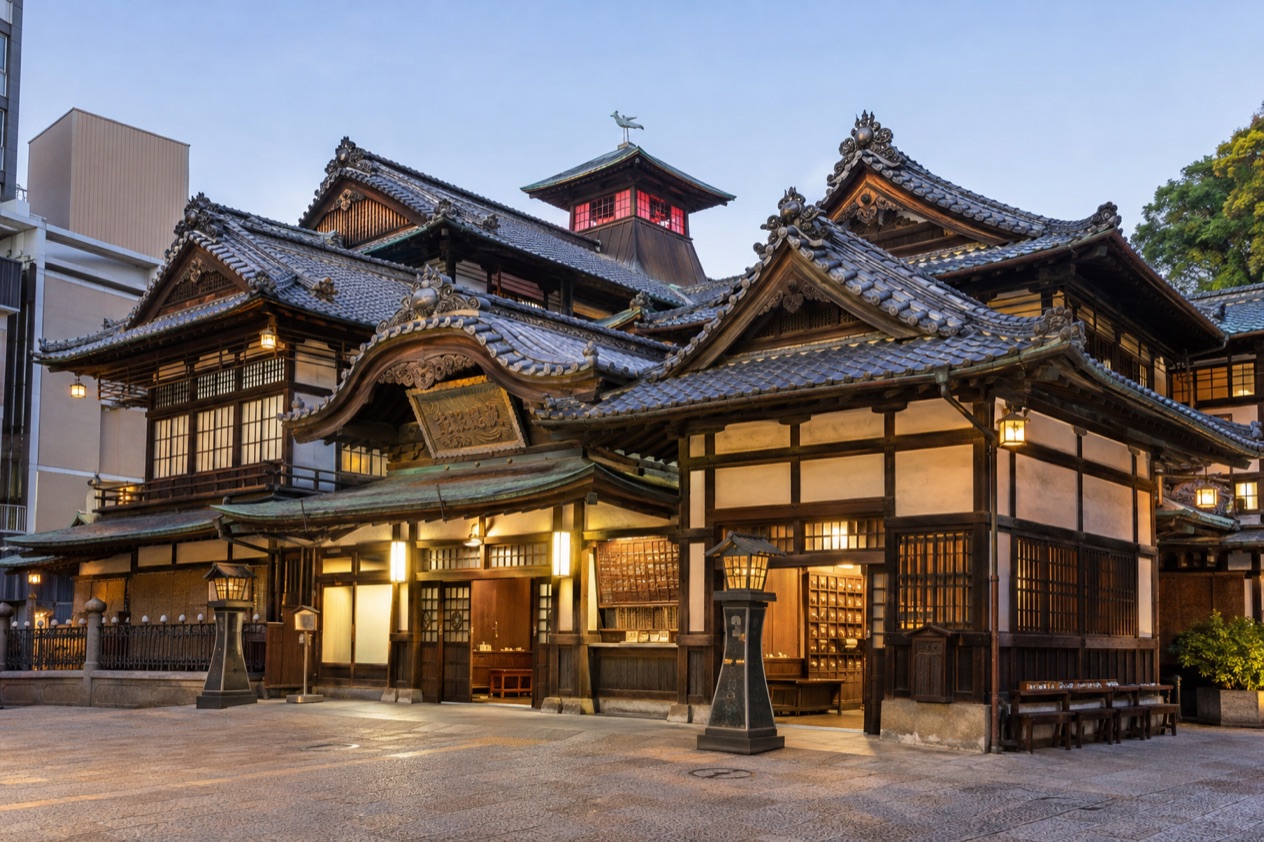
At the heart of Dogo is the Honkan, its historic public bathhouse.
Around it, the streets keep the atmosphere of a resort town, with guests from all over the country wandering in yukata after their bath. The setting is also part of Matsuyama, the largest city on Shikoku, so a day here pairs naturally with the city itself.
The honest caveat is that the bathhouse draws a crowd. It remains popular and is usually busy at peak times, such as the early evening before dinner. Visitors who enjoy that buzz will like it. Those who want a calm soak can plan around it.
What to see at Dogo Onsen
The Dogo Onsen public bathhouse
The main bathhouse, called the Honkan, was organized by Dogo Yunomachi mayor Isaniwa Yukiya and built in 1894. Its wooden bulk, layered roofs and the small tower on top give it a look that is unmistakable from the end of the street. At night the lanterns glow against the dark timber, and the whole frontage feels like a theater set that happens to be real.
Inside, the first floor, called Kami-no-Yu, holds two baths for men and one for women. The second floor, Tama-no-Yu, has one bath for men and one for women. There are four bathing plans with different rates, so the choice of floor and extras shapes the visit.
Renovation works that began in January 2019 partially closed the building, leaving two small first-floor baths open, one for each gender, while the rest of the structure was closed. The exterior and the setting remain the draw.
The Spirited Away connection
The present building partially inspired the design of Yubaba’s bathhouse in Spirited Away. You do not need to know the film to enjoy the architecture, but if you do, the resemblance is easy to feel. The tiered roofs, the ornamental gables and the lantern light all echo scenes from the story.
Fans tend to linger on the street in front, looking up at the roofline. It is a pleasant place to pause with a snack from one of the shops nearby, and the setting rewards photographs at any hour when the lights are on.
The Emperor’s bath and the stone of legend
One room inside, the Gyokuza no Ma, is a bath room for the exclusive use of the Emperor. It stands as a reminder that this humble-looking public bath has a place in the country’s history. The Gyokuza no Ma is a bath room reserved for the Emperor.
Another story lives on in a stone called Tama no ishi, exhibited at Dogo Onsen. It carries a footprint left by Sukunabikona no Mikoto, a deity who, after regaining his health in the spring, danced on the stone. Together with the egret legend, it tells you how the people of Dogo have always spoken about their water: as something that heals and revives.
The resort town around the bath
Part of the visit is simply walking. The area around Dogo retains the feeling of a resort town, with guests wandering the streets in yukata robes after their bath. The cotton robes, the sound of footwear on pavement and the steam in cool air make the evening itself a sight.
Matsuyama is also the home of the Botchan Ressha, a recreation of the old steam-powered trams, though the modern version runs on diesel. Its name comes from Botchan, the well-known novel set in this city, and the little train fits the nostalgic mood that clings to Dogo.
How to get to Dogo Onsen
Dogo is easily accessible from central Matsuyama by tram, which makes the city the natural base for visitors. The tram is the link between downtown and the hot spring district, so a stay in the center works well for a bath visit.
From the airport and the ferry port
Dogo has regular bus services to and from the air and ferry ports. That means arrivals by plane or by sea can connect with the hot spring district by bus. Regular buses connect Dogo with the airport and ferry ports.
A flight from Haneda Airport in Tokyo to Matsuyama Airport takes about 1 hour 30 minutes. Flying from Osaka in the Kansai region to Matsuyama takes no more than 50 minutes. Those two routes cover the most common ways travelers reach Shikoku by air from the main cities of Honshu.
From central Matsuyama
If you are staying in town, the tram is the connection to Dogo. Matsuyama is the prefectural capital of Ehime and the largest city on Shikoku, so it is also where the island’s travel routes gather. A hotel near the center puts you within reach of the hot spring, the old trams and the rest of the city’s sights.
Once you step off, the bathhouse is the landmark. The lanes around it fill with the rhythm of the resort district, and you will notice other visitors in yukata as you get close.
When to visit Dogo Onsen
The time of day matters more here than anything else. The baths remain popular and are usually crowded at peak times, such as the early evening before dinner. That is when guests finish sightseeing, change into yukata and head for the water, so the bathhouse and the surrounding lanes have their busiest and liveliest feel then.
If the early evening glow is what you want, the crowd comes with it. You see yukata strolls, lit lanterns and a street full of people heading to dinner. If you prefer more room in the bath, aim for another part of the day and treat the evening for the walk and the lights. The atmosphere changes noticeably between those two moods.
Seasons and the town’s mood
A hot spring suits any time of year in principle, and Dogo’s identity as a resort town does not depend on a single season. The warmth of the water is the reason the place has drawn bathers for so long, and the legends of the egret and of Sukunabikona no Mikoto are both stories of recovery in the water.
Think of the visit in terms of how you want to spend your day. A bath followed by a stroll in a yukata, then dinner in town, makes an easy rhythm for a late afternoon into evening.
Tips for your visit
Plan Dogo as an evening around the water, not a quick photo stop. The bathhouse is the reason to come, and the town around it is the reason to stay a while. Choose among the four bathing plans according to how much of the building’s character you want to experience, since the rates differ between them.
What to combine it with
Matsuyama is the largest city on Shikoku, so Dogo fits comfortably into a day or two in town. Pair the bath with a ride on the Botchan Ressha, the recreated steam-style tram, which now runs on diesel, and with time in the city center, where the tram gets you back and forth. The novel Botchan gives the city a literary flavor you can enjoy even without reading it.
Film fans can add a slow walk in front of the bathhouse for the Spirited Away resemblance. Others may prefer to wander the shopping lanes and watch yukata-clad guests pass by. The cultural thread running through the day is the same: water, healing and a long tradition of bathing.
Families and mobility
The bath layout separates men and women on each floor, with two baths for men and one for women on the first floor and one of each on the second. The Honkan has separate bathing areas for men and women. The district is a resort town built for strolling, and the stories of the egret and the dancing deity make good tales to tell children on the way.
With part of the Honkan having been closed for renovation since January 2019, with two small first-floor baths left open, one for each gender, it is worth knowing that the full interior is not what the exterior suggests. The building still rewards a look from outside, and the town offers plenty else to do on foot.
Good to know before you go
Dogo is a place for unhurried evenings, so bring the mood of a resort town with you. Guests wander in yukata after bathing, which is part of the ritual, and
The bathhouse is an old wooden building with a heavy reputation, and the legends tied to it belong to the pleasure of visiting. The rates depend on which of the four bathing plans you pick, so settle that at the entrance.
Sources
- Wikipedia, Dōgo Onsen (https://en.wikipedia.org/wiki/D%C5%8Dgo_Onsen), checked October 11, 2026
- Japan National Tourism Organization, Matsuyama (https://www.japan.travel/en/destinations/shikoku/ehime/matsuyama-and-around/), checked October 11, 2026
- Wikipedia, Matsuyama, Ehime (https://en.wikipedia.org/wiki/Matsuyama,_Ehime), checked October 11, 2026
- Wikivoyage, Matsuyama (https://en.wikivoyage.org/wiki/Matsuyama), checked October 11, 2026
To plan your stay
- Best Time to Visit Japan: Cherry Blossoms, Autumn Colors, Weather and Festivals
- Where to Stay in Japan: Ryokan, Temple Stays, Capsule Hotels and the Best Cities to Base In
- Sending Luggage from the Airport in Japan: Hands-Free Travel, Hotel Delivery and Coin Lockers
- Know Before You Go to Japan: Entry, Money, Etiquette and Getting Around