
The question usually comes up at a kitchen table in Texas, with a laptop open and two Tokyo airport codes side by side, or in a Shinjuku café where someone is already planning the trip home. Dallas/Fort Worth has a direct link to Tokyo through American Airlines, and it lands at Haneda, the airport of Tokyo city itself. What follows sorts out who flies where, which airport suits which plan, and what the trip asks of you once you have landed.
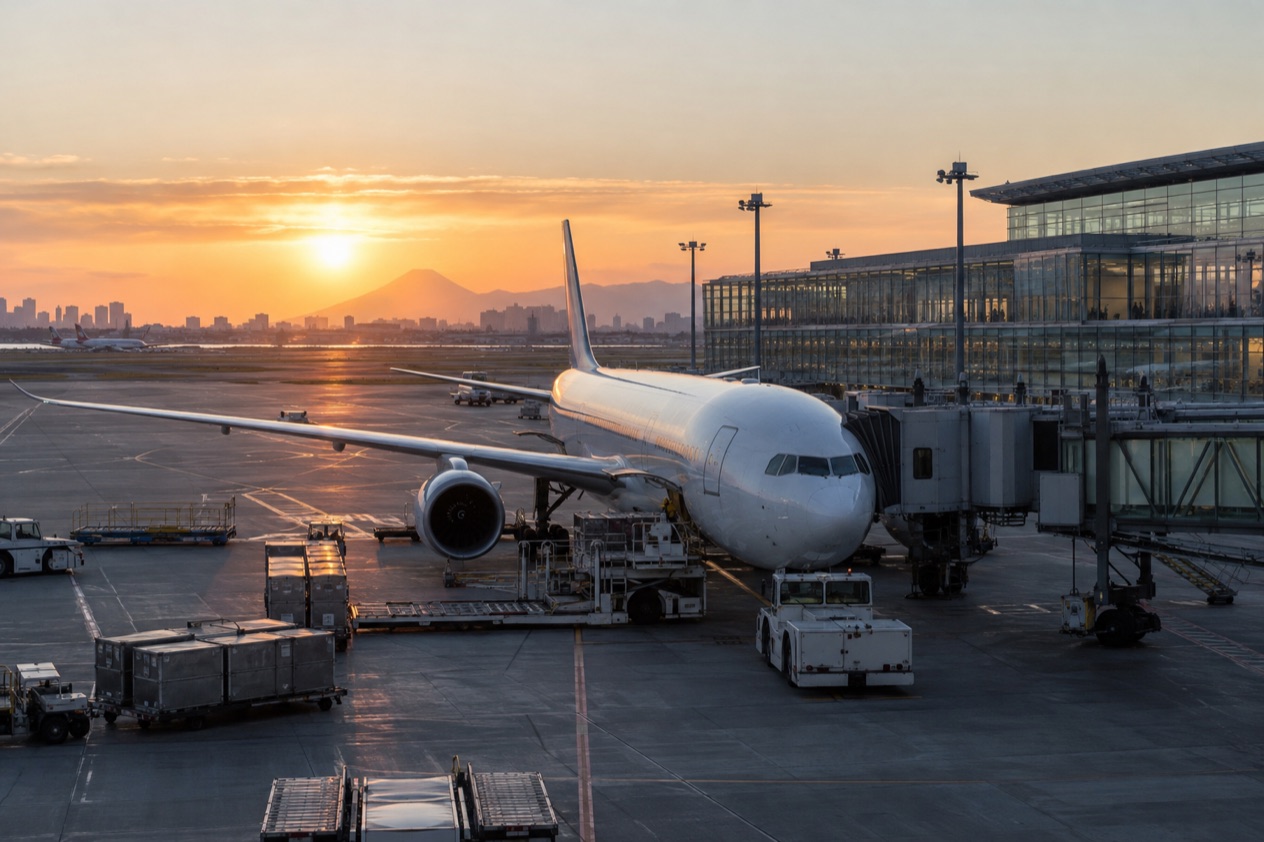
Which airlines fly from Dallas to Tokyo?
American Airlines is the carrier that links Dallas/Fort Worth and Tokyo nonstop, and it uses Haneda Airport. The same airline also flies from Haneda to Los Angeles and New York–JFK, so Haneda is a place where you can find it on several routes. Delta and United serve Haneda too, but their nonstop lists name other U.S. cities.
| Airline | Tokyo airport | Nonstop U.S. cities |
|---|---|---|
| American Airlines | Haneda | Dallas/Fort Worth, Los Angeles, New York–JFK |
| Delta Air Lines | Haneda | Atlanta, Detroit, Honolulu, Los Angeles, Minneapolis/St. Paul, Seattle/Tacoma |
| United Airlines | Haneda | Chicago–O’Hare, Guam, Los Angeles, Newark, San Francisco, Washington–Dulles |
| All Nippon Airways | Narita | Chicago–O’Hare, Honolulu, Los Angeles, San Francisco |
| Zipair Tokyo | Narita | Honolulu, Houston–Intercontinental, Los Angeles, San Francisco, San Jose (CA) |
The Dallas/Fort Worth route to Haneda
For a Texas traveler, the American Airlines flight is the one that matches the question in the title: one airline, one Tokyo airport, Dallas/Fort Worth at one end and Haneda at the other. Haneda is the airport of Tokyo city, and international flights now arrive there directly, which means the first thing you see after customs is the Tokyo end of the trip, not a long transfer from the edge of the region.
Because American also flies Haneda to Los Angeles and New York–JFK, the airline gives you a sense of how the pieces fit. Those two cities are listed beside Dallas/Fort Worth on its Haneda nonstop map, which is useful if you are comparing a trip that starts in Texas with one that starts on either coast.
Other U.S. airlines at Haneda and Narita
Delta reaches Haneda from six U.S. cities, Atlanta, Detroit, Honolulu, Los Angeles, Minneapolis/St. Paul and Seattle/Tacoma. United flies there from Chicago–O’Hare, Guam, Los Angeles, Newark, San Francisco and Washington–Dulles. Neither list includes Dallas/Fort Worth, so these are the airlines to look at when your plans start in another city.
At Narita, All Nippon Airways flies nonstop to Chicago–O’Hare, Honolulu, Los Angeles and San Francisco, with seasonal service to Vancouver. Zipair Tokyo flies to Honolulu, Houston–Intercontinental, Los Angeles, San Francisco and San Jose, and runs charter flights to Orlando. Houston is the Texas city on that list.
Flights within Japan from the two airports
If Tokyo is only the first stop, the airline maps are long. From Haneda, Air Do serves Asahikawa, Hakodate, Kushiro, Memanbetsu, Obihiro and Sapporo–Chitose. Skymark Airlines flies to Fukuoka, Kagoshima, Kobe, Naha, Sapporo–Chitose and Shimojishima. Solaseed Air serves Kagoshima, Kumamoto, Miyazaki, Nagasaki, Naha and Oita, and StarFlyer flies to Fukuoka, Kitakyushu, Osaka–Kansai and Ube.
From Narita, All Nippon Airways flies to Nagoya–Centrair, Osaka–Itami and Sapporo–Chitose, and Japan Airlines to Nagoya–Centrair and Osaka–Itami. Jetstar Japan has the longest list, with Asahikawa, Fukuoka, Kagoshima, Kochi, Kumamoto, Matsuyama, Miyazaki, Nagasaki, Naha, Oita, Osaka–Kansai, Sapporo–Chitose, Shimojishima, Shonai and Takamatsu. Peach reaches Amami Oshima, Fukuoka, Ishigaki, Kagoshima, Kushiro, Miyazaki, Nagasaki, Naha, Oita, Osaka–Kansai and Sapporo–Chitose, and Spring Japan flies to Hakodate, Hiroshima and Sapporo–Chitose.
Where do you land?
From Dallas/Fort Worth with American Airlines, you land at Haneda Airport, the airport of Tokyo city. Tokyo has a second airport, Narita, which serves international and domestic destinations, and each one gives the first hours in Japan a different shape.
Haneda, the airport of Tokyo city
Haneda is where the American Airlines flight from Dallas/Fort Worth ends, and it is where Delta and United bring their passengers from the cities on their lists. Arriving from abroad, you can reach Tokyo directly from here, and the airport itself is built around that idea: a passenger terminal with route searches for trains, monorails and buses, and taxi stands on the curb.
Two kinds of taxi stand exist at Haneda, general stands and stands for taxis dispatched through an app or reserved. If you arranged a taxi by app or by phone, you use the dedicated stand for reserved taxis. A taxi you simply hail goes to the general stand, so look at the signs before you join a line.
Narita, in Chiba Prefecture
Narita Airport sits in Chiba Prefecture, about an hour by express train from Tokyo. It serves most major international destinations and many domestic airports, which is why the All Nippon Airways, Zipair, Jetstar Japan, Peach and Spring Japan routes above start there. A flight from another U.S. city may bring you here instead of Haneda.
Three rail lines serve the airport: the Narita Sky Access line, the Keisei line and the JR line. Terminal 1 is a 5-minute walk from Narita Airport Station. Terminal 2 is a 5-minute walk from Narita Airport Terminal 2・3 Station, and Terminal 3 is a 10-minute walk from that same station.
Kansai and Nagoya, for trips that skip Tokyo
A trip that begins in Tokyo does not have to end there. Kansai International Airport makes it possible to visit Japan without going through Tokyo, and it is the gateway to western Japan, serving Kyoto, Osaka, Nara and Wakayama. It is about 50 minutes from Shin-Osaka high-speed train station and 1 hour 15 minutes from Kyoto Station.
Nagoya’s Central Japan International Airport, known as Centrair, is the hub for flights to and from cities in Asia and Japan. It also appears on the domestic lists above, since both All Nippon Airways and Japan Airlines fly to it from Narita.
What do you need for the trip?
What you need most on arrival day is a plan for the ride from the airport to your bed. The airports offer trains, monorails, buses and taxis, and the choice depends on whether you land at Haneda or Narita and where you are staying.
From Haneda to your hotel
From the Haneda passenger terminal, you can search for routes, departure and arrival times, and fares for trains, monorails and buses to your destination. Do it with your hotel address in hand, because the result depends on which part of Tokyo you are going to. A monorail, a train and a bus can all show up for the same address.
If you prefer a taxi, the two stand types matter. Passengers who arranged a car through an app or by phone must go to the dedicated stand for reserved taxis, while everyone else uses the general stands.
From Narita into the city
At Narita, the rail network is the thread to follow. The Narita Sky Access line, the Keisei line and the JR line all run to the airport, and the express trip to Tokyo takes about an hour. Match your terminal to its station: Terminal 1 has its own Narita Airport Station, while Terminals 2 and 3 share the Narita Airport Terminal 2・3 Station.
Walking from the station to the check-in hall takes a few minutes with luggage, 5 minutes for Terminals 1 and 2 and 10 minutes for Terminal 3. Keep that in mind on the day you fly home as well, since the station name on your ticket is the terminal you want.
If you are driving or planning the next flight
A few travelers will deal with Haneda’s parking. Spaces in lots P2 through P5 can be reserved in advance, and each lot has its own reservation page. That is the detail to know if a Japan-based friend or a rental car is picking you up or dropping you off.
For the onward leg, sort your domestic flights by airport before you buy. A Sapporo flight can leave from Haneda with Air Do or Skymark Airlines, or from Narita with All Nippon Airways, Jetstar Japan, Peach or Spring Japan. A Naha flight leaves Haneda with Skymark or Solaseed, or Narita with Jetstar Japan or Peach. Check which airport each ticket uses before you build the day around it.
Good to know before you go
The U.S. State Department rates Japan Level 1: Exercise Normal Precautions.
Japan runs on yen, and a rechargeable transit card such as Suica or Pasmo is the common companion for city rides once you leave the airport. Trains are generally quiet places where people keep phone calls to a minimum, and sorting your trash at the bin where you finish a drink is a habit worth picking up. Rain and typhoons depend on the season of your trip, so look at the forecast close to your departure and keep a folding umbrella in your day bag.
Sources
- Wikipedia, Haneda Airport, airlines and destinations (https://en.wikipedia.org/wiki/Tokyo_International_Airport#Airlines_and_destinations), checked October 11, 2026
- Wikipedia, Narita International Airport, airlines and destinations (https://en.wikipedia.org/wiki/Narita_International_Airport#Airlines_and_destinations), checked October 11, 2026
- U.S. Department of State, Japan travel advisory (https://travel.state.gov/content/travel/en/traveladvisories/traveladvisories/japan-travel-advisory.html)
- Japan National Tourism Organization, how to reach the city from each international airport (https://www.japan.travel/en/plan/airport-access/), checked October 11, 2026
- Japan National Tourism Organization, how to get to Japan, airports, airlines (https://www.japan.travel/en/plan/getting-to-japan/), checked October 11, 2026
- Narita International Airport, Access by rail (https://www.narita-airport.jp/en/access/train/), checked October 11, 2026
- Haneda Airport Passenger Terminal, Access (https://tokyo-haneda.com/en/access/index.html), checked October 11, 2026
To plan your stay
- Best Time to Visit Japan: Cherry Blossoms, Autumn Colors, Weather and Festivals
- Things to Do in Japan: Kyoto Temples, Onsen, Street Food and Day Trips
- Where to Stay in Japan: Ryokan, Temple Stays, Capsule Hotels and the Best Cities to Base In
- Know Before You Go to Japan: Entry, Money, Etiquette and Getting Around