
On an August night in Tokushima, on the island of Shikoku, dancers in straw hats and happi coats file through the streets to drums, flutes and shamisen, while lantern floats glow through the evenings of the Nebuta festival. Fireworks, called hanabi, light up the summer sky, and families gather for the bon dances of Obon. August is the hottest, stickiest month on the main islands, and it is also the month of Japan’s liveliest summer festivals, with Hokkaido and the sea of Okinawa as the two ways to get out of the heat.
What is the weather like in Japan in August?
August is hot and humid across most of Japan, noticeably milder in Hokkaido, and wettest in Okinawa. Honshu and Kyushu have very humid, hot and sultry summers, and the cities of the Kansai and western Japan feel it most. Sapporo is the exception, with afternoons that stay comfortably warm rather than heavy.
| Place | Average high (°F) | Average low (°F) | Precipitation (in) | Daylight on the 15th (hours and minutes) |
|---|---|---|---|---|
| Tokyo | 88.3 | 74.3 | 6.09 | 13 h 33 min |
| Kyoto | 92.7 | 76.5 | 6.06 | 13 h 31 min |
| Osaka | 92.7 | 78.4 | 4.45 | 13 h 30 min |
| Sapporo | 79.5 | 66.4 | 4.99 | 14 h 00 min |
| Okinawa (Naha) | 89.2 | 80.2 | 9.45 | 13 h 05 min |
| Fukuoka | 90.5 | 77.7 | 8.27 | 13 h 26 min |
| Kanazawa | 88.3 | 75.4 | 7.06 | 13 h 36 min |
| Hiroshima | 91.0 | 77.2 | 5.17 | 13 h 29 min |
Kyoto and Osaka share the hottest afternoons, and Osaka adds the warmest nights, so evenings bring little relief. Kyoto is the less humid of the two big Kansai cities in the air, yet it still feels sultry in a basin of temples and narrow streets. Tokyo is a notch cooler by day but damper, with humidity averaging 74 percent.
Rain in August often arrives as a passing downpour rather than a gray week. Osaka is the sunniest of the eight places, with Kanazawa close behind, while Okinawa has the most rain days and the wettest month of the group. Sapporo has the longest daylight, and its nights drop to a temperature that makes a thin layer welcome.
Where to go in Japan in August
The map splits in two this month. Cities and festivals reward the traveler who accepts the heat, and Hokkaido and Okinawa offer a different kind of summer.
Tokyo and the Kanto region
Tokyo in August is a city of evenings. Afternoons are hot and damp, so the rhythm shifts toward shaded museums, department store food halls, air-conditioned arcades and long dinners in izakaya, the casual pubs where cold beer, edamame and grilled skewers come first. Once the sun drops, neighborhoods fill with festival lanterns and the sound of taiko drums.
The calendar gives you plenty to choose from. The Asagaya Tanabata Matsuri turns a shopping arcade near JR Asagaya Station into a tunnel of bamboo and papier-mâché figures that change every time. The Fukagawa Hachiman Festival is nicknamed the water-splashing festival, because spectators douse the carriers of the portable shrines, the mikoshi, as they pass.
Later in the month, bon dances take over shrines and parks, and the Koenji Awa-odori fills the streets with dancers. This region suits travelers who want festivals on the doorstep and who plan their days around the shade, saving the open-air stops for the cooler evening hours.
Kyoto, Osaka and the Kansai region
Kyoto and Osaka are the two hottest cities of the eight in the table, and the heat is part of the August picture.
Obon gives Kyoto a particular mood, since the custom honors the spirits of ancestors and people return to family places to visit and clean graves. Lanterns, incense and quiet ceremonies mark the days at temples and neighborhood shrines. Osaka answers the heat with food: takoyaki, okonomiyaki, kakigori shaved ice in every flavor, and plenty of cold beer.
This region suits travelers who care more about culture and eating than about being outdoors for hours. Osaka’s long sunshine hours make the evenings long and bright, and Kyoto has the lower humidity of the two.
Hokkaido
Hokkaido is where Japan goes in August to cool down. Sapporo’s afternoons stay in the upper 70s, its nights are fresh, and the days are the longest of the eight places in the table. The island sits in a humid continental climate, a very different world from the sultry summers of Honshu and Kyushu.
Sapporo is a good base for a summer of beer gardens, grilled lamb called jingisukan, soup curry and seafood rice bowls. Rain falls on a fair number of days, usually in short spells, so a light jacket does double duty. August suits travelers who want to walk outdoors in comfort and eat well. It is also the month to pair a city stay with open country.
Okinawa
Okinawa is the subtropical end of the country, and in August it is hot, humid and the wettest of the eight places. Afternoons are bright and hot, nights barely cool off, and showers can sweep in often.
Between swims there is Okinawan food to look for: goya champuru with bitter melon, soki soba, sea grapes and awamori, the local spirit. The island suits beach travelers who accept humidity and a few showers, and it is the one place where August is the beach month.
What to do in Japan in August
August is a month to spend at festivals, and the biggest are dances and floats rather than flower or leaf viewing, since the blossoms and the autumn color belong to other seasons.
| Event | Dates |
|---|---|
| Awa Odori, Tokushima (Shikoku) | August 12 to 15 |
| Nebuta festival | August 2 to 7, evening processions August 2 to 6 |
| Asagaya Tanabata Matsuri, Tokyo | Early August |
| Bon-odori, Tokyo | Mid- to late August |
| Koenji Awa-odori, Tokyo | A weekend in late August |
Awa Odori in Tokushima
Awa Odori is the largest dance festival in Japan, and it draws over 540 thousand tourists every year to Tokushima Prefecture. Troupes called ren move through the streets in rows, the men with a loose, stooped step and the women in tall straw hats dancing on their toes. The refrain, a call to dance like fools and watch like fools, tells you the spirit of it.
It falls at the heart of Obon, so the whole town is in motion. Come for the evening performances, when the lanterns are lit and the music carries down every street. It suits travelers who like to be among crowds and are happy to join a lesson in the steps.
Nebuta lanterns and the Tokyo festivals
The Nebuta festival is a parade of giant illuminated figures of warriors and legendary beings, carried through the city of Aomori in the evening, with dancers called haneto leaping alongside. The brightly painted paper over a wire frame glows against the night sky.
In Tokyo, the Koenji Awa-odori brings around 10,000 dancers to the streets. A million spectators line the route. The Asagaya Tanabata decorations make a good daytime visit, and Bon-odori circles at shrines and parks let visitors step in and copy the neighbors. The Fukagawa Hachiman Festival has water thrown at the shrine carriers, so bring a change of clothes if you stand close.
Fireworks and summer evenings
Hanabi, the Japanese word for fireworks, is the sound of summer. Towns along rivers and shores hold fireworks evenings, and people arrive in cotton yukata, the light summer kimono, to eat shaved ice, grilled corn and fried noodles from stalls. Dates vary from town to town, so look for local announcements near where you stay.
Climbing Mount Fuji
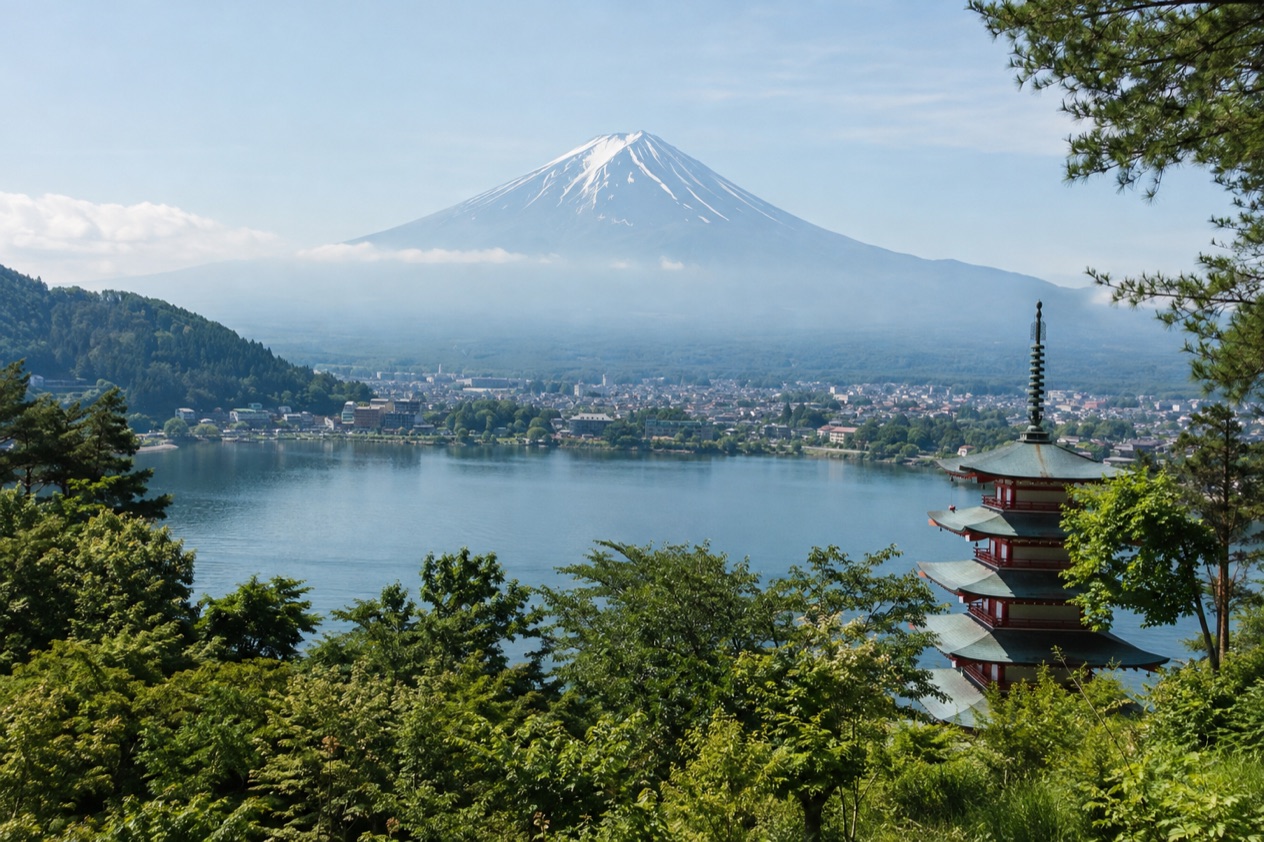
August falls inside the climbing season of Mount Fuji, which typically runs from the beginning of July to about the first week of September. Mount Fuji is the highest mountain in Japan and a UNESCO World Heritage site. In winter the trails close above the 5th and 6th stations, so summer is when the upper slopes open at all.
The climb suits people who prepare properly for a long, cold ascent. Nights on the upper mountain feel nothing like the sultry cities below, so layers matter even in August.
Is Japan busy in August?
Yes, wherever festivals gather crowds, and the busiest moments follow the calendar of Obon. The custom lasts three days, during which people return to ancestral places to visit and clean graves. That movement of families around the country gives the middle of the month a holiday feel.
The festivals bring their own throngs. Awa Odori in Tokushima draws visitors by the hundreds of thousands, and Koenji in Tokyo packs its streets. Fireworks evenings and the Nebuta processions in Aomori also gather big audiences.
Away from the festival towns, the big cities keep their usual pace. In urban areas shops are generally open from 10:00 a.m. to 8:00 p.m. every day, so evenings are a fine time to be out. In rural areas shops often close earlier, sometimes as early as 6:00 p.m. Sapporo and Hokkaido are where the cooler air draws people from the hot south, and the cities of the Kansai are where the heat keeps the afternoons empty on the streets.
What to pack for Japan in August
Packing changes with the region, from light, quick-drying summer clothes in the cities to a warm layer for Hokkaido nights and the upper slopes of Mount Fuji.
- Light, breathable clothing, because Honshu and Kyushu are hot and sultry
- A compact umbrella or light rain jacket, for passing downpours
- Sunscreen and a hat for long days outdoors
- A small towel or handkerchief for the humidity
- A warm layer for Sapporo evenings and Mount Fuji
- A swimsuit if Okinawa is on the route
Good to know before you go
Honshu and Kyushu are very humid in August, and Okinawa has the most rain days of the places in the table, so plan indoor stops for the hottest part of the afternoon. Daylight lasts well into the evening, a bit more than thirteen hours in most cities and longer in Sapporo, which makes late festivals and fireworks easy to enjoy.
During Obon, families travel and festival towns fill, so expect more people at the sites. In rural areas shops may close early, sometimes as early as 6:00 p.m., while city shops stay open into the evening.
Is August a good time to visit Japan?
August is a good time for travelers who want festivals and summer evenings and who are happy to manage the heat, and the best region this month is Hokkaido for comfort, with Okinawa for the sea.
Compared with July, Tokyo’s afternoons are a little cooler and Kyoto’s a few degrees milder, though Kyoto’s July is the wetter month. Sapporo is slightly warmer in August and drier than in September. By September Tokyo’s highs fall to the low 80s and its rain nearly doubles, so August is the sunnier choice for the capital. What is special about August is the sound of it: drums at the bon dances, the thunder of fireworks, and the sight of lanterns floating through a summer night.
Sources
- Japan Meteorological Agency (JMA), Normal values 1991-2020, monthly (https://www.data.jma.go.jp/stats/etrn/view/nml_sfc_ym.php?prec_no=44&block_no=47662), station Tokyo, elevation 25 m, checked October 11, 2026
- Computed from the date and the latitude of the place (sunrise equation, solar elevation -0.833 degrees), October 11, 2026
- Japan Meteorological Agency (JMA), Normal values 1991-2020, monthly (https://www.data.jma.go.jp/stats/etrn/view/nml_sfc_ym.php?prec_no=61&block_no=47759), station Kyoto, elevation 41 m, checked October 11, 2026
- Japan Meteorological Agency (JMA), Normal values 1991-2020, monthly (https://www.data.jma.go.jp/stats/etrn/view/nml_sfc_ym.php?prec_no=62&block_no=47772), station Osaka, elevation 23 m, checked October 11, 2026
- Japan Meteorological Agency (JMA), Normal values 1991-2020, monthly (https://www.data.jma.go.jp/stats/etrn/view/nml_sfc_ym.php?prec_no=14&block_no=47412), station Sapporo, elevation 17 m, checked October 11, 2026
- Japan Meteorological Agency (JMA), Normal values 1991-2020, monthly (https://www.data.jma.go.jp/stats/etrn/view/nml_sfc_ym.php?prec_no=91&block_no=47936), station Naha, elevation 28 m, checked October 11, 2026
- Open-Meteo Marine API, average 2015-2024, checked October 11, 2026
- Japan Meteorological Agency (JMA), Normal values 1991-2020, monthly (https://www.data.jma.go.jp/stats/etrn/view/nml_sfc_ym.php?prec_no=82&block_no=47807), station Fukuoka, elevation 2 m, checked October 11, 2026
- Japan Meteorological Agency (JMA), Normal values 1991-2020, monthly (https://www.data.jma.go.jp/stats/etrn/view/nml_sfc_ym.php?prec_no=56&block_no=47605), station Kanazawa, elevation 6 m, checked October 11, 2026
- Japan Meteorological Agency (JMA), Normal values 1991-2020, monthly (https://www.data.jma.go.jp/stats/etrn/view/nml_sfc_ym.php?prec_no=67&block_no=47765), station Hiroshima, elevation 4 m, checked October 11, 2026
- Japan National Tourism Organization, shop and attraction hours, national holidays (https://www.japan.travel/en/plan/business-hours-and-holidays/), checked October 11, 2026
- Wikipedia, Obon (https://en.wikipedia.org/wiki/Obon), checked October 11, 2026
- Wikipedia, Public holidays in Japan (https://en.wikipedia.org/wiki/Public_holidays_in_Japan), checked October 11, 2026
- Japan National Tourism Organization, summer in Japan (https://www.japan.travel/en/guide/summer-guide/), checked October 11, 2026
- Japan National Tourism Organization, festivals and events (https://www.japan.travel/en/see-and-do/festivals-and-events/), checked October 11, 2026
- Wikipedia, Hanabi (https://en.wikipedia.org/wiki/Hanabi), checked October 11, 2026
- Japan Meteorological Agency, Emergency Warnings (https://www.jma.go.jp/jma/en/Emergency_Warning/ew_index.html), checked October 11, 2026
- Japan National Tourism Organization, safety information (https://www.japan.travel/en/japan-safe-travel-information/), checked October 11, 2026
- Japan National Tourism Organization, weather and seasons in Japan (https://www.japan.travel/en/plan/weather/), checked October 11, 2026
- Wikipedia, Awa Odori (https://en.wikipedia.org/wiki/Awa_Odori), checked October 11, 2026
- Wikipedia, Climate of Japan (https://en.wikipedia.org/wiki/Climate_of_Japan), checked October 11, 2026
- Japan National Tourism Organization, Mount Fuji guide (https://www.japan.travel/en/fuji-guide/), checked October 11, 2026
- Official website for Mt. Fuji climbing, about the climb (https://www.fujisan-climb.jp/en/about/), checked October 11, 2026
- Wikipedia, Nebuta (https://en.wikipedia.org/wiki/Nebuta), checked October 11, 2026
- GO TOKYO, best things to do and see in Tokyo in August (https://www.gotokyo.org/en/story/guide/august/index.html), checked October 11, 2026
To plan your stay
- Things to Do in Japan: Kyoto Temples, Onsen, Street Food and Day Trips
- Where to Stay in Japan: Ryokan, Temple Stays, Capsule Hotels and the Best Cities to Base In
- Sending Luggage from the Airport in Japan: Hands-Free Travel, Hotel Delivery and Coin Lockers
- Know Before You Go to Japan: Entry, Money, Etiquette and Getting Around