
Stalks of bamboo creak and knock together overhead as you follow the path through the grove, and the light that reaches the ground comes down green and filtered. A few steps on, the river appears, with a long wooden-looking bridge and hills dressed in cherry trees or maples depending on the season. Arashiyama is the western edge of Kyoto where temples, gardens, a monkey-filled hill and a river meet, and it suits anyone who wants a day of walking outdoors instead of another round of city streets.
What is Arashiyama like?
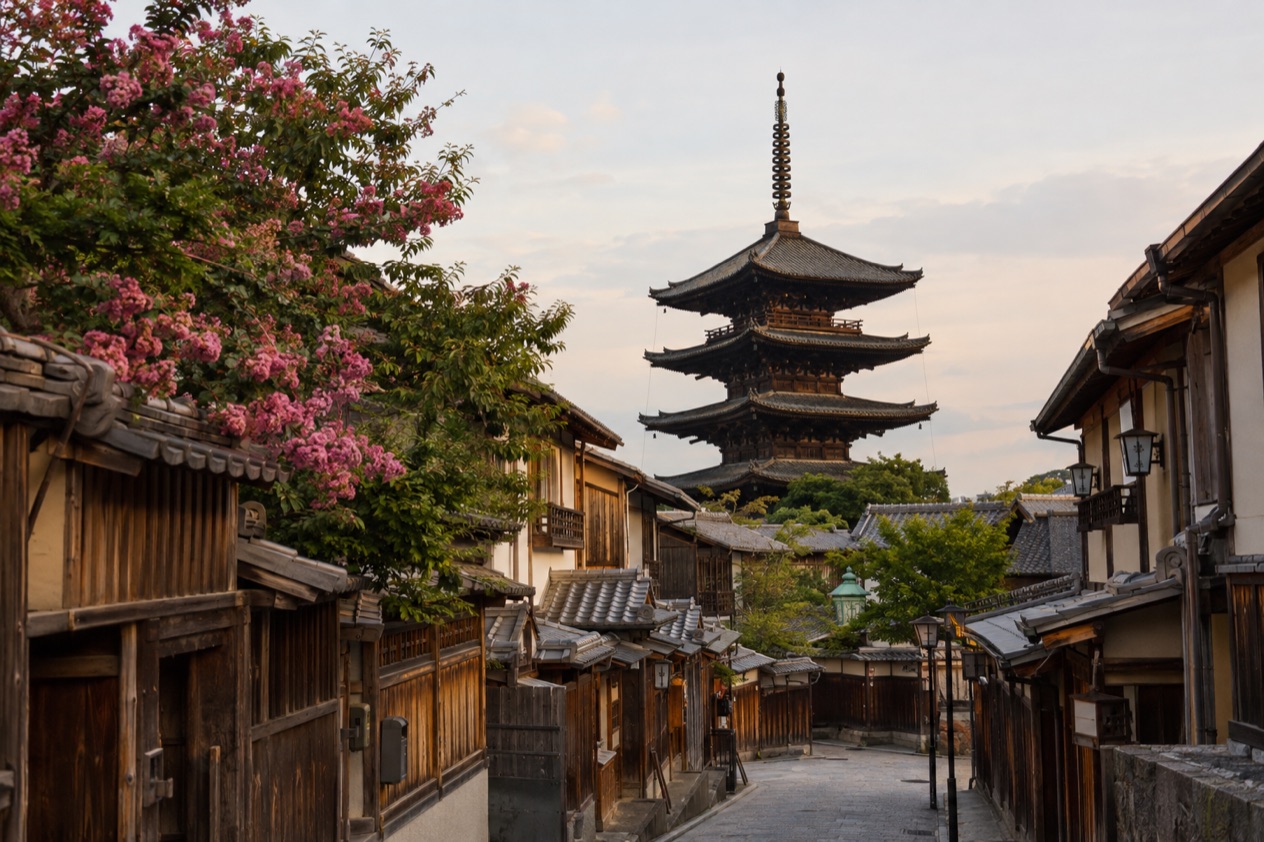
Arashiyama is a district of temples, riverbank and wooded slopes on the edge of Kyoto, where the city loosens into hillside and the landscape does most of the talking. The place has long been loved for its seasons. Cherry blossoms light up the slopes in spring, and the leaves turn red in autumn, which is the reason many visitors plan a trip around the dates.
It belongs to a city with a long memory. Kyoto served as Japan’s capital and the emperor’s residence for over 1000 years, and its traditions still show in machiya townhouses, the Gion Matsuri festival and the hanamachi districts where geishas live and work. Arashiyama adds a different note to that heritage: Zen temple gardens, a shrine among the oldest in the Kyoto area, and mountain scenery you can enter on foot.
The district rewards people who like to move between small sights rather than tick off one big one. You can pass from a bamboo path to a temple pond garden to a riverside bridge in a single outing, then climb a hill to look down on the whole scene. Garden lovers, photographers, families curious about monkeys and travelers who want some green space in a Kyoto itinerary all find a reason to come.
Things to do in Arashiyama
The main sights sit close to one another around the Saga-Arashiyama rail station and the river, so a day here is a matter of choosing a sequence. The first four stops below can be strung together, and the cruise and the outlying gardens add room to stretch the day.
The Bamboo Grove
The Arashiyama Bamboo Grove, also called the Sagano Bamboo Forest, is the sight most travelers have in mind when they say Arashiyama. A path runs between stalks that rise far above your head and sway in any breeze. The sound is as much a part of the visit as the sight: a soft rattle and creak that follows you along the way.
It works well as a moving experience rather than a place to stand. Walk it slowly, look up to watch the tops of the stalks knit together against the sky, and notice how the color of the light changes with the weather. Cloud or drizzle deepens the green, while sun sends bright shafts down onto the path. Bring a camera but leave time to put it away.
Tenryu-ji Temple
Tenryu-ji is the main temple of one of the 15 branches of the Rinzai school, a major Zen Buddhism sect in Japan. That standing explains the seriousness of the place. Halls open onto a pond garden where rocks, pines and a backdrop of wooded hills are arranged to be looked at slowly from the veranda.
Take off your shoes where the entrance asks you to, sit at the edge of a hall, and let the garden change as you look. In spring the cherry trees brighten the pond, and in autumn the maples give it a red frame. Kyoto’s tourism authorities recommend visiting shrines and temples early in the morning or late in the evening when they are less crowded, a useful thought when planning this stop.
Togetsukyo Bridge
Togetsukyo Bridge crosses the river at the heart of the district and offers notable views of cherry blossoms and autumn colors on the slopes of Arashiyama. Standing on it, you look up at hills that change from pale pink to deep green to scarlet over the year, and down at the water that threads through the valley.
Walk across it, then spend time along the bank on either side. The riverfront is where Arashiyama feels most like a place people settle into, with benches, shops and a steady flow of strollers. It is also the natural place to pause between the bamboo path and the climb to the monkeys.
Iwatayama Monkey Park
Iwatayama Monkey Park sits on the slopes of Arashiyama, on a small mountain not far from the Saga-Arashiyama rail station. The park is home to over 170 monkeys, and you meet them out in the open as you climb. At the summit, a fenced enclosure lets visitors feed the monkeys from inside, with the animals roaming freely outside the wire.
The climb pays off in two ways. You get the animals, whose behavior, from grooming to squabbling, is fun to watch, and you get a wide look back over the district and the river valley. Wear shoes you are happy to walk uphill in, and treat the monkeys the way you would any wild animal, keeping your distance and your food out of sight.
Hozu River Cruise
The Hozu River Cruise puts you on the water instead of beside it. Boats carry passengers down the river through wooded hills, and the ride is a change of pace after a morning on foot. The seasons shape the experience, from spring blossoms to the red of autumn leaves, and in winter the boats have heated seats.
| Season | Departures |
|---|---|
| Mid-March to end of November | Hourly from 09:00, last boat at 15:30 |
| Winter | 10:00, 11:30, 13:00 and 14:30 (boats with heated seats) |
Okochi Sanso and Matsunoo Taisha
Okochi Sanso, in Arashiyama, is a garden estate where cherry trees bloom in spring and the leaves turn red in autumn. It rewards a slower stop than the busier riverfront and suits visitors who like to wander paths and pause at viewpoints with a cup of tea in mind.
Matsunoo Taisha is a shrine half a mile south of Arashiyama. It was founded in 700 and is one of the oldest shrines in the Kyoto area, which gives the visit a different feel from the Zen temples: a Shinto shrine with deep roots and a setting apart from the riverside bustle.
Eating and drinking in Arashiyama
Eating in Arashiyama means small restaurants, tea shops and street stalls that cluster around the temples, the bamboo path and the riverfront. The district is a good place for a long lunch after a morning of walking, and the menu leans toward the kind of food that suits a temple town.
Tofu is the dish to look for. Kyoto is associated with it, and a set meal built around yudofu, tofu simmered in a light broth, or a spread of tofu prepared several ways suits the setting. Vegetarian Zen temple cooking, shojin ryori, follows the same spirit, with seasonal vegetables, sesame, pickles and rice arranged in small dishes. Both pair naturally with a visit to a Zen temple like Tenryu-ji.
Noodle shops offer a simpler lunch, with bowls of soba or udon in hot broth that suit a cool or wet day. Along the main lanes, stalls sell snacks to eat on the move: skewered rice dumplings called dango, croquettes, grilled rice crackers and soft-serve ice cream. Matcha, the powdered green tea, shows up in the ice cream and in cakes, roll cakes and parfaits.
Tea houses and small cafés give you a place to sit and rest your feet, often with a view of the garden or the river. For a meal that feels like an occasion, kaiseki, the multi-course dinner of small seasonal dishes, is served in the district’s more formal restaurants and ryokan. Kyoto Station, back in the city, has a full floor of ramen restaurants if you want a bowl on the way home.
Staying in Arashiyama
Arashiyama suits travelers who want to sleep beside the hills rather than in the middle of the city, and who like the idea of a ryokan, the traditional inn, as part of the trip. Lodging here leans toward that kind of stay, along with smaller guesthouses suited to a night or two.
A ryokan stay has its own rhythm. Shoes come off at the entrance, rooms have tatami mats and futons laid out for the night, and many guests wear a yukata, a light cotton robe, around the inn.
Dinner is often a kaiseki spread served in the room or a dining hall, followed by a bath if the inn has one. It is a slow way to spend an evening, and the district’s setting suits it.
Compared with the area around Kyoto Station, the choice is a matter of style. The station area has a department store, a theater and a full floor of ramen restaurants under one roof, and it is served by the Tokaido Shinkansen line, which connects to cities across Japan. Central Kyoto, with Nijo Castle and the old townhouse streets, puts you among sights from the city’s long history as a capital.
Staying in Arashiyama trades that convenience for atmosphere, with a setting of river and wooded slopes. Anyone planning a longer Kyoto trip can split the stay, a night or two in a ryokan here and the rest closer to the station or the center.
Getting to Arashiyama
Two rail routes bring you to Arashiyama from central Kyoto. The JR Sagano Line, part of the San’in Main Line, departs from Kyoto Station and stops at Saga-Arashiyama station in the district. Kyoto Station is also where the Tokaido Shinkansen arrives, so visitors coming from other Japanese cities can change there.
The other route is the Keifuku Electric Railroad, which links central Kyoto with Arashiyama Station (Keifuku). It is a different kind of ride from the JR line, and the choice between them often comes down to where in Kyoto you are starting from.
Once you arrive, the district is built for moving around on foot. The Monkey Park sits on a small mountain not far from Saga-Arashiyama station, the bridge is on the river, and the temple and bamboo path are among the sights clustered between them. From the Hozu River Cruise you finish on the water instead of on the road.
If you are building a longer day in Kyoto, Arashiyama pairs with other parts of the city, each with its own character. Central Kyoto has Nijo Castle, built in 1603 by Tokugawa Ieyasu, the first shogun of the Edo period, with its nightingale floors that chirp like birds when walked on, an old security system to warn guards of intruders. Kyoto Tower stands a few steps from the main entrance of Kyoto Station and is visible across the entire city.
Good to know before you go
Arashiyama is an outdoor district, so plan for the weather you find: a rain jacket on a gray day, a hat in sun, and shoes that suit gravel paths and a hill climb to the monkeys. At the temples, shoes come off at the entrances of the halls, and visitors keep their voices low in the gardens.
Take the same care around the animals at the Monkey Park, where visitors feed them only from inside the fenced enclosure at the summit.
Sources
- Wikipedia, Arashiyama (https://en.wikipedia.org/wiki/Arashiyama), checked October 11, 2026
- Wikivoyage, Kyoto/Arashiyama (https://en.wikivoyage.org/wiki/Kyoto/Arashiyama), checked October 11, 2026
- Japan National Tourism Organization, Kyoto (https://www.japan.travel/en/destinations/kansai/kyoto/), checked October 11, 2026
To plan your stay
- Best Time to Visit Japan: Cherry Blossoms, Autumn Colors, Weather and Festivals
- Where to Stay in Japan: Ryokan, Temple Stays, Capsule Hotels and the Best Cities to Base In
- Sending Luggage from the Airport in Japan: Hands-Free Travel, Hotel Delivery and Coin Lockers
- Know Before You Go to Japan: Entry, Money, Etiquette and Getting Around