
In June the light in Utqiagvik never goes out. Kids ride bikes along the gravel streets at midnight, whale skins hang to dry on racks, and the tundra behind town turns from brown to a patchwork of green and yellow.
The Arctic Ocean still sits cold and gray at the edge of the last town on the northern coast. It is a month for the midnight sun, for Iñupiat traditions tied to the spring whale hunt, and for the first real thaw.
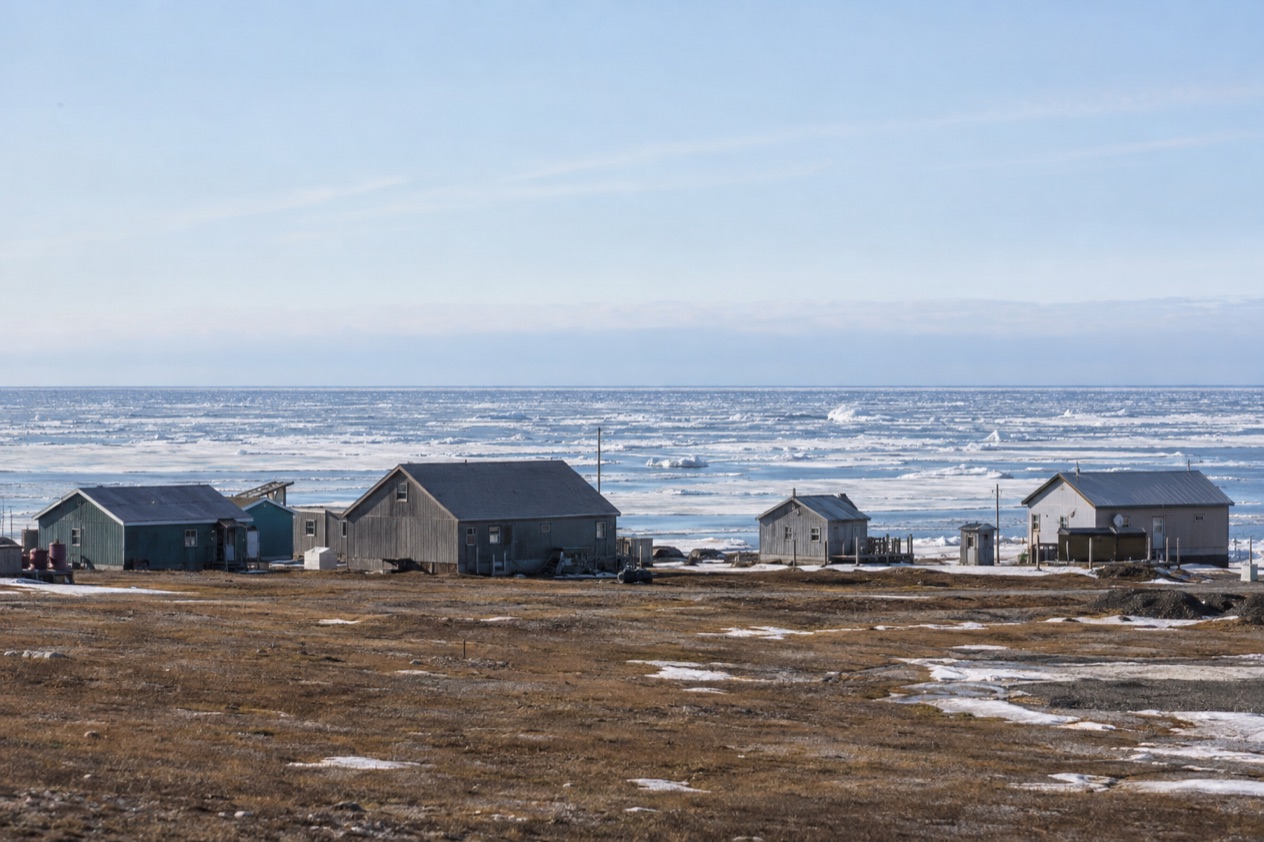
What is the weather like in Utqiagvik in June?
June in Utqiagvik is cold but no longer frozen: temperatures hover just above freezing at night and climb into the low 40s by afternoon, with very little rain and the sun up around the clock.
| Month | Average high (°F) | Average low (°F) | Precipitation (in) | Days with precipitation | Daylight on the 15th |
|---|---|---|---|---|---|
| May | 26.9 | 18.5 | 0.28 | 0.8 | 24 hours |
| June | 40.9 | 31.1 | 0.43 | 1.4 | 24 hours |
| July | 47.7 | 35.6 | 0.98 | 3.3 | 24 hours |
What this means on the ground: the snow of May is mostly gone, and the town sits in a damp thaw. Gravel roads turn to mud in places, and meltwater pools in the low spots of the tundra. A light snow flurry is still possible early in the month, but rain or snow falls on only a day or two, so most days are dry, often gray, and often foggy near the water.
Because the sun does not set, there is no real morning or evening, only a shift in mood. The hours around what would be midnight are quieter and softer, with low light that stretches long shadows across the tundra. Afternoons feel brighter but not warm. A wind off the ocean can make the air feel colder than the thermometer says, and it picks up most strongly along the shore.
Dress in layers: a warm base, a fleece, and a windproof, waterproof shell on top. Insulated boots matter more than anything, since the ground is wet. Sleeping with the sun overhead is the other adjustment. A sleep mask is as useful here as a coat.
What to do in Utqiagvik in June
The big event of the month is Nalukataq, the Iñupiat whaling festival, usually held in late June after the spring hunt ends. It is a community celebration built around the bowhead whale, and it belongs first to the town’s whaling crews and their families. If you are in Utqiagvik while it takes place, you are visiting a town that is celebrating something it has done for generations.
Spring whaling itself happens from the edge of the sea ice, and by June the work is winding down. What you notice in town is its aftermath: boats pulled up on land, skin boats resting on racks, and families sharing food. The mood is proud and busy, and it turns the whole community outward.
Nalukataq and the blanket toss
A large skin made from sewn hides is held taut by a ring of people, and one person at a time is thrown high into the air, a tradition tied to scanning the horizon for game. Crowds cheer each jump, and people watching often join in when it is their turn.
Food is the other center of the festival. Whale meat and muktuk (whale skin and blubber) are shared widely, along with other traditional dishes served to the community. This is a gathering, not a show, so the right posture for a visitor is that of a guest: watch, listen, accept food if it is offered, and ask before taking photographs of people.
The exact days shift each year with the whale hunt, so the festival is a possibility rather than a guarantee for any given week of June. If your dates miss it, the town still carries the same spirit in smaller ways, from fish drying outdoors to stories told about the spring season.
The midnight sun and the tundra
Utqiagvik is the northernmost city in the United States and the largest settlement in the country north of the Arctic Circle. In June the sun stays above the horizon day and night, and you can spend the whole 24 hours outside if you want to. A walk on the tundra at what would be midnight feels odd and wonderful, with a pale sun skimming low over the flat land.
The tundra itself is thawing. Pools of meltwater dot the land, and the first flowers and mosses begin to show color against the brown. Birds that spend the summer here are a pleasure to look for, and you may see shorebirds and waterfowl near the ponds. Wear waterproof boots, because the ground is spongy and wet.
The shore and the Arctic Ocean
The ocean is the reason for the town. In June it may still hold broken ice or lie gray and open, depending on the year, and standing on the shore looking out at the Arctic Ocean is an experience on its own. The water is far too cold for swimming, but the view is the point, with a flat horizon and the odd stretch of ice drifting by.
It makes a natural stop for photographs, and it ties back to the whaling culture that shapes the season. Wind off the water can be sharp, so keep your shell zipped.
Culture, food and quiet hours in town
The Iñupiat Heritage Center is the natural place to learn about the people of the North Slope, their language, crafts and whaling traditions. It is a good indoor stop when the wind picks up or fog rolls in. Craft items such as carved ivory, baleen work and sewn clothing reflect long skills, and buying from local artists keeps those skills alive.
Eating in town is simple and sociable. Expect a few restaurants serving burgers, Mexican dishes and other comfort food, and the occasional chance to try traditional Iñupiat foods if a local family shares them. Streets in June are active at odd hours because of the light, so a late dinner or a midnight stroll is perfectly normal here.
A two-day itinerary for Utqiagvik in June
Day 1 starts with the shore. Since the sun is up at any hour, there is no rush to catch a particular light, so begin when you feel rested. Walk to the water and the whalebone arch, look out over the Arctic Ocean, and take in the wind and the ice if any is drifting offshore.
Around midday, head into town for lunch at one of the local restaurants and spend the early afternoon at the Iñupiat Heritage Center, where the exhibits give context for everything you have seen outside. In the evening, which in June is simply a later stretch of the same bright day, stroll the streets of the residential areas and watch the town go about its summer.
Day 2 belongs to the tundra. Go out in the morning in waterproof boots and walk the thawing ground near town, looking for birds around the meltwater ponds and the first flowers. Take a thermos and a windproof layer, since the open land has no shelter from the breeze.
After lunch, browse for crafts from local artists and linger over coffee. If Nalukataq or another community gathering is taking place, join as a respectful guest in the afternoon or evening. On a foggy or rainy day, swap the tundra walk for time indoors, with more museum hours, long meals and conversation, and save the outdoor walk for a clearer moment.
Is Utqiagvik busy in June?
Utqiagvik is a small town of about 5,000 people, so even in June it feels quiet and spread out rather than crowded. The pace is set by the community and its seasons, not by tour buses or festivals built for visitors.
Where it gets lively is around Nalukataq, when families gather and the whole town turns toward the celebration. Outside that, evenings and nights are as active as days, because the light does not push anyone indoors. Visitors who come with patience and curiosity find a place that is welcoming but not built around tourism.
What to pack for Utqiagvik in June
Temperatures stay near freezing at night and cool by day, and the ground is wet, so pack for cold and damp rather than for summer.
- A windproof, waterproof jacket, because wind off the ocean is the biggest chill factor.
- Warm layers such as fleece and a wool base, for the near-freezing nights.
- Waterproof, insulated boots for muddy streets and soggy tundra.
- A hat and gloves, which are welcome even in June.
- A sleep mask, since the sun does not set.
- Binoculars, for birds on the tundra and ponds.
Good to know before you go
The main thing to plan around in June is the light: the sun does not set, so your body clock needs help. A mask or blackout curtains make a real difference to sleep, and without them it is easy to stay up far later than you meant to. The ground is also at its muddiest, so footwear matters more than anything else you bring.
Utqiagvik is a living Iñupiat community, not a theme-park stop. Ask before photographing people, and treat whaling gear, drying racks and household items as private property.
Utqiagvik in June vs May and July
Going four weeks earlier, in May, means a winter-like landscape with snow still on the ground and much colder air. The sun is already up around the clock, but the tundra is white rather than green, and the spring whale hunt is happening at the ice edge. It suits travelers who want to see the end of winter and the whaling season itself, and who can handle real cold.
The tundra is at its greenest and flowers are at their fullest, and the festival crowds of June have passed. The midnight sun continues, and it is a good fit for anyone who wants the softest weather the town offers and a quieter community.
June sits between the two: the thaw has arrived, the air is mild by Arctic standards, and Nalukataq usually falls in this window. Choose May for ice and whaling, June for the festival and the first green, and July for warmth and flowers.
Is June a good time to visit Utqiagvik?
Yes, for travelers who want the midnight sun, a living Iñupiat culture and the first thaw on the tundra, and who are happy with cold, damp air and a quiet town. It is less suited to anyone hoping for warm weather, beach time or a busy tourist scene, and a lover of long, dark nights should look at another season.
On arrival, start with the shore. Walk to the water, look at the Arctic Ocean and the whalebone arch, and get a feel for the wind and the light before you plan anything else. Then spend time at the Iñupiat Heritage Center to understand the people whose home you are visiting, and find out whether Nalukataq is happening during your stay.
What is special about June here is that the day never ends. The sun circles above the flat land, the ice breaks up on the ocean, the whaling season closes with a celebration, and a town at the top of the country spends its brightest month outdoors.
Sources
- NOAA NCEI, U.S. Climate Normals 1991-2020, monthly (https://www.ncei.noaa.gov/access/services/data/v1?dataset=normals-monthly-1991-2020&stations=USW00027502), station Barrow Post Rogers Ap, elevation 31 feet, checked October 11, 2026
- Computed from the date and the latitude of the place (sunrise equation, solar elevation -0.833 degrees), October 11, 2026
- Wikipedia, Midnight sun (https://en.wikipedia.org/wiki/Midnight_sun), checked October 11, 2026
- Wikipedia, Prudhoe Bay, Alaska (https://en.wikipedia.org/wiki/Prudhoe_Bay,_Alaska), checked October 11, 2026
- Wikipedia, Arctic Circle (https://en.wikipedia.org/wiki/Arctic_Circle), checked October 11, 2026
- Wikipedia, Polar bear (https://en.wikipedia.org/wiki/Polar_bear), checked October 11, 2026
- Wikipedia, Polar night (https://en.wikipedia.org/wiki/Polar_night), checked October 11, 2026
- Wikipedia, Climate of Alaska (https://en.wikipedia.org/wiki/Climate_of_Alaska), checked October 11, 2026