
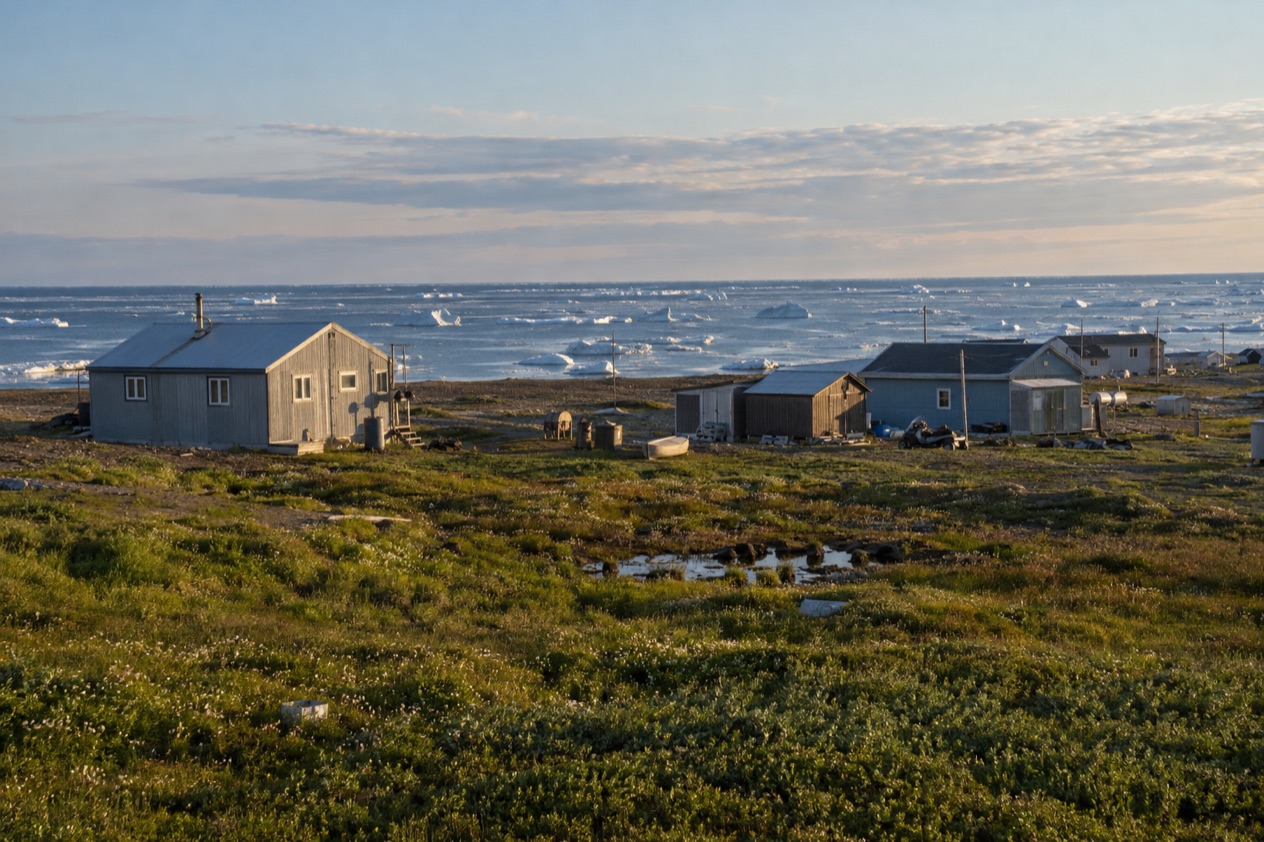
In August the tundra around Utqiagvik turns a soft green and gold, and the light lingers over the Arctic Ocean long after dinner. Wind comes off the water, gulls wheel above the gravel streets, and the town goes about its summer work with a calm that is easy to feel. It is the northernmost city in the United States, and August is a month to see it with the sun still generous but the drama of the midnight sun already behind it.
What is the weather like in Utqiagvik in August?
August in Utqiagvik is cool, damp at the edges and bright for most of the day, with a chill that never really leaves, even at midday.
| Month | Average high (°F) | Average low (°F) | Precipitation (in) | Days with precipitation | Daylight on the 15th |
|---|---|---|---|---|---|
| July | 47.7 | 35.6 | 0.98 | 3.3 | 24 hours (midnight sun) |
| August | 44.5 | 35.1 | 1.09 | 3.8 | 19 h 04 min |
| September | 37.1 | 30.3 | 0.77 | 2.1 | 13 h 41 min |
Afternoons sit in the mid-40s, which feels like a brisk autumn day farther south, and the wind off the Arctic Ocean makes it feel colder. Mornings and evenings hover just above freezing, so you want a warm layer on from the moment you step outside. Nights are no longer bright all the way through, though the evenings stretch out and the sky keeps a pale glow for a long time.
Rain here is light and brief rather than a downpour. The month is among the wetter ones of the summer, and a little snow can mix in, a dusting of less than an inch on average, mostly a hint of what is coming rather than something that stays on the ground.
What this means in practice: dress in layers, with a windproof shell on top, and plan outdoor walks for the hours when the sky is brightest. The light is the big change from midsummer.
The sun now sets, the evenings take on a softer color, and a walk along the shore after dinner feels like a real part of the day. The Arctic Ocean beside town is cold and gray-green and is a place to look at, not to get into.
What to do in Utqiagvik in August
The best of Utqiagvik in August is walking, watching and listening: the shoreline, the tundra edge, the old whaling culture of the Iñupiat and the sheer feeling of standing at the top of the country. The town sits on the Arctic coast of the North Slope, a region with no road link to the rest of the state apart from the highway between Fairbanks and Prudhoe Bay. Because the region depends mostly on waterways and small airports, everything you see here feels reached, not passed through.
The shoreline and the whale-bone arch
The Arctic Ocean is the town’s front yard, and August is a good moment to walk beside it. The gravel shore is lined with weathered driftwood, boats pulled up on the edge, and the occasional jawbone of a bowhead whale, a reminder that the town has been built around the whale for generations. The whale-bone arch is a well-known stop for photographs, framed against a wide, low horizon.
Go when the sky is clear and the wind is down, and bring a hat, because the breeze can be sharp even on a bright day. The light now has a gentler angle than in July, and the water can shift from steel gray to pewter to a pale silver within an hour. You may see ice floating offshore or a few seabirds working the waves, but nature here decides what appears, and the shoreline is worth the walk even when it offers only quiet.
This is a place for wandering rather than ticking boxes. A slow stroll along the water suits almost any traveler who likes open space, and it costs nothing but time.
Iñupiat culture and the heritage center
The Iñupiat Heritage Center is the natural place for that, with exhibits on whaling, tools, clothing and the language of the community. Only a small share of Iñupiat today speak their native tongue, which gives the effort to keep it alive extra weight.
Spend an unhurried hour or two inside, especially on a drizzly morning when the outdoors is not at its best. Looking at skin boats, carved ivory and the practical clothing built for this cold shows you how the place has been lived in for a very long time. Treat what you see with respect, and ask before photographing people.
The tundra edge and the open sky
Step away from the main streets and the land opens into a flat, low expanse of tundra, dotted with ponds and mossy hummocks. In August the plants are most colorful, with a patchwork of green, rust and gold under a very big sky. It is a landscape that rewards slow looking more than a destination.
Birds may be gathering and moving about, and you can sometimes spot waterfowl on the ponds, though sightings are never a promise. The wide horizon, the lack of trees and the wind in the grass give a sense of scale that is hard to find anywhere else in the country. Stay on the paths and roads the town uses, and keep a layer ready for when clouds slip in.
Back in town, a hot drink or a bowl of soup at a local café fits the weather. The mood is friendly and unhurried, with pickup trucks, four-wheelers and children on bikes making up the traffic, and neighbors who greet each other from across the road. Evenings are the time to walk again, since the light is soft and the wind often eases.
August is also a month of change here. The long daylight of midsummer is shortening, the days feel noticeably different from July, and the first hints of autumn creep in with cooler air and the occasional flurry. You are traveling in a season that is closing, and that gives the place a quiet, reflective feel.
A two-day itinerary for Utqiagvik in August
Day 1 is about the town and the shore. Start with a late breakfast at a local café, since the mornings are the coldest part of the day and there is no reason to rush out. By late morning, walk to the shoreline and the whale-bone arch while the light is clear, then follow the water at an easy pace, stopping where the view is best.
At midday, have a hot lunch at a diner or restaurant in town, where the menu is simple and warming. Spend the afternoon at the Iñupiat Heritage Center, which is the right choice if the drizzle returns, and gives context for everything else you see. In the evening, return to the shore for the long, soft light, which in mid-August lasts well into the night.
Day 2 turns toward the tundra. Dress in layers and bring a windproof shell, since the open ground has nothing to stop the breeze.
Have lunch back in town, then use the afternoon for whatever you missed, whether a second look at the shoreline, a browse for local crafts or a quiet hour with a book and a warm drink. Rain card: if the weather turns gray and wet, spend longer indoors, with a slow meal, a museum visit and time for conversation with people who live here. For the last evening, a final walk along the water makes a fitting close.
Is Utqiagvik busy in August?
Utqiagvik is a small, remote community, and August brings a quiet rhythm rather than a rush, since the town is reached mostly by small airports and the region has no road link to the rest of the state apart from the Fairbanks to Prudhoe Bay highway.
That isolation shapes the pace. The streets are calm, the shore is spacious and you are more likely to share the wind with a few residents than with a crowd. Visitors who do come are drawn by the idea of standing at the northernmost city in the country, and many arrive for the experience of the Arctic itself. With little else to measure it by, the best guide to the mood is the season: summer is winding down, daily life continues, and the town feels lived in rather than staged.
What to pack for Utqiagvik in August
Pack for cool, breezy, changeable weather, with the expectation that you will spend a lot of time outside in the wind. Layers matter more than any single heavy item.
- A warm insulated jacket, because afternoons stay in the mid-40s and the wind makes it feel colder.
- A windproof, waterproof shell for drizzle and gusts off the ocean.
- A warm hat and gloves, since mornings and evenings sit near freezing.
- Waterproof boots with good grip for gravel, damp tundra and puddles.
- Fleece or wool layers to add or remove as the sky changes.
- Sunglasses, because the low light on the water can be bright.
Good to know before you go
August in Utqiagvik is a month of transition, and the light is the first thing to adjust to. Daylight is long, about nineteen hours in the middle of the month, but the sun now sets again, so evenings feel different from July. A sleep mask can help if bright evenings keep you awake.
Getting here and around depends on the region’s small airports and waterways, since the North Slope is cut off from the rest of the state’s road network apart from the highway linking Fairbanks and Prudhoe Bay. Plan your days around the weather, keep your schedule flexible, and be ready to slow down.
Utqiagvik in August vs July and September
Moving the trip four weeks earlier brings you to July, when the sun does not set at all and the day has no real end. It is a little warmer and slightly drier, and the light is the main draw, with the midnight sun turning the whole town gold at hours when you would normally be asleep. If that endless daylight is why you are coming, July is the month to choose.
Four weeks later, September feels like another season. It is noticeably colder, with highs in the 30s, a good deal more snow on the ground and a drop in daylight that makes days shorter and evenings dark. The tundra browns, the air sharpens and the town settles toward winter. That suits travelers who like stark, quiet landscapes and do not mind the cold.
August sits between the two, with the light still long, the weather still tolerable and the first signs of autumn arriving. Choose July for the midnight sun, September for the cold edge of the season, and August for a balance of both.
Is August a good time to visit Utqiagvik?
Yes, August is a good time to visit Utqiagvik for travelers who want the Arctic at a gentle moment, with long evenings, cool air and a calm town.
You will enjoy it if you like open landscapes, slow walks and learning about a living Iñupiat community, and if you are comfortable dressing for wind and drizzle. It is less suited to anyone hoping for warm weather or a packed schedule of activities, and anyone chasing the full midnight sun should consider July instead.
On arrival, start with a walk along the shore to get your bearings, feel the wind and take in the scale of the horizon. Then visit the Iñupiat Heritage Center so that everything else you see has context. What is special about August here is the light on its way out: still long enough to stretch the evening, but soft and golden at the edges, and falling over a tundra at its most colorful, at the top of the country.
Sources
- NOAA NCEI, U.S. Climate Normals 1991-2020, monthly (https://www.ncei.noaa.gov/access/services/data/v1?dataset=normals-monthly-1991-2020&stations=USW00027502), station Barrow Post Rogers Ap, elevation 31 feet, checked October 11, 2026
- Computed from the date and the latitude of the place (sunrise equation, solar elevation -0.833 degrees), October 11, 2026
- University of Alaska Fairbanks Geophysical Institute, Aurora forecast (https://www.gi.alaska.edu/monitors/aurora-forecast), checked October 11, 2026
- Wikivoyage, Northern lights (https://en.wikivoyage.org/wiki/Northern_lights), checked October 11, 2026
- Wikipedia, Aurora (https://en.wikipedia.org/wiki/Aurora), checked October 11, 2026
- Visit Anchorage, northern lights viewing (https://www.anchorage.net/winter/things-to-do/northern-lights-viewing/), checked October 11, 2026
- Wikipedia, Polar night (https://en.wikipedia.org/wiki/Polar_night), checked October 11, 2026
- Wikipedia, Midnight sun (https://en.wikipedia.org/wiki/Midnight_sun), checked October 11, 2026
- Wikipedia, Alaska North Slope (https://en.wikipedia.org/wiki/Alaska_North_Slope), checked October 11, 2026
- Wikipedia, Inupiat (https://en.wikipedia.org/wiki/Inupiat), checked October 11, 2026
- Wikipedia, Prudhoe Bay, Alaska (https://en.wikipedia.org/wiki/Prudhoe_Bay,_Alaska), checked October 11, 2026
- Wikipedia, Climate of Alaska (https://en.wikipedia.org/wiki/Climate_of_Alaska), checked October 11, 2026