
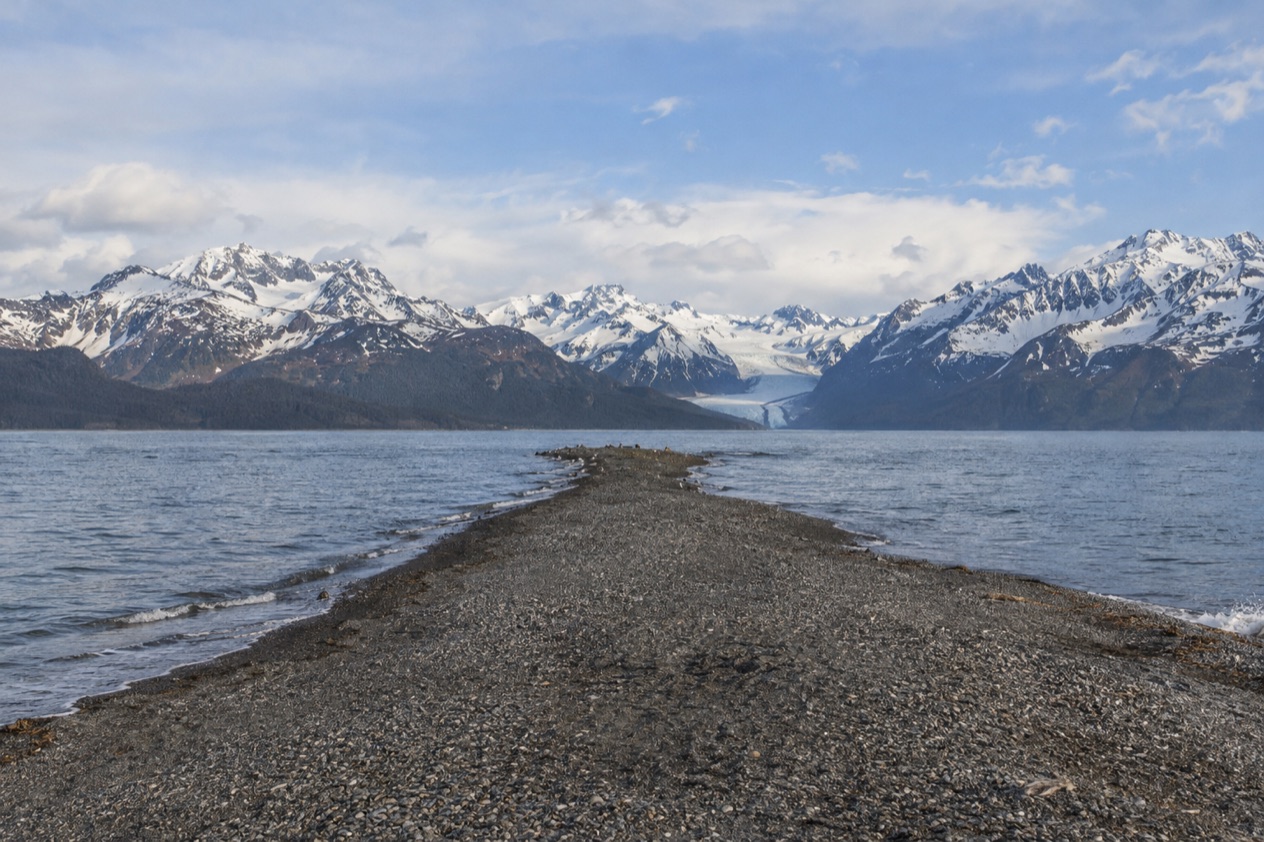
The Sterling Highway runs out of road at Homer, and the last stretch opens onto Kachemak Bay with mountains and glaciers across the water. Fishing boats rock at their moorings, floatplanes buzz overhead, and hanging baskets and peony beds soften a town that lives by the water. A few things shape a visit here: the weather you dress for, the bears you come to see from a distance, and the way a town at the end of the road works.
What should you know before visiting Homer?
Four things matter most: Homer sits at the end of the Sterling Highway on Kachemak Bay, the weather calls for layers and a waterproof shell, bear viewing and fishing are the two big draws, and the wildlife rules apply the moment you leave town. Get those straight and the rest of the trip falls into place.
Homer is on the Kenai Peninsula, 200 miles south of Anchorage, and it calls itself the Halibut Fishing Capital of the World. It is also known as the City of Peonies, a nickname that tells you the town has a gentler side than the boats and bait shops suggest. Museums, galleries and local artisans fill the downtown, and the Pratt Museum is an award-winning stop for anyone who wants the story of the bay.
What tends to surprise first-time visitors is how much of Homer’s appeal is across the water. The town is the gateway to bear viewing and the closest jumping-off point to Katmai National Park & Preserve and Lake Clark National Preserve.
Kachemak Bay State Park lies on the far shore of the bay, and a day in Homer can quickly turn into a day on a boat or a small plane. Visitors who plan only for the town itself often realize on arrival that the best parts of the area need a boat or a floatplane to reach.
The range of things to do also surprises people. Alongside fishing you find extreme adventure, helicopter glacier landings, and spas and wellness retreats.
Fees, passes and reservations
The sources for Homer give no park entry fees, pass prices or reservation rules, so there is no fee table to consult here. What they do establish is where the trips begin. Bear viewing, the most sought-after outing, runs from June through September, which is when brown bears gather on coastal sedge flats and streams.
Two operators are named in Homer for flights to glaciers and bears. Emerald Air Service is at 1344 Lake Shore Drive, and Alaska Bear Adventures with K Bay Air, LLC is at 4287 Homer Spit Road. Knowing which address belongs to which operator saves a wrong turn on the day you fly.
Kachemak Bay State Park covers over 400,000 acres and has more than 80 miles of trails, so it is large enough that a plan for the day is worth making before you leave the dock. Fishing out of Homer reaches the waters of Kachemak Bay, Cook Inlet and the Gulf of Alaska, with king salmon, halibut, lingcod, rockfish and silver salmon among the catch across the season. Those who want a charter or a flight settle the details directly with the operator, since the sources here carry no prices.
Money, phones and getting online
Homer is an American town, so everything is priced in U.S. dollars and there is no currency to exchange. The sources for Homer say nothing further about cards, cash machines or cell coverage, so this part of the trip is best left as you would handle it in any small U.S. town.
Time is one thing the sources do settle. Alaska runs on its own time zone, nine hours behind Coordinated Universal Time in winter and eight hours behind during daylight saving time. The clocks change on the second Sunday in March and go back on the first Sunday in November, so a trip in early spring or early November may catch the change.
If your plans include the road in, the Alaska 511 website carries road conditions and is worth a look before you leave Anchorage. It sorts roads into categories from Good and Fair to Difficult, Very Difficult, Hazardous and Road Closure, and it also carries a category for No Winter Maintenance. The Alaska Department of Transportation has partnered with Waze to publish incidents and closures that Waze users report.
Getting around and staying connected
Homer is at the terminus of the Sterling Highway, 200 miles south of Anchorage, so the town is a place where the road ends and the water begins.
The Alaska 511 map is the tool for checking the way in. On the map page you can add a camera to My Cameras by clicking a camera icon and then the My Cameras button in the camera popup, which lets you keep a few views on one screen. Combined with the road condition categories, it gives a fair picture of what the highway looks like before you set out.
Within the area, boats and small aircraft do much of the work of getting around. Floatplanes and helicopters carry visitors to the bear viewing areas and glaciers, and the two named operators are based in Homer itself. Glacier Lake Trail, which is 3.2 miles long and easy with very little elevation gain, leads to Grewingk Glacier Lake in Kachemak Bay State Park, a reminder that the best walking in the area starts across the bay.
Weather, daylight and wildlife
Dress in layers and carry a backpack, because Alaska weather changes during a single outing. From spring to early fall temperatures run from 50 to 70 degrees Fahrenheit, with possible rain and wind. The outer layer should be a fully waterproof and breathable shell with a hood, which keeps you warm when it is windy and dry when it rains.
Homer’s own figures show how the year moves. January is cold, with highs near freezing and lows in the teens. April is still cool, and July brings the mildest days, with highs in the low 60s and lows in the upper 40s. October is damp and chilly, with highs in the upper 40s and the most rainy days of the four months below.
| Month | Average high (°F) | Average low (°F) | Precipitation (inches) | Days with precipitation |
|---|---|---|---|---|
| January | 31.8 | 19.0 | 2.15 | 6.1 |
| April | 46.1 | 31.3 | 1.15 | 3.2 |
| July | 63.1 | 49.2 | 1.45 | 4.5 |
| October | 47.1 | 33.3 | 2.61 | 7.6 |
Bears are the wildlife people ask about most. All three North American bear species, black, brown (including grizzly) and polar, flourish in Alaska, and Homer is the gateway to bear viewing. Viewing runs from June through September, when brown bears gather on coastal sedge flats and streams. In spring they eat grasses and clams, in summer the salmon swimming home to spawn, and in fall berries and seeds.
The one rule to carry with you is that people in Alaska must keep all human sources of food secure from bears. Dangerous bear situations should be reported to the Alaska Department of Fish and Game using its wildlife encounter form.
Local customs and etiquette
Homer keeps a relaxed pace, and the dress code is whatever keeps you dry. Rain jackets, sturdy boots and fleece show up at the gallery opening and the fish dock alike, and nobody looks twice at a hooded shell in a restaurant. Conversation tends to start easily, often with a question about where you have been on the water or what you caught.
The working waterfront is part of the town’s character, and a visitor is a guest on it. Boats come in with the day’s catch, and people who fish for a living go about their business around the harbor. Give them room, ask before you photograph someone cleaning fish, and take your cue from the locals about where to stand.
Wildlife is watched with patience here, from a respectful distance and with food put away. Alaskans tend to treat bears as neighbors whose space deserves respect, and they pass that habit on to visitors without fuss. The same attitude carries over to the land and water across the bay, where Alaska Native peoples have deep and continuing ties, and where it is good manners to learn a little about whose country you are visiting.
Homer also takes its art seriously. Galleries and local artisans are woven into daily life, and buying something made in town is a way of taking part in the community. Peonies, the town’s other claim to fame, bring a different kind of pride, and local growers are usually glad to talk about them.
Good to know before you go
Bear viewing from Homer runs only from June through September, so a trip planned around bears belongs in those months. Check the Alaska 511 road conditions before you drive the Sterling Highway, and remember that the clocks change in March and again in early November.
Pack a waterproof shell with a hood, dress in layers, and keep food secured wherever bears may be. Then let the bay set the schedule.
Sources
- Homer Chamber of Commerce (https://www.homeralaska.org/), checked October 11, 2026
- Homer, attractions (https://www.homeralaska.org/things-to-do/attractions/), checked October 11, 2026
- Homer, bear viewing (https://www.homeralaska.org/things-to-do/outdoors-and-recreation/bear-viewing/), checked October 11, 2026
- Homer, fishing (https://www.homeralaska.org/fishing/), checked October 11, 2026
- Homer, glaciers (https://www.homeralaska.org/things-to-do/outdoors-and-recreation/glaciers/), checked October 11, 2026
- Homer, hiking and trails (https://www.homeralaska.org/things-to-do/outdoors-and-recreation/hiking-and-trails/), checked October 11, 2026
- Wikipedia, Climate of Alaska (https://en.wikipedia.org/wiki/Climate_of_Alaska), checked October 11, 2026
- Alaska 511 (https://511.alaska.gov/), checked October 11, 2026
- Alaska Department of Fish and Game, Living with bears (https://www.adfg.alaska.gov/index.cfm?adfg=livingwithbears.main), checked October 11, 2026
- Alaska.org, what to wear (https://www.alaska.org/advice/what-to-wear-in-alaska), checked October 11, 2026
- Wikipedia, Alaska Time Zone (https://en.wikipedia.org/wiki/Alaska_Time_Zone), checked October 11, 2026
- NOAA NCEI, U.S. Climate Normals 1991-2020, monthly (https://www.ncei.noaa.gov/access/services/data/v1?dataset=normals-monthly-1991-2020&stations=USW00025507), station Homer Ap, elevation 64 feet, checked October 11, 2026
To plan your stay
- Best Time to Visit Homer: Weather by Month, Bear Viewing, Fishing and Winter Skiing
- Things to Do in Homer: Halibut Fishing, Bear Viewing, Kachemak Bay and the Spit
- Where to Stay in Homer: the Spit, Town, Lake Shore Drive and Kachemak Bay Views
- Homer from Anchorage: The Sterling Highway, Road Conditions and Making a Day of It