
Belize City runs on the rhythm of its swing bridge over Haulover Creek, the horns of traffic along the waterfront, and the smell of fry jacks and stewed chicken drifting out of small kitchens. It is the largest city in the country and the place where many trips begin or pass through. It is also a city where the question of safety deserves a straight answer, because the honest picture is mixed.
Is Belize City safe to visit?
Belize City is a place to visit with care rather than with a relaxed guard, and no one can promise that a trip will go smoothly. Belize has a high crime rate and one of the highest per capita murder rates in the world, and the city is where much of that violence is concentrated. Isolated incidents of violent crime can happen even during the day and in tourist areas.
Much of the violence is linked to gangs, and the crimes recorded in the country include armed robbery, home invasion, sexual assault and murder. That does not mean every visitor meets trouble. It means the city asks for the habits you would use in any large city with a serious crime problem: keep to the places you have a reason to be, and keep your attention on your surroundings.
What changes the picture is what happens after something goes wrong. Local police lack the resources and training to respond effectively to serious crimes, and most crimes remain unresolved and unprosecuted. Emergency medical services are usually unavailable or significantly delayed, and serious injuries or illnesses normally require evacuation to another country. Advanced medical treatment is scarce in Belize City itself.
That is why the practical side matters as much as the street smarts. To report a crime, dial 911 for the local police, and the U.S. Embassy can be reached at +501 822-4011.
The embassy can also help replace a lost or stolen passport. Most hospitals and doctors do not accept U.S. health insurance, Medicare and Medicaid do not apply overseas, and the State Department strongly recommends supplemental insurance that covers medical evacuation.
Safety by area in Belize City
The south side
The south side of Belize City has historically had the highest concentration of violent crime in Belize, and the violence there is gang related. It is the part of the city a visitor is least likely to have a reason to enter, and the guidance on it is blunt. The State Department advises reconsidering travel to Southside Belize City because of crime.
U.S. government employees are strongly discouraged from traveling to the area from the Haulover Creek Canal to Fabers Road. For a visitor, that line on the map is a useful one to know. Haulover Creek, the waterway that cuts through the city center, marks the northern edge of it, so the creek is a landmark worth remembering when you plan any walk or ride.
The rest of the city, by day and at night
North of the creek, the city is where you find the waterfront, the swing bridge and the places most travelers actually pass through on the way to the cayes or the interior. Even so, violent incidents can happen in the daytime and in tourist areas, so the city does not divide neatly into safe and unsafe streets. Nothing here is a guarantee, and a quiet block in the morning says little about the same block after dark.
Women traveling alone or in small groups are targets for sexual assault in Belize, even in tourist areas, and sexual harassment of people traveling alone or in small groups has been reported. Travelers in pairs or groups, and anyone arriving late, will want to plan their movements around the evening rather than improvise.
Staying near the airport or heading to the cayes
Philip S. W. Goldson International Airport sits in the village of Ladyville, about 30 minutes by road northwest of the city center. Many visitors never spend a night in the city at all, because the offshore islands of Belize District, including Ambergris Caye and Caye Caulker, are considered two of the country’s primary tourism areas.
If the city is only a stop, the safety question shrinks to the hours you actually spend in it. If you do stay, the same points apply: the south side is the area to stay out of, and the rest of the city calls for steady attention both day and night.
Common scams and how to avoid them
The fraud that gets the most attention in Belize involves cards. Several credit card fraud rings are believed to be active in the country, particularly in San Pedro. The simple way around it is to watch your card at every point of payment, keep it in sight when a server or clerk runs it, and look at your statements once you are home.
Real estate is the other trap. Investment scams have been reported in Belize, with tactics that include false promises of amenities and misleading sales tactics. A sales pitch that comes with pressure, and with promises of what a development will have one day, is a reason to slow down.
Souvenirs carry a quieter risk on the way home. Counterfeit and pirated goods brought back to the United States can mean fines, and you may have to give them up at the border. Buying from a known shop for a piece of local craft, rather than a branded knockoff, avoids the problem entirely.
The rest of the protection is behavior. Stay alert in busy spots, and keep your hotel details and your embassy number somewhere you can reach them. If something is stolen, call 911 and, for a lost or stolen passport, contact the U.S. Embassy.
Getting around safely
Getting around Belize City safely begins with the clock. Isolated violent incidents can occur during the day, and the guidance for roads is stronger still after dark: driving at night is strongly discouraged in Belize. If you are arriving from the airport in Ladyville, plan to be settled before nightfall rather than moving between places in the dark.
If you do drive, drivers operate vehicles on the right side of the road, as in the United States. Road conditions in Belize range from two-lane paved roads to dirt or gravel tracks, and roadside assistance is frequently unavailable. That last point matters more than it sounds, because a breakdown puts you in the same position as any other emergency, with help slow to arrive.
Valid U.S. or international driver’s permits are accepted in Belize only for a period of three months after initial entry, which covers an ordinary vacation. Beyond that, the useful habit is to know where you are going before you set out and to keep your route out of the south side of the city.
A word on access: in Belize the law does not provide for accessibility for people with disabilities, and most public and private buildings and transportation are not accessible. Travelers who use a wheelchair or have limited mobility will want to plan the details of each leg of the trip with that in mind.
Beach, water and weather safety
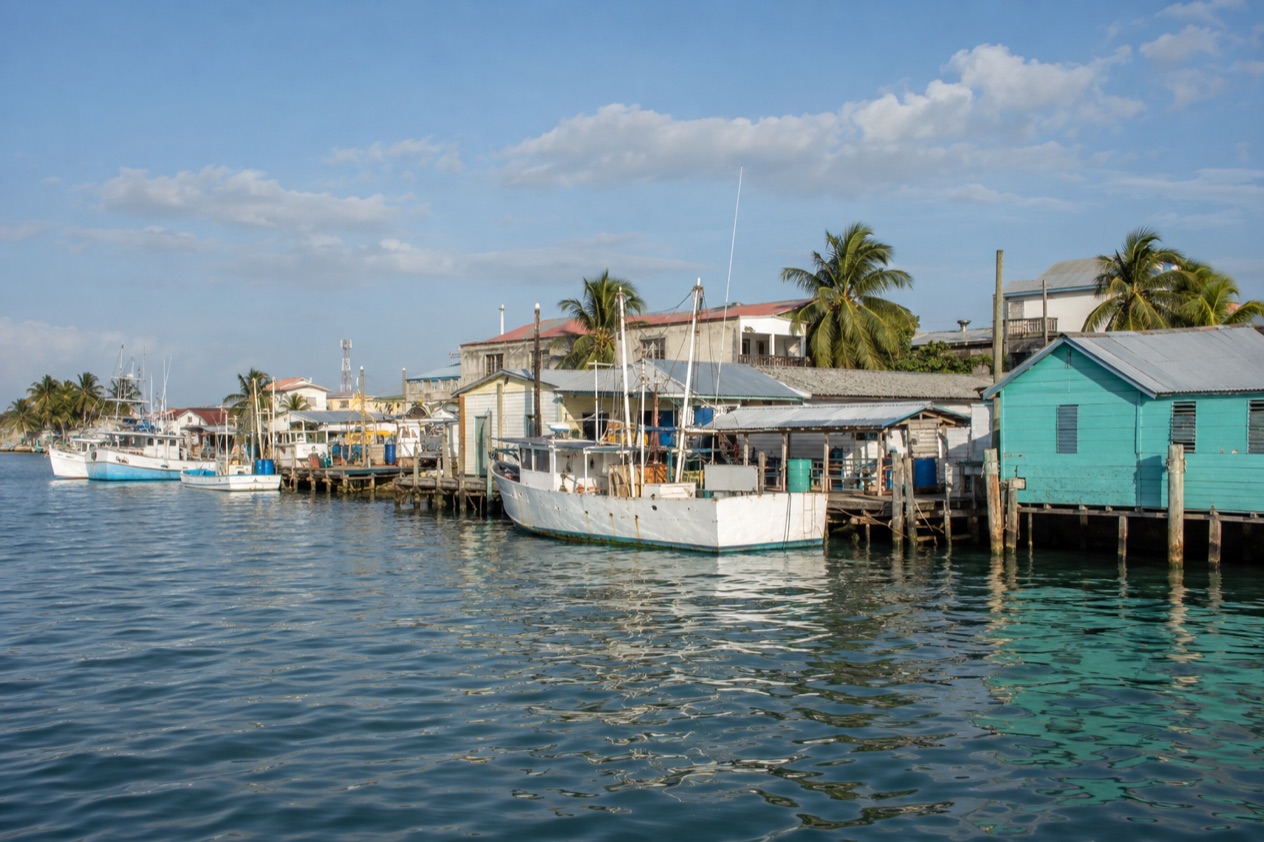
Belize City sits on a small peninsula that pushes into the Caribbean Sea, at the mouth of Haulover Creek, and it is a working port city rather than a beach town. The sea is part of the setting, but most travelers head out to the cayes for time on the water. Because emergency medical services are usually unavailable or significantly delayed, and ambulance services are not widely available, any outing on or in the water is one where you are largely on your own if something happens.
The city’s history explains why weather matters here. Belize City was the capital until flooding and other damage from a hurricane in 1961 prompted the government to relocate to Belmopan. The Atlantic hurricane season runs from June 1 to November 30, so a trip in the second half of the year falls inside it, and a trip from December through May falls outside the official season.
Tropical air also brings insects. The U.S. Centers for Disease Control and Prevention identifies Belize as a Zika risk area, and the diseases prevalent in the country include malaria, leishmaniasis, diarrheal illness, dengue fever and New World screwworm. Bug repellent and long sleeves are sensible companions on any outing, and a talk with a doctor before departure is worth having.
One more hazard sits indoors. Many hotels and other lodgings in Belize are not equipped with carbon monoxide detectors, even when they contain sources of this potentially lethal gas, so a portable detector in your luggage is a reasonable precaution. Specialized prescription medications may also be completely unavailable, so bring what you need from home.
Good to know before you go
The U.S. State Department rates Belize Level 2, “Exercise increased caution”, because of crime, and says the south side of Belize City has historically had the highest concentration of violent crime.
Think of a trip to Belize City as a plan with a safety net you build yourself. Supplemental medical evacuation insurance is the piece the State Department recommends most strongly, since the U.S. government does not pay medical bills and most hospitals do not take U.S. insurance. Keep your embassy number at hand, and keep your movements in the city simple.
There are no legal restrictions on consensual same-sex relations in Belize, and tourist-friendly areas such as San Pedro Town on Ambergris Caye remain relatively open and welcoming for LGBTQ+ travelers. Outside those areas, same-sex couples, especially men, are reluctant to show affection in public because incidents of verbal or physical assault have been reported.
Sources
- U.S. Department of State, Belize Travel Information, Travel Advisory (Level 2) (https://travel.state.gov/), checked October 11, 2026
- U.S. Department of State, Belize Travel Information, Safety and security (https://travel.state.gov/), checked October 11, 2026
- U.S. Department of State, Belize Travel Information, Local laws and special circumstances (https://travel.state.gov/), checked October 11, 2026
- U.S. Department of State, Belize Travel Information, Health (https://travel.state.gov/), checked October 11, 2026
- U.S. Department of State, Belize Travel Information, Traveling and transportation (https://travel.state.gov/), checked October 11, 2026
- U.S. Department of State, Belize Travel Advisory, Level 2, March 11, 2026 (https://travel.state.gov/), checked October 11, 2026
- Wikipedia, Belize City (https://en.wikipedia.org/wiki/Belize_City), checked October 11, 2026
- Wikivoyage, Belize City (https://en.wikivoyage.org/wiki/Belize_City), checked October 11, 2026
- Wikipedia, Belize District (https://en.wikipedia.org/wiki/Belize_District), checked October 11, 2026
- NOAA National Hurricane Center, Climatology (https://www.nhc.noaa.gov/climo/), checked October 11, 2026
To plan your stay
- Best Time to Visit Belize City: Weather by Month, Hurricane Season and What to Do
- Things to Do in Belize City: Museum of Belize, Nearby Cayes, Day Trips and Local Food
- Where to Stay in Belize City: Haulover Creek, Ladyville, the Cayes and Hotel Taxes
- Belize City from the United States: Flights, the Airport Transfer and Water Taxis to the Cayes