
Early in the day, the swing bridge over Haulover Creek fills with bicycles, school uniforms and vendors, while fry jacks sizzle in kitchens and the Kriol banter carries across the water. Boats rock at the creek’s mouth and the Caribbean sits just beyond the last streets.
Belize City is the largest city in the country and its main port, a working town with a colonial past and a front door onto the cayes. It suits travelers who want a day or two of history, food and harbor life before heading out to the reef.
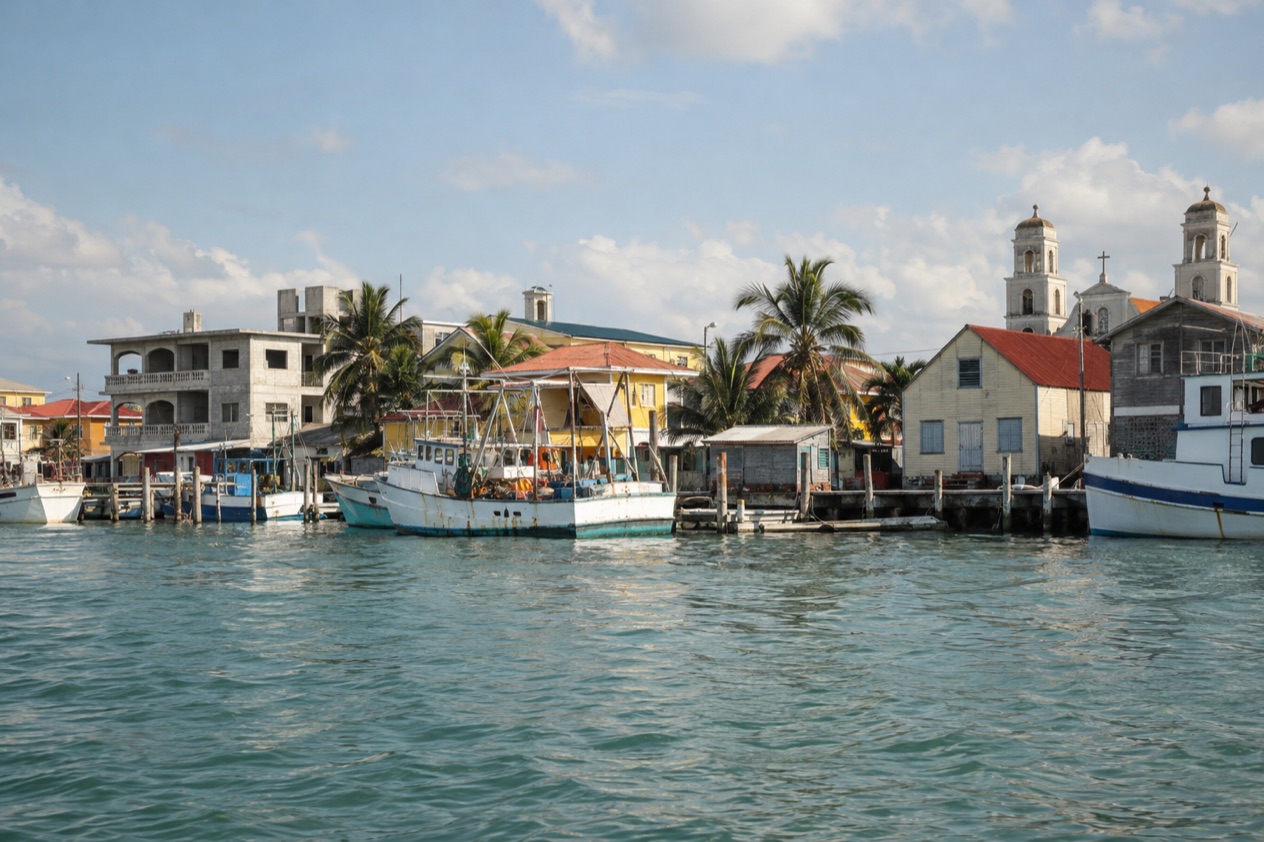
What are the best things to do in Belize City?
The best things to do in Belize City are to walk its old harbor streets, step inside a former prison turned museum, eat Creole food, and use the city as a launch point for the islands and wildlife areas of Belize District. The city itself is compact and layered with history. What makes it rewarding is combining a few hours in town with a boat or a flight out to the water.
Belize City sits on a small peninsula, split by Haulover Creek, so much of what you do here is shaped by water. Even a morning spent in town keeps the sea in view. The essentials, each developed in the sections that follow:
- The Museum of Belize, housed in the old Belize City Prison, tells the national story inside walls that once held prisoners.
- Haulover Creek and the swing bridge give you the best sense of how the city lives, with boats, traffic and trading all crossing the same water.
- The Fort Street Tourism Village offers courtyards, snack bars, local shops and live local entertainment right at the creek mouth.
- The story of Hurricane Hattie and the move of the capital to Belmopan explains why the city looks and feels the way it does.
- St. George’s Caye, an island eight miles east of the city, adds colonial history and open sea to a day out.
- Flights from the municipal airport carry you over the Caribbean to San Pedro on Ambergris Caye and to Caye Caulker.
- Crooked Tree Wildlife Sanctuary, in Belize District, brings waterbirds and wetland scenery within reach of the city.
- A plate of stew chicken with rice and beans, a fry jack breakfast or a bowl of hudut gives you the flavors of the whole country.
Beyond these, the district’s smaller islands, the northbound bus routes and the evening music scene fill out a stay of several days.
Sights and landmarks in Belize City
The sights of Belize City are mostly clustered around the creek and the harbor, and they are best taken as a loose wander rather than a checklist. Wooden houses on stilts, painted trim, small churches and crowded corners sit next to government buildings and shops. History is everywhere here, from the colonial days as the capital of British Honduras to the storm that reshaped the country’s map.
The Museum of Belize
The Museum of Belize is an art and history museum, and the building is half the story. It served as the Belize City Prison until 1993, when prisoners were moved to Hattieville Prison, and it was restored and reopened as a national museum in 2002. The old structure with its cell blocks gives the visit a sense of place that a purpose-built gallery could not.
Inside, you can expect the long arc of Belize told through Maya artifacts, colonial history and national art, set in rooms that still feel like a former jail. It suits anyone curious about how the Maya, the British Baymen and the later communities of the country fit together, and it gives context for the Maya sites you may visit elsewhere. Visitors going on to the cayes or the interior often start here to set the scene.
| Site | Location |
|---|---|
| Museum of Belize | Belize City, in the former Belize City Prison |
| Fort Street Tourism Village | Northern bank at the mouth of Haulover Creek, Belize City |
Haulover Creek and the swing bridge
Belize City stands at the mouth of Haulover Creek, a distributary of the Belize River, and the creek is the city’s spine. Standing near the bridge, you hear horns, bicycle bells, vendors and the particular rhythm of Kriol conversation.
The Belize River itself, the longest river in the country, passes through the district and reaches the sea along this coast. That connection between the river, the creek and the Caribbean explains why a port grew here in the first place. A slow walk along the water on both banks shows you warehouses, small boats and the back of the city that postcards skip.
Fort Street Tourism Village
The Fort Street Tourism Village occupies about two acres on the northern bank of the creek, at its mouth. It is a cruise port that works as a tender port, and its courtyards, snack bars and local stores with duty-free shopping make it a place to browse and sit even if you did not arrive on a ship. Restaurants and live local entertainment add a sense of occasion.
Craft stalls and shops here sell Belizean souvenirs, from woodcarvings to hot sauce and rum. Come for a drink and a snack with the creek in view, and you get a gentle introduction to the city’s food and music in one enclosed stop.
Hurricane Hattie and the old capital
Hurricane Hattie, the strongest and deadliest tropical cyclone of its Atlantic season, struck in 1961 as a Category 5 storm. In Belize City, then the capital of British Honduras, wind and storm surge damaged over 70% of the buildings and left more than 10,000 people homeless. The government later moved inland to Belmopan, completing the shift in 1970.
You will not find a single monument for this story. Instead, it is the reason the capital moved and why Belize City, though still the financial and industrial hub, is no longer the seat of government.
Knowing it makes the sparse skyline and the mix of old and rebuilt streets easier to read. The storm also did heavy damage to the barrier reef offshore, a reminder of how closely the city and the sea are tied.
Beaches and outdoor things to do in Belize City
Belize City is a harbor town rather than a beach town, so the sand and the snorkeling lie out on the cayes of Belize District and beyond. What the city does give you is access: it faces the Caribbean, and islands, reef and wildlife areas all sit within its district. Outdoor time here usually means getting on the water or into the wetlands.
The barrier reef and the cayes
The Belize Barrier Reef is the second largest in the world and a World Heritage Site, and it runs offshore from Belize City. The district includes islands such as Ambergris Caye, Caye Caulker, St. George’s Caye, Caye Chapel, English Caye, Goff’s Caye and Turneffe Atoll, each with its own character. The reef is what draws snorkelers and divers to this coast.
Think of the cayes as small worlds: palm-fringed sand, a few docks, wooden houses and the open sea beyond. Boat trips and flights from the city reach them, and the water around them is the reason most people head out. Some of the islands are tiny, others carry villages and resorts.
Ambergris Caye and Caye Caulker
Ambergris Caye and Caye Caulker are considered two of the primary tourism areas of Belize, and both belong to Belize District. Tropic Air flies hourly between the municipal airport and San Pedro.
San Pedro, on Ambergris Caye, is a small town of golf carts, beach bars and dive shops. Caye Caulker is a smaller island with sandy lanes and a slow rhythm. Both give you the white-sand, turquoise-water picture of Belize that the mainland city does not, and both sit at the edge of the reef.
Wetlands and wildlife
Belize District also encompasses wildlife sanctuaries just inland, and Crooked Tree Wildlife Sanctuary is among them. It is a place of lagoons, marsh and forest where waterbirds gather, and it gives you a quiet counterpoint to the sea. Bird-watchers often come for the herons, kingfishers and storks that use the wetlands.
Back in town, the waterfront and parks offer breezy places to sit and watch the harbor. The mix of reef, river and lagoon within one district is the real outdoor draw of Belize City.
Day trips from Belize City
The day trips from Belize City go mostly to the water and to the wetlands of Belize District, with a few options farther afield by air or road. The city’s transport links make it an easy hub for this kind of outing. Each trip below offers a different Belize.
St. George’s Caye
St. George’s Caye is an island in the Caribbean Sea, eight miles east of Belize City. It is part of Belize District, and its village shares the name. The Spaniards once called it Cayo Cocina, or Kitchen Cay, and the island was settled as a town in 1650, which makes it one of the earliest English-speaking settlements in the region.
The island is tied to the sea battle that Belizeans celebrate every September, and it still has the feel of a quiet retreat with weathered houses, a small shore and open water in every direction. It suits travelers who like a little history with their island time, and who want to see how Belizeans themselves weekend by the sea. Pair it with the Museum of Belize for context.
San Pedro and Caye Caulker by air
From Belize City Municipal Airport, about a mile outside downtown, you can fly to San Pedro on Ambergris Caye and on to Caye Caulker. The airport handles domestic flights only, serves ten destinations, and Tropic Air runs hourly flights to San Pedro. The view of the sea from the small plane is part of the appeal.
Once there, you find beach bars, dive operators and a relaxed island pace. These islands suit travelers who want sand and reef rather than a city, and who prefer to leave the mainland behind for the day. Take the plane out and savor the first view of the turquoise water.
Crooked Tree Wildlife Sanctuary
Crooked Tree Wildlife Sanctuary is a wildlife sanctuary in Belize District, built around lagoons and wetlands. It is the sort of place where birds are the main attraction, with herons, egrets, kingfishers and the jabiru stork all possible sightings. Quiet watching from the edge of the water is the main activity.
It suits bird-watchers, photographers and anyone wanting a calm break from the harbor noise. Spotting depends on the day and the season, so treat any rare species as a bonus rather than a promise. A pair of binoculars is what makes the visit.
Smaller outings
Ladyville, the largest village in Belize, lies eight miles northwest of the city along the Philip Goldson Highway. It has become a suburb with many residents commuting daily, and it is also where the international airport sits. It is more of a place to pass through than to linger.
Northbound buses leave Belize City for Orange Walk and Corozal about every half hour from 5:30AM to 7:30PM, opening the Northern Zone. Elsewhere in the district, Caye Chapel, English Caye, Goff’s Caye and Turneffe Atoll are all islands you may hear about as destinations for boat days.
What to eat in Belize City
Eating in Belize City means Creole cooking at its center, with Garifuna, Maya and Spanish flavors woven in. Rice and beans, fried dough, coconut, fresh seafood and a lot of stewed meat fill the plates. Because the city is the country’s crossroads, you can taste almost every strand of Belizean cooking within its streets.
Breakfast and everyday plates
Breakfast is where the day begins with a fry jack, a puffed triangle of fried dough eaten with beans, eggs, cheese or jam. Johnnycakes, a dense, slightly sweet bread, appear alongside, often split and filled. Coffee or hot chocolate usually goes with it.
At lunch, the classic is stew chicken with rice and beans, served with coleslaw or potato salad and fried plantain. Meat pies, panades and salbutes, small fried tortillas with toppings, show the Spanish and Maya side of the cooking. Garnaches, crisp little tortillas with beans and cheese, make a good snack.
Seafood and Garifuna dishes
With the Caribbean at the door, seafood is a natural order. Conch, shrimp, lobster and snapper show up fried, grilled or in coconut sauce. Conch fritters and ceviche are common starters, bright with lime and hot pepper.
Hudut is a Garifuna dish of fish in coconut broth, served with mashed plantain, and it is worth seeking out. Its mellow, rich flavor is a different side of the coast’s cooking. Pair it with a splash of local hot sauce, the Belizean way.
Drinks, snacks and where to sit
Belikin is the national beer, and you see its label on tables everywhere. Rum punch, fresh fruit juices, seaweed shakes and cashew wine round out the drinks. A bottle of Marie Sharp’s hot sauce is a popular thing to carry home.
The Fort Street Tourism Village has snack bars and restaurants where you can sit with a drink and watch the harbor. Street vendors sell fried snacks, fruit and sweets, and small local eateries serve the everyday plates. Eating where residents eat is the best way to taste the city.
Things to do in Belize City at night
Evenings in Belize City revolve around music, drinks and food, usually in places where locals gather rather than in a big nightlife district. The mood is easygoing, with sound systems, rum shops and open-air bars filling the streets as the day cools. The beat is Caribbean, from reggae and soca to punta and brukdown.
A first stop for many is the Fort Street Tourism Village, with its courtyards, restaurants and live local entertainment. It gives you a stage for Belizean music and a place to try the local beer. A long dinner of seafood or stew chicken, with the creek nearby, makes a full evening in itself.
Music and bars
Belizean nights are soundtracked by reggae, soca, dancehall and Garifuna punta, with brukdown, the Creole folk music, surfacing at celebrations. Bars and rum shops play it loud, and some host live bands. The vibe is casual and social, with conversation as much a part of it as the music.
Ask at your hotel about live music or events on the night you are there. Neighborhood spots, hotel terraces and restaurant bars each have a distinct feel. A Belikin and a plate of fried snacks is the standard order.
Quieter evenings
If you prefer a calm night, a long dinner is the best plan. Seafood in coconut sauce, a bowl of hudut or a plate of stew chicken lingers over conversation. A drink on a hotel terrace completes the picture.
Many visitors pair the city evening with an early flight or boat out to the cayes the next morning. Because international flights use the airport at Ladyville and domestic ones the municipal airport, planning the next day’s departure is part of the evening’s logic. A relaxed meal and an early night suit that rhythm well.
Things to do in Belize City with kids
Children in Belize City are most engaged by anything involving boats, animals and the sea, and the city offers a handful of simple ways to give them that. The most memorable moments tend to come on the water or from the air. In town, a museum visit and a harbor walk fill the gaps.
Museum, harbor and boats
The Museum of Belize can capture older children with its story of a prison turned museum, and the building itself holds their interest. Exhibits on the Maya and the colonial era connect to what they may see later on the trip. The courtyards of the Fort Street Tourism Village offer places to stop for a snack and to watch the boats.
A walk near Haulover Creek lets children watch boats and the swing bridge. Boats are a draw for most young travelers, and the creek has plenty of them. Keep the stops brief and the pace relaxed.
Flights, islands and wildlife
A small plane to San Pedro or Caye Caulker is an adventure in itself, with a view over the Caribbean on the way. The islands have sand, boats and a relaxed pace. Tropic Air flies hourly to San Pedro from the municipal airport.
Crooked Tree Wildlife Sanctuary suits children who like animals and quiet observation. Spotting birds from the water’s edge becomes a game. Binoculars make it more engaging.
What to keep in mind
The tropical sun is strong, so plan breaks and a rhythm of activity and rest. The museum and the courtyards offer places to pause. Pace the day around the youngest member.
Distances in the city are modest, but transfers to the airports and out to the islands add up. Plan the days around fewer, larger outings rather than many small ones. A single boat or flight day is usually enough for a family.
Good to know before you go
The U.S. State Department rates Belize Level 2, “Exercise increased caution”, because of crime, and says the south side of Belize City has historically had the highest concentration of violent crime.
Belize City has two airports: Philip S. W. Goldson International Airport in Ladyville, about 30 minutes by car from the center, handles international flights, while the municipal airport, about a mile from downtown, is for domestic flights only. Northbound buses to Orange Walk and Corozal leave about every half hour. The currency is the Belize dollar. The Atlantic hurricane season runs from June 1 to November 30, and the city sits at a low elevation, which leaves it and its airport open to serious flooding.
Sources
- Wikipedia, Belize City (https://en.wikipedia.org/wiki/Belize_City), checked October 11, 2026
- Wikivoyage, Belize City (https://en.wikivoyage.org/wiki/Belize_City), checked October 11, 2026
- Wikipedia, Belize District (https://en.wikipedia.org/wiki/Belize_District), checked October 11, 2026
- Wikivoyage, Belize District (https://en.wikivoyage.org/wiki/Belize_District), checked October 11, 2026
- Wikipedia, Philip S. W. Goldson International Airport (https://en.wikipedia.org/wiki/Philip_S._W._Goldson_International_Airport), checked October 11, 2026
- Belize Port Authority, Fort Street Tourism Village port (https://portauthority.bz/belize-port-facilities/fort-street-tourism-village-port/), checked October 11, 2026
- Belize Tourism Board, Cruise licensing (https://www.belizetourismboard.org/licensing/cruise/), checked October 11, 2026
- Wikipedia, Ladyville (https://en.wikipedia.org/wiki/Ladyville), checked October 11, 2026
- Wikipedia, Museum of Belize (https://en.wikipedia.org/wiki/Museum_of_Belize), checked October 11, 2026
- Wikipedia, Hurricane Hattie (https://en.wikipedia.org/wiki/Hurricane_Hattie), checked October 11, 2026
- Philip S. W. Goldson International Airport (Belize), Quick facts (https://www.pgiabelize.com/passenger-info/quick-facts/), checked October 11, 2026
- Tropic Air, Belize City municipal airport (https://www.tropicair.com/belize-city-tza/), checked October 11, 2026
- Maya Island Air, Belize City flights (https://www.mayaislandair.com/belize-city-flights/), checked October 11, 2026
- Wikipedia, St. George's Caye (https://en.wikipedia.org/wiki/St._George's_Caye), checked October 11, 2026
- Wikipedia, Tourism in Belize (https://en.wikipedia.org/wiki/Tourism_in_Belize), checked October 11, 2026
- U.S. Department of State, Belize Travel Advisory, Level 2, March 11, 2026 (https://travel.state.gov/), checked October 11, 2026
- NOAA National Hurricane Center, Climatology (https://www.nhc.noaa.gov/climo/), checked October 11, 2026
To plan your stay
- Best Time to Visit Belize City: Weather by Month, Hurricane Season and What to Do
- Where to Stay in Belize City: Haulover Creek, Ladyville, the Cayes and Hotel Taxes
- Belize City from the United States: Flights, the Airport Transfer and Water Taxis to the Cayes
- Know Before You Go to Belize City: Entry Papers, Money, Getting Around and Health