
Early in the morning at Treasure Cay, outboard engines cough awake along the docks, halyards tap against masts in the marina, and the first ferry passengers wait with duffels for the short hop to Green Turtle Cay. Later the light turns soft over the sand and the golf course, and the pace drops to flip-flop speed. Treasure Cay is a small resort community on Great Abaco, made for beach days, boat days and slow evenings, and it suits couples, families and anglers who want a base rather than a scene.
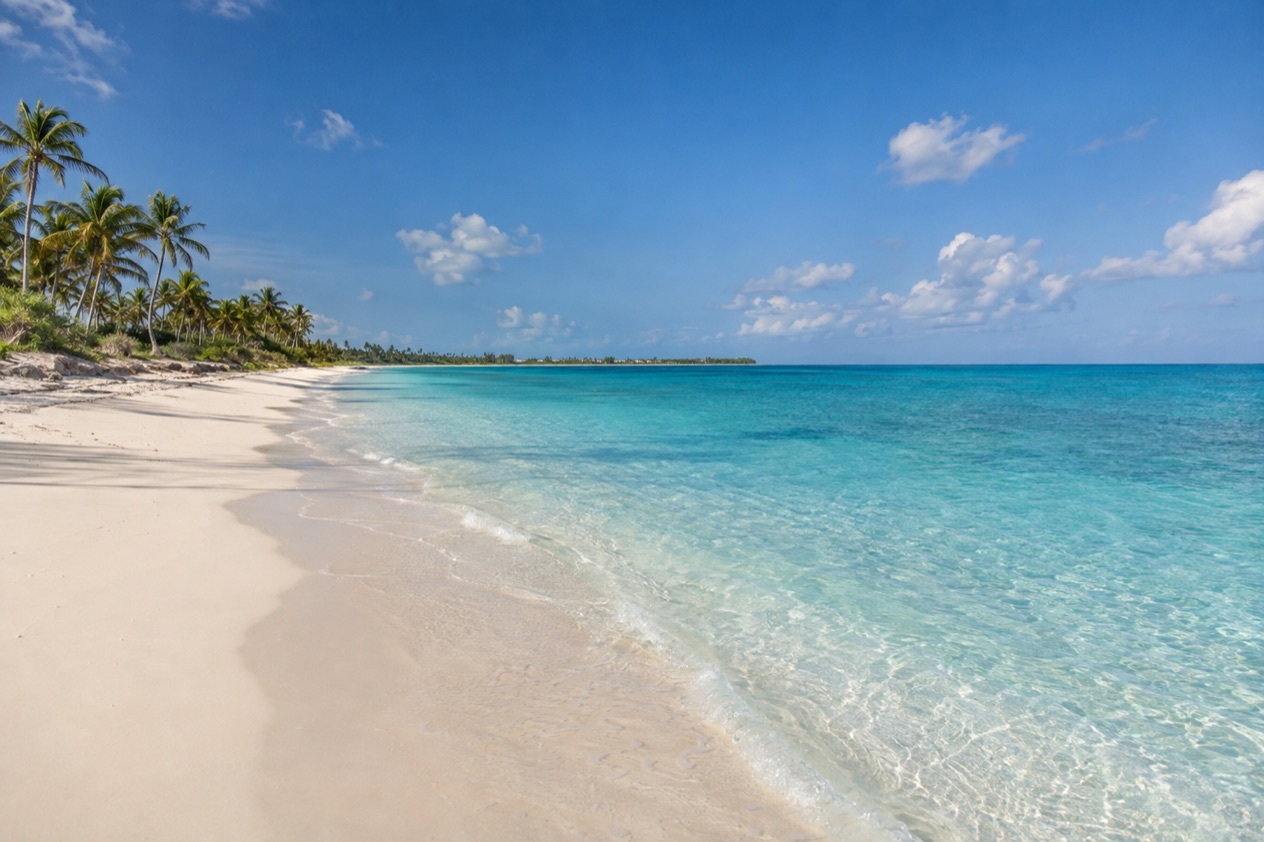
Where is Treasure Cay and what is it like?
Treasure Cay is a parcel of land connected to Great Abaco Island in the north of the Bahamas, in the Abacos chain, and it is a self-contained resort community rather than a town in the usual sense. The Abaco Islands lie about 193 miles east of Miami, which puts the whole chain in the northern part of the country, well away from the crowds of Nassau.
The Abacos form a long line of islands and cays, and Great Abaco and Little Abaco are considered the mainland of the chain. Treasure Cay sits on the bigger of the two, with its own airport, its own marina and its own ferry dock. Marsh Harbour, the commercial hub of the Abacos, is the other big name on Great Abaco, and Treasure Cay feels like its quieter, more leisurely neighbor.
The character here is resort life with a salty edge. There are two resorts, Bahama Beach Club and Treasure Cay Beach Hotel, Marina & Golf resort, and around them condos, villas and private homes, many of them for rent.
Days revolve around the beach, the marina, the golf course and the tennis courts, with boats coming and going all day. Evenings tend to be a matter of dinner, a drink on a deck and an early night.
The place is loved by people who like to unpack once and stay put: families renting a villa for a week, boaters who tie up and linger, and golfers and anglers who arrange their days around the course or the water. It may disappoint anyone looking for nightlife, shopping streets or a historic old town. For that kind of walking-around texture, the settlements across the water on Green Turtle Cay do a better job, and Treasure Cay is the comfortable place you come back to afterward.
What is there to do in Treasure Cay?
Treasure Cay is about the beach, the boats and the greens, with the Abacos spread out around it for anyone who wants to see more. What sets it apart from its neighbors is that everything a short vacation needs sits inside one community, while the islands that make the Abacos famous lie a boat ride away.
The marina and the fishing
The large marina is the working heart of Treasure Cay and the reason many visitors arrive by boat. It hosts seasonal fishing tournaments, so at certain times of year the docks fill with anglers, coolers and talk of what is biting. Even outside tournament weeks, a walk along the piers is a pleasant way to spend an hour, watching boats come in and sorting out who is heading where.
It suits anyone who likes boats, whether you fish or only like looking at them. Pair a morning on the docks with lunch nearby, and you have a day that asks very little of you.
Golf and tennis on the property
Treasure Cay has a golf course and tennis courts, which is unusual for a community this small in the Abacos and is a big part of why couples and groups of friends pick it. The golf course gives the resort a green, open character, and a round fits easily between a beach morning and a late lunch.
Tennis is the lazier alternative for those who want a game without a full day on the course. Both are a natural fit for a stay built around the resorts or a rented villa.
The ferry to Green Turtle Cay
The Green Turtle Cay Ferry Dock is on Treasure Cay, and it gives you ferry access to Green Turtle Cay, one of the best-known islands in the Abacos. The crossing turns a day at the resort into a day among small colorful houses, narrow lanes and harborfront restaurants, a different mood from the resort side.
Many visitors treat it as the one outing they must do from Treasure Cay, and it is easy to see why. You leave the resort, spend the day wandering, and return to a quiet base in the evening.
Parrots and birds in Abaco National Park
Abaco National Park, established in 1994 and covering 20,500 acres, protects the northern breeding grounds of the Bahama Parrot. The parrots nest in underground cavities in the pine forest, which is an odd and charming detail for a bird that most people picture in treetops.
The park is also home to four endemic birds: the Bahama Yellowthroat, Bahama Warbler, Bahama Swallow and Bahama Woodstar. For birders, a visit to the pine forest is a reason to come to the Abacos in its own right, and for everyone else it adds a quiet green chapter to a trip that is otherwise about sand and water.
How many days do you need in Treasure Cay?
A long weekend covers Treasure Cay itself, and a week lets you add the cays around it without rushing. Because the community is compact and the days there are built around the beach and the marina, three or four nights is enough to unwind, play a round of golf or a game of tennis and take the ferry across to Green Turtle Cay.
In a short stay, give the first day to the resort side: a morning on the sand, a stroll through the marina, a late lunch and a sunset drink. Spend the second day on Green Turtle Cay, going over by ferry in the morning and coming back when the light turns gold. The remaining day or two can go to golf, tennis, a fishing outing or simply the beach again.
With a week, the Abacos open up. Marsh Harbour is the commercial hub of the chain and the starting point for ferries to Elbow Cay, where the candy-striped Elbow Reef Lighthouse, built in 1862 and the last manually operated lighthouse of its kind in the Bahamas, rises over Hope Town harbor. Elbow Cay can be reached from Marsh Harbour by private boat or regularly scheduled ferry.
Boat rentals add another layer for confident boaters. Abaco Dorado, one operator in the Abacos, lists boat rental at $215 per day off-season and $310 per day in season as its starting rate. A day on your own boat lets you set the pace, picking a cay, anchoring where you like (where permitted) and heading back before dark.
Add a morning in Abaco National Park if birds interest you, and keep one slow day with no plan at all. In a place like this, the unscheduled day tends to become the one you remember.
Where to stay in Treasure Cay
You stay in one of two resorts, or in a condo, villa or private home, and the choice mostly depends on how you like to travel. The two resorts are Bahama Beach Club and Treasure Cay Beach Hotel, Marina & Golf resort. Beyond them, the community is full of condos, villas and private homes, and many of them are available for rent.
The resorts suit travelers who like having things close at hand: a hotel setting, the marina, the golf course and the tennis courts all within the same community. Treasure Cay Beach Hotel, Marina & Golf resort, as its name says, ties the stay to the water and the course, which makes it a natural base for anglers and golfers and for couples who like a ready-made holiday rhythm.
Condos and villas fit families and groups of friends who want a kitchen, more space and a house to come back to after a day out. They also fit longer stays, because a week in a rented villa feels more like living in the place than a week in a hotel room. Private homes for rent push that further, with the sense of being a neighbor rather than a guest.
Staying here means choosing quiet over variety. Evenings are low-key, so plan to eat in or near the resort, and use the ferry dock when you want a change of scene. If you would rather stay among small-town streets and harbor restaurants, Green Turtle Cay, across the water, is the alternative, with Treasure Cay as the easier base for golf, tennis and marina life.
How do you get to Treasure Cay and get around?
You get to Treasure Cay by air through Treasure Cay Airport (TCB), an international airport in the settlement itself, or by flying into Marsh Harbour and continuing across Great Abaco. Treasure Cay Airport serves the community directly, so you can land close to the beach, the marina and the ferry dock.
Marsh Harbour has the other airport in the Abacos, Leonard M. Thompson International Airport (MHH), located in the commercial hub of the chain. All Abaco travel connects or originates in Florida or Atlanta, which is how most visitors from the United States reach the islands. The Abaco Islands lie in the north of the Bahamas, and this northern position shapes how people arrive.
Boaters arrive by water. From Grand Bahama Island, Pinder’s Ferry operates twice a day from McLean’s Town to the Abacos, which gives travelers on Grand Bahama a sea route to the chain. Treasure Cay’s large marina is the landing point for those who bring their own vessels.
Once you are in Treasure Cay, the ferry dock is the main link to the rest of the Abacos. The Green Turtle Cay Ferry Dock is on Treasure Cay and gives ferry access to Green Turtle Cay.
For Elbow Cay, you travel from Marsh Harbour by private boat or regularly scheduled ferry. The chain spans 120 miles and is divided into North, Central and South Abaco, which makes the water the natural connector between its places.
Within the community, the resorts, marina, golf course and tennis courts sit on the same stretch of land, so most of what you came for is close together. Boat rental offers the freest way to roam the cays, with Abaco Dorado one operator in the chain.
When is the best time to visit Treasure Cay?
The winter and spring months are the most comfortable time for beach and golf days, and March carries a particular event: the Great Abaco Family Fitness Weekend takes place every March in Treasure Cay and draws both domestic and international visitors. That weekend gives the community a lively, sporty energy that the rest of the year does not have.
Climate figures here come from Nassau, farther south in the Bahamas, and they give the general shape of the seasons. In Nassau, January highs average 79.4°F, which is pleasant for walking, golf and boat days. In July, Nassau highs reach 90.8°F, and rain falls on about 12 days of the month, so summer is hot, humid and punctuated by showers.
Fishing tournaments are seasonal, so the dock scene changes through the year, and the marina is livelier when they are on. The Atlantic hurricane season covers the summer and fall, which matters for anyone planning travel in those months. If you want long, warm days outdoors without the heaviest heat, the cooler months from winter into spring are the natural choice, with March adding the family fitness weekend.
Good to know before you go
The U.S. State Department rates the Bahamas Level 2, “Exercise increased caution”, and says most crime occurs in Nassau on New Providence and in Freeport on Grand Bahama.
The Atlantic hurricane season runs from June 1 to November 30, so plan summer and fall trips with that window in mind. Hurricane Dorian made landfall on Great Abaco Island on September 1, 2019, and its storm surge reached up to 23 feet in the affected islands, a reminder that the Abacos sit in the path of Atlantic storms.
Treasure Cay is a resort community, so you will spend most of your time around the resorts, the marina and the beach. The Bahamas is a separate country with its own dollar, the Bahamian dollar, and you should expect to do your planning around the islands you are visiting rather than treating the archipelago as one place.
Sources
- Wikipedia, Treasure Cay (https://en.wikipedia.org/wiki/Treasure_Cay), checked October 10, 2026
- Wikipedia, Abaco Islands (https://en.wikipedia.org/wiki/Abaco_Islands), checked October 10, 2026
- Bahamas Ministry of Tourism, Investments & Aviation (bahamas.com), The Abacos (https://www.bahamas.com/islands/abacos), checked October 10, 2026
- Bahamas National Trust, Abaco National Park (https://bnt.bs/explore/abaco/abaco-national-park/), checked October 10, 2026
- Bahamas Ministry of Tourism, Investments & Aviation (bahamas.com), travel blog, island hopping in the Abacos (https://www.bahamas.com/blog/the-ultimate-guide-to-island-hopping-in-the-abacos-without-breaking-the-bank), checked October 10, 2026
- Wikipedia, Hurricane Dorian (https://en.wikipedia.org/wiki/Hurricane_Dorian), checked October 10, 2026
- Wikipedia, Geography of the Bahamas (https://en.wikipedia.org/wiki/Geography_of_the_Bahamas), checked October 10, 2026
- NOAA NCEI, GHCN-Daily station BF000078073 (Nassau Airport), normals 1991-2020 computed from the daily record (https://www.ncei.noaa.gov/access/services/data/v1?dataset=daily-summaries&stations=BF000078073), checked October 10, 2026
- Open-Meteo Marine API, average 2015-2024, checked October 10, 2026
- U.S. Department of State, The Bahamas Travel Advisory, Level 2 (https://travel.state.gov/), checked October 10, 2026
- NOAA National Hurricane Center, Climatology (https://www.nhc.noaa.gov/climo/), checked October 10, 2026
To plan your stay
- Best Time to Visit the Bahamas: Weather, Hurricane Season, Sea Temperatures and Junkanoo
- Where to Stay in the Bahamas: Best Islands, Resorts, Boutique Stays and How to Choose
- Getting Around the Bahamas: Flights, Ferries, Mailboats and Taxis in Nassau
- Know Before You Go to the Bahamas: Entry Rules, Money, Getting Around and Local Customs