
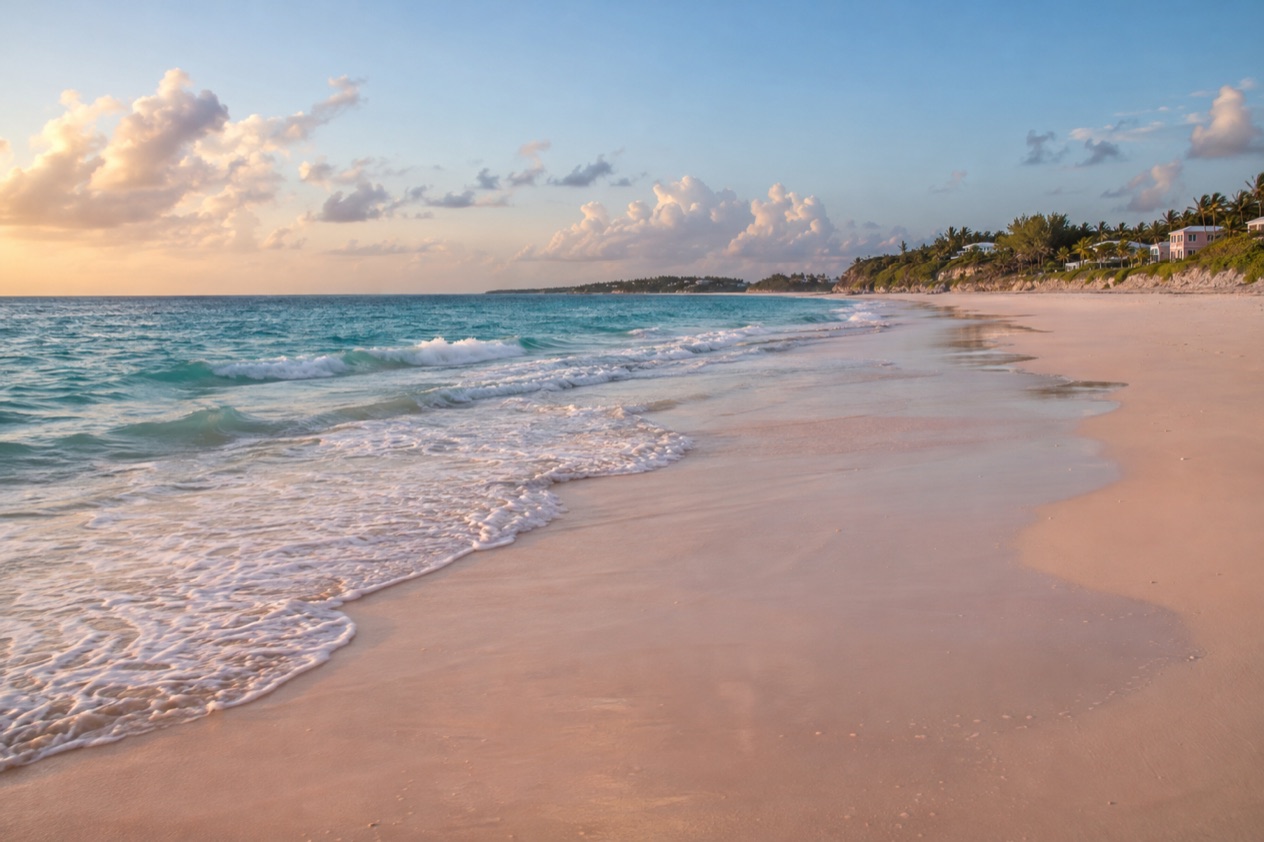
You step off the path onto the sand and the first thing you notice is the color: a pale blush, like the inside of a seashell, deepening to rose where the last wave slides back. Surf from the open Atlantic rolls in along the eastern shore of Harbour Island, which the people who live there call Briland, and the beach runs away in both directions. A visit here is a slow one, made of barefoot walking, long looks at the water and a late lunch in Dunmore Town afterward.
Is visiting the pink sand beach on Harbour Island worth it?
Yes, if you want a beach that is about color, space and quiet rather than activities, and it suits couples, friends and families who are happy to spend a day doing very little. The reward is the shore itself: a wide, pale pink strip facing the Atlantic, backed by dunes and low coastal greenery, with turquoise water in front.
The beach has been recognized well beyond the Bahamas. In March 2005 it appeared on The Travel Channel’s World’s Best Beaches segment and was named Best Sand Beach, one of 10 beaches worldwide in the program. That title is about the sand more than the swimming, and it explains why the place draws so many Americans to a small island off the coast of Eleuthera.
What sets it apart from other beaches in the Out Islands is how personal it feels. Harbour Island is a small, walkable community with one town, pastel English Colonial-style houses and picket fences, and the beach is its front yard on the ocean side.
You are not visiting a resort strip or a theme-park shoreline. You are visiting an island’s own beach, reached after a short water taxi ride from the main island of Eleuthera, and the effort of getting there is part of its charm.
Pink sand exists in a few other places in the world, but here the tint is soft rather than loud. Photographs often exaggerate it, so go expecting a delicate blush, strongest at the water’s edge, and you will not be disappointed.
If you want a lively beach with rental stands and music on every stretch, this is a different kind of place. If you want to walk for a long time, collect shells and watch the light change, it is exactly right.
What to see at the pink sand beach on Harbour Island
The pink sand itself
The color comes from foraminifera, microscopic organisms with bright pink or red shells. They live on the underside of reefs, on the sea floor, beneath rocks and in caves, and over time their tiny shells are broken up and washed ashore, mixing with the pale sand. Nothing is dyed and nothing is imported. It is simply what the Atlantic leaves behind.
Look closely and you can see the pink flecks among the paler grains. The tone shows best in the wet sand at the water’s edge, so the strip the waves keep soaking is where the color glows. Dry sand higher up the beach reads as cream with a faint rosy cast. The sand also stays cool, so walking barefoot from the dunes to the waterline is comfortable even in the middle of the day.
The long Atlantic shoreline
The beach runs along the whole eastern side of the island, and the pink sand is found all along it, which means you can choose your own spot rather than crowd into one. Walking in either direction changes the mood. Some stretches sit in front of low-key hotels and beach bars, others look out onto nothing but sea and sky, with the dunes rising behind you.
Because this is the Atlantic side, the water has the deep turquoise of open ocean, and the surf can make a noise you do not hear on sheltered beaches. Sit near the waterline and watch how the foam leaves a pink-tinged edge each time the sea pulls back. Shell hunting and long, slow walks are the natural activities here, along with simply watching the horizon.
Devil’s Backbone and the reef offshore
Offshore lies the Devil’s Backbone, a reef that is part of the story of the sand. Reefs like it are where foraminifera cling to the underside, and the beach is partly a product of that living system just beyond the surf line. You will not see the reef from the sand in the same way you see the beach, but knowing it is there changes how you look at the water.
Treat it as a landmark of the coastline and a reminder that the pink is a natural byproduct of the sea floor. It gives the beach a sense of place that a purely decorative color would not have, and it is a good talking point as you walk the shoreline.
Dunmore Town behind the beach
Dunmore Town, the only town on Harbour Island, is where the day usually begins or ends. It was named for the Earl of Dunmore, governor of the Bahamas in the late eighteenth century, who kept a summer residence on the island.
Strolling the narrow lanes between the pastel cottages, with their shutters and white fences, makes a pleasant counterpart to the open beach. The Coral Sands Hotel, founded in the mid-1960s by the American actor Brett King and his wife, Sharon, is part of the island’s story as a vacation spot.
Hours, tickets and rules
The pink sand beach is a natural stretch of shoreline along the Atlantic side of the island rather than a gated attraction with a ticket booth, so the practical details are about where it lies and who to contact. The island’s own tourist office is the point of contact for questions about the beach and the island.
| Site | Where | Size | Contact |
|---|---|---|---|
| Pink Sand Beach | Eastern Atlantic side of Harbour Island | Over three miles long, 50 to 100 feet wide | Harbour Island Tourist Office, (242) 333-2621, [email protected] |
As for rules, the one practical fact about getting around is that car rentals are unavailable on Harbour Island, though you can rent a golf cart. No other rules about swimming, drones, tripods or sunscreen are laid down here, so the best approach is simply to enjoy the beach as you would any natural shoreline and respect the dunes and the island’s residents.
How to get to the pink sand beach on Harbour Island
You reach Harbour Island by air and then by water. Flights land at North Eleuthera Airport, and from neighboring North Eleuthera a short water taxi ride carries you across to the island. That crossing is the transition from the mainland of Eleuthera to island time, and it is the standard way visitors arrive.
Harbour Island sits off the northeast coast of Eleuthera, which is part of the Out Islands of the Bahamas. It is a separate island with its own small community of under two thousand people, so the beach is not reachable by road from the rest of Eleuthera. Everything on the island happens once you have crossed the water.
Once you are on Harbour Island, the beach lies along the eastern side, facing the Atlantic. Dunmore Town is the base on the harbor side, and from there you head across the island to the ocean shore.
Car rentals are unavailable, but a golf cart can be rented, and that is the way many visitors move between the town and the beach. Walking is also a natural way to see the island, since it is small and the lanes of Dunmore Town are pleasant to stroll.
Because the island is reached by plane and boat, the trip works best as a stay of at least a night or two, though a day on the beach is certainly possible for those already in the area. The time zone follows Eastern Time, with daylight time in summer, so there is no clock change for travelers coming from the U.S. East Coast.
When to visit the pink sand beach on Harbour Island
The best hours are the soft ones. Early morning brings low light that warms the pink and leaves the shore quiet, and late afternoon gives a golden glow on the wet sand as the sun drops behind the island. Midday sun flattens the color, though the sand stays cool underfoot, so a long barefoot walk remains comfortable.
The pink stands out most in the wet sand at the water’s edge, which means the hours when the waves are working the shoreline are the best for seeing the color. Walk the line where the sea meets the sand and the blush deepens with each wave. Overcast days can mute it, while bright sun makes it glow, so a clear day is the one to aim for if the color is your goal.
As for the season, the Atlantic hurricane season runs from June 1 to November 30, so the months from December through May fall outside the official hurricane season. Within the season, storms are a possibility for any island in the Bahamas, and plans for those months should leave room for changes. Outside it, the island is simply a beach getaway, with the winter and spring months being the usual choice for travelers who want to avoid the stormy stretch of the calendar.
No special festival or date is tied to the beach itself. Its draw is constant, the color of the sand and the length of the shore, and a visit on any clear day delivers the same quiet pleasure.
Tips for your visit
Bring what you would for any long day on an open Atlantic beach: sunscreen, a hat, a towel, a book and water. The sand is always cool, so shoes can stay in the bag, and a pair of sandals is enough for the walk between the town and the shore. A small bag keeps your hands free for shells.
Plan on a half day at least, longer if you like to settle in. The beach rewards slowness: walk one direction until you feel like turning back, sit near the waterline to watch the color shift, then walk the other way. Because the shore stretches so far, you can always find your own patch of sand.
Pair the beach with Dunmore Town. A morning on the sand followed by lunch in town, or a stroll through the pastel lanes and then an afternoon at the shore, makes a balanced day. The English Colonial-style houses, the picket fences and the harbor give a very different look from the open ocean side, and the contrast is part of the island’s appeal.
Families will find a beach with plenty of room for building castles and collecting shells, and the cool sand is a plus for small feet. For anyone with limited mobility, the island is small, and a rented golf cart can carry you between the town and the shoreline, though the beach itself is natural sand and dune. The tourist office can answer questions about the island if you need them.
Good to know before you go
The U.S. State Department rates the Bahamas Level 2, “Exercise increased caution”, and says most crime occurs in Nassau on New Providence and in Freeport on Grand Bahama.
Harbour Island is a small community, and Dunmore Town is its only town, so plan the practical details of your stay, such as where you will eat and how you will move around, with that in mind. The Bahamian dollar is the local currency.
The Atlantic hurricane season runs from June 1 to November 30, so it is sensible to keep travel plans flexible if you visit in those months. Beyond that, a relaxed pace and good manners toward the island’s residents are the best habits to bring to the beach.
Sources
- Bahamas Ministry of Tourism, Investments & Aviation (bahamas.com), Harbour Island Pink Sand Beach (https://www.bahamas.com/natural-wonders/harbour-island-pink-sand-beach), checked October 10, 2026
- Wikipedia, Harbour Island, Bahamas (https://en.wikipedia.org/wiki/Harbour_Island,_Bahamas), checked October 10, 2026
- Wikivoyage, Harbour Island travel guide (https://en.wikivoyage.org/wiki/Harbour_Island), checked October 10, 2026
- U.S. Department of State, The Bahamas Travel Advisory, Level 2 (https://travel.state.gov/), checked October 10, 2026
- NOAA National Hurricane Center, Climatology (https://www.nhc.noaa.gov/climo/), checked October 10, 2026
To plan your stay
- Best Time to Visit the Bahamas: Weather, Hurricane Season, Sea Temperatures and Junkanoo
- Where to Stay in the Bahamas: Best Islands, Resorts, Boutique Stays and How to Choose
- Getting Around the Bahamas: Flights, Ferries, Mailboats and Taxis in Nassau
- Know Before You Go to the Bahamas: Entry Rules, Money, Getting Around and Local Customs