
At first light on a Bimini dock, engines idle, ice hits coolers and a captain squints at the color of the water where the Gulf Stream begins. Out on the flats of Andros, a guide poles a skiff in silence while an angler watches the mangrove edge for a flicker of tail. Fishing in the Bahamas runs from blue-water trolling to wading in a few inches of water, and it goes on all year across the islands.
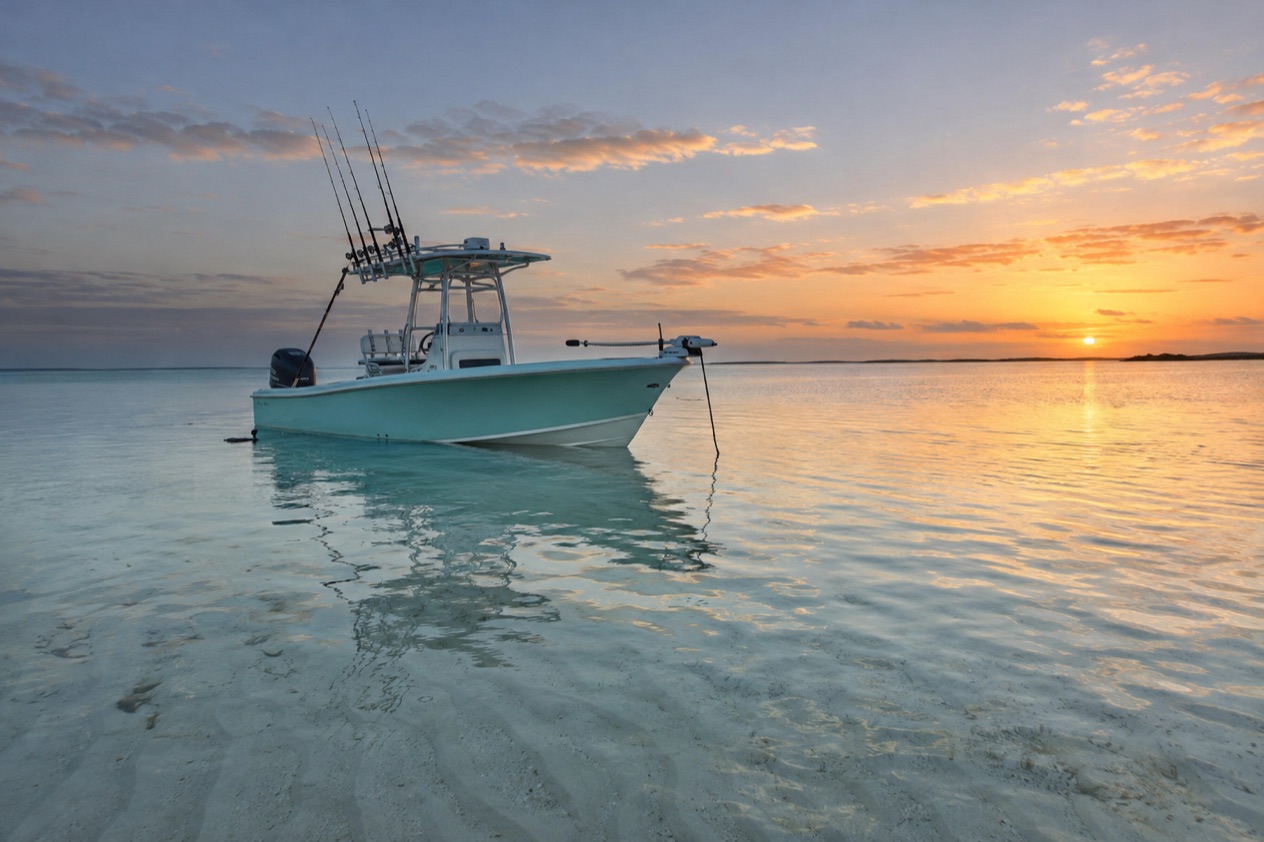
What kinds of fishing are there in the Bahamas?
There are three main kinds: deep sea fishing for big game, reef fishing close to shore, and fly fishing on the shallow flats. Fishing is available 365 days a year, so the question is less when to go than which style suits you. Each one gives a very different day, from a long hours-in-the-chair troll to a quiet morning on a skiff.
The waters have a long reputation among anglers. They are described as legendary and stocked with adventure, and the same trip that offers bonefish and marlin can include diving on shipwrecks, cave systems and coral reefs. That mix makes the islands a good fit for a group where only some people want to hold a rod.
Deep sea fishing
Deep sea fishing targets marlin, tuna, sailfish and dolphin (the fish, called mahi-mahi on many menus). Big game fishing starts under 50 miles from Miami, which tells you how close the deep blue water lies to the Bahamian shore. Boats run out beyond the edge of the banks, set lines behind the transom and wait, and the day is made of long patches of calm broken by sudden screaming reels.
This is also the world of tournaments. Anglers compete in events where the grand prize is a blue marlin, and the docks around those weekends are loud with weigh-ins, stories and grilled fish.
Bimini carries much of the legend: it holds 50+ record-setting catches, and Ernest Hemingway lived there from 1935 to 1937, fishing the offshore waters from his boat Pilar. It suits anglers who want a full day on the water and are happy to share a boat with a captain and crew.
Reef fishing
Reef fishing, also called bottom fishing, targets grouper, snapper, trigger fish and mutton snapper. It is described as perfect for a family day on the water, and the rhythm is gentler than the big game boats: you anchor over a reef, drop a baited line and wait for the tug. Children tend to like the steady action and the chance to see what comes up from the bottom.
Snapper and grouper are also what you find on Bahamian menus, so a good morning can turn into dinner. Pair it with an afternoon of beach time, since these trips stay closer to shore and leave the rest of the day open.
Fly fishing on the flats
Fly fishing targets bonefish, tarpon and permit, and the Bahamas is said to have the most renowned fishing flats in the world, with miles of shallows along the shoreline or amongst the mangroves. It is quiet, visual work: you scan the water, read a shadow, cast and strip the line. Patience matters more than muscle, which is why it appeals to both seasoned fly anglers and curious newcomers with a good guide.
Where do people go bonefishing?
Bonefishing happens on the shallow flats across the islands, and dedicated bonefish lodges and licensed fly fishing guides are found from north to south in the Bahamas. Lodges sit on islands including Andros, the Abacos and Long Island, and each puts you within reach of flats that are hard to reach any other way.
Andros
On Andros, land and water intertwine, and tarpon, permit and bonefish swim freely through that maze. These are elusive fish, and the advice from the island is simple: to catch them you have to get to know them first, which is where your local guide comes in. A guide reads the tide, the light and the way a fish holds in the grass, things no visitor learns in a morning.
A day here tends to mean early starts, a skiff slipping through mangrove channels and long stretches of looking before a single cast. It rewards people who enjoy the landscape as much as the catch, with birds, creeks and open sky around you.
The Abacos and Long Island
The Abacos and Long Island are both named as homes to fishing lodges, which is the practical way into the flats. The best lodges arrange a certified fly fishing guide, so the lodge handles the hardest part of planning: finding someone who knows the water. Staying at a lodge also means your meals and mornings are built around the fishing.
Choose by the kind of trip you want. A lodge on a quiet island suits a group of anglers who want to fish most of the day, while a mixed party may prefer a base with other things to do close by.
Bimini
Bimini is really two islands in one, North Bimini and South Bimini, and it is best known for big game, though it is also known for tuna-rich waters, scuba diving, snorkeling and white sand beaches. North Bimini is about 7 miles long and 700 feet wide, so water is never far from wherever you stand. Alice Town, the main settlement, is a string of shops, restaurants and bars along the King’s Highway.
Bases for anglers include the Bimini Big Game Club Resort & Marina in the heart of North Bimini, with a 75-slip marina out front, a freshwater pool, shaded hammocks and complimentary watersports. Bimini Cove is the only resort directly on the beach in Bimini and offers a marina, condos and two beaches.
The Hilton at Resorts World Bimini has one of the largest marina complexes in the Bahamas. Bimini bread and Bahamian cooking round out the day.
Off the water, the wreck of the SS Sapona, which ran aground in 1926 during a hurricane, draws divers and snorkelers, and a small well with a plaque to the Fountain of Youth sits on South Bimini on the road to the airport. Baleària runs a passenger ferry between Bimini and Port Everglades in Fort Lauderdale on the high-speed catamaran HSC Jaume II.
What rules apply to visitors?
Visitors fishing in the Bahamas need a fishing permit, and the country offers an online portal to apply and pay for it before arrival. Doing it ahead of time means the paperwork is finished before you reach the dock, and you can think about the fish instead.
Guides matter here as much as rules. The best lodges arrange a certified fly fishing guide, and for charters the stakes are real: operating a fishing boat or other charter in Bahamian waters without a license from the Bahamas Port Department can result in a fine of up to $100,000 and 3 years in prison. That rule is aimed at running a charter, so travelers are best served hiring operators who are properly licensed.
A few other points shape a trip. Jet skis and personal watercraft from independent operators are off limits to U.S. government employees on New Providence and Paradise Islands. The Bahamas also regularly experiences hurricanes, and the Atlantic season runs from June 1 to November 30, which is worth remembering when you plan a boat trip in those months.
| Rule | What the Bahamas says |
|---|---|
| Fishing permit | Apply and pay online before arrival |
| Operating a charter or fishing boat without a Bahamas Port Department license | Fine of up to $100,000 and 3 years in prison |
| Atlantic hurricane season | June 1 to November 30 |
Good to know before you go
The U.S. State Department rates the Bahamas Level 2, “Exercise increased caution”, and says most crime occurs in Nassau on New Providence and in Freeport on Grand Bahama.
Most crime in the Bahamas occurs in Nassau and Freeport, so the quiet fishing islands sit outside that pattern. In vacation rentals, stay alert, especially where there is no private security.
The hurricane season shapes boat plans from early summer into late autumn, and lodges and captains can tell you how the weather affects a given week. Fish, dive and eat Bahamian: fresh catch, conch and Bimini bread make a good end to a day on the water.
Sources
- Bahamas Ministry of Tourism, Investments & Aviation (bahamas.com), Fishing (https://www.bahamas.com/plan-your-trip/fishing), checked October 10, 2026
- Wikipedia, Bimini (https://en.wikipedia.org/wiki/Bimini), checked October 10, 2026
- Bahamas Ministry of Tourism, Investments & Aviation (bahamas.com), travel blog, Bimini North and South, where to stay (https://www.bahamas.com/blog/the-best-of-bimini-where-to-stay-on-this-dual-island-destination), checked October 10, 2026
- U.S. Department of State, The Bahamas Travel Information, Travel Advisory (Level 2) (https://travel.state.gov/), checked October 10, 2026
- U.S. Department of State, The Bahamas Travel Advisory, Level 2 (https://travel.state.gov/), checked October 10, 2026
- NOAA National Hurricane Center, Climatology (https://www.nhc.noaa.gov/climo/), checked October 10, 2026
To plan your stay
- Best Time to Visit the Bahamas: Weather, Hurricane Season, Sea Temperatures and Junkanoo
- Where to Stay in the Bahamas: Best Islands, Resorts, Boutique Stays and How to Choose
- Getting Around the Bahamas: Flights, Ferries, Mailboats and Taxis in Nassau
- Know Before You Go to the Bahamas: Entry Rules, Money, Getting Around and Local Customs