
In March, the boats leaving the docks at George Town carry coolers and snorkel bags, and the talk on the waterfront turns to the final lobster catches before the season closes. The mornings are soft and bright, the water over the sandbars goes from pale green to deep blue, and the light is stretching a little longer each week. This is the Exumas in March, a month of warming water, late-season crawfish and island-hopping by boat for travelers who want the sea without the peak-winter bustle.
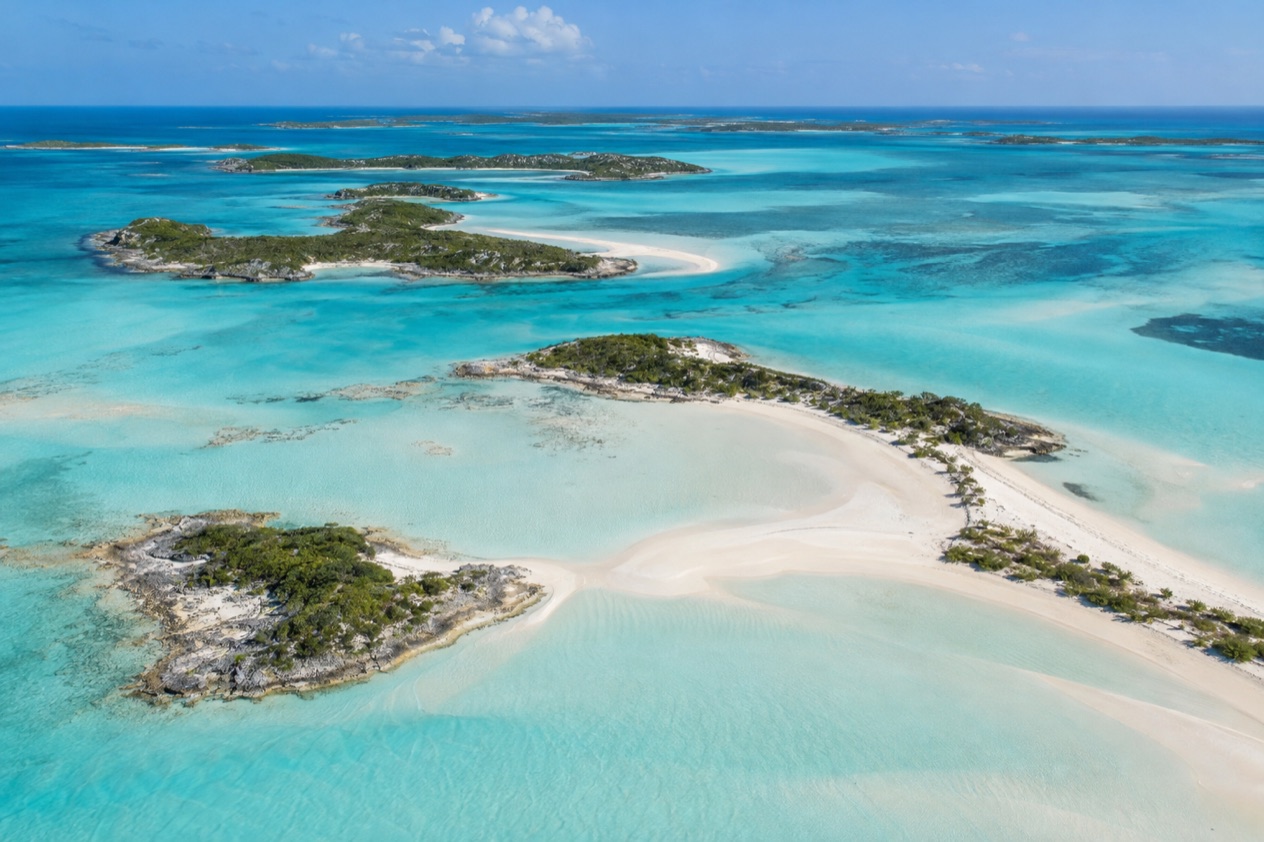
What is the weather like in the Exumas in March?
March is warm and bright, with the sea slowly gaining heat and the days stretching toward spring.
| Month | Sea at the Exumas (°F) | Daylight on the 15th (hours and minutes) |
|---|---|---|
| February | 77.2 | 11 h 25 min |
| March | 78.9 | 12 h 04 min |
| April | 80.0 | 12 h 45 min |
In Nassau, highs average about 81°F in March, and that gives a fair sense of the air across the islands: mornings mild enough for coffee on a porch, afternoons that feel properly warm in the sun, and evenings that call for a light layer rather than a jacket. Rain tends to arrive as brief showers that pass quickly, leaving the sky washed and the sand drying within the hour.
The sea near George Town sits in the high 70s, which is why a morning boat ride in a rash guard or a light cover-up feels pleasant, while the breeze on the way back can be a little cool on wet skin. Daylight runs a bit past twelve hours in the middle of the month, so there is time for a long boat day and still an unhurried dinner on shore.
The light is the quiet pleasure of the month. Early and late in the day it turns soft and golden over the shallows, and the color of the water is most vivid when the sun is high behind you. Bring sunglasses with polarized lenses if you have them, because they cut the glare and let you read the sandbars from the boat.
Can you swim in the Exumas in March?
Yes, the water is warm enough for a proper swim, sitting in the high 70s, though it may feel fresh for the first minute if you step in after hours in the sun.
Much of the pleasure here is in the shallows. Sandbars, sheltered coves and the quiet water around the cays make wading and floating a natural part of a boat day, while the open Atlantic side of an island can look and feel quite different from a protected inlet. The weather shifts daily and varies along the coastline, so one beach may offer something entirely different from the next.
For snorkeling, Thunderball Grotto just west of Staniel Cay is the name everyone knows, an underwater cave system where visitors can snorkel, dive and wade among yellow-tail snappers, angelfish and sergeant majors, with colorful coral nearby. A snorkel mask of your own, reef-safe sunscreen and a light long-sleeved top for the boat ride back are the useful extras to bring.
What to do in the Exumas in March
March is the closing stretch of the lobster season, which ends on March 31, and the menus show it. Look for grilled lobster on the beach, stewed lobster in a rich brown gravy and the cool, lime-bright crawfish salad that locals pile on a sandwich. Across plenty of Bahamian menus, crawfish and lobster serve as interchangeable terms, which means a chalkboard showing either one points to the very same dish.
Beyond the table, the month is made for being on the water. The mornings suit a boat trip to the cays, the afternoons suit a long lunch with your feet near the sand, and the evenings suit a slow walk along the waterfront in George Town. With more than 365 islands and cays in the Exuma district, the sensible approach is to choose one or two outings and let them take their time.
Pig Beach on Big Major Cay
The swimming pigs are the picture most people carry home from the Exumas. They live on Big Major Cay, also called Pig Beach, close to Staniel Cay, and the island is a small, sandy place where the animals wander down to the shoreline whenever a boat noses in. The group is small, about twenty pigs and piglets, so it feels more like a visit than a spectacle.
The only way in is by water, whether you take a private boat, charter one or join a booked boat tour. The island also has three freshwater springs, a detail that explains how animals live there at all. Go for the scene rather than a checklist: the turquoise shallows, the pigs paddling out and the quiet that returns when the boat leaves.
Thunderball Grotto and Staniel Cay
Thunderball Grotto sits just west of Staniel Cay, a limestone cave that fills with light through openings in its roof. Visitors snorkel, dive and wade there, and the fish crowd in around the rocks, with sergeant majors, angelfish and yellow-tail snappers among them. Corals color the surroundings, and the whole place feels like swimming inside an aquarium.
Staniel Cay itself is a small settlement with a marina feel, a good base for the grotto and for Pig Beach, both of which sit nearby. Spend the morning in the water, then return for lunch on land while the sun is high and the shallows glow.
Exuma Cays Land and Sea Park
The park is a protected stretch of cays and clear water, and it is a no-take reserve where all fishing is prohibited. That is why the marine life around it feels so abundant. Established in 1958, it was the first marine reserve in the Bahamas, and its 176 square miles of land and sea draw visitors who care about wildlife as much as scenery.
Think of it as a place for slow exploring by boat, with sheltered anchorages and quiet beaches. The park office keeps set hours, shown here.
| Site | Open |
|---|---|
| Exuma Cays Land and Sea Park office | Monday to Friday 9am to 5pm, Sunday 9am to 12pm |
Santanna’s on Little Exuma
At the southern end of Little Exuma, Santanna’s is a seaside stop named after Mrs. Rolle’s granddaughter. It grew from a simple idea: Mr. Rolle caught fresh lobster and grilled it, and the dish drew people to a spot by the water. In the last month of the season, a plate of it here makes a fitting end to a day on the road.
Pair it with a cold drink, a table with a view of the water and no particular plan afterward. It suits anyone who likes to eat simply, close to where the food was caught.
A two-day itinerary for the Exumas in March
Day 1 starts on the water, because the morning light is gentle and the sea is at its calmest feel before the breeze picks up. Head out early by boat toward Staniel Cay and Thunderball Grotto, and snorkel while the sun is still climbing and the cave is bright. Pig Beach fits naturally on the same run, since it lies near Staniel Cay.
Back on land by midday, take a long lunch at a casual spot near the marina. Spend the afternoon quietly, with a swim or a walk on a nearby beach, then watch the sun go down over the water. If clouds roll in, a late lunch and a slow afternoon indoors cost you very little.
Day 2 turns toward the south and the land. Begin with a relaxed breakfast in George Town, then spend the morning along the harbor and its small shops. Mid-morning is a good moment to visit the park office hours permitting, or simply to look out over the water and plan a boat day inside the park.
For the afternoon, drive on to Little Exuma for lobster at Santanna’s while the season lasts, then linger on the shore. Sunset arrives a little past six, so you can stay by the water until the light fades. On a wet day, shift the plan to a long meal and a slow walk between showers.
Is the Exumas busy in March?
March is lively but not packed, with a steady flow of boaters and travelers who want the warming sea and the late-winter sun.
School breaks and holiday weeks bring more families, and the Easter period, which moves from year to year, can add to the crowds when it falls in or near the month. Marinas and popular stops such as Staniel Cay tend to feel busier then, while the quieter cays stay quiet whatever the calendar says. Rooms and boat tours are easier to find in the weeks outside the school breaks.
As a habit, book early for any holiday week and a little later for the ordinary ones. The Exumas are a place of small inns and small boats, so the choices run out faster than in a big resort town. For the park, the office keeps regular weekday and Sunday morning hours, which helps you plan a visit around it.
Restaurants in George Town and on Little Exuma feel relaxed, and a seat at a seaside table is often a matter of timing rather than a long wait. Lunch is the natural meal for lobster, and the evenings tend to settle into a calm, unhurried pace.
What to pack for the Exumas in March
Pack for sun, salt and a breeze on the water, with one warm layer for evenings.
- A light long-sleeved top, for sun and wind on the boat
- Reef-safe sunscreen, for long hours on open water
- A snorkel mask of your own, for the grotto and the shallows
- Water shoes, for rocky shorelines and sandbars
- A light sweater, for cooler evenings by the water
- A dry bag, for phones and cameras on small boats
Good to know before you go
The U.S. State Department rates the Bahamas Level 2, “Exercise increased caution”, and says most crime occurs in Nassau on New Providence and in Freeport on Grand Bahama.
March falls outside the official Atlantic hurricane season, which runs from June 1 to November 30. The lobster season ends on the last day of the month, so any lobster dinner you want is best planned for the early weeks. Big Major Cay can be reached only by boat, so a pig visit means arranging a boat of some kind, whether private, chartered or a booked tour.
The Exumas in March vs February and April
Moving earlier to February means a cooler sea and shorter days, with the lobster season still in full swing and a touch more winter feel in the evenings. It suits travelers who want the quiet of the cays and do not mind a brisker swim.
Moving later to April brings a warmer sea and longer days, which makes snorkeling and long boat days more comfortable. The catch is that the lobster season has closed by then, so the grilled and stewed dishes of March become a memory.
March sits in the middle: a sea warm enough for swimming, light into the evening and the last chance for crawfish. Choose February for the coolest and quietest mood, April for the warmest water, and March if you want a little of both.
Is March a good time to visit the Exumas?
Yes, March suits travelers who want boat days, warm shallows and a last taste of lobster without waiting for summer.
It will please snorkelers, families who love a pig-beach outing, and anyone who likes to eat well and move slowly. Those who want hot, bath-warm water for hours at a time may prefer a later month.
On arrival, start with the water: a morning trip to Staniel Cay, the grotto and the pigs sets the tone, and the rest of the days can follow from there. What stays with you from March is the mix of closing-season lobster, brightening light and a sea that is just warming up.
Sources
- Open-Meteo Marine API, average 2015-2024, checked October 10, 2026
- sunrise-sunset.org, sunrise and sunset calculated for the 15th of the month, checked October 10, 2026
- NOAA NCEI, GHCN-Daily station BF000078073 (Nassau Airport), normals 1991-2020 computed from the daily record (https://www.ncei.noaa.gov/access/services/data/v1?dataset=daily-summaries&stations=BF000078073), checked October 10, 2026
- Bahamas Ministry of Tourism, crawfish season (https://www.bahamas.com/blog/its-crawfish-season), checked October 10, 2026
- Bahamas Ministry of Tourism, Investments & Aviation (bahamas.com), Protecting The Exumas (https://www.bahamas.com/experiences/protecting-the-exumas), checked October 10, 2026
- Bahamas Ministry of Tourism, Investments & Aviation (bahamas.com), Santannas Exuma (https://www.bahamas.com/experiences/santannas-exuma), checked October 10, 2026
- Bahamas Ministry of Tourism, Investments & Aviation (bahamas.com), Official Home Swimming Pigs (https://www.bahamas.com/experiences/official-home-swimming-pigs), checked October 10, 2026
- Wikipedia, Big Major Cay (https://en.wikipedia.org/wiki/Big_Major_Cay), checked October 10, 2026
- Bahamas Ministry of Tourism, Investments & Aviation (bahamas.com), Exuma Cays Land And Sea Park (https://www.bahamas.com/natural-wonders/exuma-cays-land-and-sea-park), checked October 10, 2026
- Bahamas National Trust, Exuma Cays Land and Sea Park (https://bnt.bs/explore/exuma/exuma-cays-land-sea-park/), checked October 10, 2026
- Bahamas Ministry of Tourism, Investments & Aviation (bahamas.com), Thunderball Grotto (https://www.bahamas.com/natural-wonders/thunderball-grotto), checked October 10, 2026
- Wikipedia, Geography of the Bahamas (https://en.wikipedia.org/wiki/Geography_of_the_Bahamas), checked October 10, 2026
- Bahamas Ministry of Tourism, Investments & Aviation (bahamas.com), Island FAQ (https://www.bahamas.com/plan-your-trip/island-faq), checked October 10, 2026
- Bahamas Department of Immigration, Entry requirements (https://www.immigration.gov.bs/entry-requirements/), checked October 10, 2026
- Bahamas Department of Immigration, Before your arrival (https://www.immigration.gov.bs/entry-requirements/before-your-arrival/), checked October 10, 2026
- U.S. Department of State, The Bahamas Travel Advisory, Level 2 (https://travel.state.gov/), checked October 10, 2026
- NOAA National Hurricane Center, Climatology (https://www.nhc.noaa.gov/climo/), checked October 10, 2026
To plan your stay
- Things to Do in the Exumas: Swimming Pigs, Thunderball Grotto, Beaches and Fresh Lobster
- Where to Stay in the Exumas: George Town, Little Exuma, Staniel Cay and How to Choose
- The Exumas from Miami: Flights, Connections, Boats and Making a Day of It
- Know Before You Go to the Exumas: Entry Rules, Money, Getting Around and Sun