
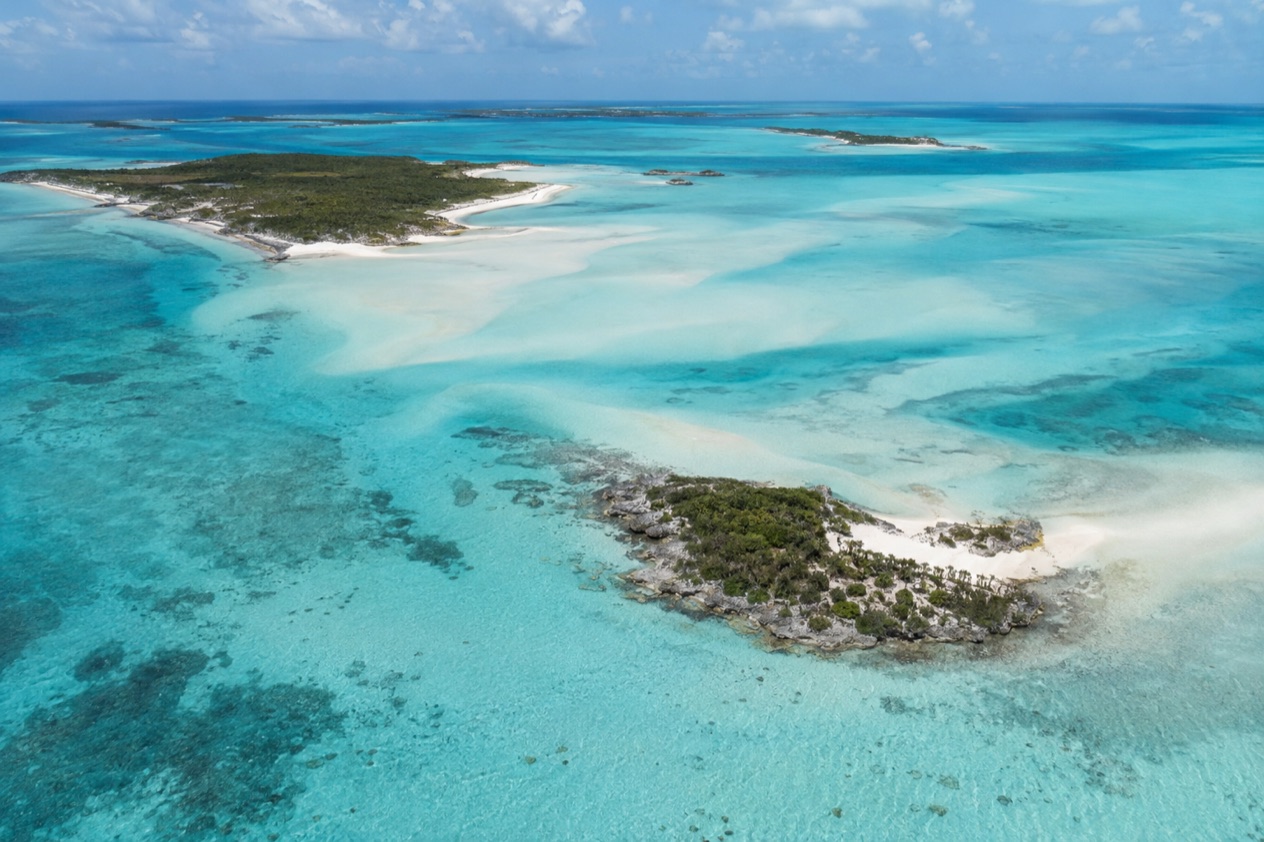
The plane drops toward Great Exuma over water in shades of green and blue that look painted on, and the first thing you notice when the door opens is the warm, salty air and the unhurried pace of the people on the ground. Island life here runs on its own clock, spread across a long chain of cays rather than packed into one town. A few things are worth knowing before you land: the entry paperwork, how money works, how people move between islands, and how strong the sun is.
What should you know before visiting the Exumas?
Four things matter most: your travel documents, the way the islands are spread out, the limits of medical care outside the big towns, and the sun. The Exumas are a district of over 365 islands and cays, so “going to the Exumas” can mean a hotel near George Town on Great Exuma or a boat day among the cays further up the chain. Decide early which of those pictures you have in mind, because they feel very different.
Documents come first. A passport, a completed arrival card and a return or onward ticket are the core of what officers expect, and the entry section below walks through each. Money is simple, since U.S. dollars and Bahamian dollars circulate side by side. The more unusual parts are practical: the cays are small, the clinics are small, and the sun is not shy.
First-time visitors are often surprised by how much of the Exumas happens on the water. Pig Beach, near Staniel Cay, is a sandy beach occupied by pigs, and they swim out to greet boats. At Staniel Cay Marina you are allowed to swim with nurse sharks at your own risk, and the sharks can bite if hands go near their mouths.
Visitors also tend to be struck by how quiet the evenings are, with George Town, the capital and largest town in the district, feeling more like a friendly village than a resort hub. Drivers keep to the left, which catches some people out the first time they cross a road.
Entry, fees and paperwork
Everyone entering the Bahamas needs a passport. The Bahamas Department of Immigration asks travelers to present one that is valid for at least six months, and passport cards will not be accepted. U.S. citizens visiting as bona fide visitors do not need a Bahamian visa for a stay of up to eight months.
You also fill in the Bahamas Immigration Disembarkation/Embarkation Card, and U.S. citizens must show proof of anticipated departure from the Bahamas. A return or onward ticket is required of all visitors. Officers may ask for evidence that you have enough funds to support yourself during the stay, so have that in mind when you pack your papers.
The length of stay that is stamped in your passport depends on the immigration officer at the port of entry, and it can differ from the maximum. If you want to stay longer than the period you were granted, you must ask the Department of Immigration for permission. The Bahamas Health Visa and the pre-arrival COVID-19 testing requirement have been eliminated, so visitors can travel freely to and throughout the islands regardless of vaccination status.
Not every arrival goes through the same door. Exuma International Airport on Great Exuma is the main gateway, with daily domestic and international flights. Staniel Cay Airport is an official Port of Entry in the Exuma Cays, with Customs and Immigration on site, which matters if you are heading straight to the cays.
On the shopping side, stores that display the Global Blue Tax-Free Shopping sign let qualifying visitors skip the VAT and the service fee on their purchases. You show a passport or valid ID to take part.
| Fee | Amount | Who pays |
|---|---|---|
| VAT saving at Tax-Free Shopping stores | Up to 7% of the purchase price | Qualifying shoppers pay no VAT and no service fee |
| Minimum purchase for tax-free shopping | More than $25 | Shoppers showing a passport or valid ID |
Money and cards
The Bahamian dollar is on par with the U.S. dollar, and both are accepted interchangeably on all islands. In practice that means you can pay with the greenbacks in your wallet and receive Bahamian bills in change, with no conversion to work out at the counter. Keep the Bahamian notes for souvenirs or spend them before you leave.
ATMs are found on Nassau and Paradise Island, on Grand Bahama and on most major Out Islands. The Exumas are Out Islands, though, and the advice for them is to carry cash. That is worth taking seriously if your plans include the cays beyond George Town, where settlements are small and spread apart.
Tax-free shopping is the one money detail that rewards a little planning. If a shop carries the Global Blue sign, bring your passport or another valid ID and spend more than the minimum, and you can save up to a fraction of the price in VAT. It is a small saving, but it is easy to claim when the sign is there.
Getting around
Driving in the Bahamas is on the left-hand side of the road. If you are used to driving on the right, that is the single biggest adjustment on Great Exuma, where the island stretches for 37 miles and George Town sits just a few miles from the airport. Little Exuma is joined to Great Exuma by a small bridge, so the two feel like one long island.
Most travelers arrive at Exuma International Airport, the primary gateway into the Exumas, which has daily domestic and international flights. From there, the capital is only a few miles away. The Bahamas as a whole is an archipelago of 16 islands that you reach by flying into Nassau, the country’s gateway, or directly into an Out Island, and the Exumas are one of the islands you can fly into directly.
Moving between islands is done by air or by boat. Travelers can fly between Bahamian islands using scheduled and chartered air service from certified domestic and international carriers. Staniel Cay Airport serves the Exuma Cays and, as a Port of Entry, handles Customs and Immigration for arrivals there.
Some of the best-known sights are reached by water. The Norman’s Cay plane wreck, a crashed cargo plane lying in shallow water in the lagoon of Norman’s Cay in the northern Exumas, can be reached by a tour from Staniel Cay or from Nassau if you do not have your own boat. Pig Beach lies near Staniel Cay, so a boat day from there can take in both.
Health and the sun
Medical care in the Bahamas is concentrated on New Providence and Grand Bahama, and even there serious illnesses or injuries might not be treatable locally. The Out Islands, which include the Exumas, have only small clinics, and care is limited. Ambulance service is available on the major islands.
Because of that, travel insurance that covers medical evacuation deserves a place on your list. Serious health problems requiring hospitalization or evacuation to the United States can cost tens of thousands of dollars in up-front costs. It is the kind of line item you hope never to use and are glad to have if a boat accident or a bad fall happens far from a hospital.
The sun is the everyday health issue. Sunscreen is really needed, because the sun in the Bahamas is intense, and it feels stronger still on a boat where the water throws the light back at you. Women are advised to bring a hat, wide-brimmed or otherwise, to block the sun on beaches, and a hat helps anyone on a long day among the cays.
Around wildlife, use the same care you would anywhere. At Staniel Cay Marina, swimming with nurse sharks is allowed at your own risk, and the sharks can bite if you put your hands near their mouths. Keep your hands to yourself and let the animals come to you.
Local customs and etiquette
Bahamians value a greeting. Walk into a shop, a restaurant or a bus and a “good morning” or “good afternoon” is expected before you ask for anything, and it is returned warmly. In a small settlement on Great Exuma, saying hello to people you pass on the road is simply part of being polite.
Dress is relaxed. Dining in a restaurant wearing flip-flops and cargo shorts is commonplace, and men will want standard swim trunks for the beach. Swimwear belongs on the beach and the boat, though, so put on a shirt and cover-up when you walk into a town, a shop or a church. Church is taken seriously on Sundays, and visitors who attend a service are welcomed if they dress neatly.
Meals tend to follow island time. Lunch is a long, social affair, and dinner is often early to moderate by city standards, with plenty of conch in the form of salad, fritters or cracked, along with fresh fish and peas and rice. Do not rush your server. If a local invites you to a meal, the Bahamian habit of hospitality means accepting is a compliment, and the People-to-People programme pairs travelers with volunteer locals who like to share their islands.
Bargaining is part of a straw market or a craft stand, but it is done gently and with a smile, not as a contest. Ask a price, chat for a moment, and make one fair counteroffer.
On the law, be clear: marijuana and all products containing its derivatives, such as CBD and THC, are not legal in the Bahamas. A prescription or medical card does not exempt you, and drug violators are regularly arrested even for small quantities.
One more local habit worth following is care for the sea. The Bahamas spans 100,000 square miles of the world’s clearest waters, and groups such as the Bonefish & Tarpon Trust have helped set up six nationally protected bonefish conservation zones. Leave shells, sand and coral where you found them.
Good to know before you go
The U.S. State Department rates the Bahamas Level 2, “Exercise increased caution”, and says most crime occurs in Nassau on New Providence and in Freeport on Grand Bahama.
The Atlantic hurricane season runs from June 1 to November 30, so a trip in the autumn falls inside it. The Bahamas Ministry of Tourism & Aviation monitors tropical storms and hurricanes in the Atlantic, and travelers are encouraged to check the Bahamas.com hurricane page regularly for updates on storm-related weather conditions.
Keep your passport, your arrival card and your return ticket together in one place, and hold on to the receipts from any tax-free purchases. The last habit is simple: pack cash in small bills for the cays, since both currencies are accepted and the Out Islands are where it is most useful.
Sources
- Bahamas Department of Immigration, Entry requirements (https://www.immigration.gov.bs/entry-requirements/), checked October 10, 2026
- Bahamas Customs and Excise, Conditionally duty-free items (https://www.bahamascustoms.gov.bs/imports-and-exports/conditionally-duty-free-items/), checked October 10, 2026
- U.S. Department of State, The Bahamas Travel Information, Health (https://travel.state.gov/), checked October 10, 2026
- U.S. Department of State, The Bahamas Travel Information, Traveling and transportation (https://travel.state.gov/), checked October 10, 2026
- U.S. Department of State, The Bahamas Travel Information, Local laws and special circumstances (https://travel.state.gov/), checked October 10, 2026
- Bahamas Ministry of Tourism, Investments & Aviation (bahamas.com), Island FAQ (https://www.bahamas.com/plan-your-trip/island-faq), checked October 10, 2026
- Bahamas Ministry of Tourism, Investments & Aviation (bahamas.com), People-to-People program (https://www.bahamas.com/plan-your-trip/people-to-people), checked October 10, 2026
- Bahamas Ministry of Tourism, Investments & Aviation (bahamas.com), travel blog, VAT-free shopping rules (https://www.bahamas.com/blog/taking-advantage-of-value-added-tax-free-shopping-in-the-bahamas), checked October 10, 2026
- Bahamas Ministry of Tourism, Investments & Aviation (bahamas.com), travel blog, dress code and what to wear (https://www.bahamas.com/blog/how-to-dress-during-your-visit-to-the-bahamas), checked October 10, 2026
- Bahamas Ministry of Tourism, Investments & Aviation (bahamas.com), Sustainability (https://www.bahamas.com/plan-your-trip/sustainability), checked October 10, 2026
- Bahamas Department of Immigration, Before your arrival (https://www.immigration.gov.bs/entry-requirements/before-your-arrival/), checked October 10, 2026
- U.S. Department of State, The Bahamas Travel Information, Entry and exit requirements (https://travel.state.gov/), checked October 10, 2026
- Bahamas Ministry of Tourism, Investments & Aviation (bahamas.com), Hurricane and storm information (https://www.bahamas.com/hurricane-storm-information), checked October 10, 2026
- Bahamas Ministry of Tourism, Investments & Aviation (bahamas.com), The Exumas (https://www.bahamas.com/islands/the-exumas), checked October 10, 2026
- Wikipedia, Exuma (https://en.wikipedia.org/wiki/Exuma), checked October 10, 2026
- Wikivoyage, Exuma travel guide (https://en.wikivoyage.org/wiki/Exuma), checked October 10, 2026
- Wikipedia, George Town, Exuma (https://en.wikipedia.org/wiki/George_Town,_Bahamas), checked October 10, 2026
- Bahamas Ministry of Tourism, Investments & Aviation (bahamas.com), Exuma Sailing Club (https://www.bahamas.com/experiences/exuma-sailing-club), checked October 10, 2026
- Bahamas Ministry of Tourism, Island hopping (https://www.bahamas.com/getting-here/island-hopping), checked October 10, 2026
- Bahamasair, home (https://www.bahamasair.com/), checked October 10, 2026
- U.S. Department of State, The Bahamas Travel Advisory, Level 2 (https://travel.state.gov/), checked October 10, 2026
- NOAA National Hurricane Center, Climatology (https://www.nhc.noaa.gov/climo/), checked October 10, 2026
To plan your stay
- Best Time to Visit the Exumas: Weather, Sea Temperatures, Hurricane Season and Festivals
- Things to Do in the Exumas: Swimming Pigs, Thunderball Grotto, Beaches and Fresh Lobster
- Where to Stay in the Exumas: George Town, Little Exuma, Staniel Cay and How to Choose
- The Exumas from Miami: Flights, Connections, Boats and Making a Day of It