
On the first mornings of the year, the cowbells and goatskin drums of Junkanoo are still in everyone’s head, and the harbor at George Town is already busy with small boats heading out past the moored sailboats. The light is low and clean, the air is soft, and the water in Elizabeth Harbour looks like poured glass before the breeze comes up. January in the Exumas means mild days for boat trips, sandbars and beach walks, crawfish on the table, and a slow pace after the holiday rush.
What is the weather like in the Exumas in January?
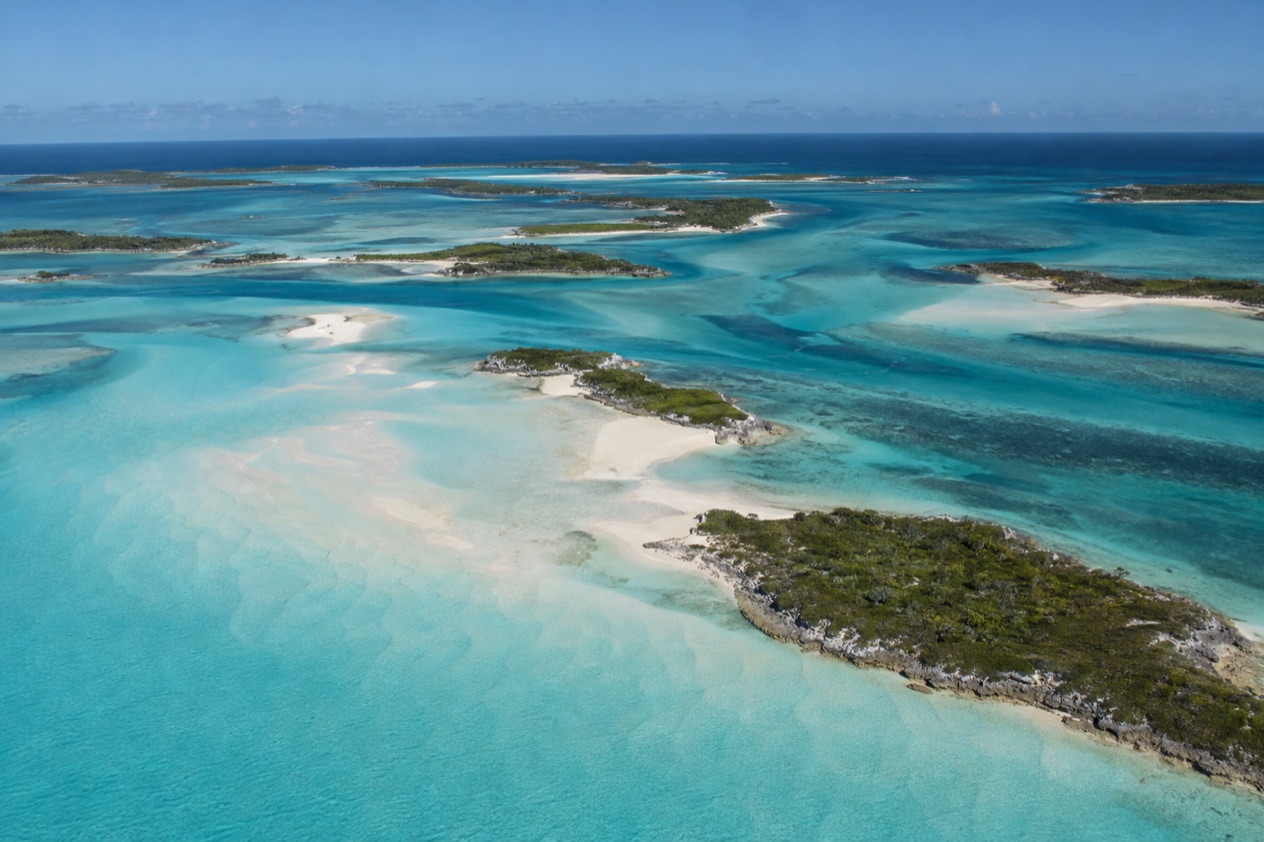
January is mild and comfortable, with sunny days that suit being outside from morning to evening, and a sea that is a little cooler than in the fall but still pleasant. The Exumas are a chain of islands and cays strung out over open water, so the weather you feel depends a lot on whether you are on a sheltered beach or out on a boat.
| Month | Sea at the Exumas (°F) | Daylight on the 15th (hours and minutes) |
|---|---|---|
| December | 78.9 | 10 hours 44 minutes |
| January | 78.3 | 10 hours 53 minutes |
| February | 77.2 | 11 hours 25 minutes |
In Nassau, highs average about 79°F in January and the nights are noticeably cooler, with only a few rainy days in the month. That is the air picture for the region: warm afternoons in a T-shirt, evenings when a light layer feels good on a restaurant terrace or on the deck of a boat.
Days are short compared with summer, so the plan matters. Mornings are the time for the water, when the sun is already strong enough to warm you and the harbor is quiet.
By late afternoon the light turns gold and low over the flats, and dinner comes early. Showers, when they come, tend to be brief and followed by clearing skies, but cloudy and breezy spells do pass through, and a windy day changes how a boat trip feels.
Sea temperatures drift down a touch from December through February, which is why a swim in January feels fresher than it did a month earlier. Sun protection still matters at midday, because the glare off pale sand and shallow water is strong even when the air feels cool.
Can you swim in the Exumas in January?
Yes, for most people the water is mild enough for a swim, though it is more refreshing than warm, and a long float is nicer after a few hours of sun than first thing in the morning. The sea around George Town sits a little cooler than in December, and cooler again as February approaches.
What the water is actually like on a given day depends on the wind and on which stretch of shore you choose. Sheltered coves and harbor-side beaches often look flat and clear, while open stretches facing the Atlantic can bring more motion.
Conditions change from day to day and from one beach to the next, so take what you see when you arrive as the guide. A swimsuit under your clothes and a light towel make it easy to take advantage of a good hour.
Snorkelers will find the shallow, clear water of the cays inviting for looking at fish and sand patterns, and a thin rash guard or shorty can take the edge off the cooler hours. Nurse sharks can bite when hands come close to their mouths, so at Staniel Cay Marina visitors swim with them at their own risk. Keep hands to yourself and let the animals pass.
What to do in the Exumas in January
January opens in the afterglow of Junkanoo. The largest parades take place in Nassau on Boxing Day and New Year’s Day, with costumes, whistles, cowbells, horns and goatskin drums, but the tradition belongs to all 16 islands and is celebrated year round. In the Exumas, that means the rhythm of the season lingers in conversation, in music at the bars and in the memory of the new year’s first morning.
This is also a good month for the table. Crawfish season in the Bahamas runs from August 1 to March 31, so January falls squarely inside it.
On many menus the words crawfish and lobster are used interchangeably, and you will see it as crawfish salad, with onions, sweet peppers, lime juice and diced lobster, sometimes piled on greens and sometimes tucked into a sandwich. Stew lobster in a rich brown gravy is a Bahamian classic, and conch, cracked or in a lime-bright salad, fills out the picture.
The mood in the settlements is unhurried. People are back to work after the holidays, boats come and go from the docks, and the days follow the rhythm of the water. Cooler mornings suit a walk along a quiet beach, and the middle of the day suits a boat. Evenings are for a rum drink and a plate of fried fish on a porch or a deck.
George Town and Elizabeth Harbour
George Town, founded in 1793, is the capital and the largest town of the Exumas and the natural base on Great Exuma. Exuma International Airport, the primary gateway into the islands, lies a few miles from town and has daily domestic and international flights. The Government Building, inspired by the architecture of the Government House in Nassau, is a popular tourist attraction and a good first photo stop, with its pastel color and its place beside the water.
Elizabeth Harbour is the heart of the scene. It is a cove off Great Exuma where sailboats anchor in good numbers, and where the Exuma Sailing Club has trained young boys and girls of Exuma since 2013, free of charge thanks to outside funding.
Watching small dinghies tack across the harbor is a pleasant way to spend an hour. Little Exuma, linked to the main island by a small bridge, is where you head for quieter beaches and a slower feel.
Staniel Cay, Pig Beach and the nurse sharks
Staniel Cay is the place in the Exuma Cays that many people picture first, and it has its own airport, an official Port of Entry with Customs and Immigration. Nearby is Pig Beach, a popular destination consisting of a sandy beach occupied by pigs. They wander the sand and the shallows, and watching them trot down to meet a boat is as much part of the visit as the beach itself.
At Staniel Cay Marina, visitors are allowed to swim with nurse sharks at their own risk. The sharks are used to people, but they can bite if you put your hands near their mouths, so the sensible way is to watch quietly and keep your hands close. January light is soft in the morning, which makes the water clear and the photos of the cays especially good.
The Norman’s Cay plane wreck
In the lagoon of Norman’s Cay in the northern Exumas lies a crashed cargo plane in shallow water, a favorite stop for snorkelers and photographers. If you don’t have a boat of your own, a tour leaving from Staniel Cay or Nassau will get you there. In January the water looks its clearest on bright, calm mornings, when the outline of the fuselage shows plainly through the surface and the cay is quiet around it.
A two-day itinerary for the Exumas in January
Day 1 is for George Town and Great Exuma. Start with the morning light at Elizabeth Harbour, when the sailboats sit still and the air is cool enough for a walk along the waterfront. Pass by the pastel Government Building, then settle into a harbor-side café for coffee and a Bahamian breakfast, with stew lobster or a plate of eggs and johnnycake if the kitchen has it.
At midday, cross the small bridge to Little Exuma and spend the early afternoon at a quiet beach, swimming when the water looks inviting and eating a crawfish salad or cracked conch at a beach shack. Days are short in January, so aim to be back near George Town as the light turns gold.
Dinner at a waterfront restaurant, with grilled fish or crawfish, suits the early dark. If a shower comes through, the Government Building, a long lunch and an afternoon at the harbor docks make a good indoor-leaning plan.
Day 2 moves to the cays around Staniel Cay. Go in the morning, when the light is soft and the water clearest, and begin at Pig Beach, where the pigs wander the sand. Then visit Staniel Cay Marina for the nurse sharks, watching from the water’s edge and keeping hands away from their mouths.
Spend the afternoon on a boat trip, perhaps to the plane wreck in the lagoon at Norman’s Cay, which is reached by tour from Staniel Cay if you have no boat of your own. Come back for a late lunch of fish or lobster at a casual spot on the cay, and end with sunset over the water. On a rainy or windy day, stay in a marina café and wait for the weather to clear, since the cays look best under blue sky.
Is the Exumas busy in January?
January is a month of two moods: the first days still carry the holiday spirit, and the rest of the month settles into a calmer rhythm. The New Year’s Day parades in Nassau draw crowds there, but the Exumas, spread over so many islands and cays, rarely feel packed in the way a single resort town might.
Boats and sailing visitors keep the harbor at George Town lively, and Staniel Cay is a regular stop for people who come for the pigs and the nurse sharks. Restaurant tables in the small settlements are limited by the size of the kitchens, not by crowds, so a relaxed approach usually works. Still, the holiday weeks around New Year’s are the time to arrange rooms and flights earlier, while the later weeks of the month leave more room to decide as you go.
The airport on Great Exuma has daily domestic and international flights, and Staniel Cay has its own airport as a Port of Entry, which means the cays are reachable without passing through George Town. Boat tours, such as the one to the Norman’s Cay plane wreck, run from Staniel Cay or Nassau, so a day on the water is part of most visits and is best planned with the weather in mind.
What to pack for the Exumas in January
Pack for sun, water and cooler evenings, with items that dry fast and fold small for boat days.
- A swimsuit or two, so one can dry while you wear the other after a morning in the water.
- A light sweater or windbreaker for evenings and breezy boat rides.
- Reef-friendly sunscreen and a wide-brimmed hat, since the glare off sand and shallow water is strong.
- Sandals and water shoes for beaches, docks and getting in and out of boats.
- A rash guard or thin wetsuit top for snorkeling when the water feels fresh.
- A waterproof pouch or dry bag for phones and cameras on boats.
Good to know before you go
The U.S. State Department rates the Bahamas Level 2, “Exercise increased caution”, and says most crime occurs in Nassau on New Providence and in Freeport on Grand Bahama.
January falls outside the official Atlantic hurricane season, which runs from June 1 to November 30. The month does bring the holiday stretch around New Year’s, when Junkanoo draws attention to Nassau, so flights into the islands are worth sorting out early. Exuma International Airport on Great Exuma is the primary gateway, and Staniel Cay Airport serves the cays as a Port of Entry with Customs and Immigration.
Entry rules for U.S. citizens are simple in outline. The Bahamas Department of Immigration says that all travellers arriving by air must hold a passport valid for at least six months, and that passport cards are not accepted.
U.S. citizens visiting as bona fide visitors do not need a Bahamian visa for a stay of up to eight months. Visitors must also have a return or onward ticket, and may be asked to show proof of sufficient funds for their stay.
The Exumas in January vs December and February
Moving the trip four weeks earlier brings you to December, when the sea is a touch warmer and the days are at their shortest. Christmas decorations and the run-up to Junkanoo give the month a festive feel in Nassau, though the Exumas themselves stay low-key. Crawfish season is on, as it is in January, so the table looks much the same.
Moving four weeks later brings you to February, when the water has cooled a little further and the days have stretched out noticeably, leaving more daylight for boats and beaches. The holiday afterglow is gone, and crawfish season is still open, though it ends at the end of March. Swimmers who feel the chill may find the water more bracing, while those who want longer days on the cays will welcome the extra light.
Choose December if you want the warmest sea and a trip wrapped around the holidays. Choose February if daylight matters most, for photography or long boat days. January sits in between, with mellow weather, the end of the holiday spirit and the settlements back to their own pace.
Is January a good time to visit the Exumas?
Yes, January suits travelers who want mild days on the water, boat trips to the cays and a relaxed pace after the holidays. It is a good month for anyone who likes crawfish, a morning at Pig Beach, a quiet walk on Little Exuma or an hour watching sailboats in Elizabeth Harbour.
Travelers who want bathwater-warm seas for long swims may prefer a later season, since the water is more refreshing than warm. Those who count on the biggest parades should plan around Nassau’s Boxing Day and New Year’s Day, which come right before the month begins.
On arrival, take the first morning slowly in George Town, with coffee by the harbor and a look at the Government Building, then decide where the weather points you next. What makes January special in the Exumas is the quiet after Junkanoo, when the drums fade, the harbor fills with boats and the cays wait in clear morning light.
Sources
- Open-Meteo Marine API, average 2015-2024, checked October 10, 2026
- sunrise-sunset.org, sunrise and sunset calculated for the 15th of the month, checked October 10, 2026
- NOAA NCEI, GHCN-Daily station BF000078073 (Nassau Airport), normals 1991-2020 computed from the daily record (https://www.ncei.noaa.gov/access/services/data/v1?dataset=daily-summaries&stations=BF000078073), checked October 10, 2026
- Bahamas Ministry of Tourism, Junkanoo (https://www.bahamas.com/events/junkanoo), checked October 10, 2026
- Wikipedia, Junkanoo (https://en.wikipedia.org/wiki/Junkanoo), checked October 10, 2026
- Bahamas Ministry of Tourism, Christmas season (https://www.bahamas.com/blog/christmas-season-officially-launched-in-the-bahamas), checked October 10, 2026
- Bahamas Ministry of Tourism, Investments & Aviation (bahamas.com), Junkanoo (https://www.bahamas.com/events/junkanoo), checked October 10, 2026
- Bahamas Ministry of Tourism, crawfish season (https://www.bahamas.com/blog/its-crawfish-season), checked October 10, 2026
- Bahamas Ministry of Tourism, Investments & Aviation (bahamas.com), The Exumas (https://www.bahamas.com/islands/the-exumas), checked October 10, 2026
- Wikipedia, Exuma (https://en.wikipedia.org/wiki/Exuma), checked October 10, 2026
- Wikivoyage, Exuma travel guide (https://en.wikivoyage.org/wiki/Exuma), checked October 10, 2026
- Wikipedia, George Town, Exuma (https://en.wikipedia.org/wiki/George_Town,_Bahamas), checked October 10, 2026
- Bahamas Ministry of Tourism, Investments & Aviation (bahamas.com), Exuma Sailing Club (https://www.bahamas.com/experiences/exuma-sailing-club), checked October 10, 2026
- Bahamas Ministry of Tourism, Investments & Aviation (bahamas.com), Protecting The Exumas (https://www.bahamas.com/experiences/protecting-the-exumas), checked October 10, 2026
- Wikipedia, Geography of the Bahamas (https://en.wikipedia.org/wiki/Geography_of_the_Bahamas), checked October 10, 2026
- Bahamas Ministry of Tourism, Investments & Aviation (bahamas.com), Island FAQ (https://www.bahamas.com/plan-your-trip/island-faq), checked October 10, 2026
- Bahamas Department of Immigration, Entry requirements (https://www.immigration.gov.bs/entry-requirements/), checked October 10, 2026
- Bahamas Department of Immigration, Before your arrival (https://www.immigration.gov.bs/entry-requirements/before-your-arrival/), checked October 10, 2026
- U.S. Department of State, The Bahamas Travel Advisory, Level 2 (https://travel.state.gov/), checked October 10, 2026
- NOAA National Hurricane Center, Climatology (https://www.nhc.noaa.gov/climo/), checked October 10, 2026
To plan your stay
- Things to Do in the Exumas: Swimming Pigs, Thunderball Grotto, Beaches and Fresh Lobster
- Where to Stay in the Exumas: George Town, Little Exuma, Staniel Cay and How to Choose
- The Exumas from Miami: Flights, Connections, Boats and Making a Day of It
- Know Before You Go to the Exumas: Entry Rules, Money, Getting Around and Sun