
The first surprise often comes at Lynden Pindling International Airport in Nassau, when a taxi pulls away from the curb and you realize the oncoming traffic is on the wrong side of your brain. Cars keep to the left in the Bahamas, and the rules behind that habit are British in spirit. For an American thinking about taking the wheel, the practical questions are the license, the side of the road and the few rules that matter most.
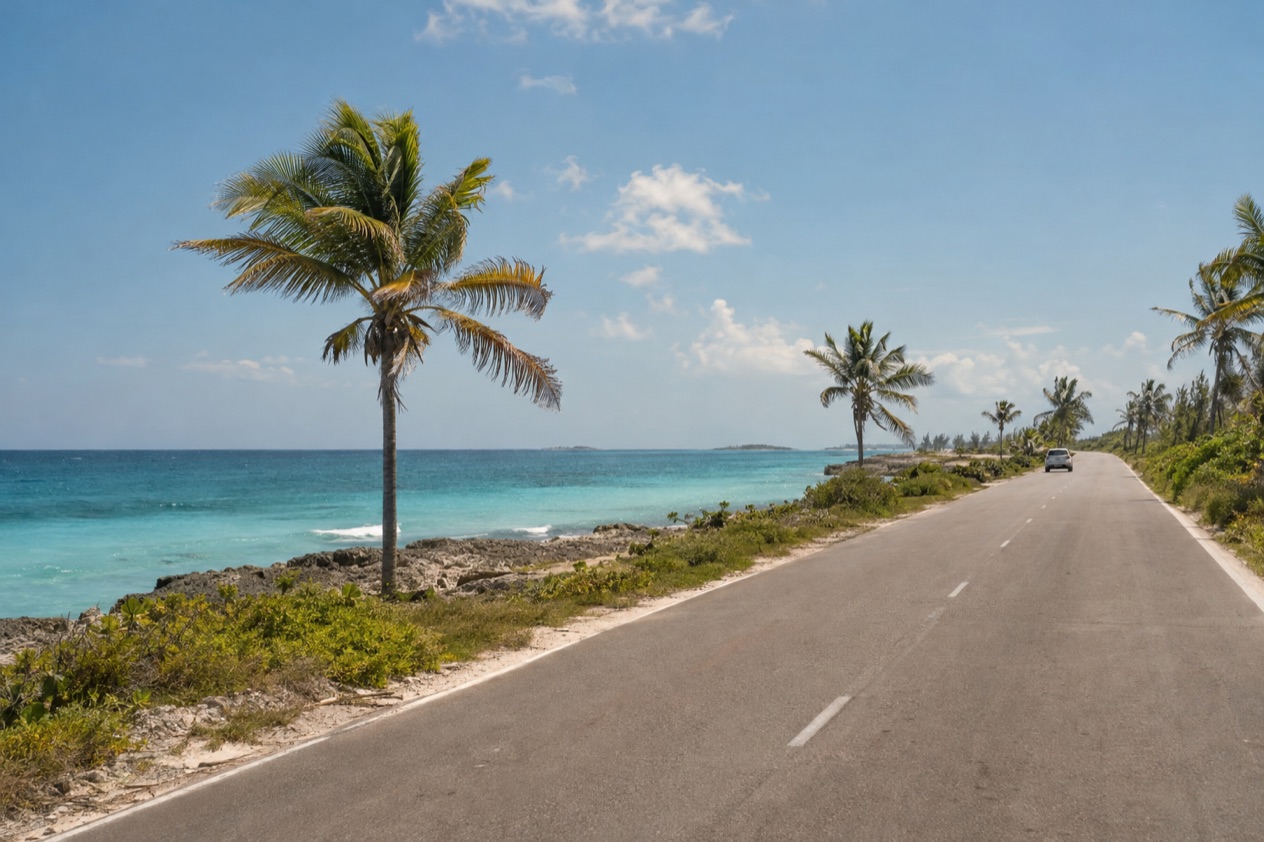
Can you drive in the Bahamas with a U.S. license?
The rules a visitor can lean on point to British practice, and the one clear statement is that visitors may use their residence permit for up to three months and may also apply for an international driving license. That wording is about how a stay is counted and what paperwork backs it up, so a traveler planning to drive should treat the license question as one to settle with the rental company before arrival.
Because the legal framework follows British lines, the habits that come with it follow too: you drive on the left, you give way at roundabouts to traffic already in them, and you are expected to behave like a driver in a country where the road is shared with pedestrians, scooters and buses at every turn.
What the license rules say
An international driving license is a translation of your home license, issued by the country that gave you the original, and it travels with that card rather than replacing it. The Bahamian rules mention that visitors may apply for one, which is the safest paper to hold if you plan to drive during your stay.
Carry both documents whenever you are behind the wheel, along with the rental agreement. Keeping them together in the glove box or a small bag means you are not searching for them if someone asks.
Rental desks at Lynden Pindling airport
Four rental brands have offices at the airport on New Providence: Avis, Budget, Dollar and Thrifty (a shared office), and Hertz. Each can be reached by phone or email, which is the natural place to ask what license they want to see and what their cars look like.
| Rental company | Phone | |
|---|---|---|
| Avis | +1-242-377-7121 | [email protected] |
| Budget | +1-242-377-7405 | [email protected] |
| Dollar / Thrifty | +1-242-377-0326 | [email protected] |
| Hertz | +1-242-377-8684 | [email protected] |
These desks serve New Providence. The other islands are separate places with their own roads and their own ways of getting around, and nothing about a Nassau rental carries over to them.
Getting around without driving
Plenty of visitors never touch a steering wheel. Taxi fares in the Bahamas are set by zones, with surcharges for extra passengers and luggage, and it is important to agree on the fare before the car leaves. Tipping is customary, with servers such as taxi drivers usually receiving 15%.
On New Providence the public bus costs $1.25 per person for the basic rate and exact change is required. Jitneys, the privately operated licensed buses, charge between $1 and $3 and are recognized by the route and number shown on the vehicle.
Water does some of the work roads cannot. Ferries and water taxis connect Downtown Nassau to Paradise Island, and elsewhere they link Great Abaco to its nearby cays and South Bimini Airport to the resort town of North Bimini. The Exumas have water taxis of their own.
Which side of the road do you drive on?
You drive on the left-hand side of the road in the Bahamas, on every island, whatever side your own car’s steering wheel sits on at home. For Americans it is a mental reset that takes a few minutes to feel natural and a few days to stop thinking about.
The reset is mostly about reflexes. Your instincts at an intersection, when pulling out of a parking lot or after stopping for gas, are all trained for the right. The first turn out of the rental lot is where mistakes happen, so slow down there and say “left, left, left” if that helps.
Settling into the left
A few habits help. Keep your body near the center line of the road, since that is where the driver sits in a car built for left-side traffic. Turn right across oncoming traffic and left into the nearest lane, the reverse of what you know. At roundabouts, look right, enter clockwise and wait for a gap.
Passengers can help by quietly reminding the driver at each turn. After a stop, the most common slip is to drift to the right side of an empty road, so a glance at the car in front is a good anchor. If no car is in front, the line down the middle of the road is your guide.
Nassau at the wheel
Traffic congestion in Nassau is severe, and drivers frequently show aggressive or careless tendencies. That is a hard setting in which to learn left-side driving. Downtown streets are narrow and busy, buses pull in and out, and the mix of taxis, delivery vans and private cars leaves little room for hesitation.
Accidents involving pedestrians on New Providence are common, so every crossing deserves attention. Look in both directions, remembering that the nearest lane to you will come from the right, and expect people to step off the curb at unmarked points.
Roads outside the capital
Outside Nassau the pressure drops, but the rule stays the same. Freeport on Grand Bahama has its own traffic and its own flooding after storms, and the Out Islands are separate places with their own roads and rhythms. Each island is its own small road network, linked to the others by air and by sea rather than by pavement.
The advantage of a quieter road is more time to think about which side you are on. Make a habit of checking your position each time you leave a stop sign, a gas station or a beach parking area, because those are the places where the old habit tends to return.
What are the road rules?
The rules a visitor most needs are simple: seatbelts for the driver and every passenger, helmets for anyone on a scooter or motorbike, and the left-hand rule that governs everything else. The rest is about reading the road, which is shaped by rain, buses and pedestrians.
Seatbelts and helmets
Seatbelts are required for drivers and passengers in the Bahamas, rear seats included. Put yours on before you start the car, and make it part of the routine for everyone who gets in, including on the short hop from a resort to a restaurant.
Wearing a helmet on a scooter or motorbike is compulsory. Scooters are a tempting way to see an island, but the same road conditions apply to them as to cars, with less protection around you, so the helmet is the minimum and the left-hand rule is the first thing to master.
Rain and flooded roads
Road flooding occurs frequently in many areas, including Nassau and Freeport, during and after rainstorms. A street that is dry in the morning can hold standing water by the afternoon, and low spots take a while to clear after the rain has stopped.
The Atlantic hurricane season runs from June 1 to November 30, so expect storms and heavy rain for much of the year. Let the weather set your schedule, and leave the standing water to the vehicles already in it.
Sharing the road with jitneys and taxis
Jitneys stop frequently and often without warning at undesignated stops. A driver following one should leave a generous gap and expect passengers to step out near the curb. Because the route and number are displayed on the vehicle, you can tell at a distance which bus is ahead and where it is likely to pull over.
Taxis follow a different logic, since they stop where the passenger asks. Give them room, particularly near hotels, the cruise port and the airport, where pickups and drop-offs bunch together and cars pull out into the lane without much notice.
On foot and on the water
If you are walking, the lesson from the drivers’ side applies in reverse. Traffic in the near lane comes from the right, so look right first at every crossing, and remember that accidents involving pedestrians on New Providence are common.
Boaters have rules of their own. Travelers entering the Bahamas by boat must clear customs at specified ports of entry, among them Marsh Harbour and Green Turtle Cay in the Abacos, Alice Town in Bimini, George Town in Exuma, Freeport Harbour on Grand Bahama and any marina on New Providence.
Good to know before you go
The U.S. State Department rates the Bahamas Level 2, “Exercise increased caution”, and says most crime occurs in Nassau on New Providence and in Freeport on Grand Bahama.
The Bahamian dollar is on par with the U.S. dollar and both are accepted interchangeably on all islands. ATMs are available on Nassau and Paradise Island, Grand Bahama and most major Out Islands, though carrying cash is advised for the Out Islands, where a small gas stop or a taxi ride may not take a card.
Hurricane season runs through November, so flooded streets and delayed plans are part of the picture for a driver in the fall. Keep the license, the rental papers and a clear sense of which side of the road you are on, and the rest of the drive is a matter of patience.
Sources
- U.S. Department of State, The Bahamas Travel Information, Traveling and transportation (https://travel.state.gov/), checked October 10, 2026
- Lynden Pindling International Airport, Renting a car (https://nassaulpia.com/to-from/renting-a-car/), checked October 10, 2026
- Bahamas Ministry of Tourism, Investments & Aviation (bahamas.com), Island FAQ (https://www.bahamas.com/plan-your-trip/island-faq), checked October 10, 2026
- Wikivoyage, Nassau travel guide (https://en.wikivoyage.org/wiki/Nassau), checked October 10, 2026
- Wikipedia, Transport in the Bahamas (https://en.wikipedia.org/wiki/Transport_in_the_Bahamas), checked October 10, 2026
- U.S. Department of State, The Bahamas Travel Advisory, Level 2 (https://travel.state.gov/), checked October 10, 2026
- NOAA National Hurricane Center, Climatology (https://www.nhc.noaa.gov/climo/), checked October 10, 2026
To plan your stay
- Best Time to Visit the Bahamas: Weather, Hurricane Season, Sea Temperatures and Junkanoo
- Where to Stay in the Bahamas: Best Islands, Resorts, Boutique Stays and How to Choose
- Getting Around the Bahamas: Flights, Ferries, Mailboats and Taxis in Nassau
- Know Before You Go to the Bahamas: Entry Rules, Money, Getting Around and Local Customs