
The line at the baggage carousel in Nassau thins out, suitcases bump along the belt, and a last door leads you past Bahamas Customs and out into the warm air. Most vacationers walk through with clothes, sunscreen and a snorkel mask and never think twice. The short answer is that personal vacation gear is rarely the issue, while food, certain weapons, business goods and a few oddities are where the rules bite.
What can you bring into the Bahamas?
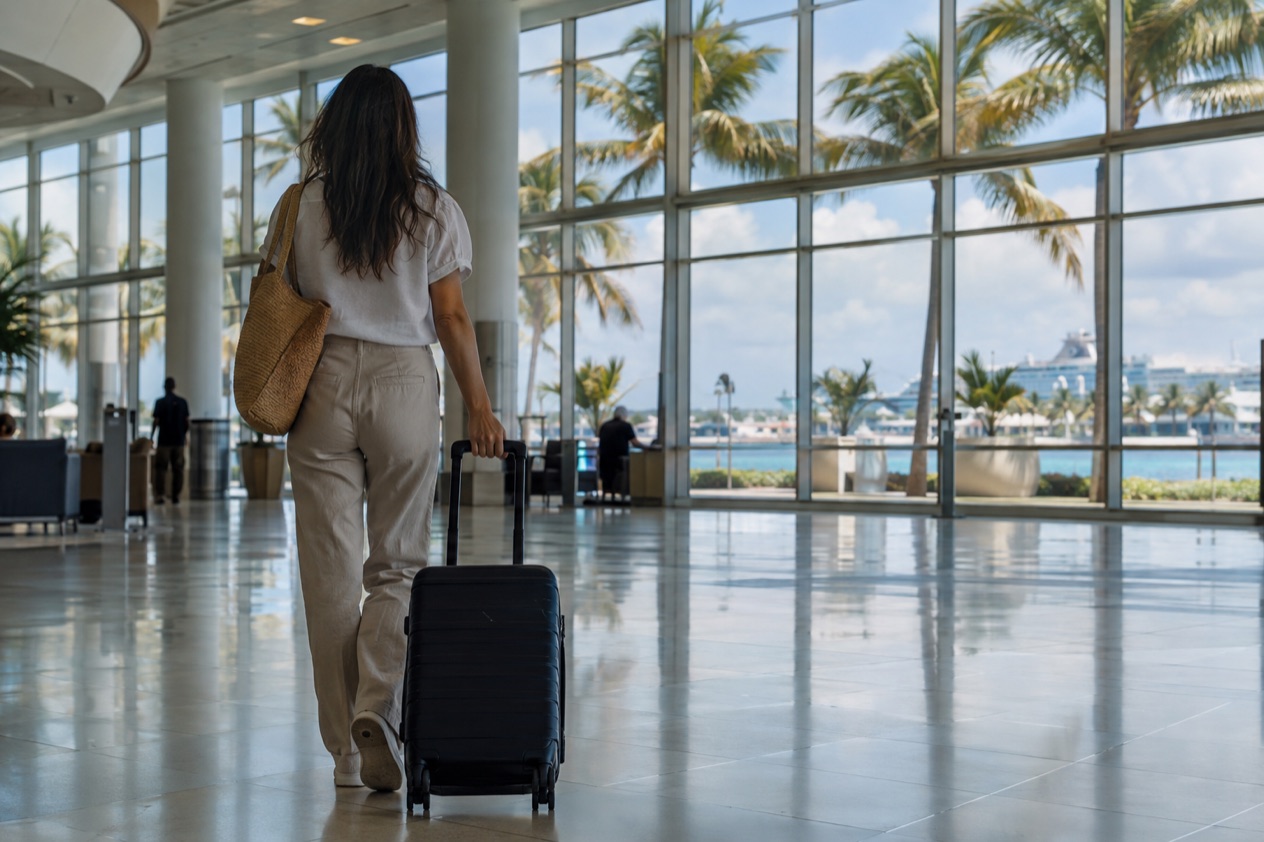
You can bring the ordinary things a vacation needs, and the written rules concentrate on goods that fall into restricted categories, goods brought in for business and goods that stay only for a while. At Lynden Pindling International Airport in Nassau the order is simple: Bahamas Immigration comes first, then you collect your checked luggage, then you pass through Bahamas Customs and the vacation begins.
Passengers continuing to another island in the Bahamas from Nassau face a departure process that amounts to clearing airport security. That keeps a connection to Exuma, Eleuthera or Abaco straightforward once you have been through arrivals.
Goods that need a license or permission
Anything imported for a business purpose is restricted unless the importer shows a current Business License, issued under the Business License Act, for inspection by the Comptroller. That matters for a photographer with a stock of prints to sell or a vendor carrying merchandise, far more than for a visitor with a camera for family photos.
More broadly, every good whose importation is restricted under any law in force in the Bahamas counts as a restricted good. Firearms and fireworks are restricted unless the Commissioner of Police gives special authorization.
Firecrackers and impact flash devices are restricted too, except those the Comptroller considers not dangerous. Mechanical games and devices set in operation wholly or partly by insertion (think coin-operated machines) are restricted imports, as are trailer caravans meant as living quarters, offices or workshops, unless the Minister specifically authorizes them.
Temporary imports for work and events
Contractors, people running special projects or group conventions, salesmen and amusement park operators can apply to bring goods in temporarily without paying full duty. The arrangement rests on a Temporary Bond and an import tax of 10% every 90 days. The application is made on the C41 Form, and a completed Bond for the Re-Exportation of the goods (CB7) is required, along with an approval letter from the Bahamas Ministry of Finance.
Approval has a turnaround of 2 to 24 hours. The costs and paperwork sit in the table.
| Item | What applies |
|---|---|
| Application form | C41 Form |
| Bond form | CB7, Bond for the Re-Exportation of goods |
| Letter required | Approval letter from the Bahamas Ministry of Finance |
| Import tax | 10% every 90 days |
| Processing fee | 1% of C.I.F. Value, minimum $10.00, maximum $1,500.00 |
| Turnaround | 2 to 24 hours |
Freeport and conditionally duty-free goods
Grand Bahama has its own regime for businesses. In Freeport, an importer of conditionally duty-free goods must be a licensee of the Grand Bahama Port Authority with bond status. To get it, the licensee applies in writing to Bahamas Customs for open warehouse status and a bond number, with a copy of the Port Authority license agreement and an original C.B.9 form.
The C.B.9 carries a minimum surety of $5,000.00 for a non-stocking business and $10,000.00 for a stocking one, and a 1% stamp duty on its face value is paid to the Department of Inland Revenue beforehand. Once the Comptroller approves, the licensee gains over-the-counter privileges to buy bonded goods locally for company use.
Each entry states its intended use on its face, such as Stock, Company Use, or Manufacturing or Assembly, and goods entered on a C-14 form attract only a $10.00 processing fee. Entries are processed in 2 to 24 hours, and the owner or agent must enter the goods in writing within five days, excluding Sundays and public holidays, after discharge begins, unless the Comptroller allows more time.
What can’t you bring in?
Several categories are flatly prohibited, and food is the one a traveler is most likely to stumble over. Meat, provisions, fruits and vegetables, and any article intended for human food that is unfit for human consumption are prohibited imports. So the sandwich in your carry-on, the bag of apples from home or a cooler of meat for a rental kitchen deserves a second thought before you pack it.
Indecent material and imitation currency
Indecent or obscene prints, paintings, photographs, books, cards, lithographic or other engravings, and any other indecent or obscene article are prohibited imports. That covers printed matter and images alike, so it applies as much to a paperback in a beach bag as to a crate of posters.
Any article bearing a design that imitates currency, a bank note or a coin in current use in the Bahamas or elsewhere is also prohibited. Novelty items printed to look like money, whether play bills for a party or souvenirs, fall into this group.
Underwater guns and copyrighted copies
Underwater guns are banned, with one exception: the device known as a Hawaiian Sling. Anyone planning to spearfish should know that the rest of the gear in that family stays home.
Copies of works for which the copyright owner has given notice to the Comptroller under Section 22 of The Copyright Act are prohibited imports as well.
Restricted rather than banned
Some items are not banned outright but need a license or sign-off, and they were described earlier: firearms and fireworks with the Commissioner of Police’s authorization, firecrackers and impact flash devices unless the Comptroller deems them not dangerous, coin-operated mechanical games, living-quarters trailers, and goods for business use with a valid Business License. If an item is in one of these groups, the authorization has to be in hand before it travels.
What can you take home to the U.S.?
Heading home from Nassau, the process happens before you ever board, because Lynden Pindling International Airport has a U.S. Customs and Border Protection pre-clearance facility. Passengers complete U.S. customs and immigration procedures in Nassau, ahead of their flight to the United States, and land in the U.S. as domestic arrivals in spirit.
Pre-clearance in Nassau
Pre-clearance moves the line from your arrival airport to the Bahamas. You go through U.S. procedures at the terminal in Nassau, then board. For anyone flying out from another island, it is the Nassau leg of the journey where this happens, so factor the stop into a connection day.
The airport offers programs meant to speed things up: TSA PreCheck, Mobile Passport Control, Global Entry and Automated Passport Control kiosks. These expedite security and customs, and frequent travelers already enrolled in them will find them useful here.
What goes in the suitcase
Souvenirs are the heart of the question, and the Bahamian rules above shape what you may have in the first place. Anything you could not legally buy or carry in the Bahamas, from imitation currency items to copyrighted copies, is better left behind, and food items fall under the Bahamas import limits on the way in rather than on the way out.
What can you take home to the U.S.? Keep purchases easy to reach in your bag so the officer can see them quickly.
Leaving from an island other than Nassau
For passengers bound for a non-U.S. destination or for another island in the Bahamas, the departure process from Nassau is as simple as clearing airport security. Customs and Immigration at the airport are laid out to make the route clear whichever way you are going.
On Abaco, ports of entry include Leonard M Thompson International Airport at Marsh Harbour, Great Abaco Beach Resort Marina, Marsh Harbour Public Dock, Baker’s Bay Marina on Guana Cay, and the public docks at Treasure Cay and Green Turtle Cay. Sandy Point Airport and Sandy Point Public Dock are ports of entry upon request.
Good to know before you go
The U.S. State Department rates the Bahamas Level 2, “Exercise increased caution”, and says most crime occurs in Nassau on New Providence and in Freeport on Grand Bahama.
The Atlantic hurricane season runs from June 1 to November 30, so a trip in those months deserves a flexible mindset when it comes to packing and plans. Bring goods that clear easily: personal items, nothing in the restricted groups, and no food from the prohibited list. Keep any business paperwork, licenses and approval letters in a folder you can hand over without digging, since customs officers inspect them on request.
Sources
- Bahamas Customs and Excise, Prohibited and restricted imports (https://www.bahamascustoms.gov.bs/imports-and-exports/prohibited-and-restricted-imports-and-exports/), checked October 10, 2026
- Bahamas Customs and Excise, Conditionally duty-free items (https://www.bahamascustoms.gov.bs/imports-and-exports/conditionally-duty-free-items/), checked October 10, 2026
- Bahamas Customs and Excise, Temporary imports (https://www.bahamascustoms.gov.bs/imports-and-exports/temporary-imports/), checked October 10, 2026
- Bahamas Customs and Excise, Ports of entry (https://www.bahamascustoms.gov.bs/customs-ports-of-entry/), checked October 10, 2026
- Lynden Pindling International Airport, Customs and immigration (https://nassaulpia.com/help/customs-immigration/), checked October 10, 2026
- U.S. Department of State, The Bahamas Travel Advisory, Level 2 (https://travel.state.gov/), checked October 10, 2026
- NOAA National Hurricane Center, Climatology (https://www.nhc.noaa.gov/climo/), checked October 10, 2026
To plan your stay
- Best Time to Visit the Bahamas: Weather, Hurricane Season, Sea Temperatures and Junkanoo
- Where to Stay in the Bahamas: Best Islands, Resorts, Boutique Stays and How to Choose
- Getting Around the Bahamas: Flights, Ferries, Mailboats and Taxis in Nassau
- Know Before You Go to the Bahamas: Entry Rules, Money, Getting Around and Local Customs