
Early in the morning at a Fort Lauderdale marina, a line of boats idles behind a lead boat, engines low, bound for water that turns from deep blue to glass green as the Gulf Stream falls behind. A few hours later the first cays rise low and sandy on the horizon. Boating in the Bahamas happens across a whole archipelago of marinas, sandbars and quiet harbors, and the page that follows is for anyone dreaming of arriving by their own hull or hiring one on the spot.
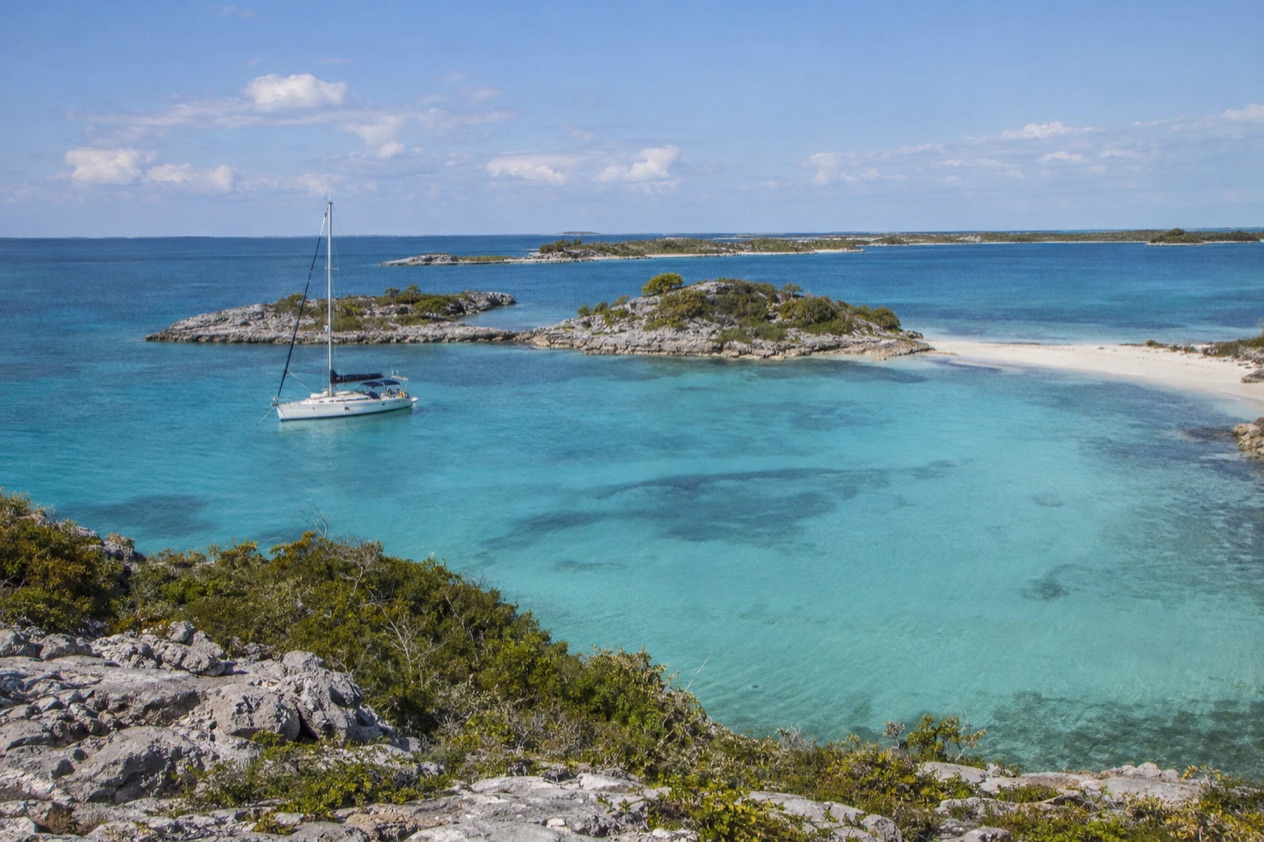
What is boating like in the Bahamas?
Boating here is a bucket list experience for many visitors: crystal blue water, a marina waiting at almost every stop, and a coast that never feels far away, since Florida lies only 50 nautical miles off. You can arrive on your own boat, join a group crossing, or simply rent a boat for the day once you land, with or without a local captain. Some travelers rent a boat before they ever think of renting a car.
The rhythm of a day on the water is gentle. You cast off after breakfast, pick a sandbar or a cay, anchor or tie up for lunch, swim, and come back to a dock where the dockmaster knows the best place for dinner. Marinas throughout the islands are well equipped with the boating and docking essentials for boats of all sizes and stays of any length, so a week-long cruise and a single night both fit.
Crossing from Fort Lauderdale
For first-timers, the crossing is the part that feels biggest. Boating Flings depart from Fort Lauderdale, with a caravan of participating boaters following a lead boat and a sweep boat at the rear, so nobody is alone out in the open water. Every year, first-time boaters in Florida can also join experienced captains on a trip from Fort Lauderdale to Bimini.
The reward is arriving in Bimini under your own power, with the Bahamas close enough that a Florida skyline is nearly still in memory. This suits people who own a boat but have never taken it abroad, and who like the company of a group on the first crossing. Cruisers heading on to the Out Islands can use a $300 Boating Fuel Credit at participating resorts and marinas.
Day charters and local captains
If you do not bring a boat, day charters put you on the blue water with or without a local captain. A captain brings knowledge of the cays, the tides and the spots worth stopping at, which matters in a place where the shallows change color every few hundred yards. Going without one suits people who already know how to handle a boat.
Around Harbour Island and Eleuthera, a boat is the best way to explore the maze of cays, according to Captain Ryan, who puts it bluntly: if you skip it, “You didn’t see nothin’.” It is the kind of day built around a swim stop, a picnic on the hull and long stretches of just watching the water go by.
Fishing and boatbuilding traditions
Fishing runs year round, and wherever you are in the islands you are never far from deep sea fishing. You can hire a local captain or set out on your own in search of big predators. The waters have long been known for their bounty, and a charter is as much a way to meet a fisherman and hear the stories as to catch anything.
Boats have a history here too. On Man-O-War Cay, the Albury family has been building boats for two centuries, and the cay’s harbor still has the look of a working boatbuilding village. For those who like boats as objects, it is a good reason to tie up and walk the quiet lanes.
Where do people sail and charter?
People sail and charter all the way down the chain, from Freeport south to Inagua, with long stays in the Exumas and the Abacos and a marina ready to welcome you at nearly every stop. Each group of islands has its own character, so the route you choose shapes the trip.
The Exumas
The Exumas are the cays most boaters picture. Big Major Cay has the world renowned swimming pigs, and visitors are asked to look but not touch. Farmer’s Cay draws yachters and boaters thanks to the Mile-Long Sandbar just south of the island, a long ribbon of sand that appears around the water’s edge.
Compass Cay has a protected marina where you can share a moment with gentle nurse sharks. Highbourne Cay is privately owned and welcomes yachtsmen and guests to a first-class marina and luxury cottages. Staniel Cay is lightly populated, and Stocking Island, a small barrier island just off George Town, is popular with visitors.
On Great Exuma, Elizabeth Harbour is a cove off the island where the Exuma Sailing Club has trained young boys and girls since 2013, free of charge thanks to outside funding. The club carries on the legacy of Sir Durward Knowles, who won the Bahamas its first Olympic Gold medal in sailing in the 1964 Summer Olympics. Annual regattas add friendly competition.
The Abacos
The Abacos are a sailing area of their own, with harbors strung along a sheltered chain of cays. Man-O-War Cay and its boatbuilding past sit here, and Marsh Harbour, Green Turtle Cay and Treasure Cay all have docks where a boat can stop for a night or a week. The mood is easygoing, a place for slow days between one harbor and the next.
Eleuthera, Harbour Island and beyond
The cays around Harbour Island and Eleuthera reward a boat trip more than any road. Beyond them, the route continues to Bimini on the crossing from Florida, and south to Inagua for those who want the full length of the islands. InDepth Bahamas, a Superyachts.com magazine, charts the full sweep of these islands for luxury yachting, which helps anyone plotting a course on a larger vessel.
What do you need to clear in with a boat?
You need a Bahamas cruising permit and a clearance through an official port of entry, where Customs and Immigration receive you. Boaters can now apply and pay for the cruising permit online, which takes some of the paperwork out of the first morning.
Ports of entry in the Abacos
The Abacos have the longest list of entry points. In Marsh Harbour you can clear in at Leonard M Thompson International Airport, Great Abaco Beach Resort Marina or the Marsh Harbour Public Dock. Baker’s Bay Marina on Guana Cay, the public dock at Treasure Cay and the public dock at Green Turtle Cay are ports of entry too.
Sandy Point Airport and Sandy Point Public Dock are ports of entry upon request. For a boat arriving in the northern cays, this means you can pick the harbor that fits your route, then start the rest of the trip from there.
Ports of entry in the Exumas
In the Exuma Cays, Staniel Cay Airport serves as an official Port of Entry, with Customs and Immigration. That makes Staniel Cay a natural first stop for a boat coming down the chain, and it is close to the swimming pigs, the nurse sharks and the sandbars that make the cays famous.
Great Exuma has Exuma International Airport, the primary gateway into the Exumas, a few miles from George Town. Little Exuma is connected to Great Exuma by bridge and is home to Tropic of Cancer Beach, a pleasant stop once the paperwork is done.
Licenses for charter and fishing boats
One rule matters for anyone running a boat for others. In Bahamian waters, operating a fishing boat or other charter without a license from the Bahamas Port Department can result in a fine of up to $100,000 and 3 years in prison, as the U.S. State Department notes. A private boat carrying your own family is a different matter, but a paid charter needs the license. U.S. government employees are also not allowed to use or rent jet skis and personal watercraft from independent operators on New Providence and Paradise Islands.
Good to know before you go
The U.S. State Department rates the Bahamas Level 2, “Exercise increased caution”, and says most crime occurs in Nassau on New Providence and in Freeport on Grand Bahama.
The Atlantic hurricane season runs from June 1 to November 30, and the Bahamas regularly experiences hurricanes, so a boat plan is best built around that calendar. Travelers staying in vacation rentals should stay alert, especially where private security is not present. Most crime occurs in Nassau and Freeport, and sexual assaults have occurred on and near downtown Nassau beaches, so a harbor in the Out Islands feels a long way from those places on the map.
Sources
- Bahamas Ministry of Tourism, Investments & Aviation (bahamas.com), Getting here by boat (https://www.bahamas.com/getting-here/boating), checked October 10, 2026
- Bahamas Ministry of Tourism, Investments & Aviation (bahamas.com), Experiences Boating (https://www.bahamas.com/experiences/experiences-boating), checked October 10, 2026
- Bahamas Ministry of Tourism, Getting here by boat (https://www.bahamas.com/getting-here/boating), checked October 10, 2026
- Bahamas Ministry of Tourism, Investments & Aviation (bahamas.com), Exuma Sailing Club (https://www.bahamas.com/experiences/exuma-sailing-club), checked October 10, 2026
- Bahamas Customs and Excise, Ports of entry (https://www.bahamascustoms.gov.bs/customs-ports-of-entry/), checked October 10, 2026
- U.S. Department of State, The Bahamas Travel Information, Travel Advisory (Level 2) (https://travel.state.gov/), checked October 10, 2026
- U.S. Department of State, The Bahamas Travel Advisory, Level 2 (https://travel.state.gov/), checked October 10, 2026
- NOAA National Hurricane Center, Climatology (https://www.nhc.noaa.gov/climo/), checked October 10, 2026
To plan your stay
- Best Time to Visit the Bahamas: Weather, Hurricane Season, Sea Temperatures and Junkanoo
- Where to Stay in the Bahamas: Best Islands, Resorts, Boutique Stays and How to Choose
- Getting Around the Bahamas: Flights, Ferries, Mailboats and Taxis in Nassau
- Know Before You Go to the Bahamas: Entry Rules, Money, Getting Around and Local Customs