
Because the season is winding down, March finds the fishing boats of Alice Town arriving at the docks with crawfish still in the coolers, while the smell of fried fish and fresh Bimini bread drifts down the main road. The days are getting longer and the light on the flats turns a pale, glassy green. This is a month for eating well, getting on the water and wandering a small island pair at an easy pace.
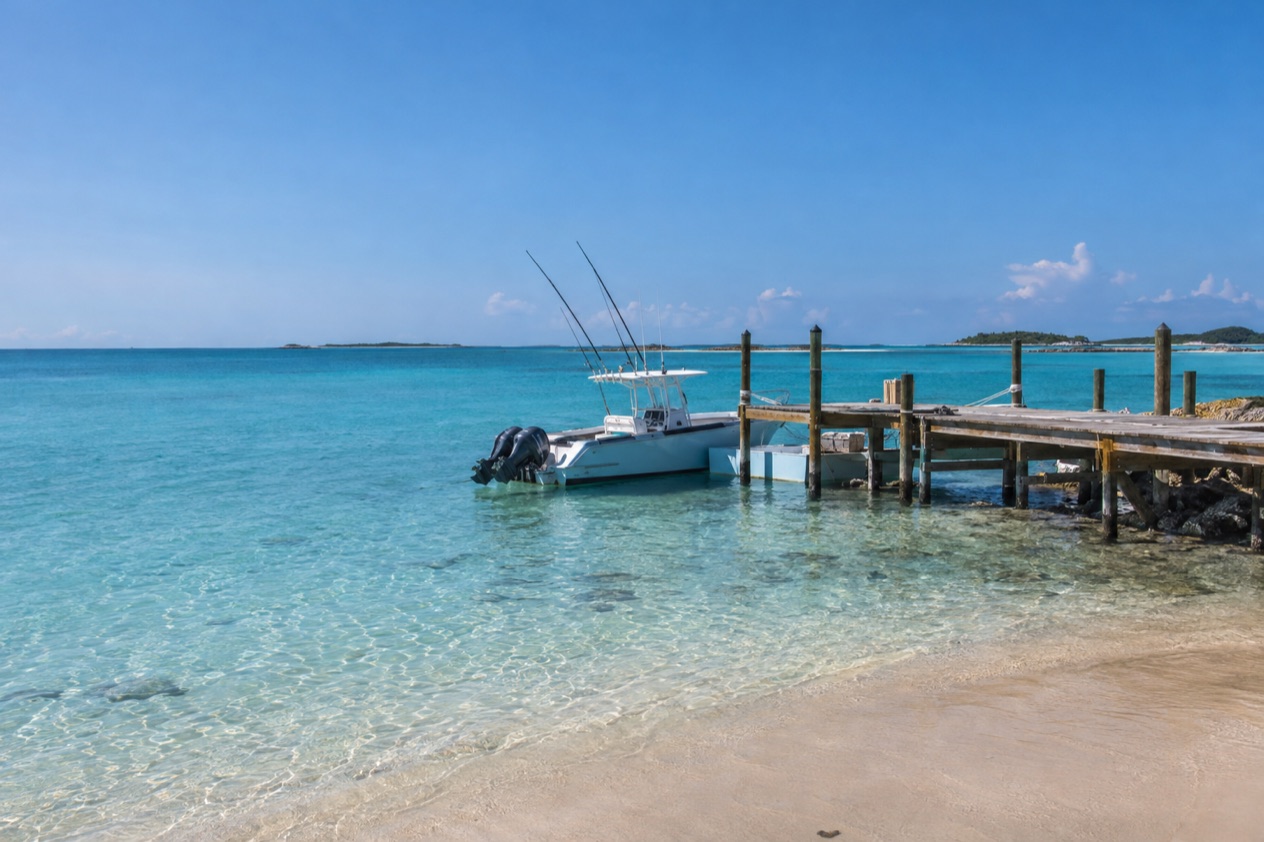
What is the weather like in Bimini in March?
March in Bimini is warm and bright, with a sea that is starting to feel like spring and days that stretch past twelve hours of light.
| Month | Sea at Bimini (°F) | Daylight on the 15th (hours and minutes) |
|---|---|---|
| February | 76.2 | 11 h 20 min |
| March | 78.6 | 12 h 03 min |
| April | 79.3 | 12 h 49 min |
In Nassau, highs average about 81°F in March, and the nights stay mild enough that a light layer is all you reach for after dinner. Rain tends to come as brief showers rather than gray, all-day weather, so a passing cloud rarely cancels a plan for long.
The daylight is the real gift of the month. March daylight gives you a sunrise walk beside the water, then lingers so you can squeeze in a boat outing, a long lunch and a slow stroll before dark. Afternoons on the open flats can feel strong, so a hat and a shaded table are welcome by midday.
The sea has crossed into the upper 70s, which changes how you spend the day: mornings on the water feel fresh rather than cold, and afternoons invite longer stays in the shallows. Evenings on North Bimini are for sitting outside near the docks, watching the boats tie up.
Can you swim in Bimini in March?
In March the water is warm enough for a nice swim, but for a long time in the sea some folks prefer a light rash guard.
Bimini is known for its snorkeling and diving spots and for endless white sandy beaches, and March is a pleasant month to enjoy them because the water is comfortable and the days are long. The beaches along North Bimini face the open Atlantic side of the island, and the water there can look quite different from one morning to the next, so what you find on a given day is a matter of the wind and the tide.
Snorkelers will want a mask and a snug fin, and anyone planning to spend hours in the water will be glad to have sun protection. Families and nervous swimmers should simply pick their stretch of shore on the day, watch how the water is behaving and go in where it looks gentle. Divers come for the wreck and reef sites around the islands.
What to do in Bimini in March
The great March event on Bimini’s plates is crawfish, since the season runs from August 1 to March 31 and these are the last weeks to order it fresh. A lot of menus treat crawfish and lobster as one and the same, and when a different type is offered, it gets called out by name. Look for it as a salad of onions, sweet peppers and lime, in a sandwich, or stewed in a rich brown gravy.
Pair it with a slice of warm Bimini bread, baked fresh on the island, and you have the flavor of the month. Bimini is also known for waters full of tuna, which means fish is rarely far from the table at the small restaurants and bars along the main road.
The Sapona wreck off South Bimini
The concrete hulk of the S.S. Sapona sits in the water off South Bimini, and in March, with the sea warming and the light steady, it is a natural draw for boat trips and for divers and snorkelers. It was built in Wilmington, North Carolina, as one of the concrete ships ordered in the First World War, when steel ran short, and legend credits Henry Ford with the design.
Carl Fisher, who developed Miami Beach, picked it up as scrap, and Bimini legend has plenty to say about what came next: a short spell as a casino, followed by use for oil storage. Seen from the water, the rusting, tilted hull is one of the most photographed sights around the islands. Go with the light behind you in the morning for the clearest view.
The Bimini Road and the Fountain of Youth
Two stories give Bimini its mystery. The Bimini Road is an underwater pathway of giant square stone blocks stretching 1,500 feet off the island, and it fascinates anyone who likes a good puzzle about what lies beneath the surface. On a clear March day, the shallow water is a fine place to think about it.
On land, the place that still carries the name Fountain of Youth is tied to the legend of Juan Ponce de León, who in 1513 set sail with three ships to find a spring said to restore youth to the old. He did not find it, but the name stuck, and a visit is a pleasant small detour on a walk around the island. Just down the road, a pair of bronze busts of Martin Luther King Jr. keep his memory alive.
North Bimini and the resort side
Most visits revolve around North Bimini, where Alice Town’s docks, bars and bakeries set the rhythm. Resorts World Bimini, a 750-acre beachfront resort that opened in 2013, also sits on North Bimini, giving the island a larger, polished counterpart to the small waterfront places.
In March the mood is relaxed: boats going out in the early hours, a lunch of seafood on a terrace, and evenings that stay open-air. Come with a loose plan and let the tide and the weather choose between a beach afternoon and a boat trip.
A two-day itinerary for Bimini in March
Day 1 begins at the docks of North Bimini in the first light, when the boats are leaving and the road is quiet. Pass the morning walking through Alice Town, pausing for fresh Bimini bread, then make your way to the Fountain of Youth site and the bronze busts of Martin Luther King Jr. before the sun turns strong.
Lunch is a crawfish salad or sandwich at a waterfront spot, and the afternoon belongs to a beach on North Bimini, with a hat and a long rest in the shade. Evening is for a stew of crawfish and a seat outdoors as the light fades late, after twelve hours of daylight.
Day 2 is for the water. Take a boat toward South Bimini in the morning to see the Sapona wreck, with a snorkel if the sea looks inviting, and look over the Bimini Road from the surface. If clouds roll in, an indoor lunch and a slow afternoon at the resort or one of the bars fills the gap until the shower passes.
Is Bimini busy in March?
Bimini in March feels lively without being crowded, since it is a small place where a handful of boats and a full restaurant make a busy day.
The warm sea and long days draw visitors for fishing, diving and beach time, and spring break weeks tend to bring more arrivals than the quiet stretches around them. Booking a place to sleep or a bite to eat goes most smoothly if you make holiday-week plans ahead of time and save the everyday weeks for a bit later, which is a good routine given how few spots the island offers.
The end of crawfish season on March 31 also nudges restaurants to feature the dish, so lunch and dinner spots with the best local cooking can be popular. Most days still leave room for a quiet table on a terrace and an unhurried walk along the road.
What to pack for Bimini in March
Think sun, salt and a light layer for the evening breeze off the water.
- A hat and sunscreen, because the light is bright on the flats by midday.
- A mask and snorkel, for the wreck and reef sites.
- A thin rash guard, for long sessions in the upper-70s sea.
- A light sweater, for cool evenings outdoors by the docks.
- Sandals and water shoes, for docks and shallow beaches.
Good to know before you go
The U.S. State Department rates the Bahamas Level 2, “Exercise increased caution”, and says most crime occurs in Nassau on New Providence and in Freeport on Grand Bahama.
March falls outside the official Atlantic hurricane season, which runs from June 1 to November 30. Commercial and charter airlines land at South Bimini Airport, and a ferry then carries you across to North Bimini. Resorts World Bimini sits on North Bimini, 42 miles east of Miami.
Travelers from the United States must carry a passport that stays valid for no less than six months when flying in (passport cards will not work), along with a ticket for return or onward travel, and a Bahamian visa is not required for a visit. The Bahamas Department of Immigration says visitors may be asked to show proof of funds.
Bimini in March vs February and April
Moving a month earlier gives you a cooler sea and shorter days, while crawfish season is still in full swing. February suits travelers who prefer a cooler dip and do not mind a little less daylight for sightseeing.
Moving to April brings a warmer sea and longer evenings, but crawfish season will have ended on March 31, so the signature dish of the month is gone from fresh menus. It suits people who care more about water time than about the table.
Stay with March if you want the last of the crawfish and a sea that is already comfortable. Shift to April for the warmest swims, or to February for a quieter, cooler feel.
Is March a good time to visit Bimini?
Yes, March is a very good time for anyone who wants warm water, long light and good seafood on a small island, and less so for travelers who want a hot, bathwater sea.
It will suit divers, snorkelers, anglers and food lovers best, and those who like to wander a small place on foot. People who want nightlife or big-resort entertainment should look at what the resort offers before choosing the month.
On arrival, settle in at North Bimini and put a crawfish meal first on the list, since the season closes at the end of the month. That dish, the Sapona rising out of the water and the late light on the flats are what make March here.
Sources
- Open-Meteo Marine API, average 2015-2024, checked October 10, 2026
- sunrise-sunset.org, sunrise and sunset calculated for the 15th of the month, checked October 10, 2026
- NOAA NCEI, GHCN-Daily station BF000078073 (Nassau Airport), normals 1991-2020 computed from the daily record (https://www.ncei.noaa.gov/access/services/data/v1?dataset=daily-summaries&stations=BF000078073), checked October 10, 2026
- Bahamas Ministry of Tourism, crawfish season (https://www.bahamas.com/blog/its-crawfish-season), checked October 10, 2026
- Bahamas Ministry of Tourism, Investments & Aviation (bahamas.com), Sapona Shipwreck (https://www.bahamas.com/natural-wonders/sapona-shipwreck), checked October 10, 2026
- Bahamas Ministry of Tourism, Investments & Aviation (bahamas.com), travel blog, Bimini landmarks (https://www.bahamas.com/blog/the-historical-landmarks-of-bimini), checked October 10, 2026
- Bahamas Ministry of Tourism, Investments & Aviation (bahamas.com), travel blog, Bimini North and South, where to stay (https://www.bahamas.com/blog/the-best-of-bimini-where-to-stay-on-this-dual-island-destination), checked October 10, 2026
- Bahamas Ministry of Tourism, Investments & Aviation (bahamas.com), Fountain Of Youth (https://www.bahamas.com/natural-wonders/fountain-of-youth), checked October 10, 2026
- Wikipedia, Resorts World Bimini (https://en.wikipedia.org/wiki/Resorts_World_Bimini), checked October 10, 2026
- Wikipedia, South Bimini Airport (https://en.wikipedia.org/wiki/South_Bimini_Airport), checked October 10, 2026
- Bahamas Ministry of Tourism, Investments & Aviation (bahamas.com), Bimini (https://www.bahamas.com/islands/bimini), checked October 10, 2026
- Wikipedia, Geography of the Bahamas (https://en.wikipedia.org/wiki/Geography_of_the_Bahamas), checked October 10, 2026
- Bahamas Ministry of Tourism, Investments & Aviation (bahamas.com), Island FAQ (https://www.bahamas.com/plan-your-trip/island-faq), checked October 10, 2026
- Bahamas Department of Immigration, Entry requirements (https://www.immigration.gov.bs/entry-requirements/), checked October 10, 2026
- Bahamas Department of Immigration, Before your arrival (https://www.immigration.gov.bs/entry-requirements/before-your-arrival/), checked October 10, 2026
- U.S. Department of State, The Bahamas Travel Advisory, Level 2 (https://travel.state.gov/), checked October 10, 2026
- NOAA National Hurricane Center, Climatology (https://www.nhc.noaa.gov/climo/), checked October 10, 2026
To plan your stay
- Things to Do in Bimini: Diving the SS Sapona, the Bimini Road, Alice Town and Bahamian Food
- Where to Stay in Bimini: Alice Town, the Resorts World Beachfront and South Bimini
- Bimini from Miami: Ferry from Port Everglades, Flights to South Bimini and a Day on North Bimini
- Know Before You Go to Bimini: Entry Rules, Money, Getting Around and Island Etiquette