
February on North Bimini starts early on the docks of Alice Town, where boats idle in the pale light and the smell of fried fish and fresh bread drifts out of kitchens along the single main road. The sun climbs a little higher each week, the days stretch, and the island’s slow rhythm suits the month. This is a page for travelers who want a small, unhurried island with water on both sides, old legends and a good plate of crawfish.
What is the weather like in Bimini in February?
February in Bimini is a mild, bright winter month, with sea temperatures that stay a notch below swimming-pool warmth and days that grow noticeably longer as the weeks pass.
| Month | Sea at Bimini (°F) | Daylight on the 15th (hours and minutes) |
|---|---|---|
| January | 76.3 | 10 h 45 min |
| February | 76.2 | 11 h 20 min |
| March | 78.6 | 12 h 03 min |
For the air, Nassau’s February afternoons sit around 80°F, and that gives a fair idea of the winter feel across this part of the Bahamas: shirtsleeves by day, a light layer once the sun drops. Rain is a passing event in this season, a brief shower rather than a gray week.
What the month really changes is the light. Mornings come up soft and golden over the Atlantic side of North Bimini, and with a bit over eleven hours of daylight there is time to fit a boat outing, a long lunch and a walk along the water before dusk. Evenings on the dock are pleasant with a sweater in reach, especially when a breeze comes across the narrow island.
The sea is the quiet star of the numbers. It sits close to its winter low and starts to warm toward March, which you notice most when you climb back onto a boat deck with wet hair and the wind in your face.
Can you swim in Bimini in February?
The water in February is on the cool side for a long, lazy swim and better suited to a quick dip, a wade or time spent snorkeling in a shorty wetsuit if you feel the chill easily.
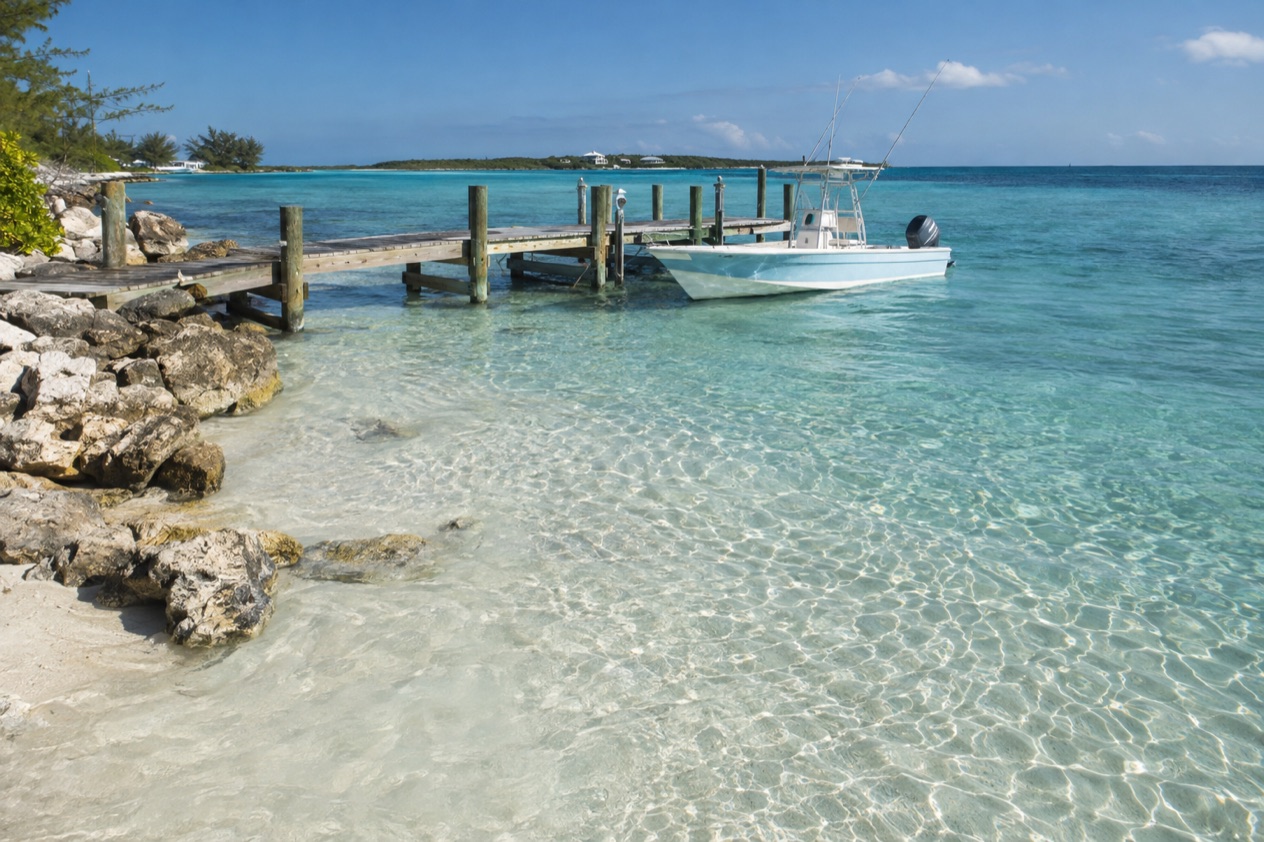
The island is known for white sandy beaches, and a winter morning on an empty stretch of sand is a pleasure in itself, even when you only paddle your feet. Bring a towel big enough to wrap up in, because the first minutes after leaving the water feel fresher than the sea itself. Wave action varies with the wind, and it can differ between the ocean-facing shore of North Bimini and the sheltered edge toward the harbor, so look at the water on the day before you decide.
Snorkeling and diving are the main reasons people come. The wreck of the SS Sapona off South Bimini lets you look at a ship whose upper half rises out of the water, and the reefs around the islands are known for their marine life. If you are a nervous swimmer or traveling with small children, the beach is a place to enjoy from the shore, and an organized boat outing is the more comfortable way to see the underwater side of the island.
What to do in Bimini in February
The month belongs to the table and the water. Crawfish season in the Bahamas runs through March 31, so February still puts the local spiny lobster on menus, and Bimini’s kitchens do it justice. Alongside it comes freshly baked Bimini bread, warm, slightly sweet and best torn apart at the table with whatever sauce is left on your plate.
On many menus the words crawfish and lobster are used for the same animal, so you can order either with confidence. A cold crawfish salad of onion, sweet pepper and lime is the light lunch, and the same mixture turns up in a sandwich. For something warmer, look for stewed crawfish in brown gravy, a dish served at breakfast in some parts of the Bahamas.
Beyond the plate, this is an island for slow walking. North Bimini is a narrow strip, about seven miles long and only about 700 feet wide, so ocean and harbor are never far from each other. Stroll Alice Town in the cooler hours, watch the fishing boats come and go, and note that the island is known for waters full of tuna, which explains the sportfishing atmosphere along the docks.
The Bimini Road and the Atlantis legend
Just off the western bluff of North Bimini, under shallow water, lies a line of square stone blocks, about fifteen hundred feet long. Some people read it as a pavement from a drowned civilization, and the story attaches it to the lost continent of Atlantis. Whatever you believe, the stones are a good excuse to be out on the water.
A calm winter morning with the sun still low is the natural moment to look down through clear water. Go for the atmosphere and the legend rather than for a dramatic monument, and pair it with a swim stop or a snorkel if the sea is willing that day.
The concrete ship at South Bimini
The SS Sapona ran aground in a hurricane in 1926 and has stayed ever since, a hull of concrete tilted in the shallows. It belonged to a wartime program of concrete ships, and later passed to a Miami Beach developer who tried it as a casino. The story is odd enough that you will want to know it before you see it.
For snorkelers it offers a rare combination: a structure you can see from the surface, with the submerged half drawing small fish. February’s cooler water makes a wetsuit sensible. If you prefer to keep dry, look at the rust-colored hull from a boat and let the history do the rest.
Legends and memorials in Alice Town
Bimini carries a surprising amount of story for such a small place. A spot here still goes by the name Fountain of Youth, linked to the old tale that Ponce de León sailed in 1513 searching for waters that restored the old to youth. He never found them, but the name stayed on the map.
Just a brief stroll from here stand two bronze busts of Martin Luther King Jr., a calmer place to pause that lends the island’s recent past a bit of gravity. Together they make a gentle half-day of looking and reading, best done in the middle of the morning when the light is clean and the air still cool.
Fishing days, a snorkel at the wreck, a long lunch of crawfish and a sunset on the dock fit comfortably into the month. If the wind turns the sea gray, spend the time on the Alice Town stories and the table rather than on the water.
A two-day itinerary for Bimini in February
Day 1 is for the island on foot. Begin with early coffee and warm Bimini bread, then walk Alice Town while the air is cool and the docks are busy with boats. In the late morning, stop by the Fountain of Youth site and the bronze busts of Martin Luther King Jr., and keep things easygoing.
Lunch is the place for crawfish salad at a casual dockside spot. In the afternoon, find a stretch of beach and walk the sand while the light turns golden, wading rather than swimming if the water feels brisk. Dinner can be stewed or grilled crawfish at a local restaurant, with a drink watching the harbor lights.
Day 2 is for the water. Start early with a boat outing toward the Bimini Road, when the morning sun lights the shallows, and then continue south to the SS Sapona for a look or a snorkel, with a wetsuit if you chill easily. Eat on board or back in town in the afternoon.
If the weather turns, stay indoors with a long lunch, a slow coffee over the legends of Atlantis and the Fountain of Youth, and wait for the clouds to move through. Then end the evening on the dock for the last light, ideally with a plate of crawfish and a view of the boats coming in.
Is Bimini busy in February?
Bimini stays a small, low-key island in February, and the feel is of a place that is never really crowded, since North Bimini is only a thin strip of land.
Winter is when visitors from the mainland arrive by air, because the island receives international flights from the United States and domestic flights from other islands, and fishing and diving visitors set the tone more than big tour groups. You notice them around the docks, in the morning when boats leave and in the evening when catches come in.
A long weekend or a school break week can bring more people to the small restaurants and guesthouses, so the habit worth keeping is to sort out rooms and flights early for the holiday weeks and a little later for ordinary weeks. Restaurant tables are rarely a puzzle in a place this size, though a sit-down dinner on a busy evening is better planned in the afternoon.
Boats for the Bimini Road and the Sapona are the outings that most reward an early decision, since they are what many visitors come for. The rest of the island, from the beach to the bread, works without any plan at all.
What to pack for Bimini in February
Pack for a mild day, a brisk boat ride and a sea that is cooler than summer, with a few things for the dock at night.
- A light sweater or windbreaker, for boat rides and breezy evenings on the dock.
- A swimsuit and a quick-dry towel, because the water is bracing when you come out of it.
- A shorty wetsuit, if you plan to snorkel at the Sapona or along the reefs and feel the cold.
- Reef-safe sunscreen and sunglasses, for glare off the shallows on bright mornings.
- Water shoes or sturdy sandals, for wet docks and rocky entries.
- A small dry bag, to protect your phone and camera on the boat.
Good to know before you go
The U.S. State Department rates the Bahamas Level 2, “Exercise increased caution”, and says most crime occurs in Nassau on New Providence and in Freeport on Grand Bahama.
February lies outside the Atlantic hurricane season, which runs from June 1 to November 30, so storms are not the question on the calendar this month. For entry, U.S. citizens need a passport valid for at least six months (the Bahamas Department of Immigration does not accept passport cards for arrivals by air), need no Bahamian visa for a visit, and must hold a return or onward ticket. Officers may ask to see proof of funds for your stay.
Bimini is two islands, North and South, and the airports for each receive flights from the United States and from other islands of the Bahamas. Plan around that when you arrange the first boat outing.
Bimini in February vs January and March
Moving the trip a month earlier gives you almost the same sea but shorter days, and by the middle of January you have less light for a boat day. Crawfish season is also well underway, so the food holds up, and the island is just as calm and winter-quiet.
Moving a month later brings clearly warmer water and a day that reaches twelve hours. That helps snorkelers, who will enjoy March far more than February, and crawfish season closes at the end of that month, so March is the last chance for the dish.
Pick February if you want winter calm, long evenings on the dock and the legends without a push. Pick March if warmer water matters more than anything else. Choose January if you simply want the cooler, quieter weeks and do not mind the shorter day.
Is February a good time to visit Bimini?
For travelers who prefer a quiet island, a plate of crawfish and a boat outing over a long beach day in warm water, February is indeed a good time.
Anglers, divers, history lovers and people who enjoy slow walks and conversation on the dock will do well here. Visitors who want to spend hours swimming, or who expect resort entertainment, should look at a later month, when the sea has warmed.
On arrival, settle in and head straight to the water to see which way the wind is blowing, then arrange your boat outing around the best morning. After that, the rest of the island is yours to walk. What marks February in Bimini is its mix of old stories and fresh food: a drowned road under shallow water, a ship stranded in 1926, a spring named for youth, and a lobster salad eaten while the sun sets over a harbor that has seen all of it.
Sources
- Open-Meteo Marine API, average 2015-2024, checked October 10, 2026
- sunrise-sunset.org, sunrise and sunset calculated for the 15th of the month, checked October 10, 2026
- NOAA NCEI, GHCN-Daily station BF000078073 (Nassau Airport), normals 1991-2020 computed from the daily record (https://www.ncei.noaa.gov/access/services/data/v1?dataset=daily-summaries&stations=BF000078073), checked October 10, 2026
- Bahamas Ministry of Tourism, crawfish season (https://www.bahamas.com/blog/its-crawfish-season), checked October 10, 2026
- Wikipedia, Bimini (https://en.wikipedia.org/wiki/Bimini), checked October 10, 2026
- Bahamas Ministry of Tourism, Investments & Aviation (bahamas.com), Bimini Road (https://www.bahamas.com/natural-wonders/bimini-road), checked October 10, 2026
- Bahamas Ministry of Tourism, Investments & Aviation (bahamas.com), Sapona Shipwreck (https://www.bahamas.com/natural-wonders/sapona-shipwreck), checked October 10, 2026
- Bahamas Ministry of Tourism, Investments & Aviation (bahamas.com), travel blog, Bimini landmarks (https://www.bahamas.com/blog/the-historical-landmarks-of-bimini), checked October 10, 2026
- Bahamas Ministry of Tourism, Investments & Aviation (bahamas.com), travel blog, Bimini North and South, where to stay (https://www.bahamas.com/blog/the-best-of-bimini-where-to-stay-on-this-dual-island-destination), checked October 10, 2026
- Bahamas Ministry of Tourism, Investments & Aviation (bahamas.com), Fountain Of Youth (https://www.bahamas.com/natural-wonders/fountain-of-youth), checked October 10, 2026
- Wikipedia, Geography of the Bahamas (https://en.wikipedia.org/wiki/Geography_of_the_Bahamas), checked October 10, 2026
- Bahamas Ministry of Tourism, Investments & Aviation (bahamas.com), Island FAQ (https://www.bahamas.com/plan-your-trip/island-faq), checked October 10, 2026
- Bahamas Department of Immigration, Entry requirements (https://www.immigration.gov.bs/entry-requirements/), checked October 10, 2026
- Bahamas Department of Immigration, Before your arrival (https://www.immigration.gov.bs/entry-requirements/before-your-arrival/), checked October 10, 2026
- U.S. Department of State, The Bahamas Travel Advisory, Level 2 (https://travel.state.gov/), checked October 10, 2026
- NOAA National Hurricane Center, Climatology (https://www.nhc.noaa.gov/climo/), checked October 10, 2026
To plan your stay
- Things to Do in Bimini: Diving the SS Sapona, the Bimini Road, Alice Town and Bahamian Food
- Where to Stay in Bimini: Alice Town, the Resorts World Beachfront and South Bimini
- Bimini from Miami: Ferry from Port Everglades, Flights to South Bimini and a Day on North Bimini
- Know Before You Go to Bimini: Entry Rules, Money, Getting Around and Island Etiquette