
At first light in Alice Town, fishing boats nose back to the docks, the smell of Bimini bread drifts out of a kitchen, and the only traffic on the King’s Highway is a golf-cart-sized hush before the day begins. The year on Bimini turns on the sea: cool and quiet in winter, bright and busy through spring, then hot, wet and full of fishing talk from summer into the early fall. This is a sense of the months that suit a beach week, a dive trip or a lazy island stay on North Bimini.
When is the best time to visit Bimini?
The best months for most travelers are March through May, when the days are long and the sea is warming, with the quieter weeks of November and early December a close second for anyone who prefers calm streets to a lively dock.
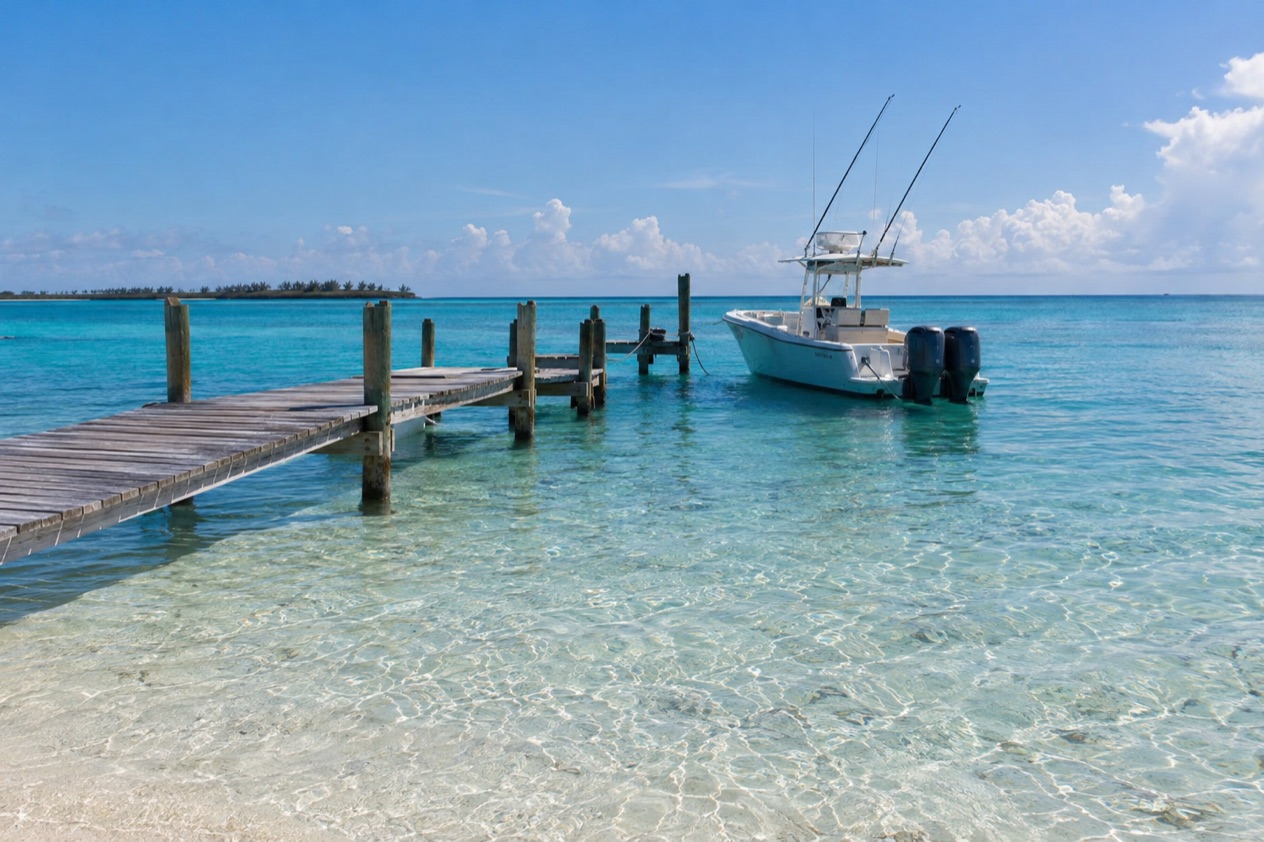
For the beach and the sea, late spring is the sweet spot. The water has shed its winter chill by May and the days stretch past thirteen hours of light, which leaves long afternoons for the endless white sandy beaches the island is known for and for the snorkeling and diving spots around it, including the wreck of the SS Sapona, whose top stays above the surface. Summer brings the warmest water of the year, but also the wettest, heaviest air.
For sightseeing, the cooler months are kinder. Walking Alice Town, finding the bronze busts of Martin Luther King Jr., visiting the spot that still carries the name Fountain of Youth and looking out over the waters where the Bimini Road lies all feel better without the midsummer sun. North Bimini is long, flat and narrow, so there is little shade to hide in when it is hot.
For budget and quiet, think of the weeks outside the school vacations and holidays: much of November, January after New Year, and the stretch before spring break. Families should know that March is the loud month, when college and school groups arrive, the bars along the King’s Highway fill up and the mood runs more party than picnic. Families who want room on the beach and a gentler soundtrack will do better in late April, May or the first half of June.
Bimini weather by month
The sea around Alice Town swings from cool-ish in winter to bathwater in July, and the days stretch and shrink with it.
| Month | Sea at Bimini (°F) | Daylight on the 15th (hours and minutes) |
|---|---|---|
| January | 76.3 | 10 h 45 min |
| February | 76.2 | 11 h 20 min |
| March | 78.6 | 12 h 03 min |
| April | 79.3 | 12 h 49 min |
| May | 83.6 | 13 h 27 min |
| June | 85.9 | 13 h 47 min |
| July | 88.9 | 13 h 38 min |
| August | 88.1 | 13 h 04 min |
| September | 87.2 | 12 h 20 min |
| October | 82.9 | 11 h 35 min |
| November | 79.1 | 10 h 55 min |
| December | 75.4 | 10 h 35 min |
In Nassau, highs rise from about 81°F in March to the low 90s by August, and rain days go from a handful in winter to more than a dozen in late summer.
The sea tells the rest. It is at its coolest in December and February, climbs steadily through spring, and peaks in July and August before sliding back through October. Daylight follows the same arc: short winter evenings with dinner under the lights by early evening, then long summer days that leave room for a morning on the water and a late swim.
What is there to do in Bimini in each season?
Winter and early spring: wrecks, walks and wildlife
From December to March the sea is at its coolest and the island moves at a slower speed. This is the season for walking Alice Town, tracing the King’s Highway from shop to restaurant to bar, and for eating at the local spots that serve Bahamian cooking alongside warm Bimini bread. The cooler air makes it the best stretch for exploring the history on land: the Martin Luther King Jr. busts, the Fountain of Youth site, and the story of Ponce de León, who set out for Bimini in the early 1500s and never found the spring.
On the water, winter is a time for boat outings and for looking at the shallow flats off the island. You may see big sharks in the cooler months, as Bimini is known among divers, though sightings are never promised. The SS Sapona, the concrete wreck off South Bimini that once served as a casino and an oil store, stays a draw all year, and the half of the ship that sits out of the water makes a striking sight from a boat in any season.
Late spring and the shoulder months: the water warms up
April through June, and again in October and November, are the shoulder months, and they suit those who want warm water without the extremes. By May the sea is warm enough for long stretches of snorkeling, and the days are long enough to fit in a morning outing and an evening on the dock. Spring is also when anglers talk most about tuna and big game fish, since the waters around Bimini are known for being full of them.
The shoulder months also leave space on the beaches, which stay white and open along the length of North Bimini. October and November sit at the tail of the hurricane season, so travelers then should keep an eye on forecasts. Both months bring the island back to a local pace after the summer heat.
Summer: hot, wet and made for the water
June to September is the hot season. The sea is the warmest of the year, which makes for easy hours snorkeling around the Sapona or the Bimini Road, and the long days leave room to do it twice. Afternoon storms are frequent, so the smart plan is water in the morning, shade and a cold drink at midday, and an evening on the dock.
Summer is also the time of fishing talk, of Independence Day on July 10, when the island marks the national holiday with music and gatherings, and of long evenings when the heat finally lets go. What to leave for another time: long walks along the exposed King’s Highway at noon, and anything that needs steady dry weather.
When is Bimini cheapest and least crowded?
Bimini is quietest in the weeks that fall between the big U.S. holidays: much of November, the stretch after New Year, and the hot, rainy end of summer when most school-age travelers are heading home.
The busiest weeks follow the American calendar. Christmas and New Year bring peak-season rates and full rooms, spring break in March makes the King’s Highway lively, Easter week draws families and boaters, and the long summer school vacation from about June to August keeps the island at a steady hum. Because the island is only 50 miles from Florida, a sunny weekend can bring a wave of boaters even in a quiet month.
What that means on the ground: in quiet weeks, rooms are easier to find, the docks are calm and the beaches stay open and empty for long stretches. In peak weeks the bars and restaurants of Alice Town fill with visitors, and the mood leans toward party. Travelers who want the island at its slowest should aim for late January, February before the March crowds, or the first weeks of November.
Which months should you avoid in Bimini?
The months to treat with care are August through October, the core of the hurricane season, and anyone who dislikes heat and wet air should think twice about midsummer.
The Atlantic hurricane season runs from June 1 to November 30, and most activity falls between mid-August and mid-October, with the peak on September 10. The Bahamas Ministry of Tourism and Aviation monitors tropical storms in the Atlantic and encourages travelers to follow its hurricane page for updates. A month outside the season is simply outside it, and a month inside is a reason to follow the forecast, not necessarily to stay home.
Rain and heat matter too. Summer afternoons can turn stormy, and the air is heavy by midday, with little shade on a narrow island. Winter has its own drawback: when a cold front passes, the wind and gray skies can cancel a boat day, though they usually clear within a day or two. Spring break in March is not a weather problem but a crowd one, and travelers after quiet should avoid it.
When can you swim in Bimini?
The sea is at its warmest from June through October, pleasantly mild in April, May and November, and at its coolest from December to February.
In winter the water holds a cool edge, comfortable for some and brisk for others, and a cold front can make it feel cooler still. Through March and April it warms steadily, and by May it has lost its chill. In midsummer it reaches its peak, so warm that it offers little relief from the heat, and the long days leave time for it morning and evening.
The beaches are described as white and sandy, and they look their best in the clear light of spring and early summer. In the hurricane months, conditions change with whatever is passing offshore, so the plan for those weeks should stay flexible. For snorkeling and diving around the Sapona and the Bimini Road, the warm months bring the most comfortable water.
Festivals and events in Bimini through the year
Winter holidays and Junkanoo
The Bahamian year turns on Junkanoo, the street parade of costumes, cowbells, goatskin drums and brass that runs in the early hours of December 26 and again on January 1. It is the national celebration, and Bimini joins in with its own gatherings, though the biggest parades are elsewhere in the country. Expect music in the street and a community that dresses up for it.
Christmas and New Year are also the busiest weeks for visitors, with peak-season rates and boaters arriving from Florida. If the goal is to see Junkanoo with few crowds, a quieter stay in January afterward still catches the afterglow, with winter calm on the docks and cooks turning out Bimini bread and Bahamian dishes.
Spring: Easter week and fishing season
Easter week falls in March or April depending on the year, and it fills the island with families and boaters. It is a time for church services, long lunches and beach days, and the fishing community is busy too. Bimini has long been known for tuna and big game fish, and spring is when talk on the docks turns to the catch.
They are a good time to see the working side of the island, with boats coming in and the day’s stories traded at the bar. Those who prefer calm should pick a week with no tournament in town.
Summer and fall: Independence Day and the sea
July 10 is Independence Day in the Bahamas, and Bimini marks it with music, food and gatherings, a good moment to see local life when it is most social. It falls in the hot, wet part of the year, so plan for an outdoor event with a chance of a stormy afternoon.
Summer is also when sea turtles nest in the region, and you may see signs of them on quiet beaches, though nothing is promised. Through the fall the island slows again as the hurricane season winds down, and November is a calm stretch with warm water and few visitors.
Sources
- Open-Meteo Marine API, average 2015-2024, checked October 10, 2026
- sunrise-sunset.org, sunrise and sunset calculated for the 15th of the month, checked October 10, 2026
- NOAA NCEI, GHCN-Daily station BF000078073 (Nassau Airport), normals 1991-2020 computed from the daily record (https://www.ncei.noaa.gov/access/services/data/v1?dataset=daily-summaries&stations=BF000078073), checked October 10, 2026
- Bahamas Ministry of Tourism, Investments & Aviation (bahamas.com), Bimini (https://www.bahamas.com/islands/bimini), checked October 10, 2026
- Wikipedia, Bimini (https://en.wikipedia.org/wiki/Bimini), checked October 10, 2026
- Wikivoyage, Bimini travel guide (https://en.wikivoyage.org/wiki/Bimini), checked October 10, 2026
- Bahamas Ministry of Tourism, Investments & Aviation (bahamas.com), Sapona Shipwreck (https://www.bahamas.com/natural-wonders/sapona-shipwreck), checked October 10, 2026
- Bahamas Ministry of Tourism, Investments & Aviation (bahamas.com), travel blog, Bimini landmarks (https://www.bahamas.com/blog/the-historical-landmarks-of-bimini), checked October 10, 2026
- Bahamas Ministry of Tourism, Investments & Aviation (bahamas.com), travel blog, Bimini North and South, where to stay (https://www.bahamas.com/blog/the-best-of-bimini-where-to-stay-on-this-dual-island-destination), checked October 10, 2026
- Bahamas Ministry of Tourism, Investments & Aviation (bahamas.com), Fountain Of Youth (https://www.bahamas.com/natural-wonders/fountain-of-youth), checked October 10, 2026
- Wikipedia, Resorts World Bimini (https://en.wikipedia.org/wiki/Resorts_World_Bimini), checked October 10, 2026
- Wikipedia, South Bimini Airport (https://en.wikipedia.org/wiki/South_Bimini_Airport), checked October 10, 2026
- Wikipedia, Geography of the Bahamas (https://en.wikipedia.org/wiki/Geography_of_the_Bahamas), checked October 10, 2026
- NOAA National Hurricane Center, Climatology (https://www.nhc.noaa.gov/climo/), checked October 10, 2026
- Bahamas Ministry of Tourism, Investments & Aviation (bahamas.com), Hurricane and storm information (https://www.bahamas.com/hurricane-storm-information), checked October 10, 2026
- U.S. Department of State, The Bahamas Travel Advisory, Level 2 (https://travel.state.gov/), checked October 10, 2026
To plan your stay
- Things to Do in Bimini: Diving the SS Sapona, the Bimini Road, Alice Town and Bahamian Food
- Where to Stay in Bimini: Alice Town, the Resorts World Beachfront and South Bimini
- Bimini from Miami: Ferry from Port Everglades, Flights to South Bimini and a Day on North Bimini
- Know Before You Go to Bimini: Entry Rules, Money, Getting Around and Island Etiquette