
Oil crackles, someone is hammering conch on a wooden board, and the smell of fried fish and lime drifts across rows of brightly painted shacks. Arawak Cay is a man-made island in Nassau, New Providence, and its Fish Fry is a strip of small eateries. where the national shellfish comes cracked, steamed, stewed or raw in a salad. It is a casual, eat-with-your-fingers kind of visit, built around a plate and a seat in the shade.
Is visiting Arawak Cay and the Fish Fry worth it?
Yes, if you want to eat the way Nassau eats, and it suits food lovers, curious first-timers and anyone tired of resort dining rooms. Arawak Cay is a place to sit down to local cooking, not to tick off a monument, and the reward is a plate of conch prepared several different ways within a few steps of one another.
What sets it apart from the other places to eat and drink around Nassau is its focus. Downtown has a cluster of bars, restaurants and clubs that one writer likens to a little version of New Orleans, with names like Senor Frogs, Pirates of Nassau and Hooters, and they lean toward music, games and nightlife.
The Fish Fry is about the kitchen. Its stalls are small, family-style and built around Bahamian dishes, so the conversation at the table is usually about how the conch was made and what to order next.
It also works for mixed groups. Not everyone at the table has to eat seafood, because several stalls serve chicken, steak and pork chops alongside the conch. That makes it a reasonable stop for a family or a group of friends who do not agree on dinner. Travelers with a shellfish allergy should skip the conch dishes, and the same goes for the conch salad in particular.
What to see at Arawak Cay and the Fish Fry
The painted stalls
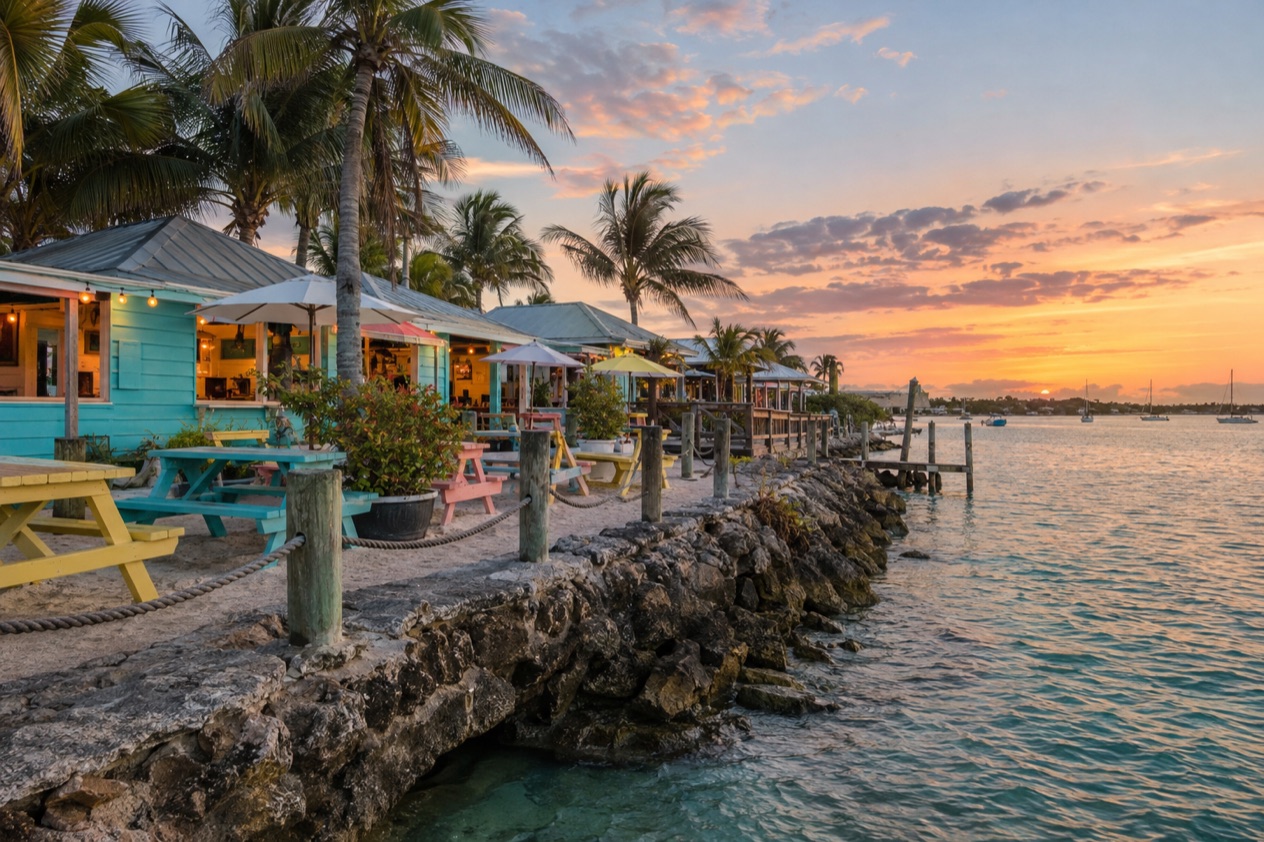
The first thing you notice is color. The eateries sit in a line, each with its own paint, hand-lettered sign and a few tables outside, and the effect is closer to a village street than a food court. Music often spills from one stand to the next, so the soundtrack changes as you walk.
Take a slow first pass before you sit. Look at what is on the counters, see where the grills are smoking, and notice which stands have people lingering over their plates. Walking the row is half the pleasure, and it lets you decide between a quick snack and a full meal.
The conch stands
Conch is the reason most people come. Cracked conch is the classic: the meat is beaten with a hammer, seasoned, bathed in flour and deep fried, and it typically arrives with fries and a choice of ketchup, hot sauce or mayonnaise. It is described as a must try for every visitor to the island, and the Fish Fry is a natural place to meet it.
Conch salad is the showpiece, and watching it made is part of the show. Diced uncooked conch goes in with onions, sweet pepper, tomatoes, lime, salt and pepper, and the tropical version adds pineapple and mango for a sweeter bite. Scorched conch is a close cousin, almost identical but with chopped tomato, cucumber and bell peppers, marinated in fruit juices and peppers and served right away.
Cooked conch: stewed, chowder and fritters
If raw conch is not for you, the cooked versions are generous and comforting. Stewed conch is served on a bed of white rice, and it appears at almost all local eateries on the island. Conch chowder is a soup with bits of conch, carrots, potatoes and a dark broth, served with Johnny Cake or grits.
Fritters are the easy one to share. Conch is mixed into batter and fried into golden bites, ideal with a drink while you decide what comes next. Ordering a few of these dishes among friends is the best way to taste the range.
Chicken, steak and pork chops
Several stalls cook for people who do not want seafood, with chicken, steak and pork chops on the menu. That turns Arawak Cay into a place where a group can split up at the counters and still end up at one table.
Local cooking of this kind usually comes with sides in the Bahamian style, such as peas and rice, macaroni and cheese and fried plantain, so a plate of meat is still a plate of the islands. Look at what the people beside you are eating, and point.
Hours, tickets and rules
Two schedules shape a visit to Arawak Cay more than any stall’s sign: the early-evening end of the jitney buses and the daytime tours at Fort Fincastle, which many people pair with a meal in town. Planning your day around them matters more than planning around a ticket line, since a plate of fish at a shack involves no ticket at all.
| Site | Open |
|---|---|
| Fort Fincastle tours, Nassau | Daily, 8AM to 3PM |
| Jitney buses, Nassau | Stop operating between 6PM and 7PM daily |
The rules worth knowing are short. People with a shellfish allergy should not eat conch salad in the Bahamas. If you shop in town afterward, most Cuban cigars sold in Nassau are counterfeit, and the advice is to buy only from a reputable, dedicated tobacconist.
How to get to Arawak Cay and the Fish Fry
Jitneys in Nassau stop operating between 6PM and 7PM daily, so the bus suits a lunch or an early dinner far better than a late supper. If you want to stay on for music and a second drink, plan to leave by another means.
A traveler based on that island therefore cannot count on the jitney for the return trip and should think about the ride home before the plates arrive.
Cruise visitors are in a different position. The cluster of bars and restaurants in downtown Nassau is within walking distance of each other, which means people there do not need cabs between them.
Bambu sits right across the road from the cruise port, and The Pub is a short distance away. Those are downtown spots, and they are a separate stop from the Fish Fry, so treat them as part of the same day in Nassau rather than as directions to Arawak Cay.
When to visit Arawak Cay and the Fish Fry
The best time of day is whenever you are hungry and the buses are still running. Lunch is the straightforward choice for anyone who relies on the jitney, since the buses stop between 6PM and 7PM. An early dinner keeps the same logic, and gives you the lively side of the place while there is still light to see the colors of the stalls.
Think of the Fish Fry as an open-air meal, so the mood of the day matters. A bright afternoon with a drink and a plate of fritters is the picture most people hold in mind, and a gray, showery hour calls for a covered table and a bowl of chowder instead. Either way, the food does most of the work.
The Atlantic hurricane season runs from June 1 to November 30, and Nassau sits inside it for those months. From December through May the islands are outside the official hurricane season. Travelers planning in the season months can enjoy the same plates, but should follow forecasts for the island as the trip nears, since a tropical system can change plans for flights and for open-air eating.
Tips for your visit
Come hungry and come with a group if you can. The menu rewards sharing: one order of cracked conch, one of conch salad, one bowl of chowder and a plate of fritters give you a tour of the preparations without anyone getting full too early. Order the fried dishes while they are hot, and save the salad for the moment you want something bright and sharp with lime.
Plan the length of your stay around the table rather than the clock. A Fish Fry meal tends to stretch, with a first round, a second look at the board and a last bite, so leave room in the afternoon and do not squeeze it between two tight reservations. If the day also includes Fort Fincastle, remember that its tours run from 8AM to 3PM, which makes it a morning or early-afternoon stop and leaves the Fish Fry for after.
For families, the dishes that are easiest to hand around are the fried ones. Cracked conch comes with fries, and the chicken, steak and pork chop stalls give picky eaters a way out of seafood. Anyone with a shellfish allergy should skip the conch salad entirely and tell the cook when ordering.
A few pairings round out a day in Nassau. Downtown has its walkable cluster of bars, restaurants and clubs for the evening, and Bambu and The Pub are near the cruise port for a drink before or after.
Good to know before you go
The U.S. State Department rates the Bahamas Level 2, “Exercise increased caution”, and says most crime occurs in Nassau on New Providence and in Freeport on Grand Bahama.
Arawak Cay is a food stop, so the practical points are short. Anyone with a shellfish allergy should leave the conch salad alone, and cooked chicken, steak or pork chops are there instead.
Between June 1 and November 30 the Atlantic hurricane season is under way, so a trip in those months is worth following in the forecast. If a souvenir shop in town offers Cuban cigars, remember that most sold in Nassau are counterfeit.
Sources
- Bahamas Ministry of Tourism, Investments & Aviation (bahamas.com), travel blog, Arawak Cay fish fry (https://www.bahamas.com/blog/fish-fry), checked October 10, 2026
- Bahamas Ministry of Tourism, Investments & Aviation (bahamas.com), travel blog, conch dishes (https://www.bahamas.com/blog/5-ways-to-eat-conch-in-the-bahamas), checked October 10, 2026
- Bahamas Ministry of Tourism, Investments & Aviation (bahamas.com), travel blog, nightlife by island (https://www.bahamas.com/blog/bahamian-nightlife-and-where-to-go), checked October 10, 2026
- Wikivoyage, Nassau travel guide (https://en.wikivoyage.org/wiki/Nassau), checked October 10, 2026
- U.S. Department of State, The Bahamas Travel Advisory, Level 2 (https://travel.state.gov/), checked October 10, 2026
- NOAA National Hurricane Center, Climatology (https://www.nhc.noaa.gov/climo/), checked October 10, 2026
To plan your stay
- Best Time to Visit the Bahamas: Weather, Hurricane Season, Sea Temperatures and Junkanoo
- Where to Stay in the Bahamas: Best Islands, Resorts, Boutique Stays and How to Choose
- Getting Around the Bahamas: Flights, Ferries, Mailboats and Taxis in Nassau
- Know Before You Go to the Bahamas: Entry Rules, Money, Getting Around and Local Customs