
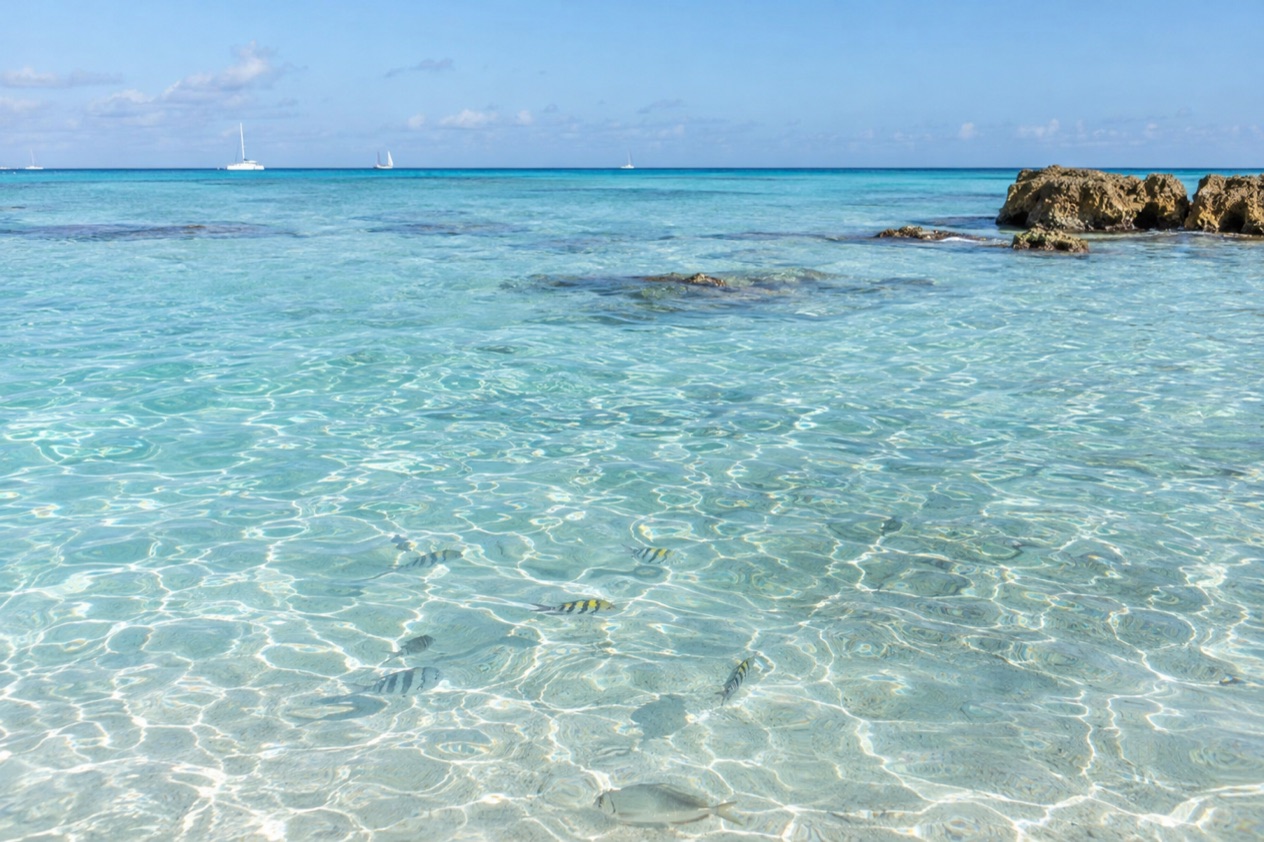
Early in the morning on the west coast, the water inside a small bay lies almost flat, and the first snorkelers drift out with their faces down, watching schools of fish flicker over the sand. Parrotfish crunch at the rocks, a trumpetfish hangs motionless like a stick, and the sun throws wobbling lines of light across the bottom. Aruba’s leeward shore, from Malmok down to the mangroves of Mangel Halto and the lagoon at Baby Beach, gives snorkelers a string of places to do this all year.
Where is the best snorkeling in Aruba?
The best snorkeling in Aruba is found at four beaches in particular: Malmok Beach, Boca Catalina, Mangel Halto and Baby Beach. The first two sit side by side in the northwest, near the resort strip. Mangel Halto and Baby Beach lie toward the southeast, and each has a different character, from a quiet mangrove shore to a broad, shallow bay with a snack stand.
Think of them as four separate mornings rather than one checklist. Each place has its own rhythm, its own kind of shade and its own mix of people, so the choice is as much about the kind of day you want as about what swims beneath you.
Boca Catalina
Boca Catalina is a small, secluded bay in the Malmok Beach area, with a white sandy beach reached by steps down from a spacious parking area alongside the road. Snorkeling tours stop here because of the variety of sea life, and independent snorkelers like it for the same reason. Some makeshift beach huts give shelter from the sun between swims.
The mood changes with the calendar. On weekdays the bay can be all to yourself, while on weekends it fills with a cheerful mix of local families and island guests. Because the access to the clear water is gentle, it suits families of all ages, and it draws those who want a more private, calm beach day with a mask on their forehead.
One more thing to know: the best way to reach Catalina Cove is to enter the water at Boca Catalina and swim up north. That makes the bay a starting point for a longer drift along the shore rather than only a spot to float in place.
Malmok Beach
Malmok is a narrow sandy stretch laid along a terrace of limestone and rock on Malmok’s coast. The water is described as crystal clear and among the best on the island, and the shallows are a big part of the appeal. Snorkelers float over pale sand and dark patches of rock where small fish gather.
Look out past the shoreline in the daytime and you will often see catamarans and sailboats anchored just off the beach while their guests snorkel. The calm, clear water is also described as perfect for a relaxing swim, so it works for mixed groups where one person snorkels and another just floats. Reefs and sunken wrecks nearby add excellent diving for those who go deeper.
Mangel Halto
Mangel Halto offers some of Aruba’s best snorkeling, kayaking and paddle boarding, which makes it a good choice when one person wants to float and another wants to paddle. The beach is secluded, and the waters are calm and shallow. Sunbathers who like a quiet shore and some privacy tend to settle here.
What gives the place its life is the mangrove edge. The roots shelter young fish and other small creatures, and the water is rich in sea life supported by the mangroves. Public beach huts and shaded areas give you somewhere to rest between swims, and the whole scene feels slower than the resort beaches to the northwest.
Baby Beach
Baby Beach is in the southern part of Aruba, close to San Nicolas, and it is ideal for families with small kids. The shallow water lets swimmers wade out a long distance and still touch the bottom. Snorkeling happens where the bay opens out to the ocean, and visitors should stay within the marked snorkel area.
This is the beach where a whole day works. A refreshment stand sells hamburgers and hotdogs, and Big Mama’s Grill serves BBQ and seafood platters. Beach beds, windscreens and snorkel gear can be rented for a fee, and complimentary huts are provided for sun protection, so you can alternate swims with long lunches in the shade.
What can you see underwater?
You can see a mix of reef and shoreline fish, mangrove nurseries, seagrass and sand, plus one famous shipwreck, the Antilla, that tours visit. What you actually meet on a given morning is a chance, not a promise, but the leeward coast is built for slow looking in clear, shallow water.
Reefs, rocks and mangroves
Around the rocky edges of Malmok and Boca Catalina, expect the everyday cast of a Caribbean reef: parrotfish grazing on stone, sergeant majors darting in small groups, and sometimes a trumpetfish or a squid hanging in the water. Boca Catalina is known for the variety of its sea life, so it rewards a slow swim with frequent pauses.
At Mangel Halto the scene changes. The mangrove roots form a tangled nursery, and the waters are rich in sea life that the mangroves support. Here you often drift quietly along the edge, looking at small fish tucked among the roots and at the sandy and grassy bottom beyond. It is gentle, patient watching rather than a parade of big animals.
The Antilla wreck
The SS Antilla is the wreck that snorkel tours stop at, and it is known as a famous WWII shipwreck. The ship was scuttled in 1940 and now lies off Aruba, where it has become part of the sea floor. Boats take visitors to it, so it is a boat outing rather than something you reach from a beach towel.
The appeal is the sense of history under the surface. A long hull, covered with growth and visited by fish, makes a very different picture from the pale shallows of the bays. Many people pair the stop with a swim at one of the beaches on the same day, which gives a nice contrast between the wreck and the quiet bay.
Beyond a mask and fins
If you want to go deeper without full diving gear, Aruba offers SNUBA, which lets you breathe underwater while the oxygen tank stays in a boat on the surface. It requires no prior diving or snorkeling experience, and the minimum age is 8. SEABOB, a powerful underwater scooter, can also be tried on the island.
Certified divers have their own list, including various shipwrecks, the Spanish Lagoon and the Barcadera Reef. Near Malmok, reefs and sunken wrecks afford excellent diving. For many travelers the best plan is to mix: a beach morning with a mask, then one adventure that goes a little further below.
Can you snorkel from the beach?
Yes, you can snorkel straight from the beach at several places in Aruba, and you do not need a boat for it. Boca Catalina, Malmok, Mangel Halto, Baby Beach and Arashi Beach all have shallow, clear water within a few steps of the sand. Boats add the Antilla and a few offshore stops, but a beach day can be complete on its own.
Arashi Beach
Arashi Beach is described as the perfect snorkeling beach for beginners because of its shallow water and sandy bottom. It is easily reached by public transport, and it has a very large parking area. That makes it a natural place to start if you have never put a mask on or if the group has mixed experience.
One thing to plan: there are no snorkel rental vendors nearby, so bring your own gear. If you need to rent equipment, Baby Beach is the place the island’s guidance points to for gear rental. Pack your mask, snorkel and fins before you leave the hotel, and the day at Arashi runs smoothly.
Getting in at the bays
At Boca Catalina you walk down steps from the roadside parking to the white sand, and then wade into water that is clear and gentle at the edge. From there you can float in the bay or follow the shoreline north toward Catalina Cove. At Malmok the beach is a narrow strip, so you step from the sand onto a shoreline of rock and shallow water.
Mangel Halto and Baby Beach are the two places to pick when you want a slower pace. Mangel Halto is calm, shallow and secluded, with public huts and shade. At Baby Beach the shallows run a long way out, and you snorkel where the bay opens toward the ocean, staying inside the marked snorkel area.
Planning a beach day
A good day starts with the quietest place first. On weekdays Boca Catalina can be all yours, while weekends bring local families, so the same bay feels different depending on the day. Then you can move on to a second beach for lunch and shade, rather than trying to fit every site into one outing.
Baby Beach suits the longest stay, because food and rentals are on hand. Mangel Halto is the better pick for a calm, private afternoon with paddle boards or kayaks. Keep in mind that the southeast beaches and the northwest beaches are far apart, so choose one end of the island per day.
What should you know before you go?
Before you go, know that the sea is warm all year, that reef-safe sunscreen is required, and that taking shells or coral home is against the law. These small habits protect the same reefs you came to see, and they cost you almost nothing.
| Month | Average sea surface temperature (°F) |
|---|---|
| January | 81.0 |
| April | 80.8 |
| July | 82.2 |
| October | 86.5 |
Sunscreen and the reef
Aruba has banned sunscreens containing oxybenzone since 2019, so check the label before you pack. Visitors are asked to use mineral-based reef-safe sunscreens, which are more likely to be biodegradable and have less impact on the environment.
If you arrive without any, sunscreen can be bought on the island from local companies such as Aruba Aloe and Arubalife Organics. Applying it before you reach the beach, and again after your swim, keeps the bays cleaner for the next person.
Protecting what you see
Visitors should avoid stepping on seagrass, corals or mangroves, which are the living nursery of the bays. At shallow places like Mangel Halto it is tempting to stand and rest, so find sand instead. Float, look and let the fish do the moving.
Taking sea shells, corals, white sand, or sea life such as sand dollars and dried sea stars from Aruba is against the law and could result in a fine at the airport. If every visitor took one shell home, it would amount to over a million shells a year. Take photographs instead, and leave the beach as you found it.
Sea warmth through the year
The water is warm in every month shown in the table, so a thin swimsuit is enough for most snorkelers. October is the warmest of the four, and the sea then feels like bathwater even after a long float. January and April are a touch cooler, though still comfortable for an hour or more in the water.
Because Aruba is small and flat, the weather will not dictate which beach you choose, but the coast will. The northwest has the resort-side beaches and the clear shallows of Malmok and Boca Catalina, while the southeast has Mangel Halto and Baby Beach. Pick the coast first, then the beach.
Good to know before you go
The U.S. State Department rates Aruba Level 1, ‘Exercise normal precautions,’ and says Aruba is generally a safe destination for travelers, with petty crime the main concern in popular tourist areas.
Bring your own mask, snorkel and fins if you plan to visit Arashi Beach, since no rental vendors are nearby, and pack mineral-based reef-safe sunscreen so you are ready the moment you arrive. Petty crime is the main concern in popular tourist areas, so keep valuables out of sight when you leave the car for a swim. Use the huts and shaded areas at Boca Catalina, Mangel Halto and Baby Beach to rest between swims, and leave every shell and piece of coral where it lies.
Sources
- Aruba Tourism Authority, Scuba and snorkel (https://www.aruba.com/us/things-to-do/on-the-water/scuba-snorkel), checked October 9, 2026
- Aruba Tourism Authority blog, Top-rated snorkeling beaches (https://www.aruba.com/us/blog/arubas-top-rated-snorkeling-beaches), checked October 9, 2026
- Aruba Tourism Authority, Boca Catalina (https://www.aruba.com/us/explore/boca-catalina), checked October 9, 2026
- Aruba Tourism Authority, Mangel Halto (https://www.aruba.com/us/explore/mangel-halto), checked October 9, 2026
- Aruba Tourism Authority, Baby Beach (https://www.aruba.com/us/explore/baby-beach), checked October 9, 2026
- Aruba Tourism Authority, Malmok Beach (https://www.aruba.com/us/explore/malmok-beach), checked October 9, 2026
- Wikipedia, SS Antilla (https://en.wikipedia.org/wiki/SS_Antilla), checked October 9, 2026
- Aruba Tourism Authority blog, Responsible guest (https://www.aruba.com/us/blog/how-to-be-a-responsible-guest-protecting-arubas-beaches-and-marine-life), checked October 9, 2026
- Open-Meteo Marine API, average 2015-2024, checked October 9, 2026
- U.S. Department of State, Aruba Travel Advisory, Level 1, issued August 19, 2026 (https://travel.state.gov/content/tsg_aem/us/en/home/international-travel/travel-advisories/destination.abw.html), checked October 9, 2026
To plan your stay
- Best Time to Visit Aruba: Weather by Month, Peak Season and Festivals
- Where to Stay in Aruba: Palm Beach, Eagle Beach, Oranjestad and All-Inclusives
- Aruba Airport (AUA): Arrival, Getting to Your Hotel, U.S. Preclearance and Departure
- Know Before You Go to Aruba: Entry Forms, Money, Water and Local Customs