
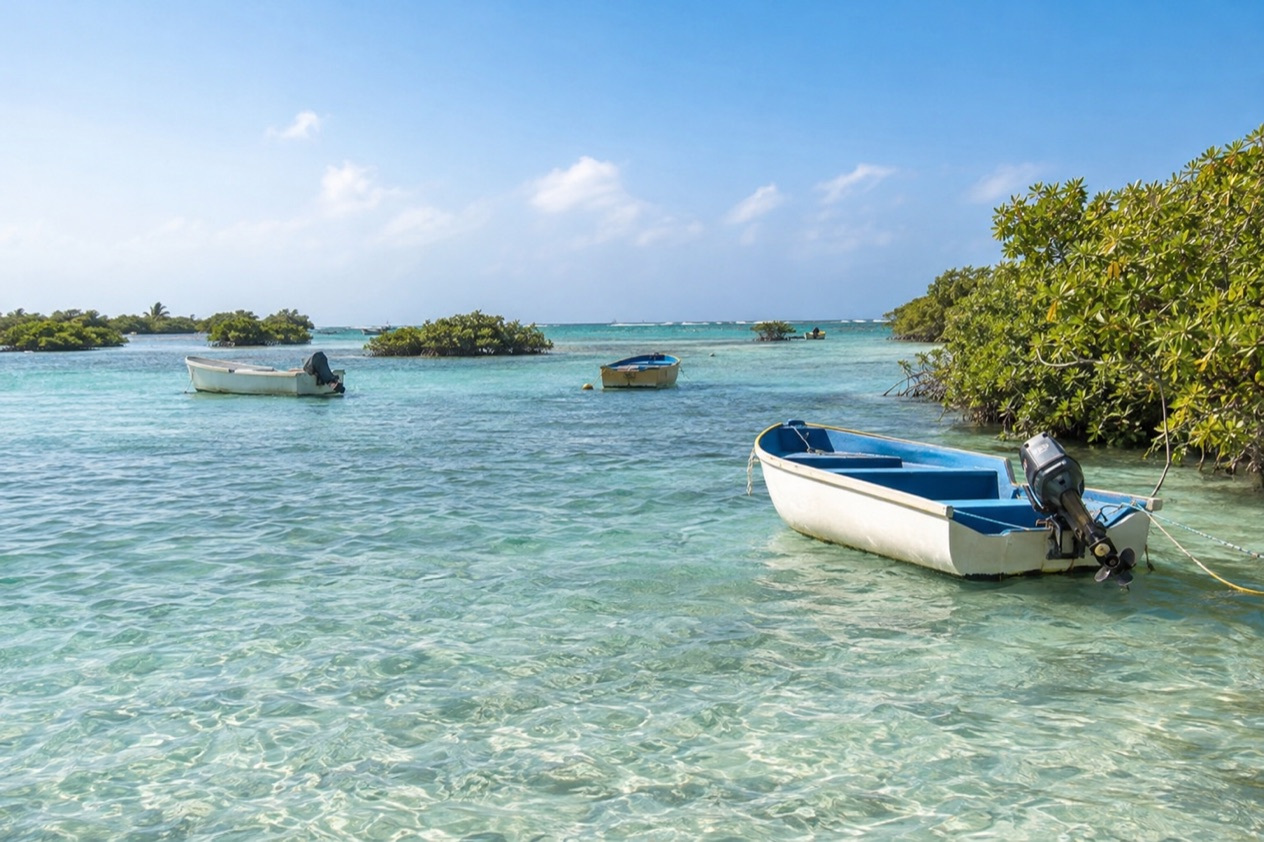
The road south of Oranjestad runs out of resorts and into low scrub, and then a sandy track ends at a fringe of mangroves with water the color of green glass behind them. At Mangel Halto the only sounds are the wind in the branches and the small slap of water against roots. This is a secluded beach on Aruba’s southwestern coast, a place for snorkelers, paddlers and anyone who wants a quiet stretch of shore, and it suits a slow half day better than a rushed stop.
Is visiting Mangel Halto worth it?
Yes, if you want to be in the water more than on a lounge chair, and especially if you like your beaches quiet. Mangel Halto draws snorkelers, kayakers, paddle boarders and shore divers, along with sunbathers who like privacy. It is less a place for beach clubs and music than a place for masks, fins and a long, unhurried afternoon.
What sets it apart from the resort beaches farther up the coast is the mangrove. The trees shelter young fish and give the shallows a living, layered look that a bare stretch of sand cannot match.
The water is calm and shallow near the shore, the sea life is rich, and a short wade takes you to a reef that drops away into deep water. Few beaches on the island pack so many kinds of water activity into one small cove.
It is not the right stop for someone who wants a row of restaurants at the sand’s edge, or a long list of organized amusements. If your idea of a good beach day is a book, a swim mask and a few hours without a crowd, it earns its place on an itinerary.
What to see at Mangel Halto
The mangrove shoreline
The mangroves are what you notice first, and what the whole place is built around. Their tangled roots stand in the water like stilts, and the sheltered pockets between them hold small fish that use the roots as a nursery. The roots also help feed the sea life in the water beyond, which is why the snorkeling here feels so full of movement.
Look at the roots from the water’s edge before you go in. Watching the shallows for a few minutes often shows more than you would expect, from tiny silvery shapes darting between the stems to the shadows of larger fish patrolling the edge. It is a quiet kind of sightseeing, and it rewards patience.
The sand beach and wooden sun deck
Mangel Halto has a stretch of sand and a wooden sun deck, which gives you two ways to settle in. The deck is the spot for drying off, watching paddlers glide by and looking out over the shallows. Public beach huts and shaded areas dot the shore, so you are not left in full sun for the whole visit.
The mood here is private rather than lively. People come with masks and towels, spread out and stay a while. If you arrive hoping for a busy promenade, you will find something much quieter, and for many travelers that is exactly the appeal.
The reef edge and the deep water
Beyond the calm shallows, you can walk out to the edge of the reef. There you may see parrot fish, yellowtail snapper, sergeant majors and blue tangs, the kind of bright, busy reef traffic that snorkelers hope for. Parrot fish are easy to recognize by their beaked mouths and their habit of grazing on coral, and sergeant majors by the dark vertical bars on their sides.
Past the edge, the reef plunges to depths of 110 feet. Octopi, morays and barracuda abound in that deeper water, and the drop is why Mangel Halto Beach serves as an excellent shore diving site. Even if you only stay on the surface, it is worth knowing how much sits just below you.
Kayaking and paddle boarding through the mangroves
There is access through the mangroves for open water kayaking and stand-up paddle boarding. Paddling lets you see the trees from the level of their roots, with the light filtering through the leaves and the water below you clear enough to watch fish pass beneath the board.
Mangel Halto is described as offering some of Aruba’s best snorkeling, kayaking and paddle boarding, so a day here can mix all three. Paddle out in the morning, snorkel the reef edge after, and finish on the sun deck.
Hours, tickets and rules
Mangel Halto is a public beach, with public beach huts and shaded areas, and the rule that matters most here concerns sunscreen. The place is built for spending time in the water, so what you put on your skin before you go in is a real part of the visit.
The setting is simple. A sand beach, a wooden sun deck, shade from the huts, and a mangrove edge that leads to the reef. There is no ticket booth to plan around and no schedule of shows. The day is shaped by the light, the water and how long you want to stay.
Aruba has banned sunscreens containing oxybenzone since 2019, and visitors should use mineral-based reef-safe sunscreens because they are more likely to be biodegradable and minimize environmental impact. That matters especially at a place where you are floating above a living reef and mangrove nursery. If you need to buy some on the island, local companies like Aruba Aloe and Arubalife Organics sell it.
Reef-safe sunscreen also fits the character of the beach. The reason people come is the clear water and the sea life it holds, and the products you choose are one small way of looking after it.
How to get to Mangel Halto
Mangel Halto Beach lies just north of the town of Savaneta, on the southwestern coast of Aruba. Savaneta is about a 20-minute drive from Oranjestad, and the route follows L.G. Smith Boulevard, the coastal road that leads out of the capital. Savaneta is easily accessible by car, and that is the simplest way to picture the trip from the capital.
Public transportation is available too, with buses regularly traveling between Oranjestad and Savaneta. That gets you to the town, and the beach sits just to its north.
Savaneta is a small place with its own character, and it is worth seeing as you arrive. It is the home of the oldest house in Aruba, a 150-year-old cas di torto, the traditional Aruban house style. Knowing it is nearby gives your trip a bit of local history on the way to the sea.
For visitors staying in Oranjestad, the beach makes a natural out-and-back outing from the capital. If you are staying in Savaneta itself, you are already close. The town offers boutique hotels, vacation rentals and bed-and-breakfast accommodations rather than large resorts, and Coral Reef Beach is a beachfront property with direct access to the water.
When to visit Mangel Halto
The best time to visit Aruba in general is from February to August, and Mangel Halto fits that pattern well, since the calm, shallow water is the main draw in any month. The peak season on the island runs from December to April, so if you want the beach at its quietest, the later part of that general window is the more peaceful choice.
Time of day matters more than the month for this kind of beach. Snorkeling and paddling reward clear light, and the morning is the natural moment to be on the water, before the sun climbs high. The wooden sun deck and the shaded huts then come into their own as the day warms up.
A secluded beach feels different from one lined with hotels. With fewer people around, the sounds of the place come through, the wind in the mangroves, the water against the roots, birds calling from the branches. Visiting on a weekday morning, when you are likely to share the shore with only a handful of other people, suits anyone who came for the quiet.
Late in the day, the light turns soft on the water and the mangroves take on a deeper green. It is a pleasant time for a last look from the sun deck, followed by dinner in Savaneta.
Tips for your visit
Bring a mask and snorkel, because the reef is the point of the visit. Add reef-safe sunscreen, a towel and something to drink. A swim shirt is a sensible extra for long hours in the water. If you plan to paddle, mangrove access is there for kayaking and stand-up paddle boarding, so you can pair the two activities in a single outing.
Plan the visit as a half day rather than a quick stop. Between the snorkeling, a walk out to the reef edge and some time on the deck, the hours pass quickly. Mangel Halto is a good place to be unhurried, and the shade from the beach huts makes it easy to take breaks.
Combine the beach with the rest of Savaneta. Zeerovers is a local restaurant where visitors can enjoy freshly caught fish right by the water, which makes a fitting lunch after a morning in the sea. The cas di torto, the oldest house in Aruba, is another stop in town for anyone curious about the island’s past.
For families, the shade of the public huts and the calm, shallow water near the shore make the beach comfortable to settle into, though the reef edge and the deep water beyond it are for confident swimmers. For anyone who prefers a quieter vacation, Savaneta is considered one of the safest areas in Aruba, and visitors can feel at ease exploring the town day and night.
Good to know before you go
The U.S. State Department rates Aruba Level 1, ‘Exercise normal precautions,’ and says Aruba is generally a safe destination for travelers, with petty crime the main concern in popular tourist areas.
Mangel Halto is a place for travelers who like to be close to nature, so pack light and leave the beach as you found it. Choosing a reef-safe, mineral-based sunscreen is the simplest way to protect the water you came to see. Savaneta is a quiet town, so you will find the setting calmer than the main resort areas, which is a good part of its charm.
Sources
- Aruba Tourism Authority, Mangel Halto (https://www.aruba.com/us/explore/mangel-halto), checked October 9, 2026
- Aruba Tourism Authority, Savaneta region (https://www.aruba.com/us/our-island/regions/savaneta), checked October 9, 2026
- Aruba Tourism Authority, Best time to visit (https://www.aruba.com/us/our-island/one-happy-island/when-is-the-best-time-to-visit-aruba), checked October 9, 2026
- Aruba Tourism Authority blog, Responsible guest (https://www.aruba.com/us/blog/how-to-be-a-responsible-guest-protecting-arubas-beaches-and-marine-life), checked October 9, 2026
- U.S. Department of State, Aruba Travel Advisory, Level 1, issued August 19, 2026 (https://travel.state.gov/content/tsg_aem/us/en/home/international-travel/travel-advisories/destination.abw.html), checked October 9, 2026
To plan your stay
- Best Time to Visit Aruba: Weather by Month, Peak Season and Festivals
- Where to Stay in Aruba: Palm Beach, Eagle Beach, Oranjestad and All-Inclusives
- Aruba Airport (AUA): Arrival, Getting to Your Hotel, U.S. Preclearance and Departure
- Know Before You Go to Aruba: Entry Forms, Money, Water and Local Customs