
On Aruba the day tends to start with the trade wind rattling palm fronds, joggers on the Eagle Beach sand and pastechi (fried turnovers, often filled with cheese or meat) coming out of a bakery counter in Oranjestad. Life for a visitor is mostly beach chairs, long dinners and rental cars parked outside open-air restaurants. Safety questions here are small and practical ones, and they are worth answering before you pack.
Is Aruba safe to visit?
Aruba is generally a safe destination for travelers, though no trip is free of risk, and the real concern is ordinary theft rather than anything dramatic. Most of what happens to visitors falls under crimes of opportunity: a phone left on a beach towel, a camera on a car seat, a bag set down in a hotel lobby.
Petty crime is most likely in popular tourist locations, which is simply where unattended belongings are most plentiful. Purses, cameras, passports, phones and other handheld electronics are the items that go missing most often. Vehicle break-ins follow the same logic, so a rental car is no place to leave valuables in plain view, and the beach is no place to leave them while you swim.
Violent crime, including rape and armed robbery, is not common but does occur, which is why isolated areas call for caution. Armed robberies have been tied to businesses that store large amounts of cash or are involved in drug or gang activity, a world most vacationers never touch. For everyday travel, the habits are the ones you would use at home in a busy resort town: keep valuables with you, stay in company after dark and trust your instincts.
Two other matters deserve a line. Local law applies to you in full, even if you break it unknowingly, and people detained in Aruba cannot post bond for release.
Drug laws are enforced rigorously, including against tourists carrying marijuana for personal use, and Aruba’s approach is very different from that of the Netherlands. Guns, ammunition and even spent shells or casings are illegal to bring in without prior written authorization, and travelers who try may face arrest and long detention. For emergencies, dial 100 for the police and 911 for medical help.
Safety by area in Aruba
Palm Beach and Eagle Beach
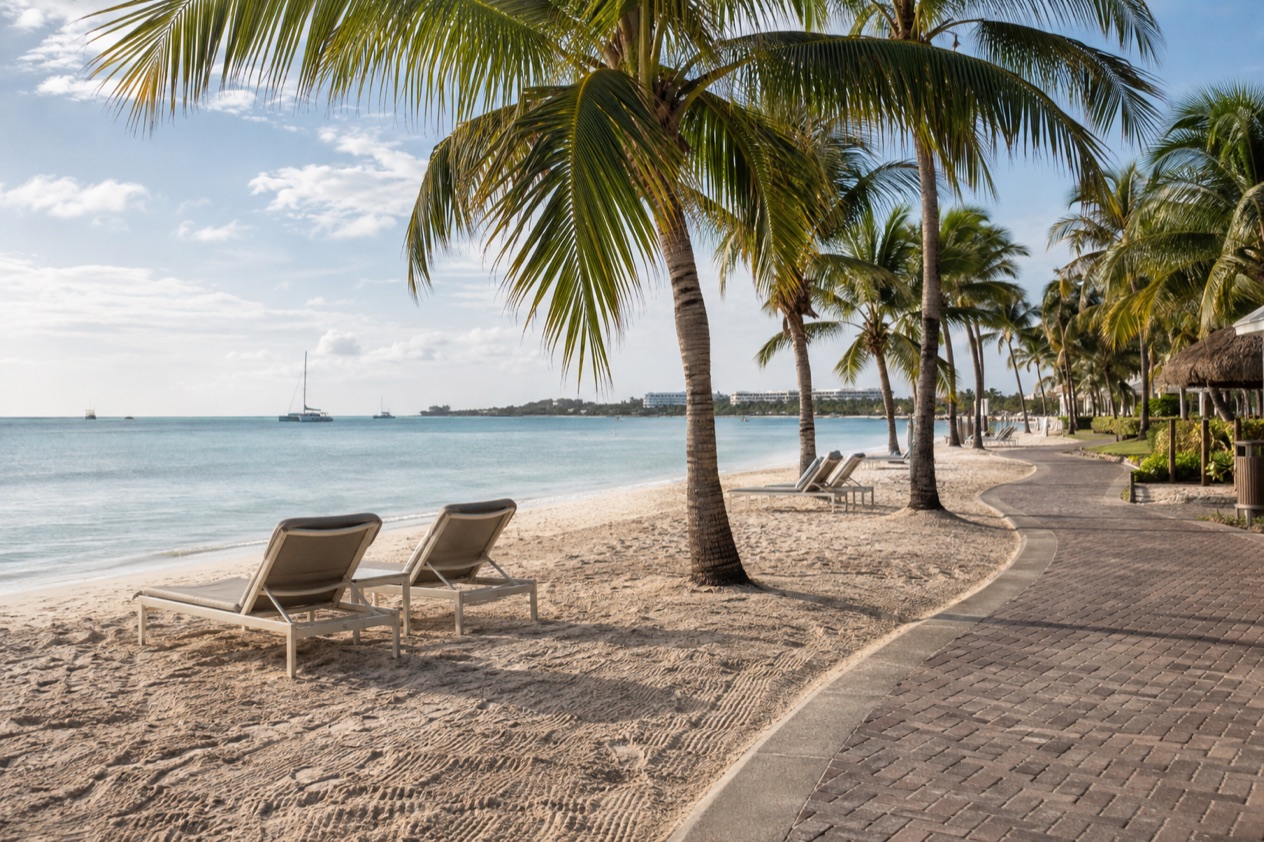
These two stretches hold the resort beaches on the leeward coast, and they are where most visitors spend their days. Towels, bags and phones sit on the sand while their owners swim or head to a beach bar, and that is exactly the kind of situation in which opportunistic theft happens. Hotel lobbies count too, so a purse set on a chair while you check in is an easy target.
The habits that help are simple. Bring only what you need to the beach, keep passports locked away at your hotel and keep your phone on you rather than on the towel. At night, bars and clubs along the strip call for ordinary care: go in pairs or groups, drink responsibly and never leave a drink unattended or accept an open container from a stranger.
Oranjestad
The capital is where cruise passengers, shoppers and diners share the waterfront streets with people going about their workday. As in any busy tourist center, petty crime is the thing to keep in mind, and handbags and cameras are the items most often taken. A cross-body bag zipped shut and a phone kept in a front pocket do most of the work.
Cars parked around town deserve the same attention as anywhere else on the island. Break-ins are among the most common crimes against foreigners, so bags, cameras and shopping should never be left visible on a seat. Sidewalks and crossings in many areas are not wheelchair accessible, and many buildings lack ramps, which matters for anyone traveling with a wheelchair.
San Nicolas
San Nicolas, at the southeastern end of the island, is known for its street murals and its local character. There is an increased risk of crime here, especially at night, and crimes against tourists are more common there than elsewhere. Visiting in daylight is the sensible approach, and the evening is better spent somewhere else.
The same caution applies to isolated areas anywhere on the island, since violent crime, although uncommon, does occur. If a stop takes you off the main routes, go with company and leave anything you would hate to lose back at your hotel.
Common scams and how to avoid them
The most common trouble for visitors is not a clever scheme but plain theft, and the cure is mostly about where your things are. The pattern on Aruba is valuables left unattended in public places: on the beach, in a parked car, in a hotel lobby. Treat anything you set down as something you may not see again.
Rental cars are the second weak point. Car theft, especially of rental vehicles, can occur, and leases and rentals may not be fully covered by local insurance when a car is stolen or damaged.
Before you drive off, find out exactly what your rental agreement and your own coverage will pay, so a stolen car does not turn into an unexpected bill. Keeping the car empty of visible belongings takes care of the break-in side.
Nightlife has its own trick, and it is an old one: the spiked drink. Keep your glass in your hand or in view, do not take open containers from strangers, and stay with your group. The legal drinking age of 18 is not always enforced, so parents of teenagers may want to keep a closer eye on evenings out.
One more trap is the souvenir. Counterfeit and pirated goods are illegal under local law, and you may pay fines or have to give them up if you bring them back to the United States. A bargain handbag is not worth that. Likewise, anything that looks like a quick favor involving drugs or contraband is a risk you do not want, given how strictly the laws are enforced.
Getting around safely
Driving on Aruba is done on the right-hand side of the road, as at home, but the details differ enough to deserve attention. Road signs are not the same as in the United States, so drivers should familiarize themselves with them before setting out. That small bit of homework helps most at roundabouts and on unfamiliar streets near the resorts.
Watch for scooters, motorcycles and ATVs, whose drivers may not strictly follow traffic rules. In less developed parts of the island, goats and other animals can cross the road unexpectedly, which is one more reason to keep your speed in check once you leave the resort areas and head toward the wilder coasts.
Night driving is reasonably safe if you know the route and the road conditions, but most roads are not as well lit as U.S. roads. If your evening plan involves a drive to an unfamiliar spot, work out the way while it is still light. A parked rental car is also a target, so keep it locked and empty of valuables whenever you leave it.
Ambulance services are widely available if something does go wrong, but access to quality medical care is limited and facilities may not match the standards you expect at home. That is a good reason to drive attentively, take the evening seriously after a few drinks and think carefully before any risky outing.
Beach, water and weather safety
The leeward coast, with its resort beaches, is where most people swim, while the north and east coasts are rough and wild. Dos Playa, on the rugged northeastern coast, is one of the island’s least populated beaches, a peaceful place away from resort crowds, and its remoteness is part of its appeal. That same solitude means few people around if you need help, so it suits a visit with company.
The tourism industry is unevenly regulated, and safety inspections for equipment and facilities do not commonly occur. If you book a boat trip, a snorkeling outing or a dive, check the operator’s safety record yourself. Divers should also know there is no decompression chamber on the island, so anyone with decompression sickness must be medically evacuated for treatment.
The sun is strong and the trade wind makes it easy to underestimate. Aruba has banned sunscreens containing oxybenzone since 2019, and visitors are asked to use mineral-based reef-safe sunscreens, which are more likely to be biodegradable and gentler on the reef. Pack the right bottle before you arrive rather than hunting for it on the island.
Mosquitoes are the other everyday nuisance. Zika virus, dengue and chikungunya are prevalent in Aruba, so use mosquito repellents recommended by the U.S. Centers for Disease Control and Prevention and sleep under insecticide-impregnated nets where relevant. As for storms, the island sits on the southern fringes of the hurricane belt, where damaging storms are rare, though the Atlantic hurricane season runs from June through November.
Good to know before you go
The U.S. State Department rates Aruba Level 1, ‘Exercise normal precautions,’ and says Aruba is generally a safe destination for travelers, with petty crime the main concern in popular tourist areas.
Medical costs are the part of a trip people forget. U.S. Medicare and Medicaid do not apply overseas, most hospitals and doctors do not accept U.S. health insurance, and many care providers take only cash.
If a medical evacuation is needed, the cost to transfer a patient to the United States is approximately $15,000 to $25,000, which is why medical evacuation insurance is encouraged. Carry any prescription medication in its original packaging with your doctor’s prescription, since the range of drugs sold locally is smaller than in the U.S.
Sources
- U.S. Department of State, Aruba Travel Advisory (https://travel.state.gov/content/tsg_aem/us/en/home/international-travel/travel-advisories/destination.abw.html), checked October 9, 2026
- U.S. Department of State, Aruba Travel Information, Safety and security (https://travel.state.gov/content/travel/en/international-travel/International-Travel-Country-Information-Pages/Aruba.html), checked October 9, 2026
- U.S. Department of State, Aruba Travel Information, Local laws and special circumstances (https://travel.state.gov/content/travel/en/international-travel/International-Travel-Country-Information-Pages/Aruba.html), checked October 9, 2026
- U.S. Department of State, Aruba Travel Information, Health (https://travel.state.gov/content/travel/en/international-travel/International-Travel-Country-Information-Pages/Aruba.html), checked October 9, 2026
- U.S. Department of State, Aruba Travel Information, Traveling and transportation (https://travel.state.gov/content/travel/en/international-travel/International-Travel-Country-Information-Pages/Aruba.html), checked October 9, 2026
- Aruba Tourism Authority blog, Responsible guest (https://www.aruba.com/us/blog/how-to-be-a-responsible-guest-protecting-arubas-beaches-and-marine-life), checked October 9, 2026
- Aruba Tourism Authority blog, Aruba wild beach (https://www.aruba.com/us/blog/aruba-wild-beach), checked October 9, 2026
- Aruba Airport Authority, Inadmissible items (https://www.airportaruba.com/inadmissible-items), checked October 9, 2026
To plan your stay
- Best Time to Visit Aruba: Weather by Month, Peak Season and Festivals
- Things to Do in Aruba: Beaches, Arikok National Park, Island Tours and Food
- Where to Stay in Aruba: Palm Beach, Eagle Beach, Oranjestad and All-Inclusives
- Aruba Airport (AUA): Arrival, Getting to Your Hotel, U.S. Preclearance and Departure