
Just across from the Arrivals terminal at Aruba’s airport, a plaza of food trucks sends up the smell of frying dough and grilled meat, and the first pastechi of the trip is often eaten before the bags have even been collected. From there the island’s table opens up: fish pulled from the water that morning, a stew simmering with goat, a cheese baked into a shell and served in slices. Aruban food is what you order, where you eat with sand under your feet and which seafood comes from local boats.
What is Aruban food?
Aruban food is a blend of Caribbean home cooking with Dutch, African, Asian and South American touches, built on fresh fish and slow-cooked stews. The mix comes from the island’s history.
The first people here were the Caquetio, who came from South America and lived on freshly caught fish and conch, both still on menus today. Later came European colonial settlers, enslaved Africans, merchants, and immigrants from the East and from Asia, and each group left something in the pot.
The result is a table that surprises first-time visitors. Pea soup and thin Dutch pancakes sit near bami and nasi goreng rice, and saté with peanut sauce. Johnnycakes, the fried, puffy biscuits, and pan bati, the Aruban pancake, stand in for bread. The fiery Madame Janette pepper, the island’s version of the scotch bonnet family, lights up meat, soup and seafood dishes, so ask how hot a sauce is before you pour it freely.
Home cooking and the Dutch table
Beef (carni di baca stoba), chicken (galiña stoba) or the sweeter goat (cabrito stoba) arrives with arroz moro, rice cooked with beans, or with funchi, a cornmeal mash that soaks up the sauce. It is food made for long Sunday lunches, and it is what to order when you want to taste what Arubans eat at home.
The Dutch side shows up in pea soup and in pancakes, thin and wide, served with sweet or savory toppings. Willem’s Dutch Pancakes is one of the restaurants that carries this tradition. A pancake is a good answer when you want something light between two heavier meals.
A table of many nations
Restaurant menus reflect cuisine inspired by more than 90 nationalities, and the island has over 250 eateries. You can eat Dutch, Asian, African, Spanish, Italian, Greek, Chinese, Thai or Indian food. Steakhouses come in Argentinean, Brazilian, American and Japanese styles.
Most restaurants cluster in Oranjestad, the capital, and in Noord, Palm Beach, Eagle Beach, Savaneta, San Nicolas and Pos Chiquito. The high-rise hotel area of Palm Beach and the downtown waterfront hold the greatest number. Most restaurants also have menu items for gluten-free, lactose-free, vegan and vegetarian diets.
Autentico in October
Every October the culinary event Autentico invites visitors to sample the island’s fusion of flavors and its authentic dishes. It is a natural fit for a trip at this time of year, since it gathers in one place the stews, snacks and seafood you would otherwise hunt down across the island.
What should you try in Aruba?
Start with keshi yena, balchi pisca, cabrito stoba and pastechi, the four dishes that say the most about the island. Each one tells a small piece of its story, and all are easy to find on menus from Oranjestad to San Nicolas.
Keshi yena
Keshi yena means stuffed cheese. A shell of cheese is filled with spiced meat or chicken and baked until the outside softens and the inside turns rich and savory. It arrives at the table in wedges, and the contrast of salty cheese and seasoned filling is what makes it the island’s signature plate.
It suits anyone who likes comfort food and does not mind a heavy lunch. Pair it with something light afterward, perhaps a stroll along the Oranjestad waterfront or a swim.
Pastechi and empanadas
The pastechi, a crescent of deep-fried pastry with a variety of fillings, is a national snack. Empanadas are the same idea with meats or chicken inside. Both are eaten with the fingers, hot, and make a fast breakfast or a snack between beaches.
The food truck plaza across from the Arrivals terminal at the airport is one place to try them from the first hour of your trip. Order one with cheese and one with meat and compare.
Stews, fish balls and bread substitutes
Balchi pisca are fish balls, a local favorite among the fried plates. Cabrito stoba, goat stew, is the sweeter of the stews and rewards slow eating. Pan bati, the Aruban pancake, and johnnycakes appear on plates where you might expect bread.
For a sweeter turn, Dutch pancakes and Gelatissimo ice cream round out a meal. Dietary needs are widely met, so vegetarians and those avoiding gluten or lactose can still order well.
Where can you eat on the beach?
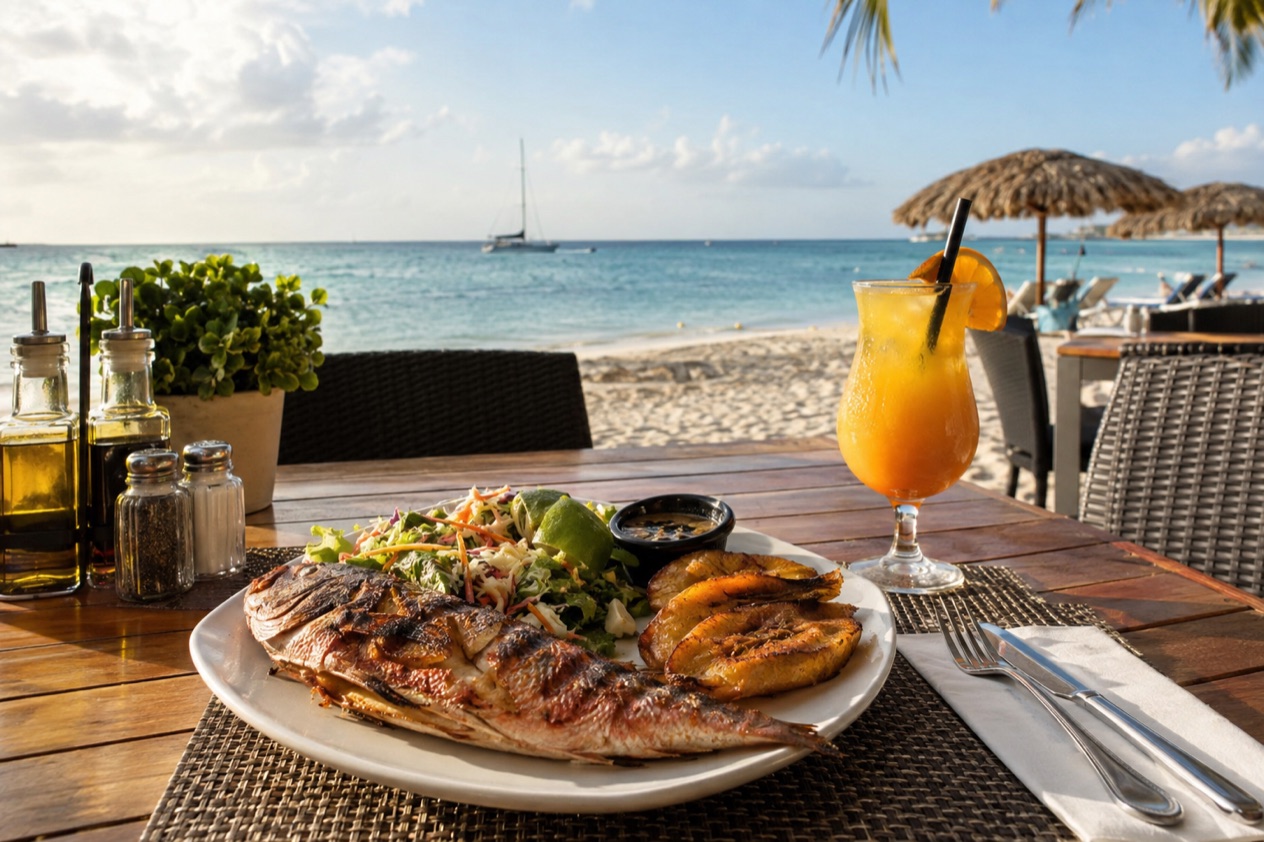
You can eat on the beach at open-air restaurants and beach bars along Palm Beach, Eagle Beach, Surfside and Baby Beach, where dining with toes in the sand sits alongside upscale indoor rooms. Palm Beach has the densest run of them.
Palm Beach tables
Moomba Beach Bar & Restaurant sits between the Marriott and Holiday Inn hotels. Its open-air restaurant serves an all-you-can-eat breakfast buffet, and live bands and deejays play several nights a week, so the beach turns livelier after dark.
Hadicurari is next to the local fishermen’s pier. Besides fresh seafood, pizzas and pasta, it offers a vegan menu, which makes it a handy choice for mixed groups. Scott’s Brats at Playa Linda Beach Resort is known for its Bloody Mary.
Eagle Beach and Casa del Mar
Matthew’s Beachside Restaurant at Casa del Mar holds an all-you-can-eat rib night every Tuesday and three daily happy hours. Elements at Bucuti & Tara Beach Resort serves vegetarian, vegan and gluten-free dishes. Coco Loco Beach Bar & Restaurant lives by its motto, no reservations, just relaxation. Ricardo’s Restaurant & Bar offers generous happy hours and sports broadcasts by the beach, and Craft, an upscale sports bar near Eagle Beach, pours artisanal cocktails and craft beers.
Surfside and Baby Beach
Reflexions Beach Club at Surfside Beach rents out chairs and umbrellas, and an adjacent children’s playground gives families a reason to linger. Rum Reef at Baby Beach, in the south, has a terrace with an infinity pool for guests and pina coladas made with real coconut milk. The legal drinking age is 18, and a valid ID might be required when buying alcohol.
What seafood is local?
Local seafood means the daily catch of Aruban fishermen: mahi-mahi, snapper, grouper, wahoo, yellowfin tuna, Caribbean lobster and shrimp. Fresh seafood is one of the foundations of the island’s cooking, and local fishermen supply many restaurants with fresh fish every day.
How fish is cooked
Fish local style is pan-fried and served with a tomato-based creole sauce. Many restaurants also feature red snapper, mahi-mahi, wahoo and barracuda in a variety of sauces. Ask what came in that day, since the catch of the day is always fresh and prepared with care.
Lobster is the splurge, and diners can choose it as a full meal. Shrimp and tuna fill out the menu for those who want something lighter.
Traditional seafood dishes
Keri-keri is shredded, seasoned fresh fish, a dish that makes the most of a good catch. Fish balls and fish soup complete the traditional trio. These are plates where Aruban home cooking shows most clearly, and they connect back to the Caquetio, who ate fish and conch.
From roadside shacks to fine dining
Seafood dining here runs from elegant fine dining to casual roadside fish shacks. Some restaurants offer seafood buffets, others serve a-la-carte dishes. Savaneta and Pos Chiquito are among the places where restaurants gather close to the water, and Opus Ocean & Grill is one featured name for a sit-down meal. Fresh fish is a staple with the local community, which is why a plain plate at a simple spot can be as good as an elaborate one.
Good to know before you go
The U.S. State Department rates Aruba Level 1, ‘Exercise normal precautions,’ and says Aruba is generally a safe destination for travelers, with petty crime the main concern in popular tourist areas.
Most restaurants can handle gluten-free, lactose-free, vegan and vegetarian requests, so dietary needs rarely limit your choices. Pace the spice, because Madame Janette pepper is genuinely hot. Oranjestad adds evening music at Mojito Bar, CILO city lounge and Café The Plaza.
Sources
- Aruba Tourism Authority, Local Aruba cuisine (https://www.aruba.com/us/things-to-do/dining/local-aruba-cuisine), checked October 9, 2026
- Aruba Tourism Authority, Dining (https://www.aruba.com/us/things-to-do/dining), checked October 9, 2026
- Aruba Tourism Authority, Seafood restaurants (https://www.aruba.com/us/things-to-do/dining/seafood), checked October 9, 2026
- Aruba Tourism Authority blog, Beach bars and restaurants (https://www.aruba.com/us/blog/aruba-bars-restaurants-on-the-beach), checked October 9, 2026
- Aruba Tourism Authority, Bars and lounges (https://www.aruba.com/us/things-to-do/nightlife/bar-lounge), checked October 9, 2026
- U.S. Department of State, Aruba Travel Advisory, Level 1, issued August 19, 2026 (https://travel.state.gov/content/tsg_aem/us/en/home/international-travel/travel-advisories/destination.abw.html), checked October 9, 2026
To plan your stay
- Best Time to Visit Aruba: Weather by Month, Peak Season and Festivals
- Where to Stay in Aruba: Palm Beach, Eagle Beach, Oranjestad and All-Inclusives
- Aruba Airport (AUA): Arrival, Getting to Your Hotel, U.S. Preclearance and Departure
- Know Before You Go to Aruba: Entry Forms, Money, Water and Local Customs