
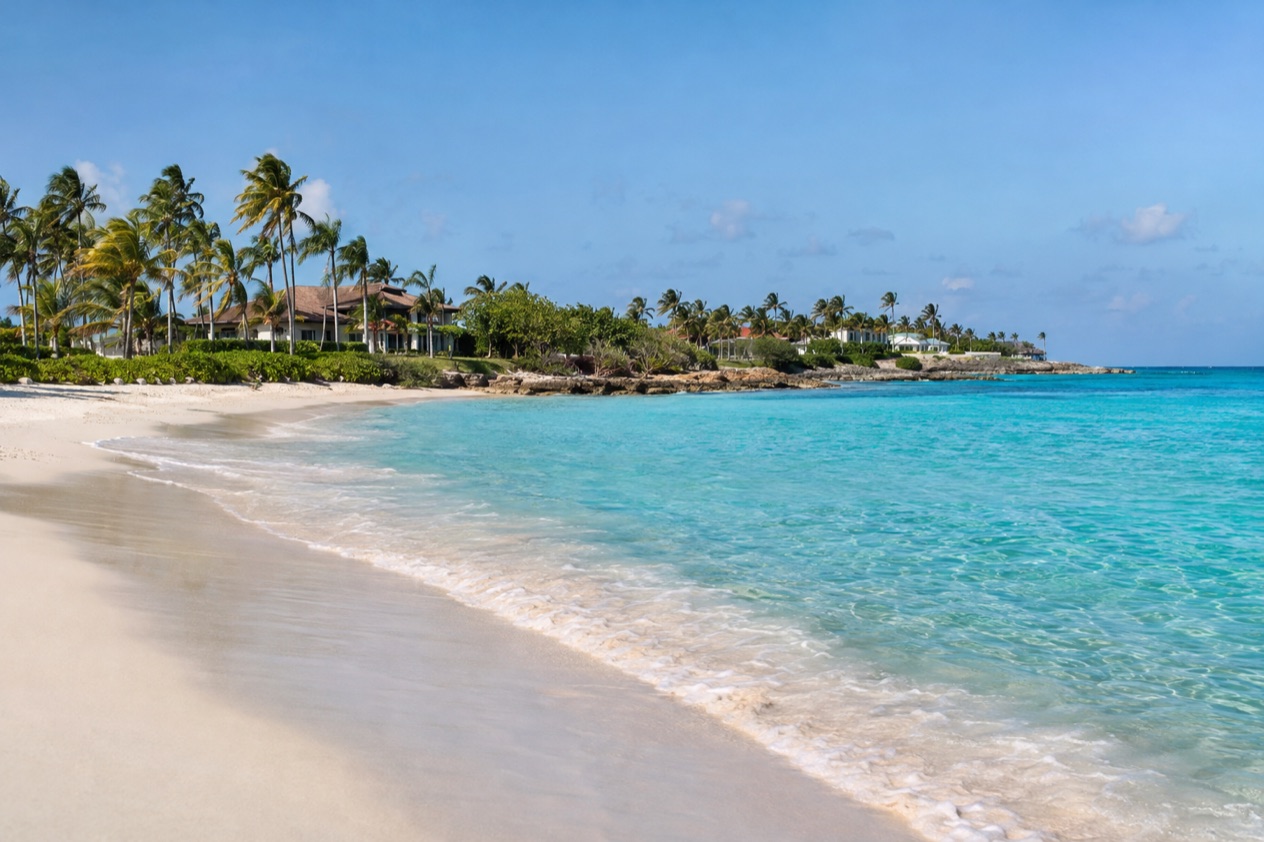
Walk down to Druif Beach and the first thing you notice is how long and gently curved the strip of ivory sand is, with pelicans perched on poles out in the water as if they were posted there on duty. Behind you, low-rise resorts keep the skyline open, and the sound is more of lounge chairs being dragged into place than of crowds. This is a relaxed, unhurried stretch of Eagle Beach, a place for lying in the sun, wading in and watching the day pass.
Is visiting Druif Beach worth it?
Yes, especially if you want a beach day that feels quiet and uncomplicated, with the sea, a chair and a cold drink all close together. Druif Beach suits couples, families and anyone who prefers a low-key stretch of sand to a busy one. It is also a good fit for people who like to stay put: the resorts here have rooms and restaurant facilities just steps from the water.
What sets it apart from the beaches around it is the mix of calm and convenience. It sits within reach of downtown Oranjestad, yet it stays a peaceful, relaxing spot.
It also runs straight into the other beaches of the Eagle Beach area, so the sand continues for miles and you can walk as far as you feel like. The Caribbean water here is relatively calm, which makes it a pleasant place for swimming and even aqua jogging, the kind of wading workout where you jog through water up to your waist.
There is plenty to do if lying still gets old. Both motorized and non-motorized water sports are offered in the area, and there is a beach volleyball field for friendly matches.
And because Druif Beach belongs to Eagle Beach, you share in its reputation: it was voted #3 Best of the Best Beach in the Caribbean in the 2026 TripAdvisor Travelers’ Choice Awards. If you are after a lively party scene, this is not that. If you want soft sand, a long horizon and an easy day, it is exactly right.
What to see at Druif Beach
Druif Beach is a place to look around slowly, and most of what you notice is simple: the sand, the water, the birds and the people playing on the shore. Here are the parts of the visit worth paying attention to.
The long ivory shoreline
The beach is a long, oval-shaped stretch of ivory sand in the Eagle Beach area, and it is the heart of the visit. Eagle Beach is the widest beach in Aruba and is known for its pristine, soft white sand, so there is plenty of room to spread a towel and still feel unhemmed in.
Because Druif Beach connects directly to the neighboring beaches, a walk along the water can go on for a long time, with Caribbean views opening out the whole way. Early and late in the day, when the light turns soft, is when the sand looks its best for a stroll.
The pelicans on their poles
Out in the shallows, pelicans perch on poles rising from the water, and they give the beach a bit of local color you will not find on a postcard of an empty shoreline. They tend to sit and watch the water, then drop off to fish, so keep an eye out and bring your camera.
Watching them is a good reason to linger at the edge of the sea for a few minutes. It is the kind of small, unplanned scene that people remember from a beach day more than they expect to.
The low-rise resorts and beach huts
Casual low-rise resorts line the beach, with rooms and restaurant facilities just steps from the water. The result is a shoreline that feels open and human-sized rather than walled in by towers.
Plenty of beach huts and chairs are set out for lounging, which means you can settle into shade and a seat without much fuss. Some hotels near Eagle Beach also provide cabanas and lounges for their guests, so you may see a more private corner here and there along the sand.
The volleyball field and the water
A beach volleyball field gives active sun-lovers a place to challenge friends and family, and it is a cheerful corner to watch even if you are not playing. Out on the water, motorized and non-motorized sports are offered in the area, so there are choices for different energy levels.
The calm, crystal clear water is what draws most people in. It is described as perfect for swimming and aqua jogging, which makes a morning dip a natural way to start the day.
Hours, tickets and rules
Druif Beach is an open public beach, so there is no gate to pass and no ticket to buy for the sand itself. What you pay for is whatever you choose to add: a beach chair, a hut, a water sport or a meal at one of the nearby resorts.
| Site | Open |
|---|---|
| Druif Beach | Open beach, no gate |
One rule applies to everyone who goes in the water here: Aruba has banned sunscreens containing oxybenzone since 2019. Visitors should use mineral-based reef-safe sunscreens, which are more likely to be biodegradable and kinder to the environment. Sunscreen can be bought on the island from local companies such as Aruba Aloe and Arubalife Organics.
How to get to Druif Beach
Druif Beach lies in the Eagle Beach area and is not too far from downtown Oranjestad, so it works as an easy beach stop for anyone staying in or near the capital. The resorts along the sand mean many visitors simply walk down from their rooms.
Public transport is listed as an amenity for Druif Beach, so it is an option for reaching the area without a private vehicle. If you are staying elsewhere on Eagle Beach, you can also arrive on foot: the beach connects directly to the neighboring stretches, forming a miles-long band of white sand.
Several of Aruba’s low-rise hotels stand nearby or just across the road from Eagle Beach, which makes the shoreline a short crossing from many front doors. Once you arrive, the walking is all along the sand, so you can drift from one part of the beach to the next as the mood takes you.
When to visit Druif Beach
The best time to visit Aruba in general is from February to August, and the beach follows that pattern. The peak season runs from December to April, so those months bring the busiest stretch of the year to the island and its shoreline.
Within a day, the soft light of morning and late afternoon suits the long walk along the sand, while the middle of the day is the time for the water, a beach hut and a cold drink. The calm water makes any hour a reasonable moment for a swim, though the sea changes and you should simply enjoy it as you find it.
If you happen to be here around Easter, you will see local families camping on Eagle Beach during Easter week every year, which gives the area a festive, community feel. Sea turtles also matter on this coast: most turtle nests in Aruba are found on Eagle Beach, so it is worth treating the sand with care, and you may be lucky enough to learn more about them during your stay.
Tips for your visit
Bring a mineral-based reef-safe sunscreen, since oxybenzone products are banned on the island. Beyond that, a swimsuit, a hat and a towel cover most of what you need, and the beach huts and chairs on the sand mean you do not have to carry your own seating.
Plan a relaxed half day or more. The beach rewards people who stay a while: a swim or an aqua jogging session in the morning, lunch at a nearby resort restaurant, a game of beach volleyball and a long walk as the light softens.
To combine it with something nearby, walk along the shore into the rest of Eagle Beach, where you will find two of the most photographed and renowned fofoti trees in Aruba. These are the wind-bent trees that lean over the sand, and they make a memorable photo stop. Downtown Oranjestad is also not too far away if you want a change of pace after the beach.
Families will like the calm water, the volleyball field and the pelicans on their poles, and the wide, soft sand gives children room to play. For anyone with limited mobility, the beach huts and chairs offer a place to sit near the sea, though ramps and paths are not listed, so judge the sand underfoot for yourself.
Good to know before you go
The U.S. State Department rates Aruba Level 1, ‘Exercise normal precautions,’ and says Aruba is generally a safe destination for travelers, with petty crime the main concern in popular tourist areas.
Druif Beach is a low-key place, and a few habits are enough: keep an eye on your belongings on the sand, as petty crime is the main concern in popular tourist areas of the island. Sunscreen, drinks and meals are easy to sort out at the resorts and shops around you, and local brands sell reef-safe sunscreen on the island. The Caribbean waters are relatively calm here, and you can simply take the sea as it comes on the day.
Sources
- Aruba Tourism Authority, Druif Beach (https://www.aruba.com/us/explore/druif-beach), checked October 9, 2026
- Aruba Tourism Authority, Eagle Beach (https://www.aruba.com/us/explore/eagle-beach), checked October 9, 2026
- Aruba Tourism Authority, Best time to visit (https://www.aruba.com/us/our-island/one-happy-island/when-is-the-best-time-to-visit-aruba), checked October 9, 2026
- Aruba Tourism Authority blog, Responsible guest (https://www.aruba.com/us/blog/how-to-be-a-responsible-guest-protecting-arubas-beaches-and-marine-life), checked October 9, 2026
- U.S. Department of State, Aruba Travel Advisory, Level 1, issued August 19, 2026 (https://travel.state.gov/content/tsg_aem/us/en/home/international-travel/travel-advisories/destination.abw.html), checked October 9, 2026
To plan your stay
- Best Time to Visit Aruba: Weather by Month, Peak Season and Festivals
- Where to Stay in Aruba: Palm Beach, Eagle Beach, Oranjestad and All-Inclusives
- Aruba Airport (AUA): Arrival, Getting to Your Hotel, U.S. Preclearance and Departure
- Know Before You Go to Aruba: Entry Forms, Money, Water and Local Customs