
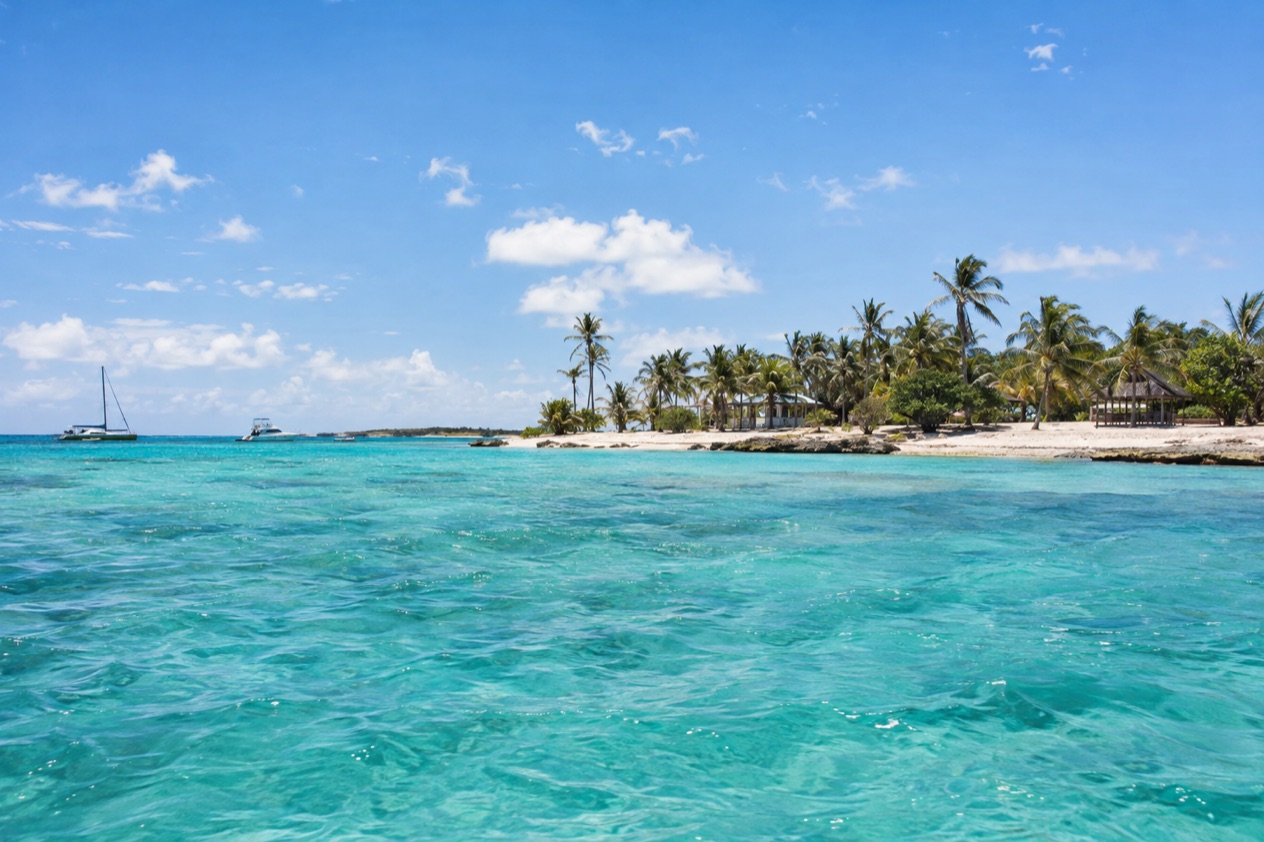
The ferry leaves the mainland and, a few minutes later, the engine slows beside a low island ringed with palms and beach umbrellas. Music drifts over the water, kids lean over the rail to spot fish, and the flamingos are somewhere behind the sand. De Palm Island sits at the mouth of Spanish Lagoon, and a visit here is a full day of swimming, slides and a buffet lunch, all rolled into one admission.
Is visiting De Palm Island worth it?
Yes, for families, groups of friends and anyone who likes to arrive once, pay once and let the day unfold without a wallet in hand. The all-inclusive format covers the ferry, a lunch buffet, an open bar, a snack corner and snorkel gear, so the planning is already done when you step off the dock.
What sets it apart from the other private island in Aruba is who may come. Renaissance Island is set aside for guests of the Renaissance Hotel and the Renaissance Suites, who ride a scheduled ferry straight to it. De Palm Island is the one that anyone can visit by buying a day pass, and it is built around activities rather than a quiet hotel beach: a water park, a kids aqua play area, banana boats, snorkeling and a flock of flamingos in their own reserved corner.
If you want a long, silent stretch of sand with nobody around, this is not quite that. It is lively, social and organized. If you want a day where the children are busy, the adults have a drink in hand and the reef is a few steps from your towel, it fits the bill very well.
What to see at De Palm Island
The reef and the snorkeling
The reef is the reason many people come. De Palm Island is counted among the most popular diving and snorkeling spots in Aruba, thanks to coral formations crowded with colorful tropical fish. The big draw is the parrotfish, especially the large purple-blue ones that glide along the coral and can be heard crunching on it.
Snorkel equipment is part of the day, so you can head to the water as soon as you land. Guided snorkel adventures are included too. For a different angle on the reef, SeaTrek and SNUBA are available for an additional fee, and they suit travelers who want to go below the surface without full dive training. Bring the kids’ curiosity and keep your eyes on the coral heads, where the fish tend to gather.
The Blue Parrotfish Water Park
Named for the reef’s star resident, the Blue Parrotfish Water Park is a set of colorful, twisting slides that spill into the water. Body drop slides are part of the included activities, and they are the loudest corner of the island, full of shrieks and splashes from morning to afternoon.
Younger children have their own kids aqua play area, plus a playground on the island. Unlimited banana boat rides are included as well, a bouncy tow across the water with a group of friends or family hanging on and laughing. Expect wet hair and a very tired car ride home.
The flamingos
A flock of flamingos lives in a reserved section of the island, and it is the detail that photos of De Palm Island are remembered for. The pink birds stand in the shallows or preen along the sand, a vivid contrast with the turquoise water behind them.
Premium seating gives a front row seat to watch them, with a private bar and luxury beds. Even without it, the flamingo section is worth a slow stroll between swims, when the sun is high and the birds are most visible against the sky.
Cabanas, beach services and the shop
For a more private day, the island offers beach cabanas with luxury beds, concierge service, a private bar and a bottle of Prosecco. Private cabanas go further, with a shower and a sundeck with stairs into the ocean, plus their own bottle of Prosecco.
On the sand you can also find beach massages, hair braiding and temporary tattoos, popular with kids and teenagers. The Coconuts store handles shopping for souvenirs, swimwear and the small things you forgot to pack.
Hours, tickets and rules
De Palm Island runs on a simple schedule: open six days a week, closed on Saturday, with a day that starts mid-morning and ends in the late afternoon. The ticket covers the ferry, food, drinks and most of the activities, and tickets are booked online at the island’s own website.
| Site | Open |
|---|---|
| De Palm Island | Sunday to Friday, 10 am to 5 pm |
Tickets should be booked early on www.depalmisland.com to secure a spot. Aruba has banned sunscreens containing oxybenzone since 2019, so choose a mineral-based reef-safe sunscreen, which is more likely to be biodegradable. Extra safety measures are in place on the island, including thorough cleaning and sanitizing under sanitary protocols.
How to get to De Palm Island
You reach De Palm Island by boat, and the crossing is part of the fun. A private-island ferry carries day visitors from the mainland, and the ride is about five minutes. That is short enough that the kids barely settle in before the dock appears, yet long enough to feel the breeze and watch the island grow ahead of you.
The island lies at the mouth of Spanish Lagoon, on the southeast side of the mainland shore, facing the open Caribbean Sea. The ferry ride is included in the all-inclusive pass, so there is no separate boat ticket to sort out once you arrive.
Both of Aruba’s private islands are reached by boat, but only De Palm Island sells day passes to the general public. Renaissance Island has its own ferry service for hotel guests and is a different experience. Once you land, everything described above is within the island itself, so there is nothing more to organize on arrival.
When to visit De Palm Island
Think of the day in three parts. The morning, right when the gates open at 10 am, is the moment to claim a spot on the sand, try the snorkel gear and head to the reef while the day is fresh. Around midday the lunch buffet draws everyone toward the shade, and the slides and banana boats keep the afternoon lively until the island closes at 5 pm.
As for the months, Aruba in general is best from February to August, and that holds for a beach day like this one. Peak season runs from December to April, which means the island may feel busier then, and it is one more reason to book your ticket ahead on the island’s website.
Hurricane season runs through the fall, and Aruba sits on the southern fringes of the hurricane belt, where damaging storms are rare. Because the island is closed on Saturday, plan the visit around the other six days of the week, and if your trip is short, pick the day that suits the rest of your itinerary.
Tips for your visit
Bring a swimsuit, a towel, a hat and a reef-safe sunscreen. Sunscreen can be purchased on the island from local companies like Aruba Aloe and Arubalife Organics, so if you forget it, you have a local option that fits the oxybenzone ban. The Coconuts store on the island covers the odds and ends.
Plan the whole day here. With a ferry, a buffet, a reef, a water park and a flamingo section, there is enough to fill the hours between 10 am and 5 pm without needing another stop. Start with the snorkeling while you are fresh, eat when the buffet opens, then spend the afternoon on the slides, banana boats and the beach.
Families have plenty to work with: the kids aqua play area, the playground, the slides and the snorkel adventures. If you want extras, SeaTrek and SNUBA come at an additional fee, and beach massages, hair braiding and temporary tattoos are there for a lazy break. A cabana, with its luxury beds and private bar, is the upgrade for a group that wants a base for the day.
To combine the island with something nearby, keep the rest of the day light. The visit is long enough that most people go back to their hotel afterward and rest.
Good to know before you go
The U.S. State Department rates Aruba Level 1, ‘Exercise normal precautions,’ and says Aruba is generally a safe destination for travelers, with petty crime the main concern in popular tourist areas.
Because the day is all-inclusive, you will spend little once you are on the island, and the main extras are the upgrade activities, a cabana and the Coconuts store. Petty crime is the main concern in popular tourist areas of Aruba, so the usual habit of keeping your belongings close applies here as it would at any beach. Hurricane season in the Caribbean follows the Atlantic calendar, and Aruba lies on its southern fringes, where damaging storms are rare.
Sources
- Aruba Tourism Authority, De Palm Island (https://www.aruba.com/us/explore/de-palm-island), checked October 9, 2026
- Aruba Tourism Authority, Private islands (https://www.aruba.com/us/things-to-do/on-the-water/private-islands), checked October 9, 2026
- Aruba Tourism Authority, Best time to visit (https://www.aruba.com/us/our-island/one-happy-island/when-is-the-best-time-to-visit-aruba), checked October 9, 2026
- Aruba Tourism Authority blog, Responsible guest (https://www.aruba.com/us/blog/how-to-be-a-responsible-guest-protecting-arubas-beaches-and-marine-life), checked October 9, 2026
- U.S. Department of State, Aruba Travel Advisory, Level 1, issued August 19, 2026 (https://travel.state.gov/content/tsg_aem/us/en/home/international-travel/travel-advisories/destination.abw.html), checked October 9, 2026
To plan your stay
- Best Time to Visit Aruba: Weather by Month, Peak Season and Festivals
- Where to Stay in Aruba: Palm Beach, Eagle Beach, Oranjestad and All-Inclusives
- Aruba Airport (AUA): Arrival, Getting to Your Hotel, U.S. Preclearance and Departure
- Know Before You Go to Aruba: Entry Forms, Money, Water and Local Customs