
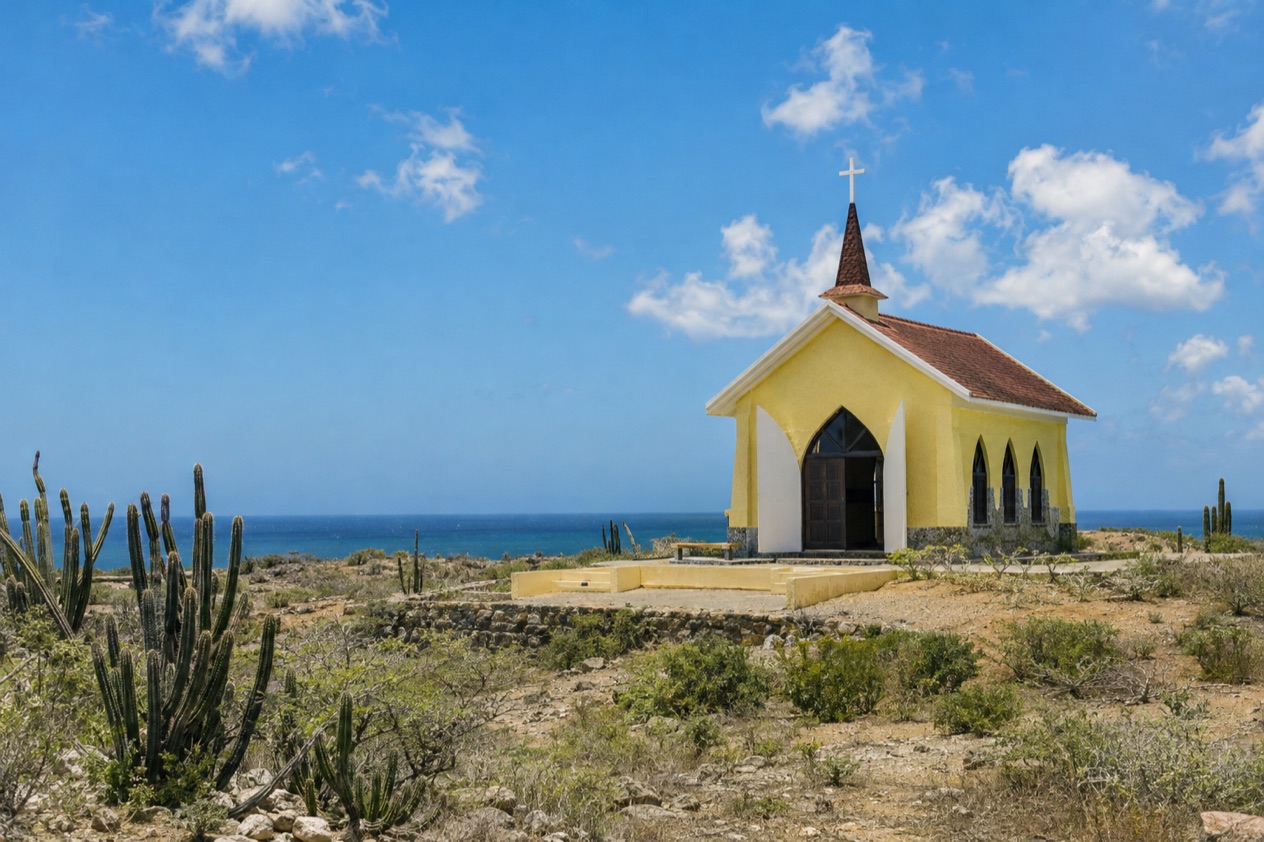
The first thing you notice is the color: a bright yellow chapel against a hillside of gray stone and green cacti, with a tall white cross planted in front of the door. The wind carries the dry smell of the scrub, and the land falls away toward a rugged coastline. Alto Vista Chapel is a small, quiet place of worship on a hilltop in Aruba, and it suits travelers who want a calm, scenic stop with real history behind it.
Is visiting the Alto Vista Chapel worth it?
Yes, if you like places with a story and a view more than places with attractions, and it suits couples, history lovers, photographers and anyone who wants a slower hour in the middle of an island trip. The chapel is small, and that is part of its appeal. You are not there for a long tour but for a mood: a hilltop, a yellow building, and a sense of how the island’s earliest faith was practiced.
What sets it apart from a beach stop or a museum is the combination of age, setting and personal ritual. It dates back to 1750, when a Spanish missionary built it, and it still feels like a working place of prayer rather than a monument behind a rope. Visitors leave ribbons and pebbles as small gestures of prayer or wishes, so the place keeps being added to by the people who come.
It also gives you a different Aruba from the resort coast. Up here the island looks rugged and dry, the cacti stand close around the chapel, and the panoramic views of the coastline stretch out below. If your days are otherwise full of sand and sea, an hour on this hill changes the rhythm of the trip pleasantly.
Anyone who wants a long, activity-packed outing will find it brief, and that is worth knowing in advance. Treat it as a contemplative pause that pairs well with other stops, and it rewards you far beyond its size.
What to see at the Alto Vista Chapel
The yellow exterior and wooden shutters
The chapel’s bright yellow walls are the image most people carry home. Paired with the wooden shutters, the color gives the building a warm, handmade look that stands out sharply against the pale ground and the muted greens of the surrounding scrub.
Walk around it slowly and look at the proportions. It is modest, closer to a village chapel than a church, and the simplicity is the point. Early or late in the day the light turns the yellow almost golden, and the shutters throw soft shadows across the façade, which makes it a rewarding subject for a photograph.
The white cross at the entrance
An iconic white cross stands tall in front of the entrance, and it is the chapel’s signature. Against the yellow wall and a wide sky, it reads from a distance and frames the view when you stand near it.
Pause here before going in. This is where the small tokens left by visitors tend to gather, ribbons tied and pebbles set down as expressions of prayers or wishes. Take a moment to look at them, and if you wish to leave one of your own, a pebble or a ribbon follows the custom already in place.
The interior and its statues
Inside, the chapel is hushed. Religious statues stand within the small space, and the atmosphere is peaceful, a cool contrast with the bright, windy hillside outside.
Take your time and keep your voice low, as people come here to pray as well as to look. The room is simple, and its value lies in the quiet and in the sense of continuity with the missionary who built it in the eighteenth century.
The cacti and the coastline view
Step back from the building and the setting takes over. The chapel sits on a hilltop overlooking the island’s rugged terrain, and cacti surround it in every direction, sculptural shapes that give the hill its desert character.
From the high ground the panoramic views of the coastline open out, and this is the best place to understand how dry and exposed this side of Aruba is. Stay for a few minutes and let the wind and the horizon do their work.
Hours, tickets and rules
The chapel is a place of worship first and a sightseeing stop second, and the visit is shaped by that. You come to see an old yellow building, stand before the white cross, step inside among the statues and look out over the coast. There is no ticketed circuit and no set program to follow, only the place itself.
Because it is a living religious site, the right manner matters more than any posted rule. Speak quietly inside, keep your movements unhurried and treat the statues and the small offerings around the entrance with care. The ribbons and pebbles are personal gestures of prayer or wishes, so look at them without moving or taking them.
The one date that changes the character of the place is January 18, the Feast of Santa Filomena, when the chapel is particularly revered during the annual pilgrimage. If you happen to be on the island then, expect the hill to feel more devotional than on an ordinary day, and approach it as a guest at a community occasion.
How to get to the Alto Vista Chapel
The chapel stands on a hilltop, so the approach is a climb toward high ground rather than a stop at sea level. That shapes what you see on the way: the land turns rougher, the vegetation thins to cacti and scrub, and the horizon opens as you gain height.
Think of the journey as part of the visit. The chapel looks out over the island’s rugged terrain, so the countryside around you changes from the softer, more developed parts of Aruba to something drier and more open. When the yellow walls and the white cross come into view, you have arrived.
Plan the trip as a stop within a wider day of exploring the island rather than as a destination that needs its own full outing. Since the chapel is small, the effort of reaching it pays off best when you give the hilltop some unhurried time once you are there, rather than rushing in and out.
Set out with the setting in mind. This is a place of wind, open sky and sun, and the experience is richer if you arrive without a tight schedule, ready to wander around the building, look at the cross and take in the coastline.
When to visit the Alto Vista Chapel
The best time to visit Aruba in general runs from February to August, and that window suits the chapel well. A hilltop with views is a place to enjoy in clear, pleasant conditions, and those months give you the open outlook the site is known for.
Peak season on the island runs from December to April, so if you travel then, the chapel falls within the busiest part of the year for visitors overall. The calendar also brings the feast of Santa Filomena on January 18, during that peak stretch, when the chapel is particularly revered during the annual pilgrimage.
As for the time of day, the light is what you are after. A yellow building and a white cross look their best in warm, low sun, and the hilltop setting rewards you when the sky is clear and the coastline is sharp. Early or late in the day also tends to feel quieter and more reflective, which fits a chapel.
If you want the devotional side, aim for the days around the feast. If you want a peaceful, photographic visit, pick a clear day within the February to August stretch and give yourself time to linger on the hill rather than treating it as a quick photo stop.
Tips for your visit
Bring something small to leave if you would like to join the custom, such as a pebble or a ribbon. Many visitors leave these tokens as a gesture of their prayers or wishes, and it is a thoughtful way to take part without disturbing anything that is already there.
Bring a camera too. The yellow walls, the wooden shutters, the white cross and the cacti make a strong composition, and the panoramic views of the coastline reward a wider shot from the hilltop. Take a few frames outside, then put the camera away for the quiet of the interior.
Plan the chapel as a short, focused stop rather than a half-day outing. Its charm is concentrated: a few minutes at the cross, a slow look inside, and some time on the hill with the view. That makes it an easy piece to slot into a larger day of exploring Aruba’s rugged side.
It pairs naturally with other outings that show the island’s wild, dry character, since the chapel itself is part of that landscape. Families and older travelers should think about the hilltop setting when planning, as the site stands on high ground in open, windy country.
Treat the place with respect, remembering that people come here to pray. Dress and behave as you would in any small church, keep conversation low indoors and leave the offerings as you find them.
Good to know before you go
The U.S. State Department rates Aruba Level 1, ‘Exercise normal precautions,’ and says Aruba is generally a safe destination for travelers, with petty crime the main concern in popular tourist areas.
The chapel is a small, contemplative site, so the visit asks little of you beyond curiosity and good manners. Keep your belongings with you as you would anywhere you travel, and give the hilltop the quiet it deserves. Come with an open schedule and a few minutes to spare, and the yellow walls, the white cross and the long view over the coast will do the rest.
Sources
- Aruba Tourism Authority, Alto Vista Chapel (https://www.aruba.com/us/explore/alto-vista-chapel), checked October 9, 2026
- Aruba Tourism Authority, Best time to visit (https://www.aruba.com/us/our-island/one-happy-island/when-is-the-best-time-to-visit-aruba), checked October 9, 2026
- U.S. Department of State, Aruba Travel Advisory, Level 1, issued August 19, 2026 (https://travel.state.gov/content/tsg_aem/us/en/home/international-travel/travel-advisories/destination.abw.html), checked October 9, 2026
To plan your stay
- Best Time to Visit Aruba: Weather by Month, Peak Season and Festivals
- Where to Stay in Aruba: Palm Beach, Eagle Beach, Oranjestad and All-Inclusives
- Aruba Airport (AUA): Arrival, Getting to Your Hotel, U.S. Preclearance and Departure
- Know Before You Go to Aruba: Entry Forms, Money, Water and Local Customs