
The first thing that greets you in Oranjestad is the smell: a clean, green, faintly sweet scent that drifts from a working factory where spiky aloe leaves are turned into lotions and gels. Behind the doors, a small museum tells how a desert plant became one of the island’s best-known exports. It is a visit for travelers who like to see how something is made, and for anyone who has come home from the beach with a sunburn and wondered what the fuss about aloe is.
Is visiting the Aruba Aloe Museum and Factory worth it?
Yes, if you enjoy a short, hands-off look at local industry and a bit of island history, and especially if you are curious about skincare or traveling with someone who is. It suits curious adults, families with older children who like to see how things are made, and anyone who wants a break from the sun that still feels rooted in Aruba. It is not a thrill ride or a full-day outing, and it works best as a compact stop inside a day in town.
What sets it apart from the other places you will pass in Oranjestad is that it combines three things under one roof: a museum, a working factory and a store. Most shops sell aloe products, but here you see the plant transformed into the skincare you are about to buy.
The story is also very local. Aloe arrived on the island long ago and found the dry, sunny land to its liking, and the company behind this place carries a royal designation that no other company in the Caribbean part of the Dutch Kingdom held before it.
There is also the matter of choice. You can follow a guided tour of the museum, or you can wander the displays at your own pace and read as you go.
Travelers who dislike groups can take the second option without missing the point of the place. And because the factory is the real thing, not a stage set, the visit has a pleasant feel of watching an ordinary working day unfold, with the scent of aloe in the air throughout.
What to see at the Aruba Aloe Museum and Factory
The visit falls into three parts that flow into one another: the museum, the factory and the store. Together they follow the plant from field to shelf, and each one answers a different question a curious visitor tends to ask.
The museum
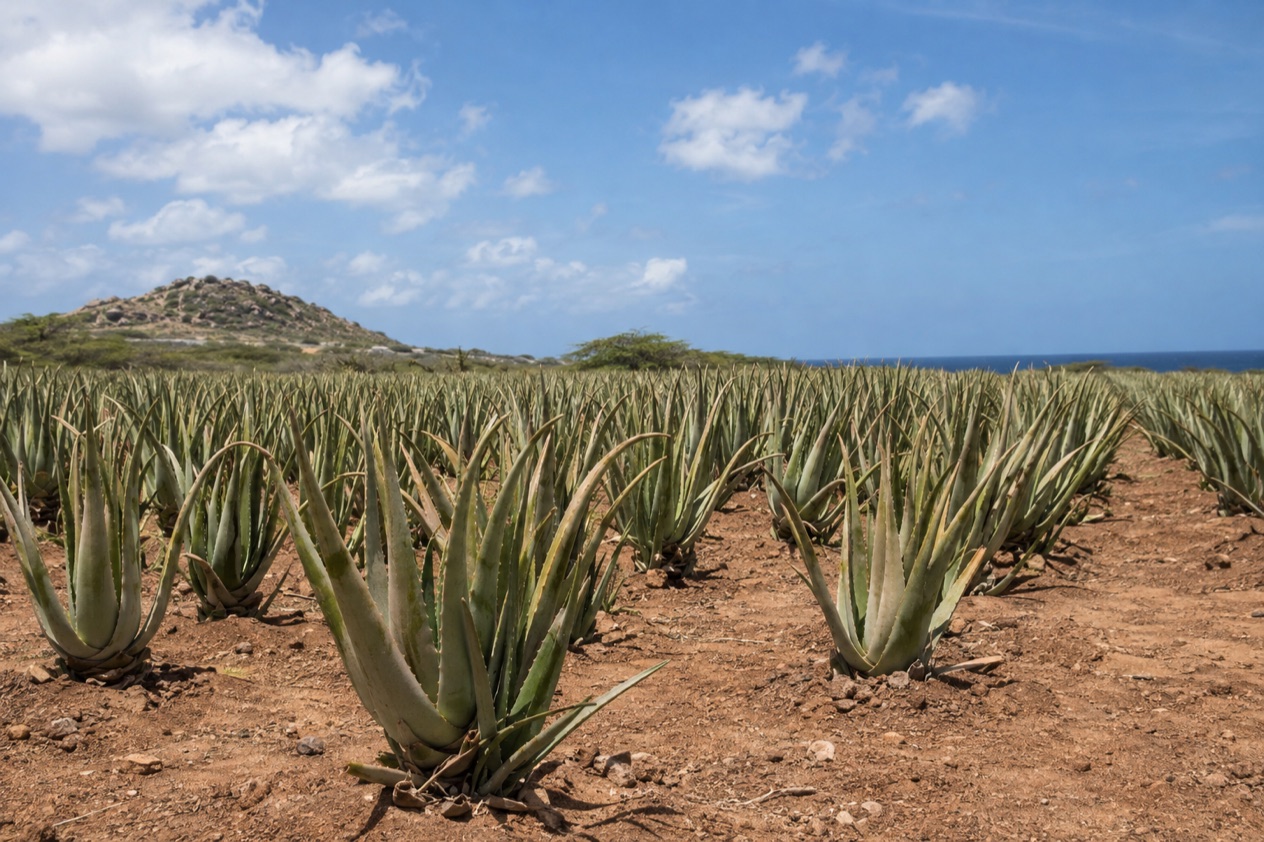
The museum is where the story begins. It teaches the history, culture, benefits and uses of aloe vera in Aruba, and it explains why a plant native to far-off lands settled so comfortably on an island of cactus, wind and sun. Aloe was first brought to Aruba as early as 1840, and over time the island’s aloe farms together grew into one of the largest exporters in the world.
Look for the displays on how the plant has been used over time, from home remedies for burns and sore skin to its place in modern beauty products. The thick, fleshy leaves with their toothed edges are the star of the story, and seeing how much clear gel they hold makes the rest of the visit click. A guided tour of the museum takes 25 minutes, and a self-guided walk lets you linger where you like.
The factory
The factory is the part that sets this stop apart. Here you see how the plants are transformed into skincare products, so the gel you read about in the museum becomes something you can watch moving through its stages. A working floor has its own rhythm, with machines, containers and workers going about the day, and it gives you a sense of the care that goes into a simple bottle of lotion.
Because it is an active production site, what you see depends on the day and the moment you arrive. Some visitors catch a busy line, others a quieter stretch, and both are part of the experience. Keep your eyes open for the way the raw leaf becomes the pale, smooth gel that ends up in the products on the shelves.
The store
The on-site store is where the tour ends, and it sells skincare products such as lotions, gels and soaps. After seeing where they come from, browsing the shelves feels different from picking up a bottle at a pharmacy. The gels are the natural choice after a long day in the sun, and the soaps are easy to tuck into a suitcase as small gifts for people back home.
Give yourself time here, because after the museum and the factory you will know what to look for. It is also a good place to slow down and compare products before you decide, since the people working the floor are the same company that makes what is on the shelves.
Hours, tickets and rules
The factory and museum keep regular office-style hours on weekdays, running from the morning into the late afternoon, and a shorter schedule on Saturday that ends at midday. Plan around that Saturday cutoff, because a visit that begins too late in the morning leaves little time for the museum, the factory and the store together.
| Site | Open |
|---|---|
| Aruba Aloe Museum and Factory, Monday to Friday | 8:30 am to 4:00 pm |
| Aruba Aloe Museum and Factory, Saturday | 9:00 am to 12:00 noon |
Visitors can choose between a guided tour of the museum or a walk around by themselves. No other rules for the visit are stated.
How to get to the Aruba Aloe Museum and Factory
The Aruba Aloe Vera Factory and Museum stands at Pitastraat 115 in Oranjestad, the island’s capital. That puts it in town rather than on a beach strip or out in the countryside, so it fits naturally into a day spent in the capital, with its colorful Dutch colonial facades, harbor views and shops.
Pitastraat is the street name to give if you are using a map app or telling someone where you are headed. Aruba is a small, flat island, and Oranjestad is its main town, so the address is straightforward to locate once you are in the capital. If you are staying elsewhere on the island, the simplest way to think about the trip is as a visit to town, with the aloe factory as one stop among several.
Since the museum and factory close at midday on Saturday and in the late afternoon on weekdays, arrive with enough time to see all three parts. Leaving for town in the morning, rather than aiming for the last hour of opening, gives the visit room to breathe and leaves the rest of the day free for the rest of Oranjestad.
When to visit the Aruba Aloe Museum and Factory
The best time of day is the morning. The doors open early on weekdays, and a visit at the start of the day keeps you well ahead of the afternoon sun, which is strong on this dry island. Starting early also leaves the later hours free for lunch in town or a stroll through the shops of the center.
Saturday is a different rhythm. Hours are shorter and end at noon, so treat it as a morning outing and do not count on an afternoon visit. On weekdays you have much more room, since the day runs until four in the afternoon, which suits travelers who sleep in or who combine the visit with other plans.
As for the season, the best time to visit Aruba in general runs from February to August, and the island’s peak season falls between December and April. A visit to the aloe factory is not tied to any one month, and since the museum and factory are a town stop, they work in any season.
In the busier winter months you may find the capital livelier, while in the rest of the year it tends to feel more relaxed. Either way, the plan that matters most is a morning on a weekday or an early Saturday.
Tips for your visit
Come curious and bring a bit of time. A guided tour of the museum alone takes 25 minutes, and with the factory and the store added you have a comfortable morning stop. If you prefer to move at your own speed, the self-guided option lets you read the displays and stay longer at whatever catches your eye.
Pair the visit with the rest of Oranjestad. The aloe factory sits in town, so you can follow it with a walk past the colorful buildings, a stop for a pastechi (a fried pastry with a savory filling, a local snack) or lunch at one of the capital’s restaurants. Since weekday hours end in the late afternoon, an early start leaves the afternoon open for the harbor or the shops.
- Start in the museum, where the story of the plant makes the factory floor easier to follow.
- Save the store for last, once you have seen how the products are made and know what to look for.
- On Saturday, plan the visit as a morning outing, since the doors close at midday.
- Bring a bit of curiosity about skincare, which turns the visit from a quick look into a real conversation about the plant.
Families with older children, who tend to enjoy watching a product come together, will probably get the most from the factory part. Younger ones may be happier with the shorter guided tour or a quick walk through. The on-site store sells lotions, gels and soaps, which makes it a natural place to pick up small gifts before you leave town.
Good to know before you go
The U.S. State Department rates Aruba Level 1, ‘Exercise normal precautions,’ and says Aruba is generally a safe destination for travelers, with petty crime the main concern in popular tourist areas.
The aloe factory is a calm, practical stop, and a few habits are enough for a trip to town: carry your belongings close, as petty crime is the main concern in popular tourist areas, and keep your purchases from the store with you rather than leaving them in view. The museum and factory open early on weekdays and close at noon on Saturday, so line up the visit with those hours, and keep the rest of the day flexible for whatever else you want to see in Oranjestad.
Sources
- Aruba Tourism Authority, Aruba Aloe museum and factory (https://www.aruba.com/us/explore/aruba-aloe-museum-and-factory), checked October 9, 2026
- Aruba Tourism Authority, Best time to visit (https://www.aruba.com/us/our-island/one-happy-island/when-is-the-best-time-to-visit-aruba), checked October 9, 2026
- U.S. Department of State, Aruba Travel Advisory, Level 1, issued August 19, 2026 (https://travel.state.gov/content/tsg_aem/us/en/home/international-travel/travel-advisories/destination.abw.html), checked October 9, 2026
To plan your stay
- Best Time to Visit Aruba: Weather by Month, Peak Season and Festivals
- Where to Stay in Aruba: Palm Beach, Eagle Beach, Oranjestad and All-Inclusives
- Aruba Airport (AUA): Arrival, Getting to Your Hotel, U.S. Preclearance and Departure
- Know Before You Go to Aruba: Entry Forms, Money, Water and Local Customs