
The first glimpse of Rio Celeste comes after a walk under dripping rain forest, with ferns brushing your sleeves and unseen birds calling from the canopy. Then the trees open and the water below is a pale, milky turquoise that looks almost painted. This is a hiking day in the Tenorio Volcano area of Guanacaste, built around a river that changes color before your eyes.
Is visiting Rio Celeste worth it?
Yes, if you like walking and want to see one of the most unusual rivers in Costa Rica, and it suits hikers, photographers and anyone happy to trade a beach day for a forest trail. It is less a place to sit and more a place to move through, with the river as the reward at the end.
What sets it apart from other nature stops in northern Costa Rica is the color itself. Two clear streams meet and the water turns a milky turquoise, a change you can stand and watch at the spot the trail leads to.
Hot springs and big waterfalls draw crowds elsewhere in the region, but here the draw is the forest around the river and the moment the water shifts hue. The trail also takes you past a waterfall on the way.
The setting adds to it. The park protects lowland mountain rain forest, tropical wet forest and very wet premontane forest, with palms, ferns, bromeliads and orchids along the trail.
The wildlife list includes white-faced monkeys, anteaters, pumas, tapirs, peccaries, trogons and three-wattled bellbirds. Most of those are chances rather than promises, but the birds and the sound of the forest alone make the walk rewarding.
Be ready for a wet, muddy, green experience rather than a polished viewpoint stop. If you want a short roadside photo, this is not it. If you want a morning on a trail that ends somewhere memorable, it very much is.
What to see at Rio Celeste
The waterfall
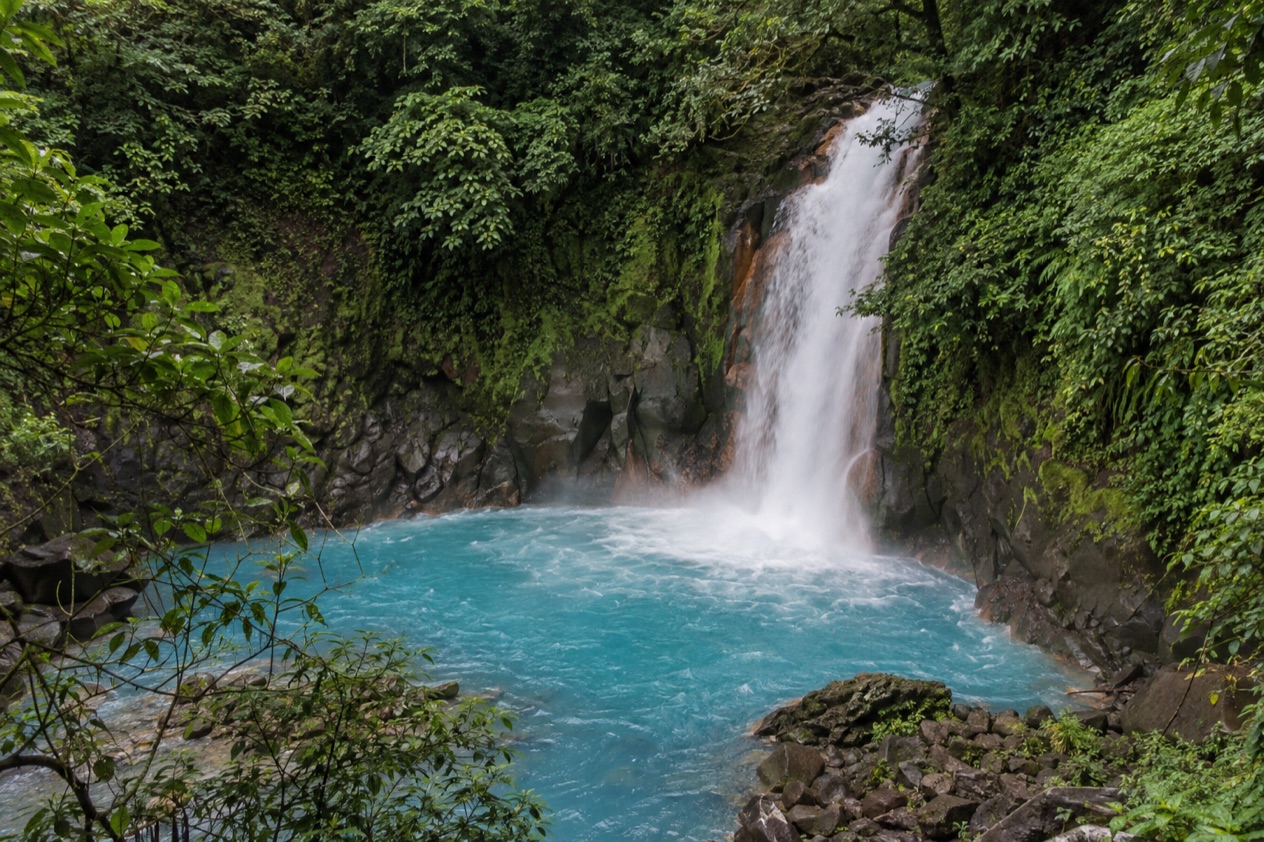
The trail leads past a waterfall, and for most visitors it is the headline of the walk. Water drops into a pool tinted the same soft blue as the river, framed by dark wet rock and thick vegetation. The best way to take it in is to pause at the lookout and let the mist and the sound of falling water settle in before you start photographing.
Look at how the color shifts with the light. On a bright morning the blue is vivid, and under heavy cloud it can look more muted and milky. The park has lookout points built for just this kind of stop, so you can view the falls without wandering off the path.
Where the color changes
Beyond the waterfall, the trail reaches the spot where two streams mix and the river turns milky turquoise. This is the heart of the visit. Upstream the water looks ordinary and clear, and then, at the meeting point, it changes. Standing there you can watch the two streams join and the color appear.
Take your time here. It is the place most people remember, and it rewards a slow look from a couple of angles. Bring a camera that handles low light, since the forest canopy keeps the trail shaded even on a sunny day.
The rain forest along the trail
The walk itself is a highlight. Palm trees, ferns, bromeliads and orchids crowd the path, and the air stays damp and green. Listen for trogons and the strange, far-carrying call of the three-wattled bellbird, a species the park is known for.
White-faced monkeys, anteaters, tapirs and even pumas live in the park, though seeing the larger animals is rare and never guaranteed. Sightings are chances, and a slow pace with quiet stops gives you the best odds. The park also has an information desk, restrooms and potable water near the start, which helps you set off prepared.
Hours, tickets and rules
The park opens every morning and closes its entry window early in the afternoon, so this is a morning-to-midday outing rather than an all-day one. Entry requires an online reservation, which you make through the national park system’s online service.
| Site | Open |
|---|---|
| Tenorio Volcano National Park (Rio Celeste trail) | Every day, 8 a.m. to 2 p.m. (exit by 4 p.m.) |
For hiking in national parks, the safety guidance says you should register with the park, hold an entry permit and use a certified tour operator. The Costa Rica Tourism Institute keeps a list of Certified Tour Guides, which is the place to look if you want a guide. Because the rules for swimming, drones, tripods and similar activities are not set out here, treat the trail as a walk-and-look experience and enjoy the river from the paths and lookouts.
How to get to Rio Celeste
The drive from Liberia takes about an hour and a half. It is a straightforward way to reach the park from the Guanacaste side, and it makes a full morning trip from the coast realistic if you start early.
There are other routes too. From San Jose you can take the Inter-American Highway to Ciudad Quesada (San Carlos), continue to Upala, and turn left toward Bijagua. From Upala, turn left toward Bijagua and continue for 30 miles to the park entrance. This approach suits travelers coming up from the Central Valley.
A third approach runs through San Rafael de Guatuso to the communities of Katira, Rio Celeste and Pilon, where the park administration and entrance are located. Knowing the name Pilon helps when you are following signs close to the end. Whichever way you come, your destination is the park entrance with the administration building, where the trail begins.
When to visit Rio Celeste
Go early. The park opens at 8 a.m., and the entry window closes in the early afternoon, so morning is the natural time to walk. Early starts also tend to mean cooler air under the trees and a quieter trail.
For months, the nearby La Fortuna climate gives a useful picture. April is the drier choice among the months shown, though rain is still possible in this very wet forest. January is greener and wetter, with rain on a little over a dozen days.
July and October are the wettest, with rain on most days and heavy monthly totals, so expect mud, wet gear and showers that can last. October in particular is among the soggiest months, so trails can be slick and the river may look different after rain.
Because this is a rain forest, no month is a promise of dry weather or a clear sky. The color of the river can vary with conditions, so treat any month as a chance. Plan for a wet walk in any season and you will rarely be disappointed.
| Month | Average high (°F) | Average low (°F) | Precipitation (inches) | Days with 0.10 inch or more |
|---|---|---|---|---|
| January | 77.6 | 67.1 | 8.26 | 12.9 |
| April | 83.8 | 69.5 | 3.09 | 7.2 |
| July | 79.4 | 70.2 | 12.51 | 25.2 |
| October | 79.9 | 70.1 | 14.00 | 26.0 |
Tips for your visit
Wear shoes with real grip, since the trail through wet forest can be muddy and slippery. A light rain jacket earns its place in any month, and a small dry bag protects your phone and camera. Bring a refillable bottle too, because the park has potable water and you can top up before you start.
Plan the visit as a morning outing. Between the walk, the stops at the waterfall and the color change, and time to simply look, it fills the first half of the day. With the park open from 8 a.m. and the exit set at 4 p.m., arriving at the start of the day leaves room to go slowly.
Facilities at the park include restrooms, an information desk, trails and lookout points. Families with young children and anyone with limited mobility should think about the terrain, since this is a forest trail rather than a paved promenade. Lookouts make good turnaround points if you do not want to go the whole way.
To combine it with something nearby, the wider Guanacaste and northern lowland region offers plenty of options for the afternoon. Since you will be on the move after a morning hike, a relaxed lunch and an easy rest are a good pairing. Hiking here requires an online reservation and an entry ticket; a guide is optional.
Good to know before you go
The U.S. State Department rates Costa Rica Level 2, ‘Exercise increased caution,’ due to crime; it says petty crime is common throughout Costa Rica and that violent crime also affects tourists, including armed robbery, homicide and sexual assault.
Rio Celeste sits in a very wet mountain forest, so humidity and rain are part of the experience rather than a surprise. Carry what you need for the morning, keep valuables out of sight in the car or leave them behind, and enjoy the quiet of the trail.
Sources
- Costa Rica Tourism Board (ICT), Tenorio Volcano National Park (https://visitcostarica.com/where-to-go/protected-areas/tenorio-volcano-national-park), checked October 8, 2026
- SINAC (Costa Rica national parks authority), online reservations (https://www.sinac.go.cr/ES/resvlinea/Paginas/default.aspx), checked October 8, 2026
- Open-Meteo / ECMWF ERA5, normals 1991-2020 computed for the grid cell at 10.4679N 84.6427W, checked October 8, 2026
- U.S. Department of State, Costa Rica Travel Information, Safety and security (https://travel.state.gov/content/travel/en/international-travel/International-Travel-Country-Information-Pages/CostaRica.html), checked October 8, 2026
- U.S. Department of State, Costa Rica Travel Advisory, issued April 1, 2026 (https://travel.state.gov/content/travel/en/traveladvisories/traveladvisories/costa-rica-travel-advisory.html), read via the State Department open data API on October 8, 2026
To plan your stay
- Best Time to Visit Costa Rica: Dry and Green Seasons, Weather by Region and Festivals
- Where to Stay in Costa Rica: Beach Towns, Cloud Forest, Volcano Views and Which Base Fits Your Trip
- Costa Rica Airports: San Jose or Liberia? Beaches, Drive Times and Getting to Your Hotel
- Know Before You Go to Costa Rica: Entry Rules, Money, Getting Around and Local Customs