
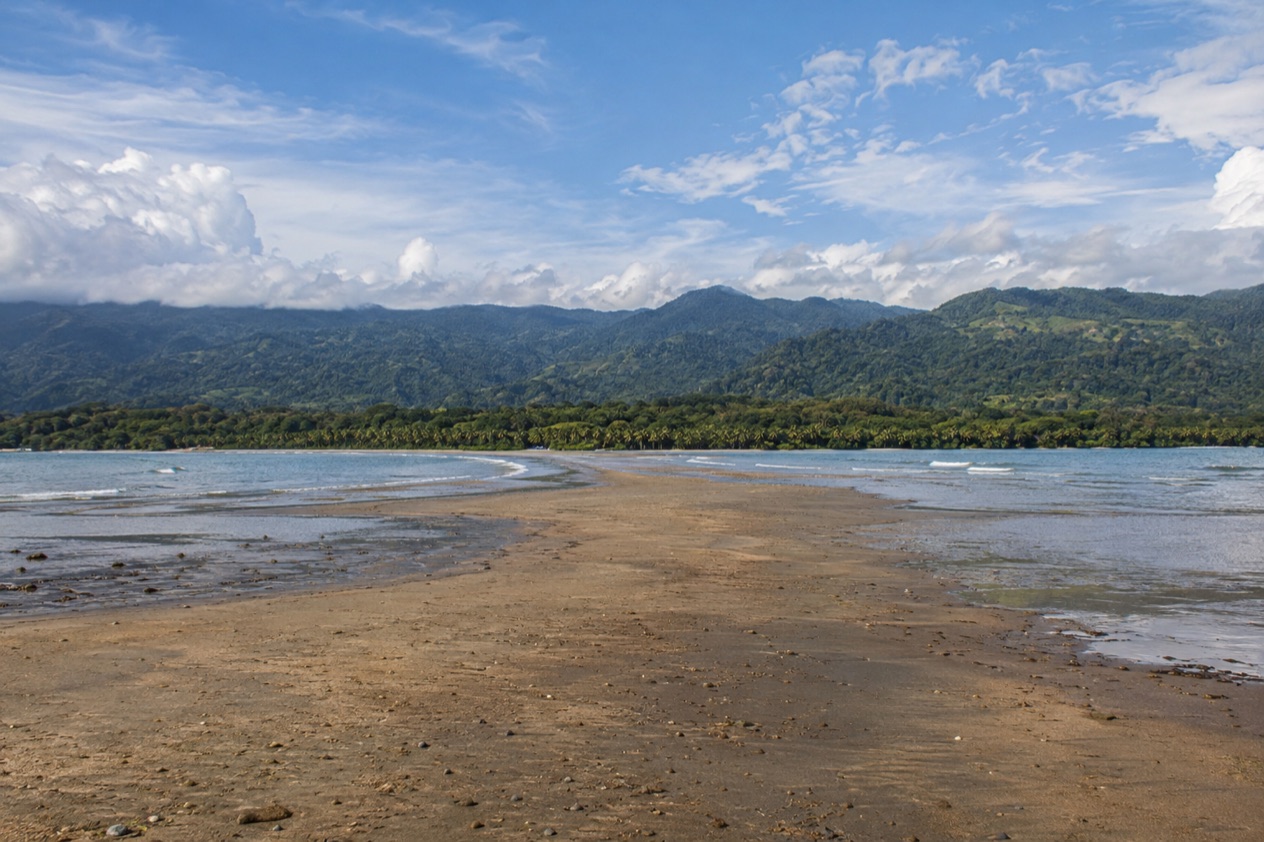
The first thing you notice at Marino Ballena is the sound of the Pacific working on a long, curving beach, with forest leaning almost to the sand and pelicans skimming the swells. Then the shoreline begins to stretch out into the water in a narrow, forked ribbon of sand and rock, the shape that gave the park its name. This is a day by the sea in southern Costa Rica, built around beach walks, the famous whale’s tail and the chance of whales offshore.
Is visiting Marino Ballena National Park worth it?
Yes, especially for travelers who like their nature at the edge of the water rather than at the end of a steep trail: beach walkers, photographers, snorkelers, families with older children and anyone hoping to see humpback whales. The park protects a stretch of Pacific coast and the sea in front of it, so the scenery is as much about tides and light as about trees.
What sets it apart from other beach stops along this coast is the tombolo, the rocky and sandy formation shaped like a whale’s tail, which is the park’s main attraction. Plenty of Costa Rican beaches offer surf and sunsets. Few let you walk out along a natural sand bridge that emerges at low tide, but check the tide before setting out so you can return before the water covers it.
The marine life adds a second reason to come. Humpback whales visit this coast in two seasons, spotted and bottlenose dolphins live in the waters, and divers and snorkelers find manta rays, hammerhead sharks, parrotfish and mackerels. It is not a place for a long jungle hike. It suits a slow, salty day, and it rewards people who time their visit to the tide and the season.
What to see at Marino Ballena National Park
The park is a coastline more than a single sight, so the best visit moves between a few distinct experiences: the sandbar, the long beaches, the whales and dolphins offshore, and the reefs and islands under the surface.
The whale’s tail tombolo
A tombolo is a strip of sand and stones that links the shore to an offshore rock, and this one is the star of the park. Seen from the air or from a rise on the coast, it splits into two arms like the flukes of a humpback’s tail. Visitors can visit the tombolo inside the park, and as the tide drops it becomes a pale line reaching into the surf.
On the ground it is less about a view and more about a feeling: wet sand underfoot, waves slapping both sides, and rocks dotted with small tide-pool life. Photographers like it when the light is low and the water is shallow and shiny. Because it is shaped by the tide, the same spot looks quite different from one hour to the next.
Beaches and the forest edge
Walking along the beaches is one of the main things visitors do here, and it needs no equipment. The sand runs in long, open arcs with palms and tropical forest behind, and the quiet stretches between the busier spots feel wide and empty. Birds work the shoreline, and shells and driftwood collect along the tide line.
Look but leave things where they are. Shells and every other natural resource of the park may not be taken away, so a photograph is the souvenir. Walk early or late in the day when the sand is cooler and the beach feels more like a wild coast than a resort strip.
Humpback whales and dolphins
Humpback whales come to this coast twice a year, roughly from December to April and again from roughly July to October, one of the longest whale-watching windows in the world. The July to October visit is tied to the whales’ reproductive cycle, which is why mothers and calves are a common sight in those months. Spotted and bottlenose dolphins are also found in the park’s waters.
Sightings are chances, never promises. You may spot a blow or a fluke from the beach on a clear morning, but boat trips give a much better angle, and a calm sea helps more than anything else. Bring patience and binoculars if you have them.
Snorkeling, diving and boat trips to the islands
Under the surface, the park’s waters hold manta rays, hammerhead sharks, parrotfish and mackerels. Snorkeling, scuba diving and boat trips to nearby islands are all among the activities visitors can enjoy. Boat trips to nearby islands can add snorkeling or diving to a park visit.
Conditions change with swell and rain, and visibility can drop after heavy downpours wash silt out to sea. Hammerheads and mantas are special encounters rather than daily sightings, so go for the whole experience of the reef and the boat rather than for one animal.
Hours, tickets and rules
The park keeps full days, seven days a week, so you can build a visit around the tide, the whales or the light. You do not need to plan ahead for a spot: reservations are not necessary, and tickets come from authorized counters. Payment is by card only, so cash will not get you in.
| Site | Open | Tickets |
|---|---|---|
| Marino Ballena National Park | Monday to Sunday, 7 a.m. to 6 p.m. | No reservation needed. Authorized counters. Credit or debit card only |
A few rules shape a day here. Grills, beer, liquor, smoking and drones are prohibited. Prepared food, juice and water are allowed, so a picnic is fine as long as it is already made. Shells and any other natural resource of the park may not be extracted. Parking for vehicles is outside the national park.
How to get to Marino Ballena National Park
Most visitors start from Uvita, the small southern Pacific town that serves as the gateway to the park. Its beach is the one where the sandbar forms the shape of a whale’s tail at low tide, so staying in or near Uvita puts you close to the main attraction.
The park has four official access routes: Uvita, Colonia, Ballena and Piñuela. All of them connect to the Inter-American Highway South, so you reach the park by turning off that road toward the coast. Each entrance gives a different slice of the shoreline, from the busy tombolo end to quieter beaches.
Parking is available outside the national park, which means you leave the car at the edge and walk in. Expect to carry what you need for the day: water, food that is already prepared, sun protection and a card for the ticket counter. A map app helps once you leave the highway, since the access points are named for the communities they serve.
A list of Certified Tour Guides is kept by the Costa Rica Tourism Institute (ICT), which is a good place to start when choosing someone for the water.
When to visit Marino Ballena National Park
Arriving soon after the gates open gives you cooler sand and more time to match your walk to the tide. Afternoons in this part of Costa Rica often bring showers, and the late hours are best for soft light on the sand. The park closes in the evening, so sunset is something you enjoy from the road or from town rather than from inside.
For whales, the two seasons are the real calendar: roughly December to April, and again roughly July to October. The second window overlaps with the greener, wetter part of the year, so you trade some sunshine for the chance of seeing mothers and calves. For beach walking and the tombolo, any month works if the tide cooperates, but dry-season mornings are the most pleasant.
| Month | Average high (°F) | Average low (°F) | Rain (inches) | Days with rain |
|---|---|---|---|---|
| January | 82.1 | 71.4 | 8.13 | 18.6 |
| April | 83.1 | 73.6 | 12.57 | 23.3 |
| July | 81.0 | 72.9 | 32.45 | 30.8 |
| October | 80.0 | 72.8 | 38.11 | 30.7 |
Warm air and warm nights are the rule all year. January is generally drier than the other months shown, although rain still falls on many days. April is more humid and cloudier. July and October bring rain almost daily, often heavy, so plan the outdoor hours around the showers and keep a rain jacket handy.
Tips for your visit
Pack light but think about sun and water. A hat, sunscreen, a swimsuit, a towel and plenty of drinking water cover most needs. You may bring prepared food and juice, but beer, liquor and grills stay home. Carry a credit or debit card for the ticket, since that is the only way to pay.
Allow enough time for a beach walk, a picnic and a visit to the tombolo. Pair the park with a boat trip for whales or dolphins, or with snorkeling or diving if the sea is clear. Back in Uvita, the town has easy places for a late lunch and a cold drink after a salty morning.
Families will like the open beach and the tide pools, but keep a close eye on children near the water. Rip currents are very dangerous and cause several drownings of U.S. tourists each year, so ask the hotel or a surf school about the day’s conditions, follow flags where there are any, never swim alone, and keep children within arm’s reach at the edge of the water where they wade, float or play. Walking on soft sand takes effort, so travelers with limited mobility should expect a slower pace and plan short stretches.
Do not bring a drone, and leave shells and other natural items where you found them. The best kit is simple: curiosity, a camera and patience for the tide.
Good to know before you go
The U.S. State Department rates Costa Rica Level 2, ‘Exercise increased caution,’ due to crime; it says petty crime is common throughout Costa Rica and that violent crime also affects tourists, including armed robbery, homicide and sexual assault.
Keep the day simple and low on valuables, since petty crime is common throughout Costa Rica. Leave anything you do not need in your lodging and carry only the card, water and a few essentials.
Rules and park conditions can change, so the park’s official page is the place to confirm details before you set out. With a good tide, a clear morning and a bit of luck offshore, a day at Marino Ballena is one of the most memorable beach visits in the south.
Sources
- Costa Rica Tourism Board (ICT), Ballena National Marine Park (https://visitcostarica.com/where-to-go/protected-areas/ballena-national-marine-park), checked October 8, 2026
- Open-Meteo / ECMWF ERA5, normals 1991-2020 computed for the grid cell at 9.1561N 83.7347W, checked October 8, 2026
- U.S. Department of State, Costa Rica Travel Information, Safety and security (https://travel.state.gov/content/travel/en/international-travel/International-Travel-Country-Information-Pages/CostaRica.html), checked October 8, 2026
- U.S. Department of State, Costa Rica Travel Advisory, issued April 1, 2026 (https://travel.state.gov/content/travel/en/traveladvisories/traveladvisories/costa-rica-travel-advisory.html), read via the State Department open data API on October 8, 2026
To plan your stay
- Best Time to Visit Costa Rica: Dry and Green Seasons, Weather by Region and Festivals
- Where to Stay in Costa Rica: Beach Towns, Cloud Forest, Volcano Views and Which Base Fits Your Trip
- Costa Rica Airports: San Jose or Liberia? Beaches, Drive Times and Getting to Your Hotel
- Know Before You Go to Costa Rica: Entry Rules, Money, Getting Around and Local Customs