
The day starts in the small farming village of San Gerardo de Rivas, where roosters, coffee plants and the cool air of the Talamanca foothills set the tone before a single boot touches the trail. Above the last houses, the mountain disappears into cloud and forest, and everything you will do over the next days is a slow climb toward it. Cerro Chirripo is Costa Rica’s highest peak, and visiting it means a real hike with a night in a mountain hut, a trip for people who want to earn their views.
Is visiting Cerro Chirripo worth it?
Yes, if you like long days on foot and want to stand on the roof of the country, this is one of the most rewarding things you can do in Costa Rica. It suits fit hikers, travelers who enjoy simple mountain lodging, and anyone who has had enough of beaches and zip lines and wants something that feels like an expedition. It is not a casual stop, and it does not suit someone with a single free afternoon.
The peak rises to about 12,530 feet, and the climb is a multi-day hike with a night at a hut near the top. That is what sets it apart from the volcanoes most visitors know, such as Arenal, Poas and Irazu.
Unlike the better-known volcanoes near Costa Rica’s main tourist routes, Chirripo asks for a multi-day hike with a night at a mountain hut. Chirripo asks for effort and planning, and in return you get cloud forest, open high country, glacial lakes and, on a clear day, a view reaching toward both the Caribbean and the Pacific.
The mountain also rewards patience. Weather in the high country changes quickly, so the view is a chance and never a promise. Many hikers say the memory that stays is not only the summit but the whole rhythm of the trip: the early start, the cold evening around the hut, the quiet before dawn and the long walk back down through the forest.
What to see at Cerro Chirripo
The park sits in the Cordillera de Talamanca, the longest mountain range in Costa Rica, and the landscape changes with every stretch you climb. You begin among farms and forest and end up in a bare, windswept world that feels far from the tropics most people picture.
The forest on the way up
The trail begins in the green foothills above San Gerardo and climbs through tall forest that grows damper and mossier as you gain height. Trees are draped in ferns, orchids and bromeliads, and mist drifts between the trunks, especially later in the day. It is a good setting for birdwatching, and Costa Rica’s rainforests and cloud forests shelter toucans, many butterflies and frogs, with monkeys in some areas.
Most animals stay hidden, and a certified local guide notices far more than a hiker walking alone. Listen as much as you look, since the forest announces itself through calls long before you see anything. Stopping to rest along the way gives you time to breathe and enjoy the changing light.
Glacial lakes and high country
Higher up, the trees shrink and then give way to open, rugged terrain. This is where the mountain shows its past, because the park features sculpted glacial formations, including U-shaped valleys, lakes left behind by moraines and terraces. These shapes were carved long ago by ice, a surprising fact in a country known for heat and rainforest.
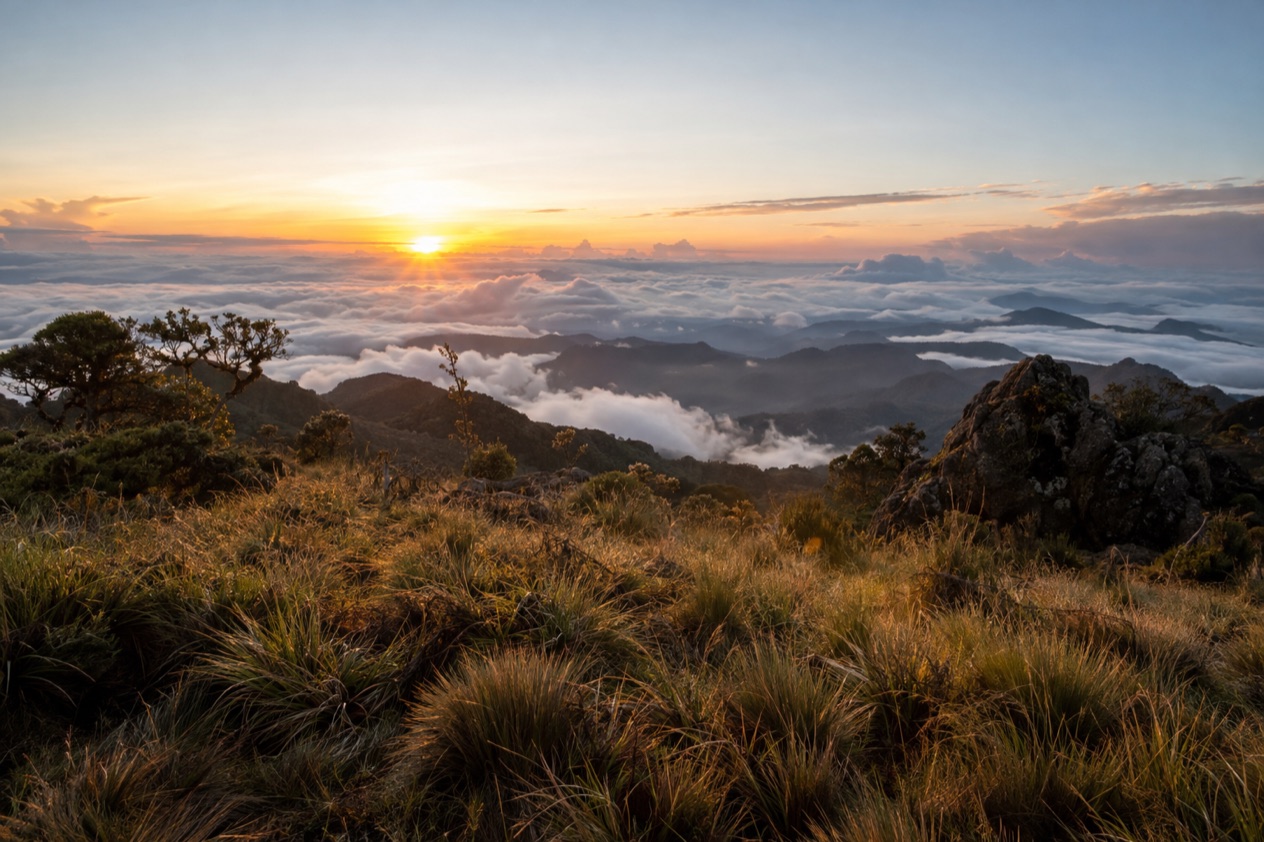
The air is thin and cold here, the vegetation turns low and tough, and the ground opens into wide views. Photographers love the lakes when the light is soft and the water is still. Take your time on this stretch, since the altitude slows almost everyone, and the scenery rewards each pause.
The summit and its views
The top of Cerro Chirripo is a rocky, exposed place where the wind can be strong and clouds move in and out. On clear days, both the Caribbean and Pacific coasts can be seen from the peak, which is the image that draws most hikers.
Many hikers aim to reach the summit early, since clouds tend to build later in the day in the mountains. Bring patience as well as a camera, because the view can open up for a few minutes and close again. Even when it stays cloudy, standing at the highest point in the country has its own quiet satisfaction.
The mountain hut and park services
The night in the mountains is part of the experience. The park offers information, a ranger station, trails, signage, restrooms, drinking water, several natural viewpoints and lodging. The park provides lodging where hikers can rest before an early start.
Evenings are cold and simple, with hikers wrapped in layers and talking over hot food. The viewpoints near the lodging are good places to watch the light change at the end of the day. Stars can be remarkable on a clear night, far from any town.
Hours, tickets and rules
The park is open every day, from morning until late afternoon, and an online reservation is required for its sectors. You must reserve park entry online through the national parks system before you travel.
| Site | Open | How to book |
|---|---|---|
| Chirripó National Park (San Gerardo, San Jerónimo and Herradura sectors) | Every day, 8 a.m. to 4 p.m. | Online reservation required at serviciosenlinea.sinac.go.cr |
For hiking in national parks, the guidance is to register with the park, have an entry permit and use a certified tour operator. The Costa Rica Tourism Institute provides a list of Certified Tour Guides, which is the place to start when you are choosing who will go with you.
How to get to Cerro Chirripo
Every visit begins in San Gerardo de Rivas, because visitors must travel to that village to access the park. It is a small mountain community, and it works as the staging point for everyone heading up, with the ranger station and the start of the trail close by.
Plan your route so that you reach the village the day before you start walking, with time to rest and sort your gear. Because the park opens in the morning and the hike is long, arriving relaxed matters more than saving a few hours. The mountain does not forgive a rushed start.
Roads in the mountains are often slower and steeper than they look on a map, so give the journey generous time. Whichever base you start from, the last stretch ends in San Gerardo, and from there the climb is on foot. Choose lodging in the village for the night before if you want an unhurried morning.
When to visit Cerro Chirripo
The best time of day is the early morning, both for the trail and for the summit views. Clouds tend to gather as the day goes on, and rain in much of Costa Rica usually falls in the afternoon during the green season, so an early start gives you your best chance at clear skies. The park gates are open from morning to late afternoon, so plan your timing around those hours.
Much of the Pacific side and the Central Valley has a dry season from about December to April and a green, rainy season from about May to November. Those months are a useful guide, with the dry season generally offering better odds of clear days. Mountains make their own weather, though, so even a dry month can bring cloud, wind and cold at the top.
In the green season the forest is lush and the trail can be wet and muddy, and views are more likely to be hidden. The reward is quieter paths and intensely green scenery. Whatever month you choose, reserve ahead, since the park requires online reservation, and pack for changing conditions.
Tips for your visit
Pack for several climates in one trip. Warm layers, a windproof and waterproof jacket, a hat, gloves, sturdy broken-in boots, a headlamp for the early start and a small daypack all earn their place. Nights in the hut are cold, so bring something warm to sleep in. Drinking water and restrooms are available at park facilities.
Think of this as a trip of several days, not a day outing. Build in a rest day on either side if you can, because tired legs and a long drive do not mix well. Take the altitude seriously by walking at a steady pace, drinking water and eating regularly. If you feel unwell, go down, since the summit will still be there.
Families and anyone with limited mobility should think carefully. This is a demanding hike, and it suits fit, experienced walkers best. Younger children and people who are not used to long uphill days may be happier with an easier outing elsewhere in the country.
For wildlife, a certified guide makes a real difference, since they spot birds, frogs and butterflies that most hikers walk past. After the climb, San Gerardo is a pleasant place to unwind, with sore legs, a warm meal and a view of the hills you just crossed. Spend an extra night there if your schedule allows, and let the mountain sink in.
Good to know before you go
The U.S. State Department rates Costa Rica Level 2, ‘Exercise increased caution,’ due to crime; it says petty crime is common throughout Costa Rica and that violent crime also affects tourists, including armed robbery, homicide and sexual assault.
Altitude is the thing to respect most on this mountain, along with the cold and the sudden weather changes at the top. Carry your own supplies for the trail, keep valuables to a minimum and leave anything you do not need at your lodging in the village.
Costa Rica’s rainy season runs on its own calendar, so the weather on the day matters more than the month on the calendar. Take the usual care with your belongings in towns, and let the mountain slow you down.
Sources
- Costa Rica Tourism Board (ICT), Chirripo National Park (https://visitcostarica.com/where-to-go/protected-areas/chirripo-national-park), checked October 8, 2026
- SINAC (Costa Rica national parks authority), online reservations (https://www.sinac.go.cr/ES/resvlinea/Paginas/default.aspx), checked October 8, 2026
- U.S. Department of State, Costa Rica Travel Information, Safety and security (https://travel.state.gov/content/travel/en/international-travel/International-Travel-Country-Information-Pages/CostaRica.html), checked October 8, 2026
- U.S. Department of State, Costa Rica Travel Advisory, issued April 1, 2026 (https://travel.state.gov/content/travel/en/traveladvisories/traveladvisories/costa-rica-travel-advisory.html), read via the State Department open data API on October 8, 2026
To plan your stay
- Best Time to Visit Costa Rica: Dry and Green Seasons, Weather by Region and Festivals
- Where to Stay in Costa Rica: Beach Towns, Cloud Forest, Volcano Views and Which Base Fits Your Trip
- Costa Rica Airports: San Jose or Liberia? Beaches, Drive Times and Getting to Your Hotel
- Know Before You Go to Costa Rica: Entry Rules, Money, Getting Around and Local Customs