
On a July afternoon in Loiza, drummers work through the bomba rhythms while masked figures in bright costumes and coconut-shell masks move through the streets for the feast of Santiago Apostol. Elsewhere the island is just as busy in its own way: families spread out on beach blankets in Rincon, kayaks slide toward the mangroves near Fajardo, and cooks along the roadside fry alcapurrias for the Sunday crowd. July in Puerto Rico is a hot, bright, sea-warm month for beaches, festivals and long meals, with afternoon showers that arrive and leave quickly.
What is the weather like in Puerto Rico in July?
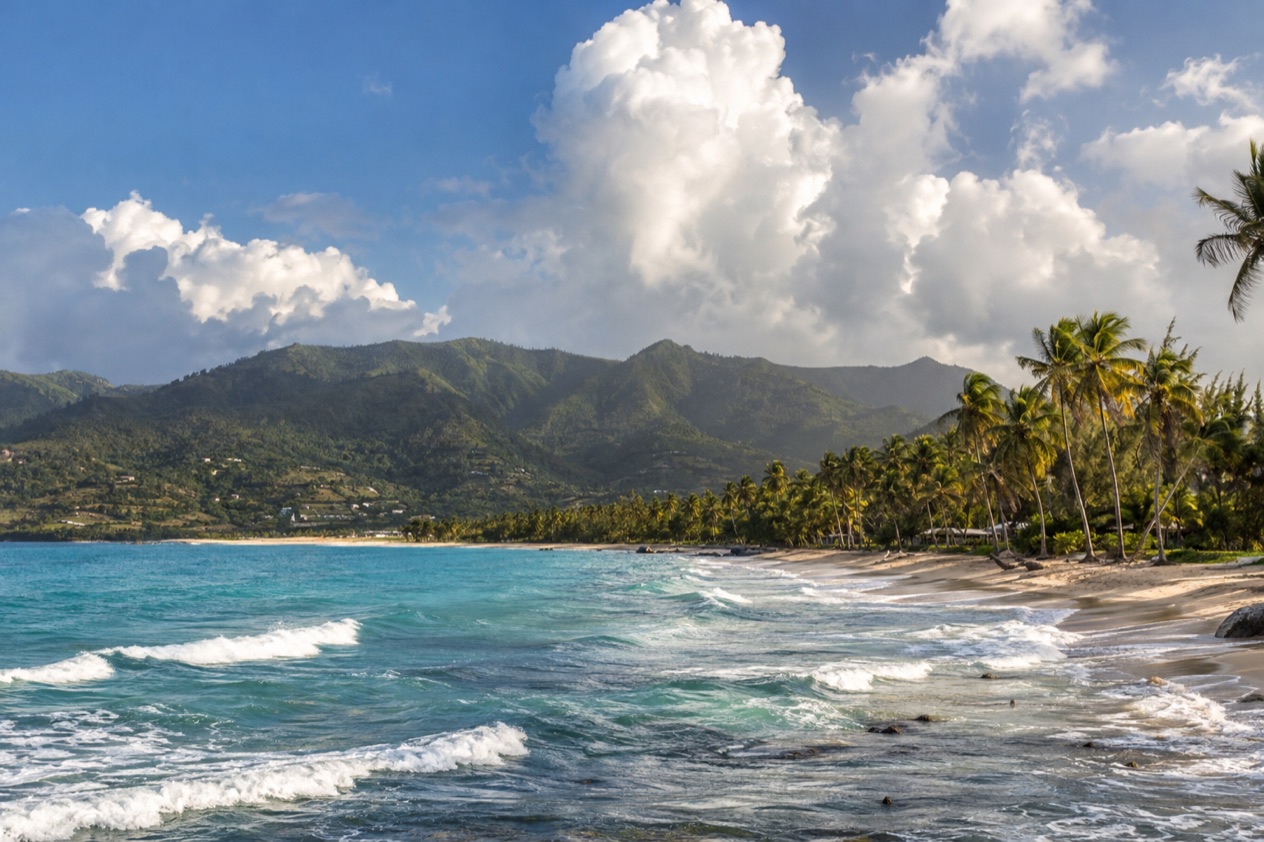
Come July, heat and humidity blanket the whole island, the north and east coasts see showers most often, the south and west enjoy the driest, sunniest days, and the sea stays bathtub-warm on every shore.
| Place | Region | Average high (°F) | Average low (°F) | Rain (in) | Rain days | Sea (°F) |
|---|---|---|---|---|---|---|
| San Juan | North coast | 88.7 | 77.6 | 6.02 | 10.7 | 84.9 |
| Fajardo | Northeast | 88.8 | 77.3 | 4.31 | 10.2 | 85.7 |
| Culebra | East islands | 82.3 | 79.6 | 3.66 | 8.9 | 85.2 |
| Ponce | South coast | 86.9 | 76.2 | 2.24 | 5.6 | 85.7 |
| Rincon | West coast | 86.7 | 78.2 | 2.07 | 5.6 | 87.9 |
Of these spots, San Juan gets the most rain by a wide margin, making it the wettest, and showers arrive roughly every third day. They tend to be heavy and short, with the sun often returning after a downpour.
Ponce and Rincon get far less rain, roughly a third of San Juan’s, and about half as many rainy days. Culebra has the lowest daytime highs because of the sea breeze, yet its nights are the warmest.
The sea is warm enough for swimming and snorkeling, but conditions still vary, so follow posted flags, signs and lifeguards. The hours around midday are the hottest, so most people plan beach time for the morning and keep the afternoon for shade.
Where to go in Puerto Rico in July
San Juan and the north coast
The capital is lively in July, and its showers mean you can plan around them rather than avoid them. Early in the day suits a stroll over Old San Juan’s blue cobblestones, the fort walls and the plazas, with a café or museum as your refuge when a cloud rolls through. Condado and Isla Verde offer easy beach days, and the city’s restaurants make it the place for mofongo and a rum drink at sunset.
The heat is strongest in the afternoon, and the humidity can make it feel heavier than the numbers suggest. This region suits travelers who want a city, history and food as well as beaches, and who don’t mind an umbrella in the daypack. On the Atlantic coast, summer swells tend to arrive smaller than winter ones, yet they shift from day to day, so keep an eye on any flag, sign or lifeguard on duty.
The northeast, Fajardo, Culebra and Vieques
July is when the sea starts at Fajardo, offering sailing excursions, kayaking on Laguna Grande, or ferry rides from Ceiba to Culebra and Vieques. The small islands lie off Puerto Rico’s east coast and offer the clear water that summer visitors come for. Culebra’s Flamenco Beach and Vieques’s stretches of sand rank as the top picks, and in summer turtles occasionally nest on the beaches of these islands.
Nights here can be special. Both Laguna Grande and Mosquito Bay light up throughout the year, though they shine brightest when the moon is dark, so look at the lunar calendar first as you pick which night to go. El Yunque rainforest, close to Fajardo, is green and wet at this time of year, so it suits travelers who like a damp, misty walk with waterfalls rather than dry trails.
The west coast and Rincon
Summer is the calm season in Rincon. The big winter swells that bring surfers have gone, and the water is at its warmest, so snorkeling and paddleboarding take over from surfing. Sunsets from the beaches are the evening ritual, and the town’s restaurants and bars fill with a relaxed beach crowd.
Aguadilla and its nearby beaches share the same easy summer mood. Sea conditions still change from beach to beach, so ask locally and follow posted flags where they exist. The west suits couples, snorkelers and travelers who want sun with less rain.
Ponce, the south and the central mountains
Ponce is one of the drier, hotter corners of the island, so it is best explored in the morning. Shade is available at the plaza, the firehouse in red and black, and the museums, and along the south coast you will come across quiet beaches plus the bioluminescent bay of La Parguera in Lajas, which once more shines brightest on nights with no moon.
Up in the central mountains, the coffee towns are cooler and greener. A drive on winding roads, a stop for a cup of local coffee and a lunch of lechon asado at a mountain roadside kiosk make a good break from the heat of the coast. Clouds and afternoon showers are common in the hills, so go early.
What to do in Puerto Rico in July
The Santiago Apostol festival in Loiza
The big cultural event of the month is the feast of Santiago Apostol in Loiza, centered on Saint James’s feast day in late July. The town is the heart of Afro-Puerto Rican culture, and for several days it fills with processions, bomba music and dancing. The vejigante masks, with their horns and bright colors, are the image everyone remembers.
Expect crowds, heat and plenty of street food, including alcapurrias and fried snacks from the stalls. Go with a hat, water and patience, and plan to spend a few hours rather than a whole day. It suits travelers who want to see living tradition rather than a staged show.
Beach days, snorkeling and the glowing bays
With the sea this warm, July is for the water. Snorkeling off Culebra, boat trips from Fajardo, and calm-season beach hopping in the west fill most itineraries. Mornings are the best time, before the heat and the afternoon clouds build.
At night, the bioluminescent bays are the signature experience. Every time your paddle goes in, La Parguera in Lajas, Laguna Grande near Fajardo and Mosquito Bay in Vieques can glow, and you may get an even bigger show on a night with no moon or clouds. Think of it as a possibility instead of a guarantee, because the display shifts with clouds, rain and moonlight.
Eating and drinking
Summer is a good time to eat the way locals do: mofongo, tostones, pasteles and lechon asado at lunch, and piraguas, the shaved-ice cones with fruit syrup, to cool down in the afternoon. Tembleque, a coconut pudding, is the classic sweet. Coffee from the central mountains and local rum finish the day.
Is Puerto Rico busy in July?
July is a busy month on the island, because it is summer vacation for many U.S. families and for Puerto Ricans themselves, and the beaches and ferries reflect it.
Weekends are the busiest, when local families head to the coast with coolers, tents and speakers. On weekends, beaches near San Juan and Luquillo are lively, and the public ferries to Culebra and Vieques leave from Ceiba. Around the Fourth of July and the Loiza festival, expect extra traffic and full lodgings.
Quieter corners are still easy to find. Weekdays are calmer almost everywhere, the mountain towns see fewer visitors, and the south coast and the farther beaches of the west are relaxed. Old San Juan has a steady flow of visitors at midday, but early mornings and evenings are far more pleasant.
Boat trips and rooms on the small islands draw plenty of interest in summer. For a slower vacation, build in weekday beach days and leave the weekends for the towns and the mountains.
What to pack for Puerto Rico in July
Packing stays easy: bring lightweight clothing for the whole island, plus a little extra rain gear if you are headed to San Juan, El Yunque and the mountains, and more sunscreen for the dry, sunny south and west.
- Light, quick-drying clothes and a swimsuit or two, since everything is hot and humid and clothes dry slowly.
- A compact rain jacket or umbrella for the afternoon showers in San Juan and the rainforest.
- For the intense sun on the beach and the boat, bring sunscreen, a hat and sunglasses.
- Water shoes for rocky entries, river trails and the waterfalls.
- A light layer for air-conditioned restaurants, evening boat rides and the cooler mountain towns.
- Insect repellent for the evenings, especially near mangroves and the bioluminescent bays.
Good to know before you go
July falls inside the Atlantic hurricane season, which runs from June 1 to November 30, with the peak still weeks away in September. Usually the early weeks of summer prove quieter than the months that follow, but storms can build quickly, so during your trip, watch the National Hurricane Center along with updates from local officials.
Some summer days bring sargassum seaweed ashore on the east and south coasts, and in a few places that can ruin a trip to the beach. Travelers who are U.S. citizens and arrive from the mainland can visit Puerto Rico without a passport or visa.
Is July a good time to visit Puerto Rico?
July is a good month for travelers who want warm water, festivals and long beach days, and the west coast around Rincon, along with Culebra and Vieques, makes the best base for the sea.
Compared with June, July is a little busier, with more families on the road and more events. Rain stays showery rather than constant, and the heat is steady. Compared with August, it comes before the stretch when storms become more likely, since the main hurricane activity builds from mid-August toward September, though forecasts can change quickly in any month of the season.
The trade-offs are heat, humidity and crowds on weekends. If you like hot days, you will do best with a morning-beach, afternoon-shade rhythm, with a swim again near sunset. If you prefer cooler weather and open trails, the dry months of winter suit you better. What makes July special is the mix: the drums and masks of Loiza, warm water off Rincon, and nights on the water when the bays may glow under a dark sky.
Sources
- NOAA NCEI, monthly normals 1991-2020, station RQW00011641 (San Juan L M Marin International Airport), checked October 8, 2026
- Open-Meteo Marine API, average 2015-2024, checked October 8, 2026
- Open-Meteo / ECMWF ERA5, 1991-2020 normals calculated on the grid cell 18.0111N 66.6141W, checked October 8, 2026
- Open-Meteo / ECMWF ERA5, 1991-2020 normals calculated on the grid cell 18.3403N 67.2499W, checked October 8, 2026
- NOAA NCEI, monthly normals 1991-2020, station RQW00011630 (Roosevelt Roads (Ceiba)), checked October 8, 2026
- Open-Meteo / ECMWF ERA5, 1991-2020 normals calculated on the grid cell 18.3N 65.28W, checked October 8, 2026
- NOAA National Hurricane Center, Climatology (https://www.nhc.noaa.gov/climo/), checked October 8, 2026
To plan your stay
- Things to Do in Puerto Rico: Old San Juan, Beaches, Bioluminescent Bays and Island Food
- Where to Stay in Puerto Rico: San Juan, Rincon, Vieques and the Best Areas for Your Trip
- Getting Around Puerto Rico: Rental Cars, Tolls, Carros Publicos and Ferries to Culebra and Vieques
- Know Before You Go to Puerto Rico: ID, Money, Getting Around and Local Customs