
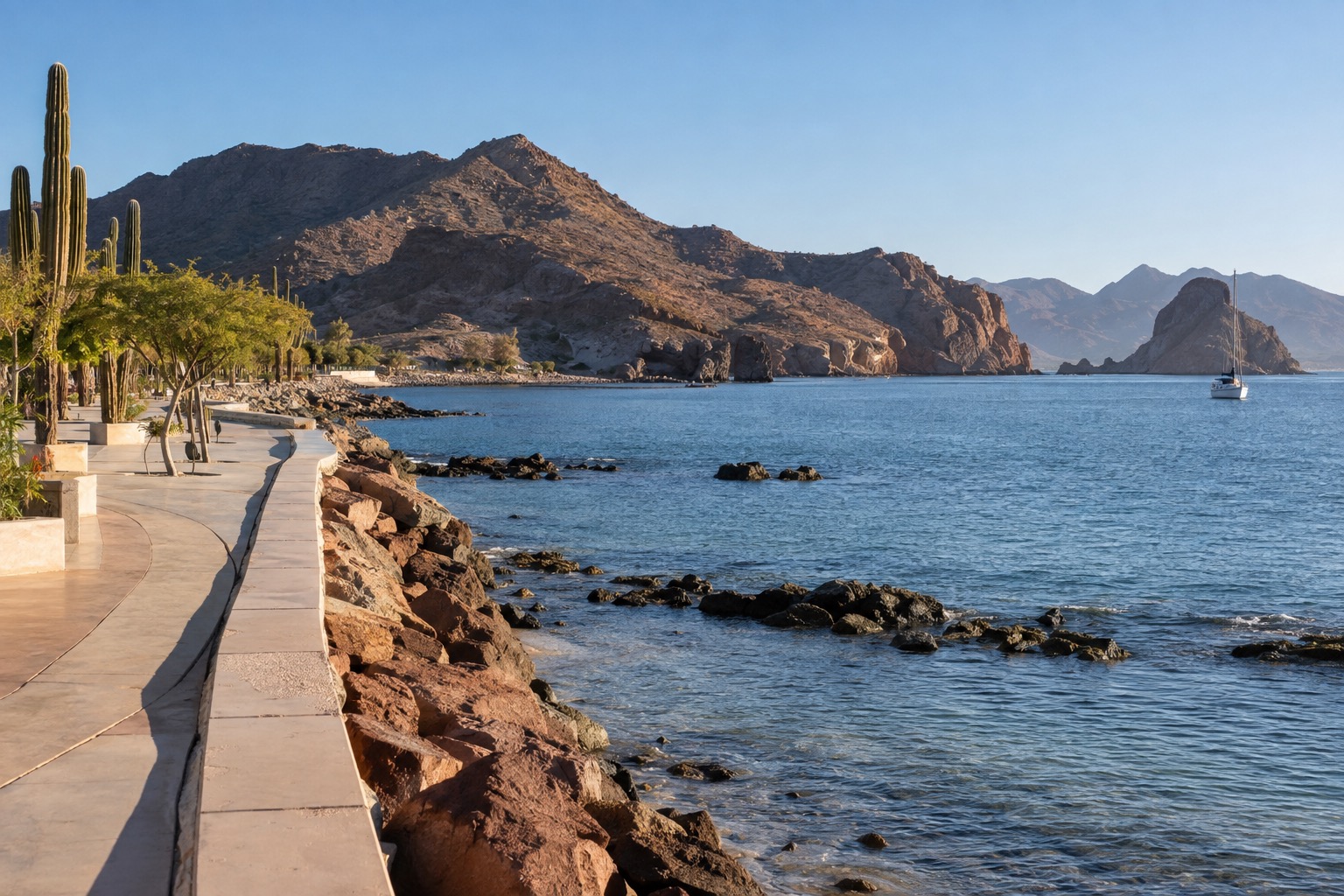
On a February morning the Malecón of La Paz is quiet enough to hear pelicans slapping the water, and by late afternoon the benches face a sky that goes orange, then pink, over the bay. Panga skippers hose down their boats, fishermen unload the catch near the pier, and the smell of grilled fish drifts from the taco stands. This is a month for getting out on the water, since the Sea of Cortez is full of life, and for lingering outdoors in dry, sunny air.
What is the weather like in La Paz in February?
February brings warm, bright days and cool nights, with almost no rain and a sea that stays brisk.
| Month | Average high (°F) | Average low (°F) | Rain (in) | Rain days | Sea (°F) | Daylight on the 15th |
|---|---|---|---|---|---|---|
| January | 77.7 | 54.1 | 0.37 | 2.3 | 71.1 | 10 hours 51 minutes |
| February | 79.7 | 55.0 | 0.22 | 1.6 | 69.7 | 11 hours 24 minutes |
| March | 84.7 | 56.7 | 0.03 | 0.6 | 71.0 | 12 hours 4 minutes |
Afternoons are comfortable in a T-shirt, and the sun on the water feels strong even when the air is mild. Mornings and evenings call for a light layer, especially on a boat moving at speed. A shower is possible but rare, and it passes quickly.
The sea is the coolest of the three months, so snorkeling comes with a wetsuit if you tend to feel the cold. Days are getting longer, with a little over eleven hours of daylight in mid-month, which leaves time for a full outing and a slow dinner afterward.
What to do in La Paz in February
Swimming with whale sharks
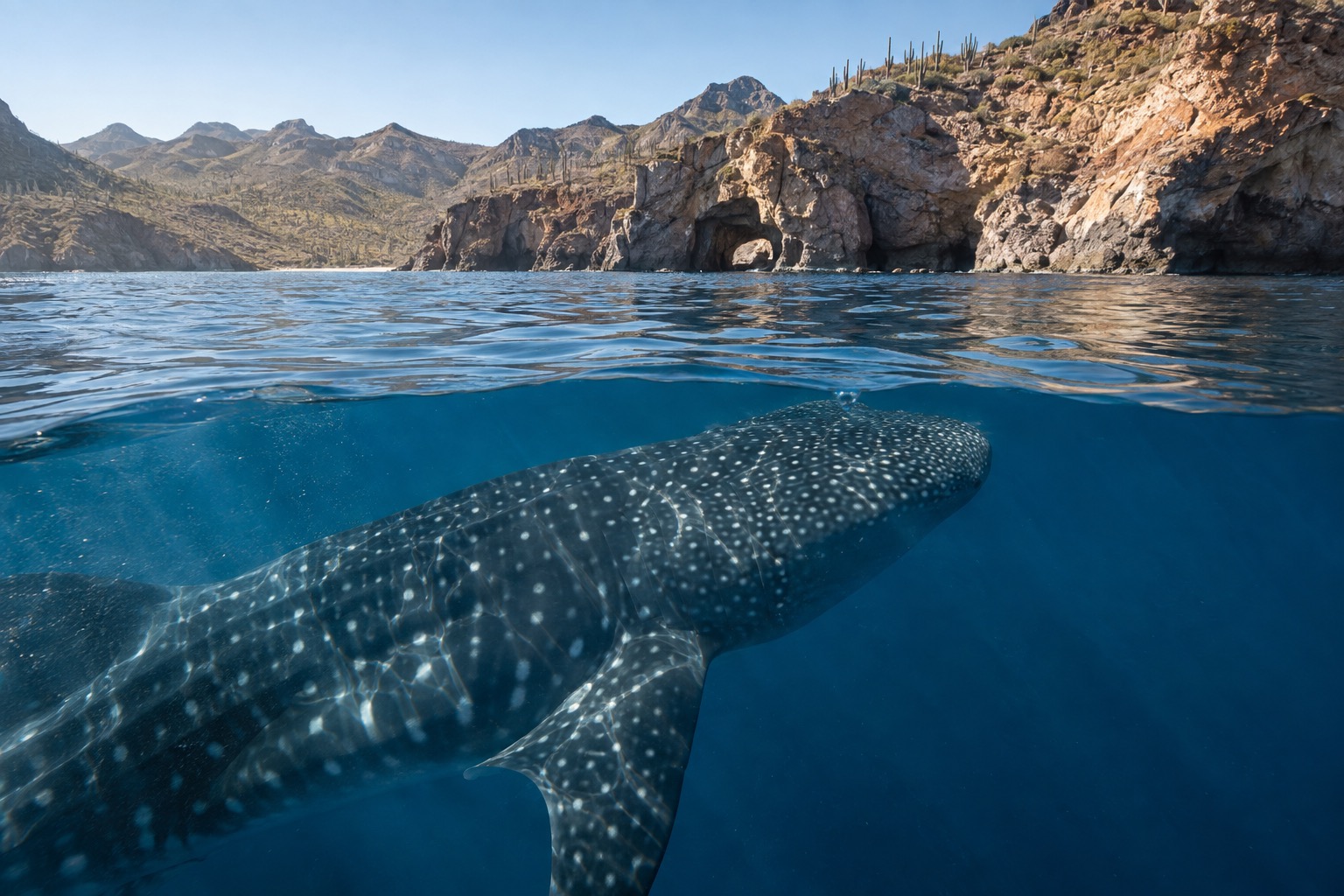
The gentle giants feed in the bay near the city in the cooler months, and a morning boat trip to find them is the classic La Paz outing. Boats leave from the waterfront area, and the ride out is short and calm in the early hours, before the wind picks up. Seeing a spotted shape as long as a bus glide beneath you is something most visitors remember for years.
Go in the morning, when the water is flattest. Encounters follow strict rules and happen with licensed local operators, so the experience stays gentle for the animals. A wetsuit makes the cool water easy to bear, and children who swim confidently often join in.
Sea lions and the islands
Isla Espíritu Santo, a short boat ride north of town, is the other great day on the water. Its rust-red cliffs, turquoise coves and white sand look unreal against the dry desert hills. The sea lion colony at Los Islotes is the highlight, where pups dart around snorkelers with the curiosity of puppies.
The full day usually includes a beach stop and a lunch of fresh ceviche or grilled fish on the sand. February suits it because the sun is warm but not punishing, and there is hardly any chance of a rained-out trip. Kayaking along the shore and hiking the island’s dry arroyos are good ways to stretch the day.
Carnaval and evenings on the Malecón
La Paz is known for one of the liveliest Carnavals in Mexico, with parades, floats, music and costumes along the waterfront in the weeks before Lent. The exact dates move with Easter, so some years it lands in February and others in early March. When it does, the Malecón fills with families, food stalls and dancing late into the night.
Even without a parade, the seaside promenade is the town’s living room. Locals bring kids for paletas, couples walk under the lights, and street musicians play near the sculptures. Find a table nearby for fish tacos, a chocolate clam (almeja chocolata) or a cold Baja beer as the lights come on.
Beaches and desert days
Playa Balandra is the postcard beach of the area, with shallow, clear water and a mushroom-shaped rock at one end. The cooler sea means short dips rather than long swims, but the white sand and calm lagoon are lovely for walking and photographs. Playa Tecolote, nearby, adds a lively beach-shack lunch scene.
Back in town, the cooler air makes wandering pleasant: the cathedral on the main plaza, the anthropology and whale museums, and the small shops of the downtown grid. Fresh seafood markets and bakeries make a good morning stop before the heat of the day builds.
Is La Paz busy in February?
La Paz is moderately busy in February, with a steady flow of winter visitors but none of the crush of larger resort towns.
Snowbirds from the U.S. and Canada settle in for the season, and whale-shark and island boats fill up on weekends. Long weekends in both countries can tighten up rooms, particularly in the small waterfront hotels. Carnaval weekends, when they fall in the month, draw crowds of Mexican families from across the peninsula.
Restaurants along the Malecón are lively at dinner but rarely impossible, and weekday mornings at the beaches feel relaxed. Booking a room ahead makes sense if your dates touch a holiday weekend.
What to pack for La Paz in February
Think layers: summer clothes for the afternoon, a warm top for the boat and the evening.
- A light fleece or windbreaker for early boat rides and breezy nights
- Reef-safe sunscreen, a hat and sunglasses for strong desert sun
- A rash guard or thin wetsuit for snorkeling in cool water
- Sandals plus sneakers for island trails
- A refillable bottle for the boat trips
Good to know before you go
February is well away from the stormy months of late summer and fall, so weather rarely changes plans. Baja California Sur charges a lodging tax on hotel stays.
| Fee | Amount | Who pays |
|---|---|---|
| Lodging tax (Impuesto sobre la Prestación de Servicios de Hospedaje) | 4% | Guests staying in hotels and other lodging in Baja California Sur |
Is February a good time to visit La Paz?
Yes, especially for travelers who like their sunshine mild and their days spent on the water with wildlife.
January is a touch cooler and slightly wetter, while March warms up noticeably and the sea eases a bit. February sits in between, with clear skies, gentle afternoons and the best chance to pair whale sharks with sea lions in one trip. What stays with you is the rhythm: a dawn boat ride, a long seafood lunch, and a Malecón sunset that gathers the whole town at the water’s edge.
Sources
- Servicio Meteorologico Nacional (CONAGUA), normales climatologicas 1991-2020, estacion 03074 (La Paz (Dge), La Paz), checked September 29, 2026
- Open-Meteo Marine API, average 2015-2024, checked September 8, 2026
- sunrise-sunset.org, sunrise and sunset on the 15th of the month, checked September 8, 2026
- Ley de Hacienda del Estado de Baja California Sur, art. 13 (mirror Secretaria de la Contraloria y Transparencia Gubernamental de BCS, contraloria.bcs.gob.mx); 2026 rate confirmed by El Contribuyente, ISH 2026 table, elcontribuyente.mx, read on September 29, 2026
- U.S. Department of State, Mexico Travel Advisory (reissued May 29, 2026), section "Risks in specific areas" / State of Baja California Sur, travel.state.gov, read live via browser on 29 September 2026
To plan your stay
- Things to Do in La Paz: Whale Sharks, Espíritu Santo, the Malecón and Fish Tacos
- Where to Stay in La Paz: El Centro, the Malecón, Marina Costa Baja and La Ventana
- Best Time to Visit La Paz: Weather by Month, Whale Sharks, Crowds and Festivals
- La Paz in January: Whale Sharks, Cool Sea and Sunny Waterfront Days