
At a sushi counter in Niigata, the rice arrives still faintly warm, each grain separate and glossy, and the fish was swimming off the Sea of Japan coast not long before. Outside, the Shinano River slides under the arches of the Bandai Bridge and the wind carries a hint of salt from the harbor. This is a port city of rice paddies, sake and old geisha quarters, a place for travelers who like to eat well and wander without a checklist.
Where is Niigata and what is it like?
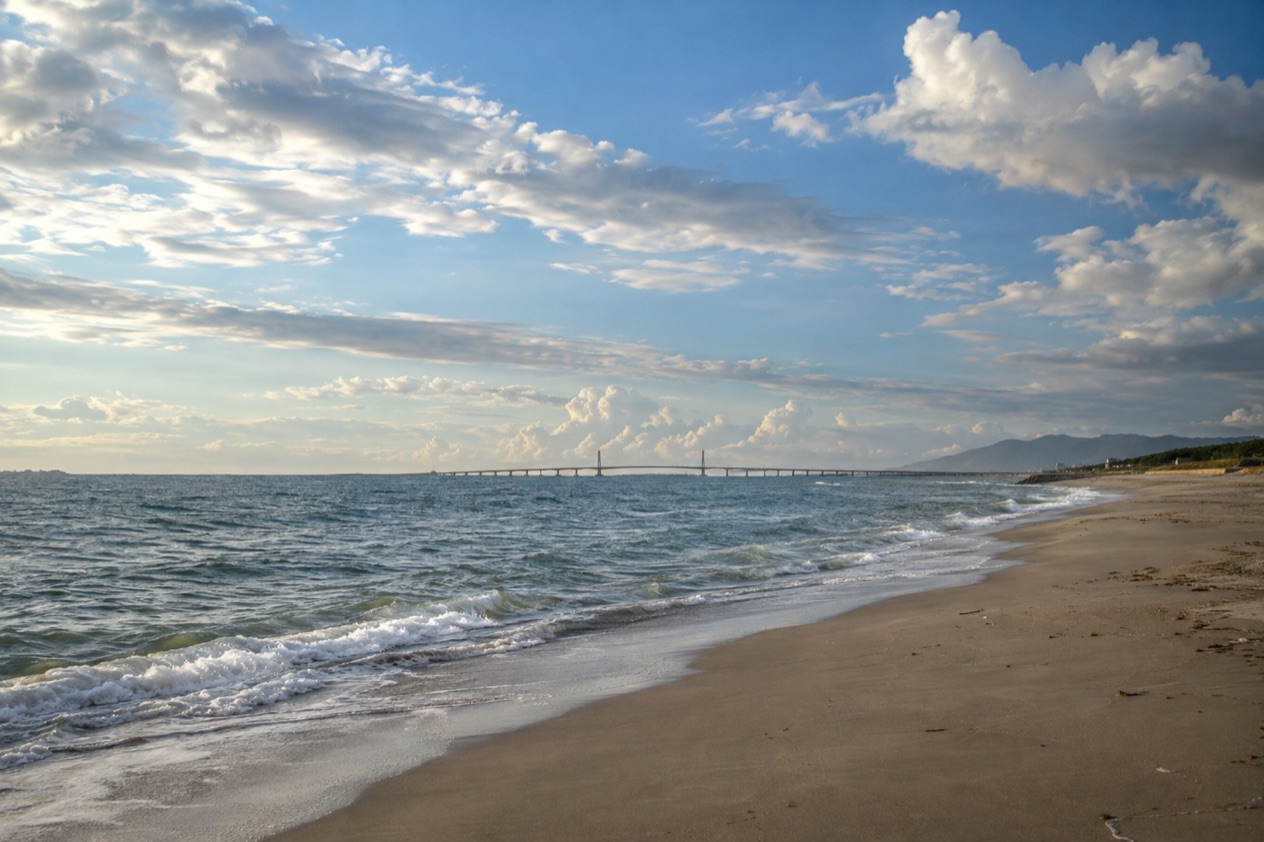
Niigata is the capital of Niigata Prefecture, a harbor city on the Sea of Japan coast of Honshu, with the Shinano River running through it to the water. It sits on the side of the country that faces the continent rather than the Pacific, and that orientation shapes everything, from the light on the horizon to the way people cook and the boats that leave from its port.
With a population of 810,000, it is a real city, yet it does not behave like Tokyo or Osaka. Streets are wide, the river and the sea are never far away, and the rhythm is that of a regional hub where office workers stop for a bowl of noodles and fishermen’s families have run the same shops for generations. In 2007 Niigata became the first government-designated city on the west coast of Honshu, a status that reflects its weight as a port and a center for the surrounding countryside.
What defines the place is rice. The plains around the city grow the Koshihikari that many Japanese cooks treat as a benchmark, and the same water and cold winters feed a sake tradition that runs deep. You feel it at the table more than at any monument. Meals here are built around the quality of a few ingredients, served plainly and without fuss.
Niigata suits travelers who enjoy food, markets, river walks and a slower city that does not rush them from one headline attraction to the next. It also works as a gateway, since ferries leave from its port for Sado island and beyond, and several rail lines fan out from the station toward mountain and coastal towns.
Those who want a dense list of temples and palaces, or a skyline of neon, may find it understated. Those who like to sit by the water, order another small cup of sake and watch a gray sea turn pink at dusk will understand it quickly.
What is there to do in Niigata?
The reasons to come are concrete and mostly edible: a river with a landmark bridge, a table built on rice and seafood, an old pleasure district with its own tradition, and a ferry to an island. Together they give Niigata a character unlike the castle-and-shrine cities of western Japan.
The Bandai Bridge and the Shinano riverfront
The Bandai Bridge, a six-arch span and a national cultural property, is a symbol of Niigata and the natural place to start. Its stone-gray arches carry traffic across the Shinano River, and the riverbanks on either side invite a slow walk with the water beside you and the sky wide open, as it often is on a coastal plain.
Near the bridge stands the Bandai City Rainbow Tower, which has an observation point high above the river. From up there you can read the layout of the city, the curve of the Shinano, the harbor and the flat land stretching out around it. It is a useful way to orient yourself before you go down to the streets, and it suits anyone who likes to see a place whole before walking it.
Sake, rice and the Niigata table
Eating is the main sport here. Sushi is the obvious order, with rice that tastes of itself and seafood from the cold waters off the coast, such as sweet shrimp, squid and, in winter, crab. Local specialties reward curiosity. Tare katsudon is a pork cutlet dipped in a sweet-savory sauce and laid over rice, noppe is a gently simmered stew of root vegetables, and hegi soba is buckwheat noodles bound with seaweed and served in neat bundles on a wooden tray.
Sake belongs to the same story. Niigata sake is often described as clean and crisp, a good match for the seafood, and tasting counters and small bars let you try several cups in one sitting. Sweets follow naturally, among them sasa dango, rice dumplings wrapped in bamboo leaves, and rice crackers in every shape. Pair a morning at the market with an evening of sake and you have understood the city.
Furumachi and the harbor town evenings
Niigata grew rich as a port, and the old pleasure quarter of Furumachi is a relic of that past. Geisha culture took root here, and the district still carries something of the atmosphere of lantern-lit lanes, small restaurants and narrow bars where regulars know the owner by name. Evenings are the time to wander, picking a counter, ordering a few small plates and letting the night unfold.
Even without entering the most formal establishments, you can feel the city’s past as a trading harbor in this part of town. It suits couples and solo travelers who enjoy an izakaya, a Japanese pub where food arrives in small dishes meant for sharing, and who are happy to leave plans loose.
Sado island by ferry
Passenger services leave the Port of Niigata for Ryotsu on Sado island, which makes the island the great outing from the city. Sado carries a reputation for taiko drumming, old gold-mining history, round tub boats paddled along rocky shores and a program to bring back the crested ibis, the toki, to its wetlands. Its coast faces the same sea you see from the city, but the pace is slower and the landscape greener.
The same port also has passenger services to Otaru, Akita and Tsuruga, a reminder that Niigata has long been a ferry town. Anyone who loves crossing water by boat will find the departure hall a pleasure in itself. Sado suits travelers with time to spare and a taste for rural scenery, seafood from the island’s waters and the sound of a drum echoing across an open field.
How many days do you need in Niigata?
A long weekend is enough to taste Niigata properly, and a week lets you use it as a base for the coast, the island and the mountains behind it.
With two or three days, the city fills the time pleasantly. One day goes to the Bandai Bridge, the riverfront and the Rainbow Tower, with a long sushi lunch and an evening in Furumachi.
Another goes to the harbor, markets and a sake tasting, with time left for a slow afternoon in a café or a bath. Because the city is a destination for eating and strolling, there is no need to rush between sights, and a short stay can feel complete.
With four or five days, Sado island becomes the natural addition. The ferry from the Port of Niigata to Ryotsu turns the crossing into part of the experience, and the island easily absorbs a night or two with its drumming, its coastline and its seafood.
Travelers who want to see more of the region can use the conventional lines that terminate at Niigata Station, which serve Myoko, Itoigawa, Akita, Sakata and Aizuwakamatsu. Each is a different kind of town, from mountain country to coastal stops, and any of them gives a fresh look at the Sea of Japan side of Honshu.
A week suits those who combine Niigata with Tokyo or with further stops along the coast. Spend the first days in the city, cross to Sado, return for a last evening of sake and rice, and leave by rail or by ferry. Slow travelers, food lovers and people who prefer fewer hotels and more time in each place will find that rhythm rewarding.
Where to stay in Niigata
The most practical area is around Niigata Station, where the Shinkansen and the conventional lines arrive. Staying here puts you at the point where trains, buses and the airport connections meet, and it suits anyone planning day trips to other towns or an early departure for Tokyo. The surroundings are those of a working city, with shops, restaurants and plenty of places to eat before or after a journey.
The riverside, around the Bandai Bridge and the Rainbow Tower, suits travelers who want to wake up to water and open sky. Evenings along the Shinano are pleasant for a stroll, and the views from upper floors can take in the river and the city. It is a good choice for couples and for those who prefer a gentler rhythm to the bustle of the station.
Furumachi, the old pleasure quarter, appeals to people who want to step out of the hotel into lantern-lit lanes, small bars and restaurants. It is a good base for those who plan to eat out every night and prefer to walk home afterward. Light sleepers might choose a quieter street, since an entertainment district keeps its own hours.
For a night in a more traditional setting, a ryokan, a Japanese inn with tatami floors, futon bedding and a communal bath, is part of the wider Niigata experience, whether in the region or on Sado. Shoes come off at the entrance, slippers take over inside, and meals often center on local seafood and rice. It suits travelers who want to slow down and treat the night as part of the journey.
How do you get to Niigata and get around?
The train from Tokyo is the clearest way in: from Tokyo Station, the Joetsu Shinkansen runs to Niigata Station, a trip of about 2 hours. The line terminates at Niigata and provides daily service to Tokyo, so you board with the knowledge that the city is the end of the line. The trip is fully covered by the Japan Rail Pass and the JR East Rail Pass, which matters for travelers already holding one.
An express bus also links Tokyo and Niigata, running from Ikebukuro or Shinjuku, and the journey takes about 4 or 5 hours. It suits those who prefer to watch the countryside change from a window seat and are in no hurry. Rail travelers will also see that the Shin’etsu Main Line, Hakushin Line, Echigo Line, Uetsu Main Line and Ban’etsu West Line all terminate at Niigata Station, which connects the city with Myoko, Itoigawa, Akita, Sakata and Aizuwakamatsu.
By air, Niigata Airport handles international flights from Seoul, Shanghai and Taipei, and its schedule has also included Harbin and Vladivostok. Seoul is served five times a week. For travelers combining Niigata with a trip to East Asia, the airport offers a way to land close to the coast and begin on the Sea of Japan side.
Within the city, the main landmarks around the Bandai Bridge and the Rainbow Tower sit along the river, so exploring that part on foot is natural. Buses and taxis fill in the rest, and a rental car broadens the options for the countryside. The port is the other way to move: passenger services go to Ryotsu on Sado island, Otaru, Akita and Tsuruga, turning a city break into a sea journey whenever you like.
When is the best time to visit Niigata?
Early autumn is the strongest answer, September and October, when the rice harvest fills the plains with gold and the new crop reaches the table. This is the moment to eat rice at its freshest, drink sake alongside it and walk the riverfront in comfortable air. Late spring, May and June, is the other good window, with green fields and long days for crossing to Sado.
Summer, July and August, brings heat and humidity to the coast, and the season of sea views, festivals and fireworks that many Japanese cities hold in late summer. Evenings by the water can be pleasant, and the long light is useful for exploring, though the afternoons call for slow pacing, shade and cold noodles. Typhoon season in Japan runs in the late summer and early autumn, so a flexible plan is wise.
Winter on the Sea of Japan coast means gray skies, wind off the water and snow in the region, a mood that suits hot baths, crab, rich stews and warm sake. It is a season for those who enjoy atmosphere over sightseeing and who plan more time indoors, at the table or at an inn. Spring, March and April, is a shoulder season, as the land thaws and the first greens return, a quiet moment for those who like to see a place waking up.
Good to know before you go
Niigata rewards a relaxed approach. Shoes come off at the entrance of a ryokan and in many traditional restaurants, bathing at an onsen, a hot-spring bath, begins with a wash at the shower stations, and a quiet voice on trains is the habit. Sake and seafood are the center of the table, so it helps to arrive hungry and curious.
The Sea of Japan side shifts quickly between sun, cloud and rain, and typhoons can affect travel in late summer and early autumn, so a rain jacket and a flexible schedule are sensible. Ferries and trains each have their own timetables, and it helps to treat the port and the station as parts of the same journey rather than separate chapters.
Sources
- Japan National Tourism Organization, Niigata (https://www.japan.travel/en/destinations/hokuriku-shinetsu/niigata/niigata-city-and-around/), checked October 11, 2026
- Wikipedia, Niigata (city) (https://en.wikipedia.org/wiki/Niigata_(city)), checked October 11, 2026
- Wikivoyage, Niigata (https://en.wikivoyage.org/wiki/Niigata), checked October 11, 2026
To plan your stay
- Best Time to Visit Japan: Cherry Blossoms, Autumn Colors, Weather and Festivals
- Where to Stay in Japan: Ryokan, Temple Stays, Capsule Hotels and the Best Cities to Base In
- Sending Luggage from the Airport in Japan: Hands-Free Travel, Hotel Delivery and Coin Lockers
- Know Before You Go to Japan: Entry, Money, Etiquette and Getting Around