
In spring, Kyushu’s castle moats and river banks turn pale pink, and in the evening steam drifts up from the bathhouses of Beppu. A bowl of milky tonkotsu ramen eaten at a Fukuoka counter is as much a part of the year as the festival drums of summer or the maples of late autumn. Kyushu, the southern island of Japan, has a different pleasure in each season, and this is the year as it unfolds there.
When is the best time to visit Kyushu?
Spring and autumn suit most travelers best, and the stretch from mid-November to early December is the moment for red, yellow and orange leaves, though winter hot springs and summer festivals have strong reasons of their own.
For sightseeing, spring and autumn offer the gentlest conditions. In spring you can travel comfortably with a light jacket or a simple sweater, which is handy when you are moving between castles, shrines, harbor towns and volcano viewpoints in the same week. Autumn brings milder temperatures after the summer, the kind that suit walking, and the leaves arrive in the second half of November and the first days of December.
For food, any month works, because Kyushu eats well all year. Tonkotsu ramen, the pork-bone noodle soup the island is known for around the world, tastes best on a cool evening, and the same goes for the hot pots and grilled dishes of the izakaya (casual pubs). Summer favors cold noodles and shaved ice, while winter is the season for steaming bowls and long dinners.
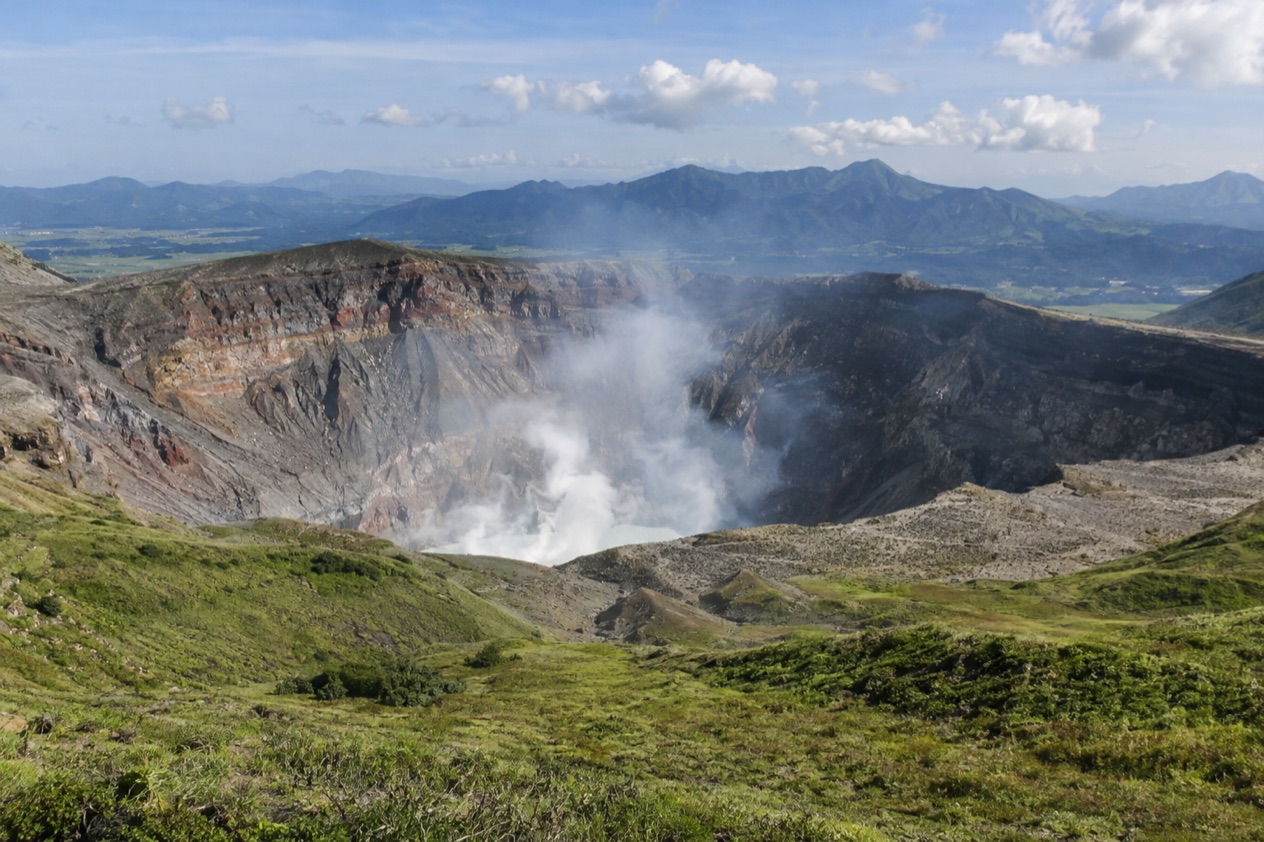
For nature and hot springs, the choice depends on what you want to see. Mount Aso, Japan’s largest active volcano at 5,220 feet, shapes the landscape of the island’s interior, and the spring and autumn months suit days spent outdoors around it. Beppu, with its eight boiling water sources, is a pleasure whenever the air is cool enough to make a hot bath feel earned, so autumn and winter stand out.
For budget and quiet, the months outside the national holiday weeks are the ones to aim for, and the early-summer rainy season keeps some travelers away. Families with children can plan around school vacations and the milder seasons, leaving the hottest weeks of summer for indoor stops such as aquariums, museums and bathhouse visits.
Kyushu weather by month
Kyushu is the most southerly of Japan’s four main islands, so its year runs milder than that of the northern islands, with a long warm season and a short, cool winter. Spring warms up steadily, and the light jacket or sweater that suits much of Japan at that time of year is the right layer here too. Mornings and evenings call for the extra layer, and by afternoon you can often take it off. A compact umbrella earns its place in the bag from spring onward, because rain can come in any season.
Early summer brings the rainy season, a stretch of gray, damp days with showers that can turn heavy. Rain gear matters more than sun gear then, and quick-drying clothes make the days easier. Midsummer is hot and humid, so light fabrics, a hat and a small towel for wiping your face suit the season, and the days stay long, which gives you light for evening strolls and festival nights.
Autumn becomes gradually milder after the summer, and the temperatures stay moderate for walking. Winter is cooler, and the days are noticeably shorter, so sightseeing plans have to fit into fewer daylight hours. A warm coat, gloves and a scarf are enough for the lowlands, while the interior around Aso feels the cold more, and a hot bath at the end of the day becomes part of the plan rather than a treat.
What is there to do in Kyushu in each season?
Spring: blossoms, castles and open-air days
Spring is the season of cherry blossoms, and Kyushu, being the southern island, sees them as part of Japan’s early flowering. Castle grounds, river embankments and temple gardens fill with people sitting under the trees for hanami, the flower-viewing picnic. Dates shift from one spring to the next, so the timing is something you follow in the news rather than fix months ahead.
Beyond the blossoms, spring suits the volcanic landscapes. Around Mount Aso the green grasslands return, and the light jacket you carry in your bag is enough for days outside. Evenings in Beppu or Yufuin are comfortable for walking between bathhouses, and the town streets are good for tasting local sweets, grilled skewers and warm snacks.
Rainy season and summer: onsen, festivals and indoor days
In the early-summer rainy season, plan around the weather. Hot springs are a natural fit, since a bath feels better with rain falling on the roof, and museums, covered shopping arcades and food halls fill the gaps between showers. Wet days also make the countryside look very green.
Summer is the season of matsuri, the local festivals, with drums, lanterns, floats and food stalls. In July the city of Fukuoka holds the Hakata Gion Yamakasa, in which teams of men in loincloths race heavy floats through the streets. Between festivals, summer is for cold noodles, shaved ice and evenings by the water, and the heat is best met with a slow pace.
Autumn leaves and winter baths
From mid-November to early December, the trees show red, yellow and orange, and temples, gardens and mountain valleys become the destination. Moderate temperatures make long walks pleasant, and the days end with a hot bath and a meal of seasonal dishes.
Winter is the quieter side of the island’s year, and also the time when hot springs feel most rewarding. Beppu’s steam rises into cold air, and ramen shops, hot pots and sake fit the season. The Nagasaki Lantern Festival, tied to the Lunar New Year, lights the city in red. Leave swimming, long hikes and hot-weather plans for another time of year.
When is Kyushu least crowded?
The calmest times are the weeks that fall outside Japan’s national holiday periods and outside the main flower and leaf moments. Golden Week at the start of May, the Obon holiday in mid-August and the New Year break are times when many people in Japan travel, so train seats, rooms and sights are in higher demand than in an ordinary week.
The cherry blossom weeks and the leaf-color weeks also draw visitors to parks, castles and gardens, since these are the moments people plan trips around. If you want a quieter visit, choose days just before or after those moments, or visit places where the scenery does not depend on a flowering date, such as onsen towns, volcanic landscapes and food districts.
The rainy season in early summer and the cooler weeks of winter, outside the New Year break, are the stretches in which fewer people travel for sightseeing. They suit visitors who prefer a slower pace, who enjoy bathing in hot springs while it rains or snows lightly outside, and who do not mind adjusting plans to the weather.
For moving around the island, the JR Kyushu Rail Pass is a ticket for foreign visitors that allows travel between several cities in Kyushu. The All Kyushu version for 3 consecutive days costs 22,000 yen for adults and 11,000 yen for children.
Which months should you avoid in Kyushu?
No month is off limits, but the rainy season of early summer and the hottest weeks of midsummer ask the most of a traveler, and the national holiday weeks change the feel of a trip.
The rainy season brings gray skies and showers, sometimes heavy, which can spoil a day at a volcano viewpoint or a garden. It does not close the island, since onsen, museums and restaurants carry on as usual, but it asks for flexible plans and a good rain jacket.
Midsummer is hot and humid, and the hours of sightseeing on foot become tiring. Festivals and cold food make up for it, but cities and open-air sites are best explored at a slower pace with plenty of breaks. Late summer and early autumn are also when typhoon news is part of Japan’s weather reports, so keep an eye on the forecast when you plan.
Winter is cool, and the days are short, which limits how much you fit into a day. It is a good season for bathing, but less so for long outdoor hikes. Golden Week, Obon and New Year are the weeks to approach with care, since they fill transport and lodging, and they are worth avoiding if a calm trip is the goal.
If your goal is flowers or leaves, remember that both are tied to dates that shift from one year to the next. Plan around the general window rather than a single week, and keep your itinerary flexible enough to follow the bloom or the color.
Festivals and events in Kyushu through the year
Winter and early spring: New Year, lanterns and grass fires
The year begins with New Year, the most important holiday in Japan. Families visit shrines for the first prayers of the year, an act known as hatsumode, and shrines across the island fill with people in warm coats, holding paper fortunes and hot sweet drinks. It is a time of family gatherings, special foods and quiet streets in the early days of January.
At the Lunar New Year, usually in late January or February, Nagasaki holds its Lantern Festival. Thousands of colored lanterns hang over the streets and the Chinese-influenced districts of the city, with parades and stalls at night. It reflects the city’s long contact with China. In spring, the grasslands around Mount Aso are traditionally burned in a seasonal ritual known as noyaki, which helps the pasture renew itself.
Spring and summer: blossoms, Golden Week and matsuri
Cherry blossom season is a festival in itself, with picnics under the trees and lanterns lit in castle parks after dark. Golden Week, at the start of May, brings a string of national holidays, and in Fukuoka the Hakata Dontaku parade fills the streets with costumed groups, music and dancing.
In July, Fukuoka holds the Hakata Gion Yamakasa, a festival of the Hakata district with decorated floats and teams racing through the city at dawn on its final day. In mid-August, Obon is the time when families remember their ancestors, and communities hold bon odori dances, with lanterns and drums in the evening.
Autumn: harvest festivals, balloons and leaves
Autumn is the season of harvest festivals. In October, Nagasaki holds Nagasaki Kunchi, a festival of the Suwa Shrine with dragon dances and floats shaped like ships. In November, the city of Karatsu holds Karatsu Kunchi, in which huge lacquered floats in the shape of animals, helmets and boats are pulled through the streets.
In the Saga area, the autumn sky fills with colorful hot air balloons during the Saga International Balloon Fiesta, in the late autumn season. From mid-November to early December, the leaves turn red, yellow and orange, and temple gardens and mountain valleys draw people out for a walk in the cool air. The season ends with winter illuminations and the return of the hot-spring season.
Sources
- Japan National Tourism Organization, Kyushu (https://www.japan.travel/en/destinations/kyushu/), checked October 11, 2026
- JR Kyushu, Rail passes (https://www.jrkyushu.co.jp/english/railpass/), checked October 11, 2026
- Wikipedia, Kyushu (https://en.wikipedia.org/wiki/Kyushu), checked October 11, 2026
- Wikipedia, Regions of Japan (https://en.wikipedia.org/wiki/Regions_of_Japan), checked October 11, 2026
- Japan National Tourism Organization, autumn in Japan (https://www.japan.travel/en/guide/autumn-guide/), checked October 11, 2026
- Japan National Tourism Organization, spring in Japan (https://www.japan.travel/en/guide/spring-guide/), checked October 11, 2026