
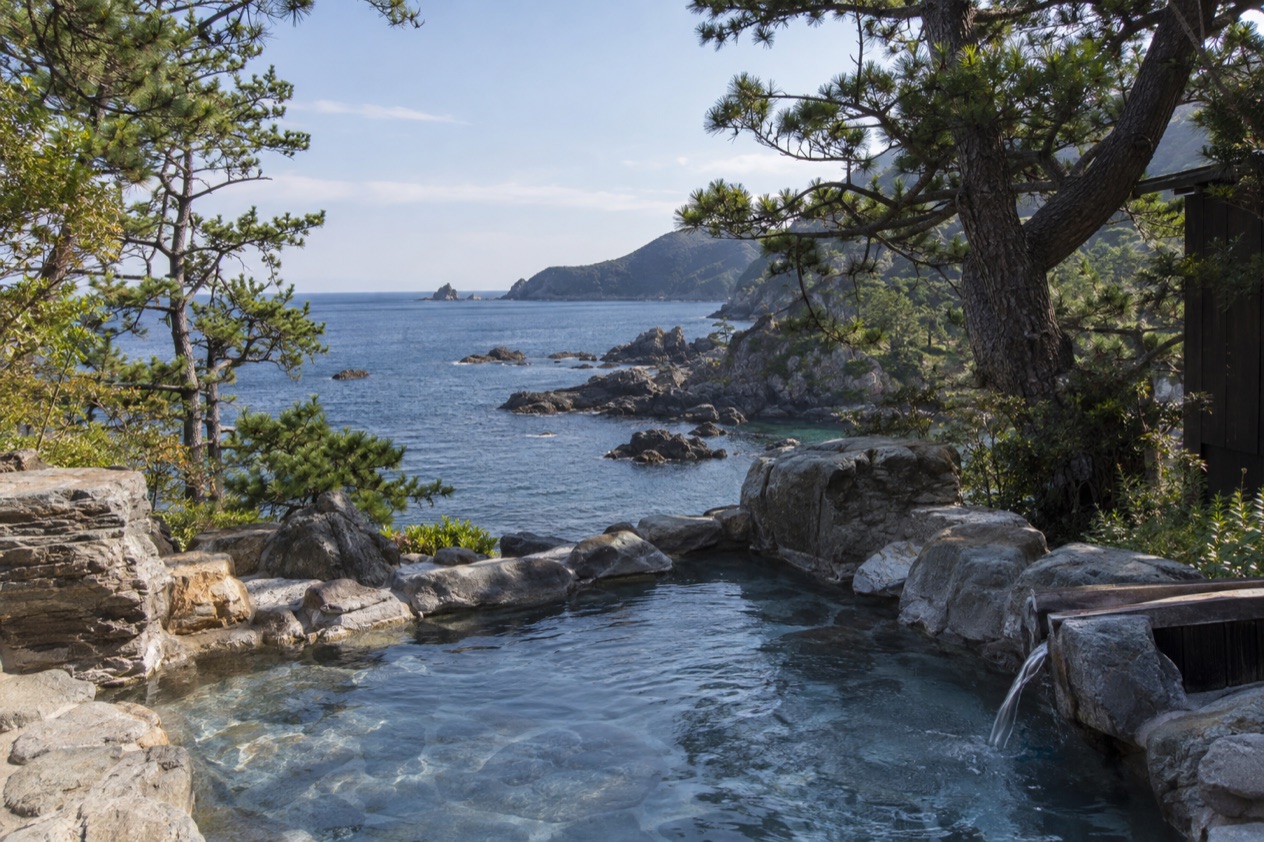
Steam rises from a public foot bath at the edge of a hot spring town, and the smell of grated wasabi drifts from a lunch counter where the green root is rubbed on a sharkskin grater. Somewhere below the road the Pacific keeps moving against a ragged coastline. The Izu Peninsula is a place of hot springs, sea and mountains, made for travelers who like to soak, eat and drift along a coast.
Where is the Izu Peninsula and what is it like?
The Izu Peninsula is a mountainous finger of land on the Pacific coast of Honshu, west of Tokyo, in Shizuoka prefecture in central Japan. Its coastline is deeply indented, so the shore keeps turning into small bays, headlands and fishing harbors, while the interior folds into forested ridges. It is a resort region first of all, and the resorts here are built around hot water that comes out of the ground.
Three towns carry the onsen reputation: Atami, Shuzenji and Ito. Each has its own temperament. Atami is a seaside resort town with hotels stacked up a hillside above the water. Ito is a coastal hot spring town with bathhouses and inns spread through its streets. Shuzenji sits among hills, and its name comes from the temple at the heart of the town, around which the baths and ryokan (traditional inns) gather.
Beyond the spa towns the peninsula has another life. People come for sea bathing, for surfing, for golf and for motorcycle touring, which tells you something about the roads: they curl along the shore and over the hills, and they are meant to be enjoyed at the pace of a long, wandering drive. The southwest coast, from Matsuzaki through Nishiizu to Minamiizu, was designated a National Place of Scenic Beauty in 1937, and it remains the stretch where the peninsula feels most like open coast.
It suits people who want to unwind, who think of a trip as a series of baths, meals and slow afternoons. It also suits those who like to wander without a checklist.
What is there to do in the Izu Peninsula?
The reasons to come fall into a few clear groups: hot springs, the sea and the coast, the roads, and the table. What sets Izu apart from its neighbors is how much of this sits within reach of Tokyo, yet in a setting of hills and shoreline rather than city streets.
Soaking in the onsen towns
Atami, Shuzenji and Ito are the names that matter for hot springs. A day in any of them follows a familiar rhythm: a walk through the streets, a bath, a meal, another bath. Travelers stay overnight in a ryokan, where the habits are well established. Shoes come off at the entrance, guests change into a yukata (a light cotton robe), and dinner is often a spread of small seasonal dishes in the kaiseki style.
Public baths and foot baths turn up in these towns as well, and a wander between them is a pleasant way to spend an afternoon. The three towns reward different moods.
Choose Atami for a seaside setting, Ito for a coastal town with baths scattered through it, and Shuzenji for a spa town gathered around its temple. A towel and a little patience with bathing etiquette, washing first and then entering the water, are all you need.
The southwest coast and the sea
The coast from Matsuzaki to Nishiizu and Minamiizu is the stretch officially recognized as a place of scenic beauty. Here the shoreline breaks into coves, rocky points and small fishing settlements, and the peninsula shows its wilder face. It is a place to stop at a lookout, walk along the water and let the afternoon go by.
The sea is part of the appeal across Izu. Sea bathing and surfing are among the things the region is known for, so beach days belong in the plan alongside the baths. Conditions change with the weather and the swell, so treat any day on the water as a chance rather than a promise, and take cues from local signs and what the surfers are doing.
Wasabi, seafood and the Izu table
Izu is one of only a couple of areas in Japan where wasabi is widely cultivated, which gives the local food a bright, clean edge. Fresh wasabi is grated at the table onto rice or sashimi, and it tastes sweeter and rounder than the paste in a tube. Wasabi also finds its way into pickles, soba and, for the curious, soft-serve ice cream.
With a long coastline come the fishing harbors and their catch. Expect sashimi, grilled fish, simmered dishes and sets served at harbor-side restaurants and in ryokan dinners. A good plan is to eat the sea in the morning or at lunch in a fishing town, then spend the evening on a bath and a slower kaiseki meal.
Golf and motorcycle touring
Golf and motorcycle touring are named among the peninsula’s draws. Riders come for the coast roads and the hill roads that link the spa towns, and golfers come for courses laid out in the hills. For these visitors Izu works as a base for several days of movement, with a bath waiting at the end of each one. If neither sport appeals, the same roads suggest the rhythm of the whole peninsula: go slowly, stop often, and let the coast set the pace.
How many days do you need in the Izu Peninsula?
A long weekend is enough to taste Izu, and a week lets you really settle into it. With two or three days, pick one area and stay put.
That might be Atami and its hillside above the sea, Ito and its baths, or Shuzenji and its temple town. Spend the time on the things that bring people here: a night in a ryokan, two or three soaks, a seafood lunch and a long walk by the water.
A short stay works best when it stays in the north, where the Tokaido Shinkansen stops at Atami and Mishima. The less time you spend on connections, the more of it goes to the baths and the table. The northern parts of the peninsula reward people who want a restful break from Tokyo without a long day of transfers.
With four or five days, you can add a second base and move down the east coast toward Shimoda, using the JR Ito Line and the Izu Kyuko Line. Services along that coast are less regular, so give the transfers room in the schedule and enjoy the slow pace of a line that serves small communities. Shimoda is the end of the line and a natural place to spend a night or two.
A week opens the southwest, the stretch from Matsuzaki to Nishiizu and Minamiizu. It also leaves time for a day at the beach, a surf session, a round of golf or a loop by motorcycle. Add a wasabi-focused meal or two and a couple of unscheduled afternoons, and the peninsula starts to feel like somewhere you could return to rather than somewhere you have ticked off.
Day trips from Tokyo are also possible, since Atami and Mishima sit on the Shinkansen line. A day in Atami fits a bath, a walk and a meal. It is not the same as a night in a ryokan, but it is a way to sample the region.
Where to stay in the Izu Peninsula
The best base depends on whether you want the sea, a hot spring town or a long run down the coast. Atami suits travelers who want a seaside onsen resort close to the Shinkansen. Hotels and inns climb the hillside above the water, and the town is a natural first stop for a bath and a sea view.
Ito suits those who like a coastal town with hot springs and plenty of bathing options. It sits on the east coast line, which makes it a convenient link between the north and Shimoda. Shuzenji suits travelers who prefer a spa town in the hills, built around its temple, with ryokan where a night’s stay is the whole point of the trip.
Shimoda, at the end of the east coast railway, suits those who want to be near the southern part of the peninsula and to explore from there. The southwest coast, in Matsuzaki, Nishiizu and Minamiizu, is for travelers who want to wake up close to the shoreline and the fishing harbors, and who are comfortable with a slower rhythm.
Mishima, on the Shinkansen line, works as a gateway for the northern part of the peninsula rather than a place to settle in. Choose a ryokan for the full experience of the baths and a multi-course dinner, or a simpler inn if you mostly want a base for the sea, the roads and the walks.
How do you get to the Izu Peninsula and get around?
You reach the Izu Peninsula from Tokyo by train, in two to three hours from Tokyo Station. The Tokaido Shinkansen stops at two stations on the northern edge of the peninsula, which places the northern parts within reach of the capital.
| Station | Shinkansen services that stop | From Tokyo |
|---|---|---|
| Atami | Kodama and some Hikari | 40 minutes |
| Mishima | Kodama and some Hikari | 50 minutes |
The JR Odoriko limited express runs three times a day directly from Tokyo Station to both Shimoda and Shuzenji. That is the through service for travelers heading to those two towns without changing trains.
Along the east coast, the JR Ito Line and the Izu Kyuko Line run to Shimoda. Services are less regular because the population is low, so the timetable shapes the day more than it does in a city. It helps to treat the train ride itself as part of the trip, a slow run beside the sea.
The peninsula is also known for motorcycle touring, and its coast and hill roads are part of the draw. On foot, the spa towns are places to stroll between baths, shops and restaurants. For the wilder southwest coast, plan around the character of the area: small settlements, long stretches of shoreline and a pace that rewards time rather than a tight schedule.
When is the best time to visit the Izu Peninsula?
The Izu Peninsula works in any month, because its main pleasure, a soak in a hot spring, is not tied to a season. The question is what else you want from the trip. Hot water is one of the pleasures of the cooler months, when stepping from a bath into fresh air is part of the appeal. Travelers who care mostly about onsen towns and food can pick their dates by price, schedule and mood.
The warm months are the time for sea bathing and surfing, two of the activities the region is known for. That is also when the beaches and the coast come into their own. Golf and motorcycle touring depend on the weather as well, so check the forecast before committing a day to either. Summer brings Japan’s rainy season and typhoon season, so build some flexibility into any coastal plans.
Local festivals and fireworks are part of life in the resort towns, and the dates move from one year to the next, so confirm them close to your trip. Weekends and national holiday periods are when the Shinkansen and the Odoriko are likely to be in demand, so a midweek stay lets you enjoy the towns at a gentler pace.
Good to know before you go
Bathing has its own etiquette: you wash before entering the water, and the tub is for soaking only. Keep the train timetable in mind on the east coast, where services are less regular, and give yourself time for connections. If you travel in the rainy or typhoon season, stay flexible, since weather can reshape a day on the coast.
Sources
- Wikipedia, Izu Peninsula (https://en.wikipedia.org/wiki/Izu_Peninsula), checked October 11, 2026
- Wikivoyage, Izu Peninsula (https://en.wikivoyage.org/wiki/Izu_Peninsula), checked October 11, 2026
To plan your stay
- Best Time to Visit Japan: Cherry Blossoms, Autumn Colors, Weather and Festivals
- Where to Stay in Japan: Ryokan, Temple Stays, Capsule Hotels and the Best Cities to Base In
- Sending Luggage from the Airport in Japan: Hands-Free Travel, Hotel Delivery and Coin Lockers
- Know Before You Go to Japan: Entry, Money, Etiquette and Getting Around