
A basket of bread and a carafe of water land on the table before anyone has opened a menu, the olive oil in the salad shines under the lights of the terrace, and the plates arrive one after another until the table is crowded. Behind the tables the sea goes dark and the kitchen keeps sending out fried tomatoes, grilled fish and wedges of feta. On the Greek islands, food is the evening’s main event, and each island adds its own cheese, its own sweet, its own spirit.
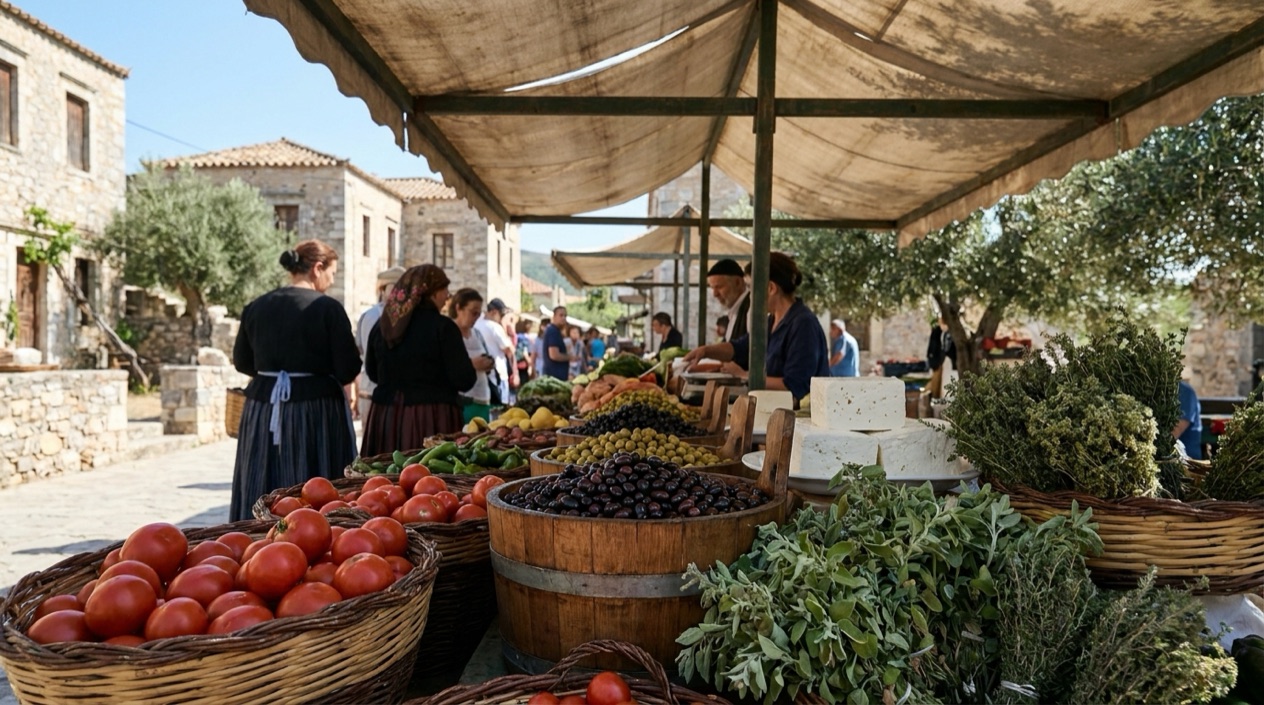
What do the Greek islands eat?
The islands eat what the land and the sea give them, and almost all of it is cooked in olive oil: vegetables, grains, fish, lamb, pork, poultry, rabbit and goat, seasoned with oregano, mint, garlic, onion, dill and cumin. Wheat, olive oil and wine form the old base of Greek cooking, and that base is still easy to taste on an island table. A plate of greens, a slab of cheese, a piece of grilled fish and a glass of local wine make a full dinner.
Olive oil is the most characteristic and ancient element of the kitchen, and it appears in nearly everything, from the salad to the baked beans to the pie. Greece’s Mediterranean diet has been on the UNESCO Intangible Cultural Heritage Lists since 2013, and on the islands you see why: the food is built around vegetables, bread and oil, with fish for the coastal villages and meat for celebrations.
The taverna table
The taverna and its cousin the estiatorio are widespread across Greece, serving home cooking to locals and visitors alike. On an island you will find them on the harbor, on the village square and along the beach road. Bread and water arrive soon after you sit down, which is the custom, and a small free dessert often comes with the bill, perhaps a slice of fruit, a spoonful of something sweet or a little cake.
Greeks sit down to lunch around two or three in the afternoon, and dinner comes late, often well after nine. In the hot summer months dinner can stretch as late as ten, and it is the main event of the day. Tourist-facing places may open earlier, so an early table is easy to find, but the island rhythm is a slow start to the evening, with the terrace filling as the light fades.
A few signs help you pick a good place. Large photo posters outside, waiters calling to passersby, or plates cleared while you are still at the table are poor signs. A menu that lists desserts is another. A short list of daily dishes, a kitchen you can half see and tables full of Greek families are better ones.
Fish and the sea
Fish dishes are common on the islands and in coastal regions, and they have been part of the diet of coastal dwellers since ancient times. You see them as grilled whole fish, as fried small fish eaten with lemon, as octopus left to dry on a line and then charred, and in soups and stews. Lemon, oil and oregano are often all they need.
Fresh fish is sold by the kilogram and can be very expensive, so it is sensible to ask what your portion will cost before ordering. By law, frozen seafood must be marked as such on the menu. If the budget is tight, order the small fried fish, a seafood pasta or the shrimp saganaki, and let the fish of the day be a treat.
Breakfast, bakeries and ice cream
Bougatsa is a popular breakfast, sold mainly in bougatsadika, shops that also carry pies, pastries and coffee. The custard version comes warm under a dusting of sugar and cinnamon, and the cheese and spinach versions are savory. Many islanders start the day this way, standing at a counter or at a small table with a coffee.
Greek sugar bakeries sell locally made ice cream by the weight, much cheaper than at ice cream kiosks, so a cone from the bakery is the thrifty choice on a hot afternoon. Yogurt is another daily staple: genuine Greek yogurt carries 10% fat, thick and creamy, and it arrives with honey and walnuts or as the base of a sauce for grilled pork.
Which local specialties are there?
The specialties range from the Greek salad and tomato fritters to Cretan egg dishes, baklava and the spirits poured at the end of the evening. Some are found on every island, others belong to just one, and the pleasure of eating your way between islands is that the same dish changes from one harbor to the next.
Salads, fritters and dishes from the oven
The Greek salad, horiatiki, is tomato, cucumber, onion, olives and a slab of feta, which plays the central part. Traditionally it is dressed only with olive oil. Vinaigrette or lettuce show up only in the most tourist-oriented restaurants, so a plain bowl with a block of cheese on top is a good sign. Feta can be bought packed or by the weight at any market.
Tomatokeftedes, tomato fritters, are well known across Santorini, where they arrive crisp outside and soft inside, flavored with herbs. From the oven come moussaka, layered with eggplant and a creamy topping, and baked vegetables or beans in tomato and oil. Souvlaki and gyros, the grilled skewers and the spit-roasted pork wrapped in pita, are the street food you eat standing up.
Cretan plates
It is rich and plain at once, and it tells you what the island’s pantry is built on: dairy from the hills, eggs from the village and good oil. Cretan tables also carry the rusk salad called dakos, wild greens and hard cheese, though the rest of the island’s list changes by village.
On Crete, tsikoudia is the most common aperitif, a clear spirit poured in small glasses before or after the food.
Sweets, mastic and spirits
Baklava is a dessert of tissue-thin layers of pastry with honey, cinnamon and chopped walnuts, sold by the slice from pastry shops and syrupy enough to need a fork. Beside it sit the spoon sweets, fruit preserved in syrup and served on a small plate with a glass of water, a gesture that says you are welcome.
Mastic, an aromatic plant resin grown on the Aegean island of Chios, flavors sweets, liqueurs and ice cream with a taste of pine and resin. Ouzo, the anise spirit, turns cloudy when water is added and is the classic partner of a plate of small dishes. Pour a little water in, take a bite of cheese or an olive, and let the glass last.
Which islands are best known for them?
Crete, Santorini, Chios, Lesbos and Syros each have a food that is tied to the island’s name, and Corfu, Naxos and Kefalonia add their own plates. Planning a trip around these is easy: choose an island for what it cooks, and the harbor, the village and the table come together.
Crete
Crete is the island for a long, hearty table. The staka and egg dish, the tsikoudia poured at the end of dinner and the cheeses and greens of the mountain villages all belong to it. Lamb and goat cooked slowly, snails in oil and rabbit in a stew with onions appear on tavernas, alongside oil from the olive groves that fill the countryside.
Because it is a large island, the food changes between the coast and the hills. Seaside tavernas lean on fish and salads, while mountain villages serve pies, grilled lamb and dishes from the oven. A kafenio in a village square is where you find the local spirit and a plate of something small to go with it.
Santorini
Santorini is known for its tomato fritters, which turn up in tavernas across the island, made with the small local tomatoes and herbs. Alongside them come the yellow split-pea purée called fava, usually served with onions, capers and olive oil, and salads of local cherry tomatoes. The volcanic soil is part of the story, and it shapes the island’s wines as well.
Tables on the caldera edge fill with fish, fritters and small plates of cheese and capers, while village tavernas inland serve plainer cooking. A glass of local white wine is the natural partner for everything on the table.
Chios and Lesbos
Chios is the home of mastic, the resin grown in the island’s southern villages and used in sweets, liqueurs and spoon preserves. It is the ingredient you taste when a Chios pastry shop hands you a small plate of something chewy and perfumed, and it is the souvenir people carry home in small packets and bottles.
Lesbos is particularly famous for its ouzo. On the island the spirit is the center of a long afternoon: a few glasses of ouzo, water added, with grilled sardines, olives, cheese and bread placed on the table at the same time. Order slowly, because the food keeps coming as long as the glasses are filled.
Syros, Corfu and beyond
Syros has a place in Greek food history: the first Greek cookbook was printed on the island in 1828. The island is also known for its sweet loukoumi, a soft, powdered candy, and for local cheeses, so a walk through the port town of Ermoupoli can include a bakery, a cheese shop and a taverna.
Corfu in the Ionian Sea has a kitchen of its own, with pastitsada, pasta and spiced beef or rooster in a red sauce, and sofrito, thin slices of beef in garlic and white wine. Naxos is known for its graviera cheese and its potatoes, and Kefalonia for its meat pie. Each of them rewards a table that orders what the island is proud of.
Good to know before you go
Euros are the currency, and eating well on the islands is easy to do on a modest budget in tavernas serving home cooking. Vegetarians will find plenty of vegetable dishes on every menu, but restaurants catering strictly to vegans and vegetarians are practically non-existent outside Athens and Thessaloniki. Many restaurants add a small charge per person for bread and the table setting.
| Fee | Amount | Who pays |
|---|---|---|
| Cover fee in restaurants | €0.30 to €2 | Each diner, per person |
Sources
- Wikipedia, Greek cuisine (https://en.wikipedia.org/wiki/Greek_cuisine), checked October 12, 2026
- Wikivoyage, Greek cuisine (https://en.wikivoyage.org/wiki/Greek_cuisine), checked October 12, 2026
- Wikivoyage, Greece, section Eat (https://en.wikivoyage.org/wiki/Greece#Eat), checked October 12, 2026
To plan your stay
- Best Time to Visit Greece: September and Late May to Early June
- Arachova: Parnassus Mountain Town, Formaela Cheese, Ski Season and Saint George's Day
- American Airlines Flights to Greece: U.S. Cities, Athens Arrivals and Onward Island Flights
- Greece on a Budget: Cash Machines, Cards, Beaches and Ferries