
A bowl of tomatoes is sliced into a wide dish, the oregano is rubbed between two palms, and a thread of green olive oil goes over everything before anyone has said a word. That is how a Greek kitchen starts, and it is the moment a cooking class lets you share. Learning to cook in Greece means learning a place through its pantry, from island fritters to the pastry of a morning bougatsa shop.
Where can you take a cooking class in Greece?
A cooking class in Greece belongs wherever the food has a strong local identity, so the useful question is less “which city” than “which kitchen do you want to learn?” Greek cooking changes with the island and the region, and the dishes tied to one place are the ones that make a class worth planning a stop around.
The ingredients are the thread through all of it. Wheat, olive oil and wine are the base of the cuisine, vegetables and herbs fill the plate, and fish turns up often on the coast and the islands. A class built around those basics will make sense in almost any corner of the country, and a class built around one local product will tell you more about where you are standing.
Santorini and the tomato fritter
Tomatokeftedes, the tomato fritters, are well known throughout Santorini, which makes them a natural subject for a hands-on lesson there. You chop ripe tomatoes, fold them into a batter with onion and herbs, and fry spoonfuls until the edges turn crisp. Mint and oregano are the kind of herbs Greek cooks reach for, and a class gives you the chance to learn how much is enough.
What you take home is a dish you can repeat anywhere, as long as the tomatoes are good. The fritters are a meze, a small plate for the middle of the table, so the lesson often grows into a spread of shared dishes with a glass of something cold beside them.
Crete and its egg and cream breakfast
On Crete, staka me ayga is a dish of poached or fried eggs served with staka, a buttery cream mixed with flour. It is rich, local and unlike anything on a standard breakfast menu, which is exactly why it suits a class devoted to the island’s own cooking.
Cooking it teaches patience at the stove, since the cream needs watching as it thickens. Around it, a Cretan lesson can drift toward the other staples of the island table, the greens, the olive oil and the herbs, so you leave knowing a whole way of eating rather than a single recipe.
Chios, mastic and the Aegean pantry
Mastic is an aromatic plant resin grown on the Aegean island of Chios, and it gives a perfumed, slightly piney note to sweets and drinks. A class that centers on mastic is a lesson in how a single crop can shape a whole island’s pastry shelf.
You learn to use it sparingly, ground with a little sugar so it does not clump, and to pair it with something creamy or sweet. It is the sort of ingredient that is hard to find a use for at home until someone shows you, and then it quickly becomes a favorite souvenir to cook with.
Athens, Thessaloniki and the plant-based table
Restaurants that cater strictly to vegans and vegetarians are practically non-existent outside Athens and Thessaloniki, so a class in either city is a good place to learn how Greek vegetable cooking works. The cuisine already leans on vegetables, grains and olive oil, which means a lesson can fill a table with dishes built from the garden.
Travelers who eat plant-based can use a class to learn the logic behind these dishes and carry it into their own kitchen. Away from the two big cities, that knowledge helps when you order from a menu that does not mark anything as vegetarian.
What do classes cover?
Classes cover the building blocks of Greek cooking first, olive oil, herbs, vegetables and bread, and then move on to the plates that turn them into a meal. Expect a lesson to start at the chopping board rather than the stove, because so much of Greek food depends on what goes into the bowl raw.
Olive oil, herbs and the Greek salad
Olive oil is the most characteristic and ancient element of Greek cuisine, and it goes into most dishes. A good class makes you taste it on its own, then cook with it, so you learn what it does for a pan of vegetables or a plate of tomatoes.
The Greek salad is the clearest example. Traditionally it is dressed only with olive oil, and vinaigrette or lettuce show up only in the most tourist-oriented restaurants.
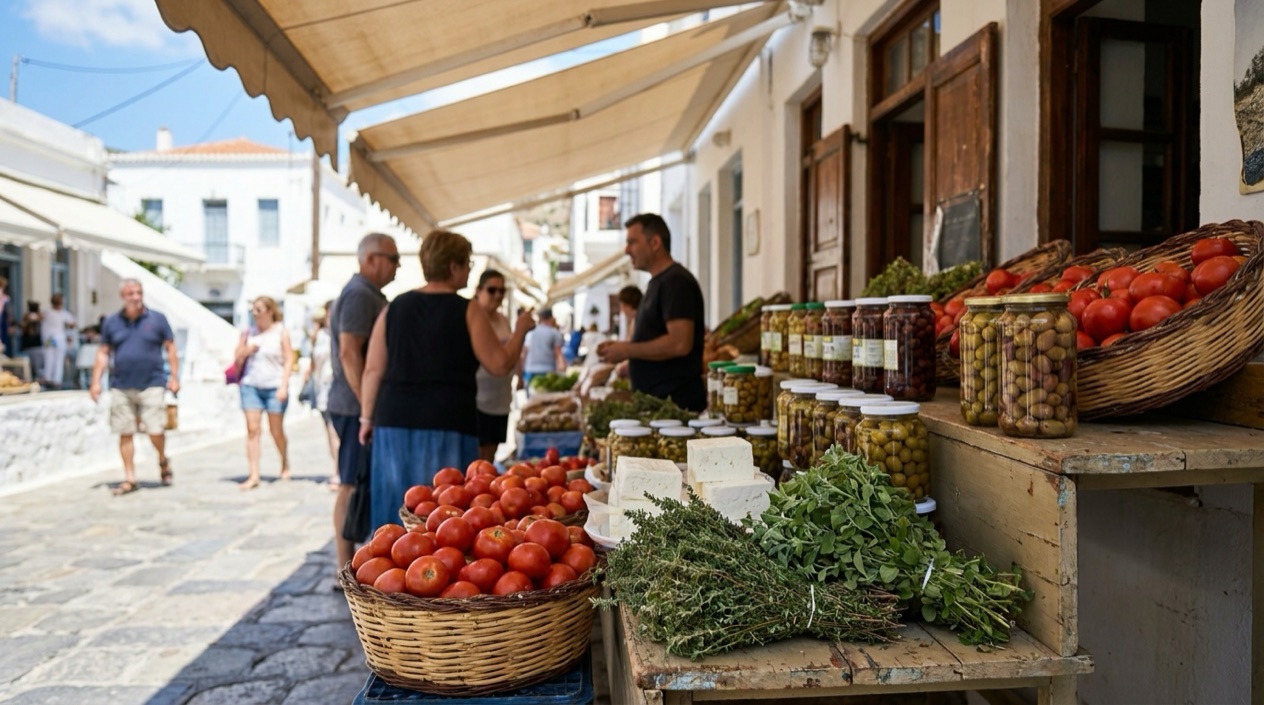
Making it yourself, with ripe tomato, cucumber, onion, olives and a slab of feta, shows how little it needs. Oregano, mint, garlic, onion, dill, cumin and bay leaves are the seasonings that appear more often here than in other Mediterranean kitchens, and a lesson often lets you smell each one.
Fish and meat
Fish dishes are common in coastal regions and on the islands, so a seaside lesson may turn to grilled or baked fish with lemon and oil. Meat has its place too, with pork, poultry, veal and beef, lamb, rabbit and goat all part of the cuisine.
One fact to carry with you: fresh fish in Greece is sold by the kilogram and can be very expensive. Cooking a whole fish in class teaches what to look for at the counter, and it helps you understand why a menu price for fish can surprise you. By law, frozen seafood must be marked as such on the menu, a detail that is worth knowing once you start reading menus with a cook’s eye.
Pastry, honey and breakfast
Baklava is made of tissue-thin layers of pastry with honey, cinnamon and chopped walnuts, and a class on it is a lesson in patience and a steady hand. Brushing each sheet with butter, layering the nuts and pouring the syrup over the hot pan are the steps that decide whether it turns out crisp or soggy.
Bougatsa is a popular breakfast, found mainly in bougatsadika, shops that sell bougatsa, pies, pastries and beverages. Learning the dough behind it explains why those shops are so devoted to one specialty. Greek yogurt belongs in the same chapter. Genuine Greek yogurt has 10% fat, which is why it tastes different from a typical supermarket tub, and a class that ends with yogurt, honey and walnuts makes the point without a word of explanation.
Products with a name
Some lessons wander into the specialties that carry a protected name. Avgotaracho Messolongiou is a PDO product made from flathead mullet caught in the Messolonghi-Etoliko Lagoons, and it shows how closely a place and a food can be tied. You may not cook with it, but hearing the story behind it adds depth to a menu you read later.
The whole approach sits within the Mediterranean diet, which has been on the UNESCO Intangible Cultural Heritage Lists for Greece since 2013. A class is a way to feel what that listing means in practice: vegetables, oil, grains and fish, shared at a table.
How do you book?
You book a class by deciding first what you want to learn, because Greek cooking is so tied to place that the dish should drive the choice of where to go. Pick the island or city whose food you most want to eat, then look for a lesson built around it.
Match the class to the stop
If tomato fritters appeal, think Santorini. If a rich Cretan breakfast does, Crete is the place. If the fragrance of mastic draws you, Chios is where it grows, and if you want to understand vegetable cooking from the ground up, Athens and Thessaloniki are where plant-based eating is easiest to find.
Building a trip this way keeps a class from feeling like a detour. It becomes the reason you linger over a market, a bakery or a taverna table, and the dish you learn is the one you will order again with real understanding.
Use the taverna as your classroom
Taverna and estiatorio, the casual and more formal Greek eateries, are widespread and serve home cooking at affordable prices to locals and tourists alike. Eating in them before and after a class turns the lesson into a conversation, since you can spot on the menu the dishes you just learned.
Greeks tend to eat lunch in mid-afternoon and dinner late in the evening, though tourist establishments may open earlier. Bread and water arrive soon after you sit down, and a small free dessert often comes with the bill, so a meal has a rhythm you will recognize from the way a class is paced.
Reading a menu like a cook
A class sharpens your eye for restaurants. Bad signs include desserts listed on the menu, large food posters outside, waiters yelling for clients, or plates taken away while diners are still seated. A place that avoids all of those is usually cooking for people who sit and stay.
For a quick, cheap bite between lessons, Goody’s is a popular fast food chain in Greece, where a hamburger with Coke costs €3-5. It is a very different meal from the ones you will cook, and a useful contrast when you taste the difference.
Good to know before you go
Euros are the money in Greece, and the meals you eat around a class are part of the experience. Restaurants can add a cover fee, charged officially, and if it tends toward the top of the range it may be worth eating elsewhere. Fresh fish is priced by weight, so ask what your portion costs before ordering.
| Fee | Amount | Who pays |
|---|---|---|
| Restaurant cover fee | €0.30 to €2 per person | Each diner |
Sources
- Wikipedia, Greek cuisine (https://en.wikipedia.org/wiki/Greek_cuisine), checked October 12, 2026
- Wikivoyage, Greece, section Eat (https://en.wikivoyage.org/wiki/Greece#Eat), checked October 12, 2026
To plan your stay
- Best Time to Visit Greece: September and Late May to Early June
- Arachova: Parnassus Mountain Town, Formaela Cheese, Ski Season and Saint George's Day
- American Airlines Flights to Greece: U.S. Cities, Athens Arrivals and Onward Island Flights
- Greece on a Budget: Cash Machines, Cards, Beaches and Ferries