
A tray of warm bougatsa is cut into squares with a pair of shears, dusted with sugar and cinnamon, and set down next to a small cup of thick coffee. Around you, people read the paper, argue gently about football and take their time.
That is how a Greek morning starts, in a pastry shop or a café, with a pastry and a coffee.
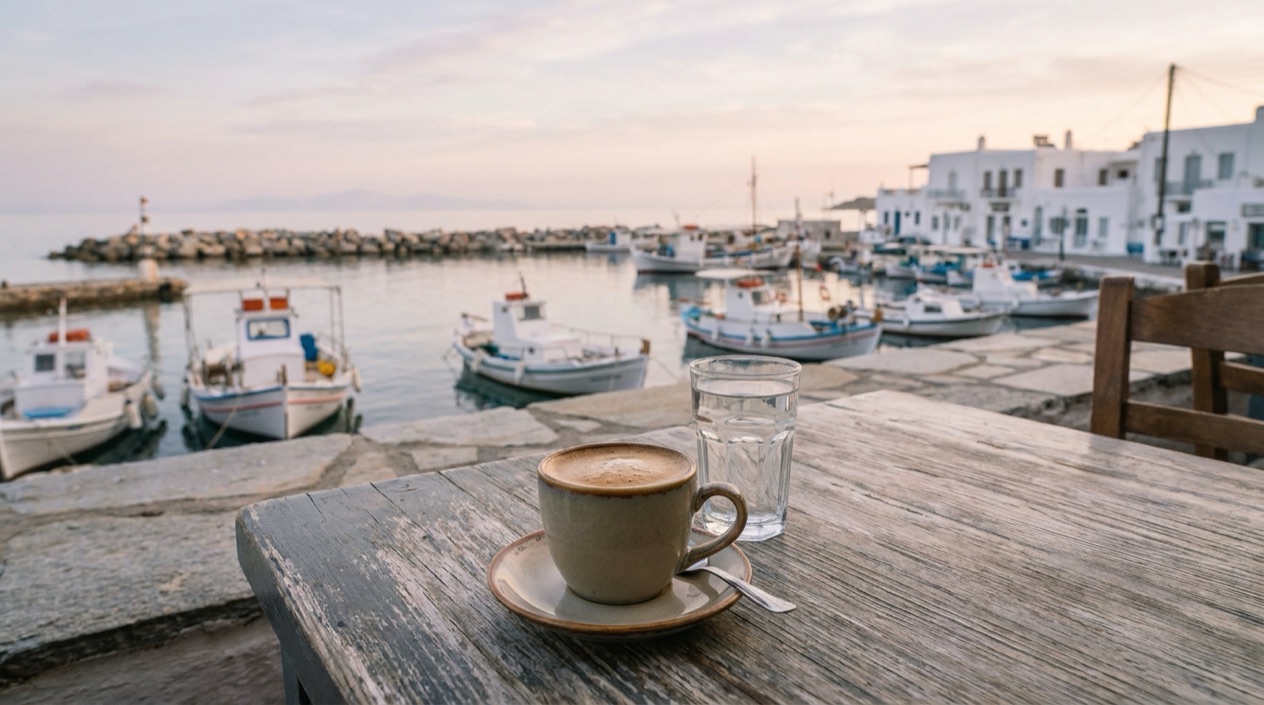
What do Greeks eat for breakfast?
A Greek breakfast is usually something baked or sweet with a coffee, not a cooked plate of eggs and bacon. The day’s main meal comes much later, since Greeks sit down to lunch in the middle of the afternoon and to dinner in the late evening, so the morning is light and often eaten standing or at a café table on the way to work.
For a visitor, this is good news. Breakfast is cheap in spirit and simple to find, and it pushes you into the places locals actually use: the pastry shop, the corner bakery and the café with outdoor tables.
Bougatsa and the bougatsadika
Bougatsa is a popular breakfast, sold mainly in bougatsadika, shops that specialize in it and also sell pies, pastries and drinks. The pastry is made of paper-thin sheets of dough wrapped around a filling. The sweet version holds a warm semolina custard and is finished with powdered sugar and cinnamon. The savory versions are filled with cheese or minced meat.
You eat it with a fork, still hot, with a coffee beside it. The shop usually has a few tables, a glass case of other pies and a counter where regulars order without looking at a menu. If you are unsure, point at the custard one first, then come back the next morning for the cheese.
Pies, sesame rings and other bakery stops
Beyond bougatsa, the bakery is where breakfast happens. Tiropita, the cheese pie in flaky pastry, sits next to spanakopita, the spinach pie, and next to koulouri, a ring of bread covered in sesame seeds that is sold from street carts and bakery counters. Many people grab one of these on the way somewhere and eat it walking.
Greek cuisine rests on wheat, olive oil and wine, and a bakery counter shows the first two at once. The pastry is crisp, the fillings are rich with cheese or greens, and the olive oil is there in the dough. Pair any of them with a coffee and you have breakfast for very little effort.
Yogurt, honey and fruit
Greek yogurt with honey is the breakfast that most visitors recognize, and the real thing is far thicker than the supermarket tubs back home, with 10% fat in the genuine version. Spoon it into a bowl, pour honey over it, and add walnuts if the café offers them. Fruit follows the seasons: strawberries and cherries show up in the markets from May onwards, while kiwis and oranges are the fruits of winter.
If you have an apartment kitchen, a market run for yogurt, bread and fruit makes a good slow breakfast on the balcony. Hotels in tourist areas tend to lay out a buffet with the same ingredients alongside eggs and cold cuts for guests who want the familiar plate.
Eggs and local breakfasts on Crete
Crete has a breakfast dish of its own. It is made of poached or fried eggs set in staka, a buttery cream that is cooked with flour. The result is rich and savory, closer to a small brunch than to the pastry-and-coffee habit of the mainland, and it goes well with bread for mopping the plate.
Look for it in cafés and tavernas on the island, and expect olive oil, local cheese and herbs to show up around it. It is a good example of how the morning table changes from region to region while the coffee stays the constant.
What kinds of coffee are there?
Greece has three coffees you will meet everywhere: Greek coffee, the hot, small and strong original, the frappé, a shaken iced instant coffee, and the freddo, which is espresso with ice. Each one has a time and a mood, and ordering the right one for the moment is half the pleasure of sitting down at a café table.
Greek coffee
Greek coffee is a thick, strong black coffee served in a small cup. It is made in a small long-handled pot called a briki, and the fine grounds settle at the bottom of the cup, so you sip slowly and stop before the sludge. If you do not say how you want it, it arrives moderately sweet. A glass of water usually comes alongside.
The name has a history. It used to be called Turkish coffee, but political tensions with Turkey in the 1950s pushed Greeks toward the euphemism Greek coffee, and the new name spread even further after the invasion of Cyprus in 1974.
On Corfu it is sometimes called eastern coffee, because Armenians who settled on the island brought the habit with them. Corfu had never been part of the Ottoman holdings and had no coffee culture of its own before that.
The frappé
The frappé is Greece’s summer coffee: instant coffee, water, sugar and ice shaken until it grows a thick layer of foam, often finished with milk. The foam is possible because the spray-dried instant coffee contains nearly no oil. It arrives in a tall glass with a straw, and people nurse one for a long time at a seaside table or a shaded square.
It was invented in Thessaloniki in 1957 by Dimitris Vakondios, a Nescafe representative. At the Thessaloniki International Fair he could not find hot water, so he shook instant coffee with cold water and ice cubes in a shaker. A film from a few years earlier already shows two characters making frappé with a shaker at Pavlidis Patisserie on Amerikis Square in Athens, so the drink may have been brewing longer than the legend says.
At some beach bars, the frappé comes with a liqueur such as Kahlúa or Baileys Irish Cream stirred in. That is a bar’s own twist, so expect it at the seaside and not in a neighborhood café.
Freddo espresso and freddo cappuccino
Freddo espresso is simply espresso poured over ice, and freddo cappuccino adds a cap of chilled milk foam. These are the most popular coffees throughout Greece, and you will see them on nearly every café table. The freddo espresso was first made in Athens in 1991, which makes it a much younger invention than its place in daily life suggests.
If the frappé feels sweet and frothy, the freddo is its cleaner cousin: stronger, colder and without the foam of the shaker. Order it when you want a real espresso taste in a glass of ice, and ask for sugar if you take it.
Iced tea and other drinks
Iced tea in mass-market tavernas and cafés usually means instant, so ask twice if you want brewed. Coffee is the default morning drink, but the same café will pour juices, soft drinks and, later in the day, ouzo, which is most famous from Lesbos, where Mytilene is known for it.
How do you order?
You order by naming the coffee and then saying how sweet you want it, because in Greece sugar is part of the order itself. The same short phrases work for Greek coffee and for the frappé, so learning three words covers most of the menu.
Sweetness: the three words
Say the coffee, then the sugar level. A café waiter will not ask twice, and if you leave it out the coffee arrives with sugar added by default. The three words below are all you need.
| Word | Meaning | Spoonfuls of sugar |
|---|---|---|
| glykós | Sweet | 4 |
| métrios | Medium | 2 |
| skétos | Plain | None |
So a métrios Greek coffee is a medium-sweet small cup, and a skétos frappé is an iced coffee with no sugar at all. If you want a Greek coffee without thinking about it, say nothing and take it as it comes, moderately sweet.
Milk, with or without
In Greece a frappé generally comes without milk unless you ask for it. To add milk, say that you want it with gála, the Greek word for milk. To state clearly that you want none, say horís gála. A frappé with milk is occasionally called frapógalo, though you will hear that word less often than the plain request.
Fresh milk is sold only for a few days after production under Greek law, which makes it relatively expensive, and that may be part of why plain coffee is the default. A freddo cappuccino, by contrast, always comes with its cold milk foam on top.
What arrives with the coffee
A glass of water is traditionally served with any drink you order, one glass for each drink, especially with coffee. In touristy areas you may have to ask for it. Bread and water arrive soon after you sit down at a taverna, and a small free dessert often comes when you ask for the bill, so breakfast and lunch both end with a little something.
At a bougatsa shop or a bakery, you often order at the counter and carry your coffee and pastry to a table. At a café with waiters, you sit first and wait to be served. Greeks tend to stay long, so there is no pressure to leave once the cup is empty.
A sample morning order
At a bougatsa shop, ask for a sweet bougatsa and a Greek coffee métrios, and you have a classic start. In summer, trade the coffee for a frappé or a freddo espresso and take it to a table in the shade. If you are hungry, add a koulouri from the next cart or a cheese pie from the counter.
Dinner is the main meal in Greece, and in the hot summer months it is commonly eaten as late as 21:00 or 22:00. That is another reason breakfast stays light, and a long café stop makes a natural middle of the day.
Good to know before you go
Pastries and coffee are cheap, and tavernas and estiatoria serve home cooking at affordable prices to locals and visitors alike. Some restaurants officially charge a cover fee per person, and if it tends toward the top of the range, consider eating elsewhere.
On some small islands the tap water is imported and heavily chlorinated and does not taste very good, so many visitors prefer bottled water. The frappé is a drink for the hot summer months, when a cold glass is welcome by mid-morning.
| Fee | Amount | Who pays |
|---|---|---|
| Cover fee in restaurants | €0.30 to €2 per person | Each diner |
Sources
- Wikipedia, Frappé coffee (https://en.wikipedia.org/wiki/Frapp%C3%A9_coffee), checked October 12, 2026
- Wikipedia, Greek coffee (https://en.wikipedia.org/wiki/Greek_coffee), checked October 12, 2026
- Wikipedia, Greek cuisine (https://en.wikipedia.org/wiki/Greek_cuisine), checked October 12, 2026
- Wikivoyage, Greek cuisine (https://en.wikivoyage.org/wiki/Greek_cuisine), checked October 12, 2026
- Wikivoyage, Greece, section Drink (https://en.wikivoyage.org/wiki/Greece#Drink), checked October 12, 2026
- Wikivoyage, Greece, section Eat (https://en.wikivoyage.org/wiki/Greece#Eat), checked October 12, 2026
To plan your stay
- Best Time to Visit Greece: September and Late May to Early June
- Arachova: Parnassus Mountain Town, Formaela Cheese, Ski Season and Saint George's Day
- American Airlines Flights to Greece: U.S. Cities, Athens Arrivals and Onward Island Flights
- Greece on a Budget: Cash Machines, Cards, Beaches and Ferries